








 What Two Hebrew Words Reveal About Israeli Democracy
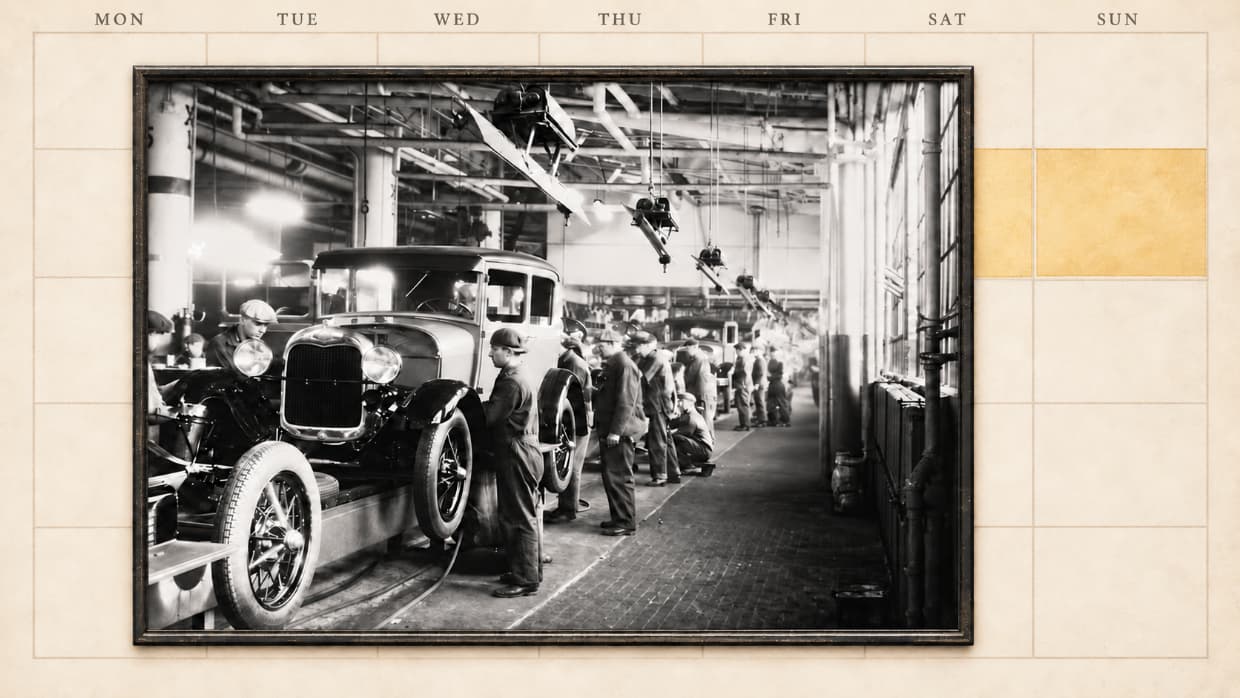






Shabbat gave the world a weekly day of rest. Jews also helped create the two-day weekend.
We take the two-day weekend for granted, but it's barely a century old. And a surprising part of its story runs through Jewish workers and the rabbis who fought for their right to keep Shabbat, the Jewish Sabbath.
Ancient societies marked time in all kinds of ways. Some divided the month into ten-day periods, others into eight-day cycles, often with a festival at the end of each. Sociologist Eviatar Zerubavel, who studied calendars from around the world, found that nearly every culture separates ordinary days from holy ones.
But one system stands apart. "A continuous seven-day cycle that runs throughout history paying no attention whatsoever to the moon and its phases is a distinctively Jewish invention," he writes in The Seven Day Circle.
That cycle begins in the Tora). After six days of creation, "God blessed the seventh day and sanctified it" (Genesis 2:3). The Torah then asks people to do the same: "Six days shall you work and on the seventh day you shall desist" (Exodus 34:21). The rest extends to everyone, including our animals, our workers, and even strangers living among us.
Hebrew builds Shabbat into the calendar itself. English days are named for ancient gods and heavenly bodies: Sunday for the sun, Monday for the moon, Tuesday for the Norse god Tyr. Hebrew days simply count toward Shabbat. Sunday is Yom Rishon, "the first day." Monday is Yom Sheni, "the second day," and so on, until the week reaches its peak on Shabbat.
For thousands of years, Jewish life revolved around that seventh day. Work and business stopped, and time went to family, friends, prayer, study, and appreciating life's gifts.
"For centuries the seven-day week remained a uniquely Jewish institution," writes Witold Rybczynski in Waiting for the Weekend. That changed under Greek and Roman rule. In towns with large Jewish populations, it made sense for merchants to work around the Jewish calendar, since Jews did no business on Shabbat. The Romans came to associate the Jewish day of rest with Saturn, whom they considered unlucky, and some began avoiding business on that day too. The seven-day week, Rybczynski notes, "appears to have been spread by word of mouth and adopted by common people."
Early Christians adopted the idea of a weekly holy day but moved it to Sunday. In 321, Constantine, the first Christian Roman emperor, made Sunday an official day of rest. For the next 1,500 years, much of the world rested one day a week.
So how did Saturday join it?
The answer lies in the booming industrial cities of the 1800s. Blue laws kept businesses closed on Sundays, but city workers increasingly wanted their free time for fun, not just church. Music halls, and later movie theaters, filled up on Saturday nights. In Britain, so many workers showed up late and hungover on Monday, or skipped it altogether, that the habit earned a nickname: "Saint Monday." Some businesses gave up and opened late.
Meanwhile, wealthier city dwellers bought country homes and left town at the end of each week. By the 1870s, some English employers were giving workers Saturday afternoons off, and a new word appeared. In 1879, the magazine Notes and Queries described a Staffordshire custom: someone who left after work on Saturday afternoon to spend the evening and Sunday with friends elsewhere was "spending his week-end" there.
In America, Jewish workers in sweatshops and mills were rarely lucky enough to get any part of Saturday off. When Rabbi Hayim Pereira Mendes arrived in New York in 1877 to lead the Spanish and Portuguese Synagogue, he was shocked by their conditions. He lobbied officials to let Jewish students skip Saturday exams, to let Jewish soldiers observe Shabbat, and to stop forcing Jewish shopkeepers, already closed on Saturday, to close on Sunday too. He founded the Jewish Sabbath Observance Society to push for these rights.
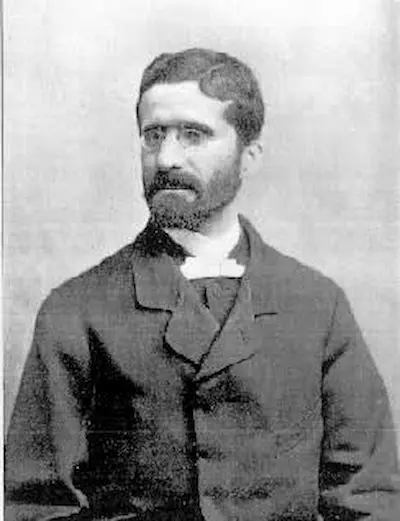 Rabbi Hayim Pereira Mendes
For years, Rabbi Mendes kept an office next to his synagogue open every day. Observant Jews came to him after losing their jobs for refusing to work on Shabbat, and again and again he helped them find new ones.
In 1908, the pressure paid off. A New England textile mill with many observant Jewish workers realized they would rather quit than work on Shabbat. So the mill closed on Saturdays, and to accommodate its Christian workers and managers, on Sundays too. It's the earliest known case of an American business adopting a two-day weekend.
Rabbi Bernard Drachman, a close ally of Rabbi Mendes, took the fight further. Born in New York in 1861, he studied in Breslau and Heidelberg and returned home a strictly observant leader determined to protect Jewish workers' right to keep Shabbat. He founded the Jewish Sabbath Alliance of America, with his brother Gustav, a gifted lawyer, defending Jewish shopkeepers prosecuted for doing business on Sunday.
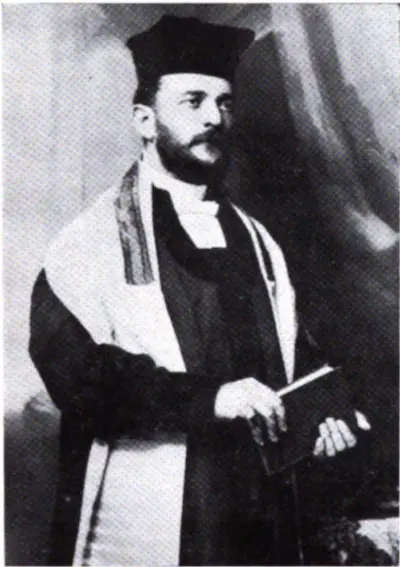 Rabbi Bernard Drachman
Christian "Sabbatarian" groups, intent on protecting Sunday blue laws, opposed him at every step. Rabbi Drachman refused to back down, making his case in courtrooms, before lawmakers, and to business owners. "How can an American state say to its citizens of Hebrew faith: 'You must revere and observe (the Christian Sabbath on Sunday instead of the Jewish Sabbath on Saturday)'? Yet this is exactly what it is doing when it compels the observance of Sunday by Jews. If this is not religious tyranny, what is?" he told Christian leaders in 1915.
After years of asking for exemptions for Jews, Rabbi Drachman hit on a better idea: a two-day weekend that would benefit Jews and Christians alike. He joined forces with labor organizers fighting punishing work hours, and appealed to Christian leaders on behalf of "the young men and young women who have been tied down for six weary days to hard and exacting toil." His solution was two days off: "one (day) to be purely secular in character and devoted to physical recuperation, the other to be purely religious and devotional."
The weekend's most famous adopter was Henry Ford, a notorious antisemite with no interest in Jewish religious needs. But Ford understood that workers with more free time would want cars, and time to drive them. In 1914, he introduced the eight-hour workday, unheard of at the time. In 1926, he closed his factories on Saturdays, bringing the two-day weekend to one of America's largest employers. Others followed, and within about 15 years the five-day week became the American standard.
For most of history, two days off a week would have seemed unimaginable. It took a small people's stubborn loyalty to an ancient day of rest to make it ordinary.













the power of persistence and how accommodating a minority often benefits the majority as well!
Historically the Christians also kept Shabbat until Constantine's edict in 321. This edict was for pagan sun worshippers, but was later adopted by the Christians.
Shabbat observers need Sunday off to mow their lawns etc.
There is a 2 day weekend in America, but not in Israel there should a 2 day weekend in Israel too, because they only have Friday off and Shabvat where religious Jews can't use for non Shabbat things to do
Great article!
Wow, amazing!
That's an interesting history, and makes me feel slightly bad about (many but not all of) the current generation who take shabbat for granted and use it for anything but Judaism.