





 What Jensen Huang’s Downfall Teaches Us About Human Nature


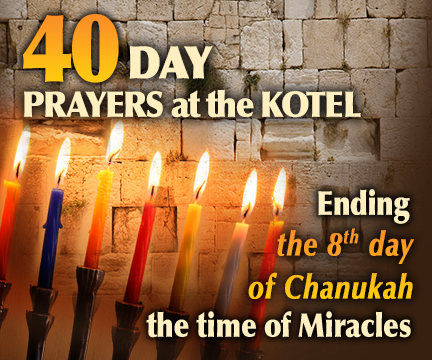



GOOD MORNING! Last week I received a call from a good friend of mine who asked to meet with me because his adolescent grandson had told him that has no interest in praying. His grandson had complained to him that when he prays he feels like he’s talking to a wall, “What’s the whole purpose of prayer anyway?”
It wasn't lost on me that my friend – who is in his seventies, deeply religious, and prays three times daily – could not explain to his grandson why we pray, or even begin to convey what he himself finds meaningful about praying. It astonishes me how many religious Jews spend upwards of sixteen hours a week in synagogue yet have so little understanding of what they are doing there – or the general purpose of prayer.
In my opinion, the lack of understanding about prayer is undoubtedly one of the greatest failures of our education systems. People who pray regularly generally fall into one or more of the following categories:
The Terms and Conditions Congregant: Those who routinely speed-read their daily prayers at 140 words per minute with the exact same level of comprehension and sincerity they have when clicking “I Agree” on an iPhone update.
Prayer as Magical Incantations: Those who pray without any real understanding of what they’re saying or why they’re saying it. Even if they can translate the words, they rarely think about or internalize the meaning of the words coming out of their mouth. To these folks, the religious experience is a matter of plowing through all the paragraphs of the liturgy, hoping there will be some magical effect on their lives.
Prayer as Coins in the Cosmic Vending Machine: Some treat prayer less like a spiritual conversation and more like a divine vending machine; hoping the incomprehensible words they mumble while half asleep is akin to paying God and hitting “B4.” They then get annoyed when the desired outcome doesn’t immediately clatter into their cosmic tray.
The Misguided Gratitude Layering: Those who have mastered the “compliment sandwich recipe” in prayer. Ingredients: You start with thirty seconds of vague praise, slide in a three-page list of urgent demands, and close with a quick “thank you” so it does not sound like a ransom note.
And of course…
The Foxhole Devotee: Nothing boosts a person’s sudden devotion (or concentration) in prayer like severe turbulence at 35,000 feet, a check engine light 200 miles from home, or waiting for a biopsy result.
The fundamental question is: Why do we pray? God is perfect and has no lack whatsoever – He obviously does not need our prayers. So why do we pray, for ourselves and our needs? If so, why do we need to pray at all – God already knows our needs better than we do!
The basis of having a meaningful and successful life is the creation of profound and consequential relationships. From deep familial ties to close personal friendships, it is these relationships that provide real meaning and context to our lives. Even while networking for a job or growing your own business, the truism is “It’s not what you know – it’s who you know.” The depth of these familial, communal, and business relationships are the true barometer of a successful life.
But all meaningful relationships are based on one fundamental principal – communication. The sages teach us that God created the world to bestow goodness to mankind – and the ultimate good that God can provide man is the opportunity for a deep and meaningful connection to Him. This relationship – like every relationship – is based on communication. This is the true purpose of prayer. We begin each and every day with a conversation with the Almighty. Just like every relationship, our prayers contain elements of praise, gratitude, and an articulation of needs.
Prayer is the key to a relationship with God. ln fact, creation itself waited for human prayer.
The Talmud (Chulin 60b) says that the vegetation remained at the surface, right below the ground, until Adam prayed. Once he prayed the rain began to fall and the vegetation grew. The famous Biblical commentator Rashi (Genesis 2:5) emphasizes Adam’s recognition: Before Adam, there was no one to appreciate the benefit of rain. Adam understood the world’s need and prayed for it. This indicates another deep connection that we have with the Almighty; as a partner in creation. It is this relationship that enables the world to operate.
Judaism has a remarkable perspective on the true definition of prayer and how we are to go about it. In Hebrew the word “lehitpallel” means “to pray.” The root word pallel appears in the Torah when Jacob says to his son Joseph (after a 22-year absence in which Jacob thought that Joseph had perished), “I never even hoped to see your face” (Genesis 48:11).
According to Rashi (ad loc) the word pallel means to have one’s mind filled with a thought. In Hebrew grammar the word lehitpallel falls in the category of self-reflexive verbs – in other words, the word describes prayer as something that you do to yourself: You fill your mind with a thought. Thus, it is not so much about the words you utter, it is about getting yourself into the proper mind space for a conversation with the Almighty.
In a similar vein Søren Kierkegaard said, “Prayer doesn’t change God, but it changes him who prays.”
Therefore, the act of one praying is meant to transform the person praying. God does not need to be informed of our needs, persuaded to care, or taught what is good. We, however, need to grow in our understanding of ourselves and our relationship with Him. When we begin praying, we naturally focus on what we want: Heal me. Help me succeed. Remove this difficulty. But sincere prayer should gradually change the person making those requests.
For example, a person may pray that someone difficult will change. Through that prayer, he may begin recognizing his own resentment, impatience, or responsibility. The request concerns the other person; the transformation begins within himself. This in no way implies that prayer is merely a psychological exercise. The transformation comes through addressing God: learning to stand honestly before Him, to listen, and to surrender to the fact that our judgment and knowledge is incomplete.
Ultimately, the change should go from “God, make things conform to my will” to “God, help my will become worthy of Yours.”
This week’s Torah portion opens with our forefather Jacob traveling at the direction of his parents, heading to his family’s ancestral homeland to find a wife.
“And Jacob departed from Be’er-Sheba and went to Haran. He encountered the place and spent the night there because the sun had set […]” (28:10-11).
The Torah relates that on his journey he passed by the future home of the Holy Temple on Mount Moriah (see Rashi ad loc). According to Rashi, Jacob felt it would be inappropriate to pass up the opportunity to pray at the same place his father and grandfather had prayed. Therefore, he returned to the place and instituted the evening prayer known as Ma’ariv (see Rashi 28:17).
The sages teach that the three prayer services (Shacharit – morning service, Mincha – afternoon service, and Ma’ariv – evening service) were established by the three forefathers: Abraham instituted Shacharit, Isaac instituted Mincha, and Jacob instituted Ma’ariv.
Yet this seems a little odd. We know that in Judaism every day begins with the onset of the prior evening. That is, Monday begins at sunset on Sunday. Thus, the first prayer of each day is Ma’ariv. Wouldn’t it be more logical for Abraham, being the first of the forefathers, to have instituted the first prayer service? Moreover, Ma’ariv was originally established as a nonobligatory prayer. Why should Jacob, who is considered the greatest of the forefathers, institute a prayer that is not even obligatory?
The purpose of the prayers being established by our forefathers is that they leveraged their relationship with the Almighty to establish an “appointment,” as it were, for their children to speak and connect with the Almighty.
There are two distinct components to every twenty-four-hour period: day and night. They are not merely differentiated by whether the sun is above or below the horizon. Rather, they have completely different functions. Daytime is the period in which mankind goes out and contributes to the functionality of the world, while nighttime is the period when man reaches out to connect.
In Hebrew, the word “yom – day” is masculine and “leila – night” is feminine. Day is the time for people to do, and night is the time to connect. This is also why when a woman tries to express an issue to a man, he focuses on trying to solve it (the do/give aspect) even though what she really wants is for him to just listen (the connect aspect).
Abraham is the forefather who is associated with acts of kindness (chessed) – which is the attribute emblematic of giving. This is why he was the proper forefather to institute Shacharit, the daytime service that defines what we are supposed to do during the day – act and achieve. Jacob, who is the greatest of the forefathers, instituted the first prayer service of the Jewish day (the evening service) – the one which is all about connecting to the Almighty.
This also explains why it takes the greatest of the forefathers to establish Ma’ariv, the one non-obligatory prayer service. Only Jacob was capable of establishing an appointment for his children with the Almighty – even though they might never show up for the appointment! It is the power of his relationship with the Almighty that compels this nighttime connection.

This week we have the trials and tribulations of Jacob living with and working for his father-in-law, Lavan. Jacob agrees to work as a shepherd for seven years in order to marry Rachel – only to have Lavan switch daughters on him at the wedding. (This is why we have the bedekin, the lifting of the veil, at traditional weddings – to ensure one is marrying the right bride.)
As Jacob tries to build his equity, Lavan changes their agreement time after time. After 20 years, the Almighty tells Jacob the time has come to return to the land of Canaan. Jacob and his household secretly leave only to be pursued by Lavan who has claims to put forth. The story ends with peace and blessings between Jacob and Lavan.

Prayer changes the world because it changes us.
- Rabbi Jonathan Sacks
Dedicated In Honor of Rabbi Zweig and
In Loving Memory of Rabbi Packouz
By Howard and Tobi Ash