








 Unity: The Driving Force Behind the Jewish People

5 min read
5 min read
7 min read




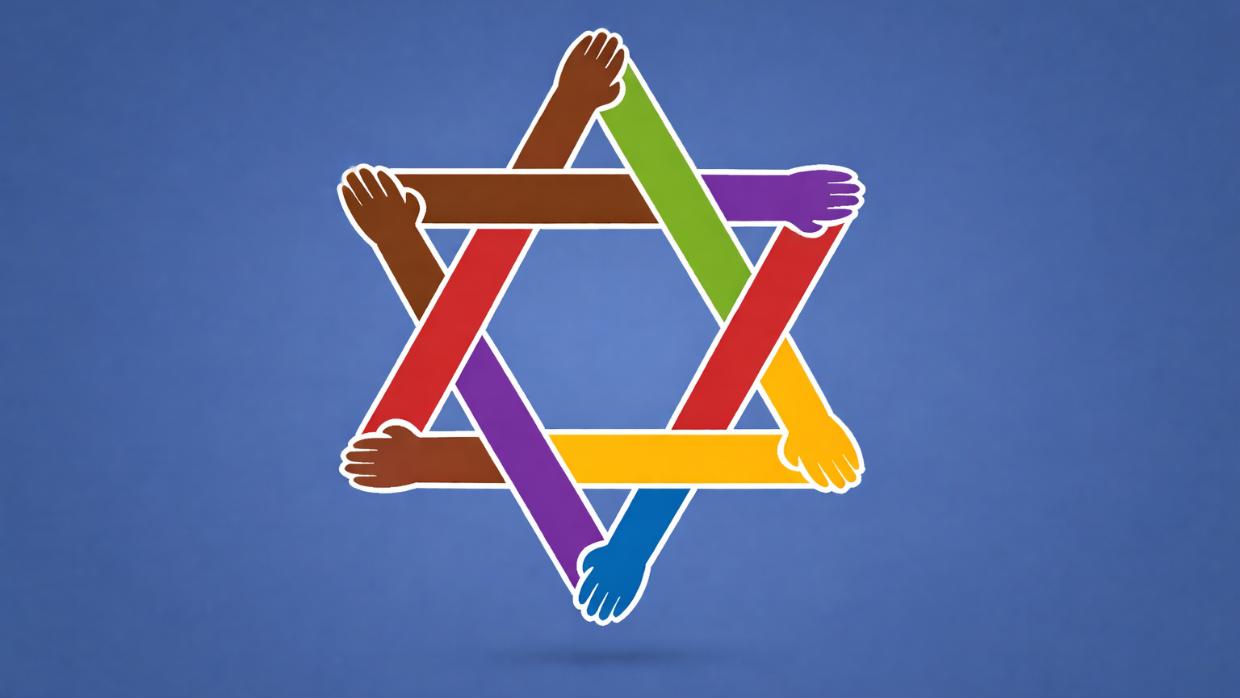
Five ways differences fuel productivity, creativity and strength, according to science and Jewish wisdom.
Science and Judaism point to the same surprising truth: you don’t thrive despite your differences. You thrive because of them.
Those very differences that frustrate you at work, at home, in your community are actually the source of your greatest strength, innovation, creativity, and productivity.
Here are five ways diversity becomes your greatest advantage and how to harness it.
Sameness feels efficient, but research shows the opposite. In one well-known study, groups made up of people who thought differently consistently outperformed groups of “high‑ability” individuals who all approached problems the same way.1 Different minds catch different things.
Effective teams thrive in the same way. The planner, the improviser, the emotional compass, the practical realist – each one sees what the others miss. Productivity grows when you stop trying to make everyone operate the same way and start valuing the strengths each person brings.
How to facilitate it: Give different people the chance to lead at different times. Rotating leadership taps into a wider range of strengths and ensures the group benefits from multiple perspectives, not just one dominant style.
Creativity comes from contrast and candor, not the echo chamber. Pixar’s famous “Braintrust” meetings where directors, animators, writers, and editors with wildly different styles challenge each other produced some of the most original films of our time.
When people from different fields work together, they generate more innovative ideas than teams of specialists who all think alike.2
Jewish tradition thrives on this. The Talmud is built on disagreement, debate, and the interplay of opposing views.
How to inspire it: Encourage unconventional, unpolished ideas without judgment. When people know their contributions won’t be dismissed or evaluated too quickly, they take more creative risks and innovation expands.
Groupthink may feel harmonious, but it’s dangerous. After the Challenger disaster, investigators found that the decision-making group was too similar. NASA engineers who raised concerns were side-lined and the team fell into a pattern of agreeing too quickly, leading to poor judgment.3
Differences disrupt that. It forces you to pause, reconsider, and ask better questions. It protects you from your own certainty, allowing you to analyze problems more critically and consider multiple solutions.
Judaism has its own stories of groupthink. When the people feared Moses wouldn’t return from the top of Mount Sinai, the crowd quickly rallied around the idea of making a Golden Calf. It was a moment when collective panic drowned out individual judgment, showing how quickly a group can move in the wrong direction when no one stops to question the momentum.
How to reduce it: Assign a rotating “dissent chair,” someone whose job is to question assumptions and encourage divergent thinking.
True collaboration is about each person contributing their different skills for the same purpose.
Biologists see this in nature: ant colonies and bee hives thrive because members have different roles – scouts, foragers, defenders. When everyone tries to do the same job, the colony collapses.
Human teams work the same way. In hospitals, surgical teams with people who have different training, roles, and levels of experience communicate more effectively and catch more potential errors than those who are the same.4
Jewish tradition reflects this idea in the leadership of the Jewish people in the desert. Moses served as the teacher and lawgiver, Aaron as the High Priest and spiritual leader who brought peace between people, and Miriam as the one who sustained the nation’s spirit and hope. Each had a completely different role and strength. It was the combination of distinct contributions working toward the same mission that allowed the nation to grow and survive.
How to strengthen it: Clarify each person’s role and name the unique value they bring. Collaboration improves when people understand how their differences fit together toward a shared goal.
When a group of diverse people come together, they can create something none of them could have achieved alone.
We see this in social movements like the Civil Rights Movement, where organizers, clergy, students, lawyers, and everyday citizens each played different roles, together shifting the moral direction of a nation.
We see it in scientific breakthroughs like the Human Genome Project, where biologists, computer scientists, statisticians, and lab teams across multiple countries mapped the human genome years ahead of schedule.
The Mishkan/Tabernacle described in the Torah was built the same way. Artisans, metalworkers, weavers, donors, and leaders each offering something unique, together creating a sacred space no single person could have built alone.
How to drive it: Anchor the group with a clear, shared purpose. When everyone knows the “why,” diverse contributions can naturally align and amplify one another.
Embracing diversity doesn’t just add our strengths together; it multiplies them.













If any of you think you know more about diversity and all of its ramifications than the great Thomas Sowell, who has studied it intimately for decades, then I must disagree with you. I think he knows more about it than you do.
I don't know anything about "the great Thomas Sowell" other than your citation of his words: "The mystical benefits of 'diversity' are non-existent..."
He puts "diversity" in quotation marks, indicating that he is using the word in a specific context. I doubt that he would agree with the removal of the quotation marks and make such a blanket statement about diversity in general. Unfortunately, without his context, it is hard to know how his claim applies to the article, since he is clearly talking about diversity in a very different sense.
He may be talking about some unsuccessful attempts at social engineering, like some DEI initiatives, but that doesn't alter the fact that there are such issues that can be successfully addressed.
If you don't know anything about Thomas Sowell, who is probably the greatest American economist/sociologist/thinker alive today, then you are terribly uninformed. If you read any of his many fine books on economics, race, or society in general (which I highly recommend that you do), you will see that he would, indeed, make a blanket statement about the benefits of diversity being non-existent.
I have no idea how you would define "diversity" so that the statement "the benefits of diversity are non-existent" would be accurate. That would be an absurd thing to say. Diversity is an essential characteristic of life.
However, I notice that he inserts the word "mystical". Perhaps, he is correct that it is "mystical" benefits that are non-existent, whatever those might be (they don't exist, he says), but there are non-mystical benefits that matter.
You'll have to do better if you want to make a case that he is saying something relevant to this article.
Come on, you'll have to do better than that. This article isn't about biological diversity or geologic diversity or climate diversity, and you know it. It is about institutional diversity, and that is what Sowell is talking about. It is completely relevant to this article. Don't try to twist it to make Sowell's comment irrelevant. And I might add that if you don't know who Thomas Sowell is, you shouldn't even be talking about subjects like this.
"That is what Sowell is talking about"? Isn't it you who is twisting the words? Sowell is talking about "mystical benefits", whatever those are, and (quote)diversity(quote). You are changing his words. If what you say is correct, then why wouldn't he write in clear language: "the benefits of institutional diversity are non-existent"? It is obvious to me why he wouldn't write that.
Is your comment with the five quotations simply a copy and paste from a political site? If you aren't able to elaborate on these quotations, then it is you who shouldn't be talking about this subject.
He was already talking about institutional diversity when he made the statement. If you want to know what "mystical" means, look it up. "Mysticism" means a vague or obscure thinking or belief. That is what the supposed "benefits" of diversity are.
Very few people write more clearly than Thomas Sowell. If you knew anything about him, you would know that. Try it some time.
The quotes I posted are not from "some political site." I actually found them in my reading. If they were from a political site, would that make them less true?
What elaboration is needed for these quotes? "You can have meritocracy in an institution or you can have diversity. You cannot have both." Heather MacDonald. (I don't suppose you have heard of her either.) What elaboration is needed on that statement?
No, Terry, I'm not an American and I don't live inside America's anti-DEI echo chamber so I don't know who Heather Mac Donald is, either. I would simply ask for evidence that supports her assertion. If by "meritocracy", she means the best choice for a role, that choice would depend on the role to be filled; if for a creative role, then someone with a fresh perspective which complements the existing team. That would contradict the claim that "you cannot have both".
By your definition (bizarre, given the nature of this website), "mystical" does not pertain to the article, which is neither vague nor obscure. Did you read beyond the title?
Dear ADS, if you're not an American, then buzz off and don't annoy us with your comments about DEI as practiced in America. You obviously know nothing about it.
The great Thomas Sowell must have had you in mind when he said: "It is usually futile to try to talk facts and analysis to people who are enjoying a sense of moral superiority in their ignorance." (Is that "clear" enough for you, or do you need an explanation of that, too?)
So long, ADS. Have a nice life and enjoy your moral superiority.
Whoa... Have you read the article, yet? Who was it who injected DEI in America into this conversation? "Buzz off" is exactly what we have been trying to tell you! No one cares about your Pavlovian response to the word "diversity".
And, I stand by position that a great writer would not use a word like "mystical" unless it had meaning in its context. It seems that his readers may not know what the word actually means and he is using it purposely for misdirection. It is rhetorical, not precise, and it's disappointing to see him resorting to political rhetoric like that.
I try to distinguish political rhetoric from facts and analysis. You should, too.
I do not want to get into a flaming war. Unfortunately, one can see that the reactions/responses to the article truly reflect the divisions of our country. Sadly, this is all I feel I can say without receiving negative and/or insulting comments from some of those who posted their thoughts.
It truly saddens me to see how a word can get weaponized in such a malicious way. Take a meaningful idea and load it with so much negativity that we can't even have the most basic conversation about it any more.
If nothing else, can't we at least acknowledge that life's diversity is one of the most profoundly beautiful aspects of Creation?
So true, ADS. How boring would life be without the diversity that HaShem created.
"You can have meritocracy in an institution or you can diversity. You cannot have both." Heather MacDonald, author of "When Race Trumps Merit"
"There's no knowledge required to be a diversity bureaucrat. The only thing necessary is you're willing to prosecute the race hustle." Id.
"The mystical benefits of 'diversity' are non-existent, however politically correct it is to proclaim such benefits." Thomas Sowell
"At its heart, wokeness is divisive, exclusionary, and hateful. It basically gives mean people a reason, it gives them a shield to be mean and cruel, armored in false virtue." Elon Musk
"Conservatives shake their heads in sad wonder at the idiocies of liberals." David Mamet, "Recessional"
These people are talking about a different kind of diversity - the kind where externals drive the hiring. In practice, all the people hired have to think alike, they only must LOOK different.
The article speaks of the diversity that comes naturally with a meritocracy - people with different skills and outlooks, all of value in their own fields, coming together to work on a specific project which has many aspects and requires lots of different kinds of input.
It all comes down to how we measure "merit", doesn't it?
If merit is measured using tests, then the tests will naturally select individuals whose skills and outlooks best match the tests and won't naturally select different skills and outlooks.
However, what usually happens in the workplace is that merit is measured by interviewers who naturally select individuals whose skills and outlooks best match themselves, also leading to little diversity.
In other words, external drivers are often needed to disrupt our natural tendencies to maintain the status quo.
Please don't presume that positive change just "comes naturally".
Diversity of thought and ideas is the key. Superficial diversity of incidental traits such as skin color and gender is not important.
But some thoughts and ideas are simply incompatible with others. That kind of diversity results the Big Tent Problem in which enforcement of diversity of thought and ideas causes inclusion of people whose thoughts and ideas drive them to undermine the very same Big Tent that admitted them in the first place.
Respectfully, it’s impossible to have true diversity of ideas without diverse persons. A man doesn’t know what it’s like to be a woman, and vice versa. Many people who are not antisemites nonetheless don’t understand what it’s like to be the subject of antisemitic remarks. Where you stand often depends on where you sit.
Everything in this article is true. Unfortunately, in the UK (where we live) our government is using the term "diversity" to justify importing literally millions of people from Third World countries, many of whom turn out to be rabidly antisemitic and who have already carried out terror attacks against synagogues, festivals, and so on. Diversity can be good, but it depends what it means and the context it's being used in.
crawl out of your world cavern. You believe what you believe in order to manage your own existential angst, not to help anyone. You project an emotion-driven a priori conclusion and invent blather to support it. Your beliefs hurt people and the countries they live in.