




 What Two Hebrew Words Reveal About Israeli Democracy
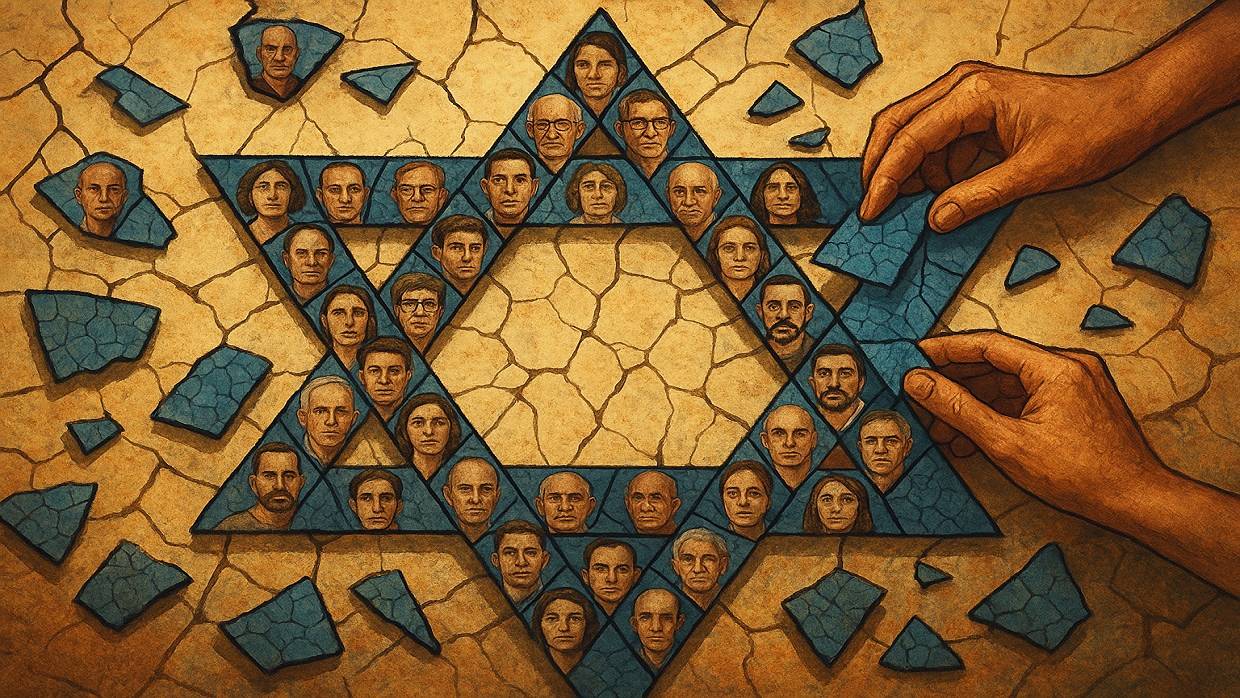






This fragile ceasefire carries our greatest hope—that every hostage will return, and our people will know peace.
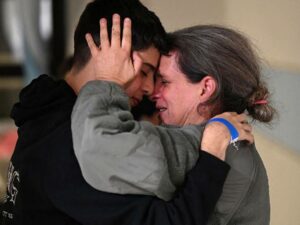
Sukkot – the festival of joy – has been infused with an almost unimaginable measure of joy. The signing of a ceasefire and the long-awaited news that the remaining hostages are finally being released and returning home have shaken us to the core. Our incessant prayers are being answered. We are overwhelmed by a storm of emotions: elation that twenty living hostages are coming back to their families, grief that twenty-eight are no longer alive, and the painful uncertainty of whether all the bodies will ever be found. And now, at last, a fragile but real hope flickers—that the war will soon end and our soldiers will come home.
At this charged moment, when the Jewish People are riven with painful divisions and rifts, let us pause and turn our attention to the few truths that transcend politics—truths that every Jew, left and right, can agree upon.
In a world that so quickly turned against Israel after the October 7th massacre—when many Jews suddenly discovered who their true friends really are—we must never lose sight of the most basic truth: Hamas alone bears responsibility for this carnage. As Hillary Clinton pointed out, there was a ceasefire on October 6th. It was Hamas that shattered it on October 7th, invading southern Israel, murdering 1,200 innocent civilians in the single worst atrocity against Jews since the Holocaust. Israel is not the aggressor in this war. This conflict could have ended instantly—if only Hamas had released the hostages and laid down its weapons.
Israeli Jews are not the only ones breathing a sigh of relief at the ceasefire; so are Palestinian Arabs—especially those in Gaza, who have long been reduced to little more than human shields for a ruthless regime that has shown utter disregard for their welfare. Many Gazans now dare to hope that life can begin again, free from the terror and torment of Hamas’ iron grip.
And as for the morally inverted accusations of Israel committing “genocide,” we must set the record straight. French philosopher Bernard-Henri Lévy put it best:
A genocidal army doesn’t take two years to win a war in a territory the size of Las Vegas. A genocidal army doesn’t send text warnings before firing, or open safe corridors for civilians fleeing strikes. A genocidal army wouldn’t evacuate, every month, hundreds of Palestinian children with rare diseases or cancer, flying them to hospitals in Abu Dhabi as part of a medical airlift set up right after October 7. To speak of genocide in Gaza is an offense to common sense, a maneuver to demonize Israel, and an insult to the true victims of genocides past and present.
Whatever one may think of Donald Trump, the ceasefire and release of the hostages would not have been possible without his courage, resolve, and relentless determination. For this, we owe him an enormous debt of gratitude. Against all odds, he managed to rally a coalition of disparate Arab nations and forge a united front strong enough to pressure Hamas into laying down its arms and releasing the hostages in one decisive move—even as many details of the next stages remain uncertain.
His vision has opened the door to the possibility of peace in the Middle East. With God’s continued help, we pray that vision will come to fruition and Trump’s candidacy for the Nobel Peace Prize next year will be undeniable.
With the war hopefully behind us and the hostages returning home, it is time for the Jewish People—both in Israel and across the Diaspora—to turn our hearts toward healing the painful rifts that divide us. This cannot be left to President Trump or Prime Minister Netanyahu; it is not a task for politicians. It is a responsibility that falls on each and every Jew. We must deepen our awareness that the entire Jewish people, even the ones you vehemently disagree with, are all one family. That recognition of our underlying unity has been the bedrock of Jewish survival for millennia.
As for those Jews who have turned their backs on Israel—some even siding with Hamas and publicly severing ties with the Jewish state—the instinct may be to write them off. But family is not abandoned. Many of these Jews are sincere, yet lack the historical grounding to grasp the mission and destiny of our people.
Our task is not to reject them, but to reach out: to engage in respectful dialogue, to patiently fill the gaps in their education, and to kindle within them a renewed sense of connection. It will not be easy. But it is vital—and it is our responsibility.
The return of our brothers and sisters, the chance for Palestinians to rebuild free of tyranny, the possibility of peace, and the call to heal our own divisions—all point toward a future that can be brighter than our past. May we seize this moment with gratitude, courage, and faith, and may God bless our people with unity, peace, and enduring strength.