







 What Repentance Really Means in Judaism




8 min read
12 min read
12 min read
13 min read




Shulamit Cohen-Kishik was a wife, mother of seven, and an Israeli spy.
In an interview conducted a few years before her passing, Shulamit Cohen-Kishik and her daughter, Carmela Assel, tell a story of unfathomable courage
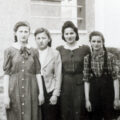
“My mother, Shulamit, née Cohen-Erazi, was born in 1917 in Buenos Aires, Argentina,” her daughter Carmela began. “In 1924, when my mother was just seven years old, the family business fell into hard times, prompting them to immigrate to the Holy Land. They settled on Alfandari Street, in the Mekor Baruch neighborhood of Jerusalem.
“At first, their financial situation was manageable. My mother’s father traveled for long periods to South America to help out in the family business, and they lived off the income from that. But after a number of years, the business deteriorated dramatically, and they really struggled.
"At that point, a marriage proposal came: my father, Yosef Cohen-Kishik, an impressive young man from a respected and established family in Lebanon, had come to Israel to look for a bride. All his brothers had married women from Lebanon, but he insisted on marrying a girl from the Holy City. My parents married in 1936 and went to live in Beirut, the capital of Lebanon.”
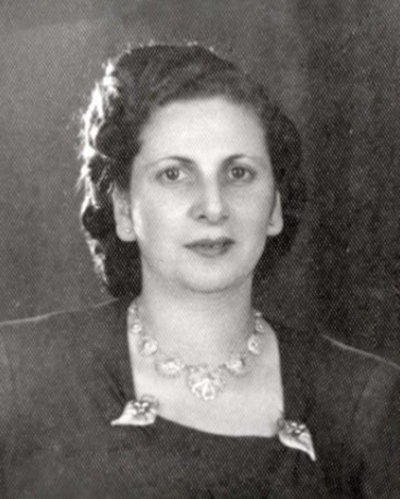
Over the next decade, Shulamit, a powerhouse, integrated into the upper circles of the Jewish community in Lebanon. She also made friends with many Christian Phalangist women, the ethnic group who dominated politics at the time. She built close ties with key figures in the Lebanese government, moving in and out of their inner circles. She also bore seven children: Yaffa, Berti (Avraham), Meir, Arlette, Itzhak, Carmela, and David.
Shulamit, a powerhouse, built close ties with key figures in the Lebanese government.
“My mother was a model housewife,” Carmela recalled with deep admiration.
“I remember her knitting, embroidering, sewing, cooking, and baking."
Then came the turning point that changed Shulamit's life.
“At one private social event she attended,” said Carmela, “my mother overheard a conversation between several Arab figures discussing attacking the soon-to-be-established Jewish State.
“My mother was horrified by what she heard and understood she had to get this information to the Jews in Palestine. But mail delivery between the two countries had stopped and the borders were sealed.
“My mother, ever creative, composed a message in invisible ink and managed to have it sent across the border to the Haganah headquarters in Metula in the hope that the message she'd written would be deciphered."
A few days later, there was a knock at the door.
A Lebanese citizen, who was actually an undercover agent working for Shai, the pre-state intelligence service, handed her a reply letter.
“They thanked her for the crucial information,” said Carmela, “and in the same breath, asked her to carry out an urgent mission. My mother felt a new energy surging through her veins and so, in 1947, even before the State of Israel was established, my mother began her journey in the intelligence services as a sharp, skilled, charismatic yet cautious spy, with connections in the highest levels of the Lebanese government."
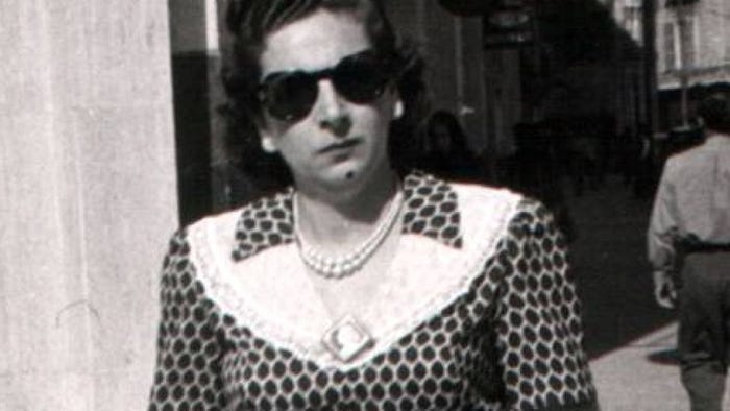 Shulamit in Beirut
For 14 years, Shulamit fulfilled a role of immense value, transmitting vital and highly sensitive political and military intelligence to the Israeli intelligence services. She also ran her household with a firm hand and contributed to the Jewish community in Beirut through a wide range of initiatives, from training teachers to teach Hebrew to printing Hebrew grammar books to organizing self-defense training to protect the Jewish quarter.
As a cover for her espionage activities — which carried the death penalty by hanging or firing squad — Shulamit engaged in the smuggling of Jews from Arab countries into the newly established State. This way, she helped Jews whose safety in Arab countries had become precarious since the establishment of the State, and, if caught, she could fall back on the less severe charge of smuggling.
For 14 years, Shulamit transmitted vital and highly sensitive political and military intelligence to the Israeli intelligence services.
Through this dual role, Shulamit saved thousands of Jewish refugees who had fled to Lebanon from places like Syria and Iraq, and smuggled them into Israel by sea, land, and air.
Whenever she secretly traveled to meet with intelligence officials in Tel Aviv and plan operations, Shulamit insisted on passing through Tiberias to pray at the gravesite of Rabbi Meir Baal Haneis. Carmela recalls her mother saying, “Every time I went to Israel before a mission, it was important to me to ask God that the merit of Rabbi Meir Baal Haneis protect me."
That’s how her mother explained it to the contact who waited for her in Metula after she crossed the border. Shulamit would bring along a tzedakah box dedicated to Rabbi Meir and place the money she'd collected inside the gravesite, while murmuring, “Eloka d’Rebbe Meir, aneini – May the God of Rabbi Meir answer me.”
“My father, who sold fabric, supported my mother every step of the way. He was proud of the holy work she was doing — saving Jewish lives," says Carmela. He helped her raise funds and even invested significant amounts of his own money to finance her vast network of operations — despite the fact that it was often unclear who would reimburse those substantial sums. And every time she had to fly to Turkey, he provided her with a cover story, claiming she was traveling to deliver a catalog from his factory.”
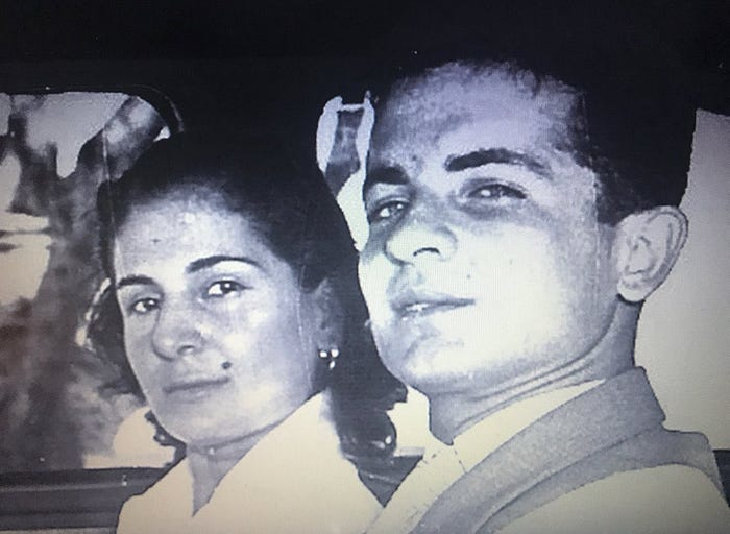 Shulanit Kishik-Cohen with a Lebanese intelligence agent
Any Jew who came to Lebanon from a neighboring Arab country to try to smuggle themselves into Israel knew where to turn: Shulamit Cohen was the one who contacted the smugglers, coordinated the timing and transfer of funds to them, and accompanied the frightened families nearly all the way to the meeting points.
“The Jewish refugees who came to us couldn’t stay long in Lebanon,” Shulamit recalled. “Many had fled their home countries in secret and were considered illegal residents in Beirut. Had the authorities discovered them, they would have been sent back to hostile countries of origin, where they’d face charges of border smuggling.
“I had to act quickly and discreetly, all while raising my children. For me, all roads led to Israel. I'd send the families through Tyre or Sidon to Rosh HaNikra, or through southern routes to Metula — depending on the situation and intelligence about the border patrols at the time.
I barely slept at night, yet had to function normally during the day.
“The moment I would finally breathe a sigh of relief that one group had arrived safely, I’d get word that another group had just shown up and couldn’t be abandoned. Once again, I had to organize trucks, coordinate with the smugglers, calm the frightened women and children, support them emotionally and physically until they crossed the border, and give them detailed instructions on how to behave. Some operations lasted for weeks on end, during which I barely slept at night, yet had to function normally during the day.
“After the 1948 War of Independence, I tried to encourage the Jewish community in Lebanon to immigrate to the Holy Land. My hope was that even wealthy Jews in Beirut would at least send their children to safety in Israel. But they flatly refused, and sarcastically suggested that I should send my own children first, and only then come to them with such proposals. I had enough courage to take them at their word, and so, in 1949, a year after the State of Israel was established, when my eldest son was only eleven and his brother nine, I parted from them in tears and smuggled them into Israel via Metula, determined that they would live in the Land of Israel, hoping we’d reunite there one day.”
In the following decade, Shulamit continued her espionage activities with great intensity, alongside her smuggling operations.
In 1958, a civil war broke out in Lebanon between the Muslims and Christians. The situation in Beirut became explosive. “After long deliberation, I decided to send my daughter Yaffa, then 20 years old, to join her brothers in Israel," says Shulamit. "We were left with four children still in Beirut, and my work became more crucial than ever."
“One time, dozens of young children were under my mother’s care, as she was in the process of having them smuggled into Israel via Metula. The children were ready to go, when my mother spotted agents from the Russian secret police, who were working in collaboration with Syrian and Lebanese security services, standing next to the bus that was supposed to collect them," recounted Carmela.
"My mother instructed the children to wait, and ran quickly to the nearby grocery store. She asked the startled shopkeeper to give her every candle he had — on the shelves and in the storage room. Then she returned to the children, equipped with candles and matches. 'Children,' she said, 'We’re now practicing for the upcoming holiday of Hanukkah, and we’re going to march through the streets singing Hanukkah songs!'
A spontaneous Hanukkah parade unfolded before the bewildered eyes of the Russian secret police, led by my brave mother. The secret police lost interest, assuming she was just a harmless woman.
"The confused children didn’t ask too many questions. And so, a spontaneous Hanukkah parade unfolded before the bewildered eyes of the Russian secret police, with dozens of children marching in a long, winding line though the streets of the Jewish quarter singing Hanukkah songs, led by my brave mother. Eventually, the secret police lost interest, assuming she was just a harmless woman taking her students on a festive outing in honor of a Jewish holiday.
"The moment the secret police left the area, my mother sprang into action, quickly ushering the children onto the buses, which then raced toward southern Lebanon, toward the border to Metula.
"My mother was an absolute genius.”
Throughout the later years of Shulamit’s espionage activity, she was under constant surveillance. She was arrested and interrogated several times, but the act she put on was flawless. She was a master of deception, and the authorities were never able to prove her involvement in anything, and she was always released for lack of evidence.
But one time, things ended differently.
It happened in 1961.
Shulamit had once again gone to meet her handlers in Israel. After completing her mission there, she traveled to Turkey, intending to continue from there to Beirut. Readying to board her connecting flight to Lebanon, she discovered a critical mistake. Her passport had mistakenly been stamped with an Israeli stamp when she'd left Israel. This incriminating stamp meant she couldn't present the passport upon entering Lebanon.
She was stranded at the Istanbul airport.
As the night deepened, the terminal — far less busy than airports today —emptied out. Only one woman remained, alone and cornered. She couldn’t return to Israel, couldn’t stay in Turkey, and couldn’t go back to Beirut. Through extraordinary ingenuity, which involved details that still can't be published to this day, Shulamit managed to overcome the crisis. After two long months — during which she temporarily stayed in Rome — she succeeded in reaching Beirut.
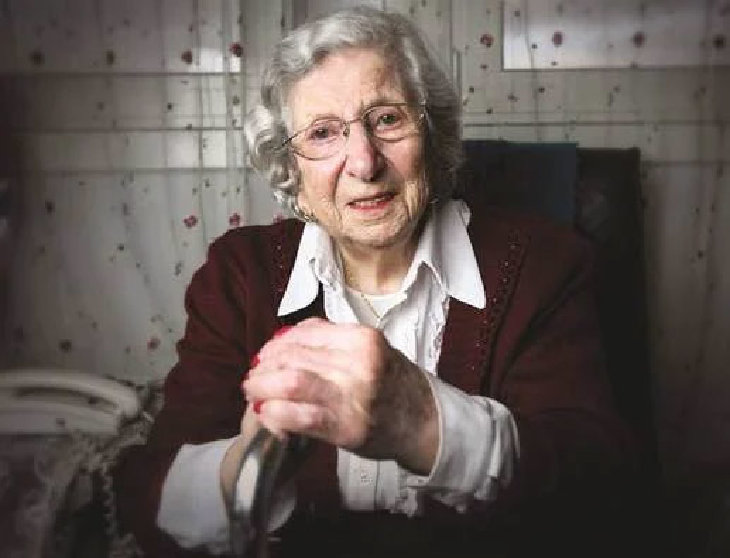 Shulamit in her later years
But the moment she stepped off the plane, everything went wrong. The authorities had found conclusive proof of her espionage activities and a massive force of military troops immediately surrounded her, leaving no room to maneuver.
The game was over, and in its place began a harrowing ordeal.
“I spent six years in an infamous Lebanese prison,” Shulamit recounted. “I was the only Jewish woman among hundreds of Lebanese prisoners and Syrian wardens, all of them deeply antisemitic. Most of the time, I was held in solitary confinement, and in the beginning, I was taken out for interrogations from morning till night — interrogations that were torture for both body and soul."
I spent six years in an infamous Lebanese prison… these sadists tortured me by pulling out fingernails, tearing out hair, breaking teeth, electrocution, and other agonies I’d prefer to spare you from hearing about.
“I want you to be able to sleep at night,” she said to me, “so I won’t tell you everything. I’ll only mention that these sadists tortured me by pulling out fingernails, tearing out hair, breaking teeth, electrocution, and other agonies I’d prefer to spare you from hearing about.”
“The famous Israeli spy in Damascus, Eli Cohen, was caught and hanged while I was in prison. The guards used to mock me: ‘He’s Cohen, and you’re Cohen. He was hanged, now it’s your turn.’"
“Years later,” Carmela said, “Mother told us that when Eli Cohen was captured — and since he shared her last name — she was subjected to a horrific wave of torture, in an effort to see if there was a connection between them. During that torture, Mother’s eye was injured, and she lost vision in it."
“I knew the Book of Psalms by heart," continued Shulamit, "and the words of King David were constantly on my lips. I survived only thanks to Psalms. I also fasted every Monday and Thursday, and I spoke to the Creator in my own words. I'd say to Him: ‘Master of the world, I believe only in You. Only You will get me out of here — for the sake of my children. After all, I gave my life for Your children.’
Knowing that I'd been captured because I saved thousands of Jews was like morphine that slightly dulled the unbearable torment my body endured.
“During those years, I missed the bar mitzvahs of three out of my four sons. But not for a moment did I lose hope. I prayed constantly, and above all, I believed that the moment the Creator would choose to pull me out of the valley of death, it would happen suddenly and swiftly. I truly believed that whatever happened to me would be what God Himself decided. He determines my fate, not human judges of flesh and blood. I lifted my eyes to Him in hope that He would have mercy on me.”
Beyond the prayers that gave her the immense strength to bear her suffering, Shulamit constantly sharpened her sense of purpose. “I asked myself, Why am I here? And the answer gave me new strength. Knowing that I'd been captured because I saved thousands of Jews was like morphine that slightly dulled the unbearable torment my body endured.”
“I hoped my children would hold on, that there would be something for me to come back to."
Shulamit’s husband was also arrested — on the accusation that he'd known about his wife’s activity — but he was acquitted after an appeal.
“Suddenly, overnight, we became four orphaned children,” recalled Carmela.
“Our father’s family in Lebanon wanted to split us up, but our parents, from afar, gave strict instructions: No one leaves the house, and no one takes the children. From a distance, they helped us, and the four of us grew up in our home in Lebanon, while our three older siblings were in Israel. My brother Isaac left his studies and took over our father's store. My older sister, who was nineteen, dropped out of school and became a homemaker. I was thirteen, and my younger brother was nine."
"At first, the youngest didn't know anything,” Shulamit said. “He thought I was recovering from an illness in the hospital — until someone in his class accidentally let slip the bitter truth.”
"It was hard, but we were strong," said Carmela. "The faith my mother lived by throughout all her activity, and the faith of my father, stuck to us like glue.
"One of the more painful situations was that the community kept their distance from us. Anyone associated with us suddenly felt threatened by the authorities and cut off contact.”
Shulamit was originally sentenced to death. After an appeal, she was given a 20-year sentence.
But after six years, her sojourn in prison came to an end with surprising suddenness.
In 1967, following Israel’s victory in the Six-Day War, a prisoner exchange agreement was signed between Israel and Lebanon, and Shulamit was to be released as part of the deal.
She'd been languishing in a narrow cell, 14 years of her sentence to go, and within a few hours, under the protection of the Red Cross, her husband, she, and the four children who had remained in Lebanon, were extracted from Beirut and transferred to Israel via Cyprus.
“Upon arriving in Israel, I understood that I'd finally attain inner peace," Shulamit said.
“My mother has an exceptionally strong spirit," Carmela said at the time. "The State of Israel recognized her as a ‘redeemed captive,' which granted her a disability pension from the National Insurance Institute. As part of this, she was eligible for professional counseling sessions. She had every reason to break down, but she remained a lioness, refusing to succumb to the terrible memories."
A woman with such inner strength, who grits her teeth through torture and refuses to betray her comrades, is a woman who can recover from any hell and continue to grow in the face of all risks.
“Throughout her life, Mother continued to thank God — that the family was reunited, that she wasn’t hanged like Eli Cohen, and that she was freed from prison more quickly than Jonathan Pollard,” says Carmela.
In her later years, after contributing within Israel — through educational and volunteer work, including giving lectures for the security establishment and many other venues — Shulamit received numerous honors.
“She never chased fame,” Carmela emphasized. “Mother was humble and modest, never sought credit for anything — but fame chased after her. It was exactly her humility that earned her such respect.”
On the 25th of Iyar, May 21, 2017, Shulamit Cohen passed away peacefully at the age of 100. She left behind a large family — children, grandchildren, and great-grandchildren — among them the diplomat Yitzhak Levanon, who served as Israel’s ambassador to Egypt and passed away not long ago.
This article originally appeared in Mishpacha Magazine.









I read about her in my magazine recently, I consider her a heroine of Jews and Israel, and there should be more people like her
An amazing woman.may her legacy continue.
What a great story! Unfortunately, I never heard of Shulamit prior to reading this. A true heroine of Israel. Thank you so much for sharing the story of this remarkable woman.