







 Those Shameful Thoughts and What They Really Say about You


5 min read
6 min read
4 min read





Freedom from slavery is just the beginning. The Haggadah is also about what you do with freedom once you have it.
Benjamin Franklin wanted America’s national seal to show Moses at the Red Sea, stretching out his hand as Pharaoh’s army drowned behind the fleeing Israelites. His proposed motto was just as revealing: “Rebellion to tyrants is obedience to God.”
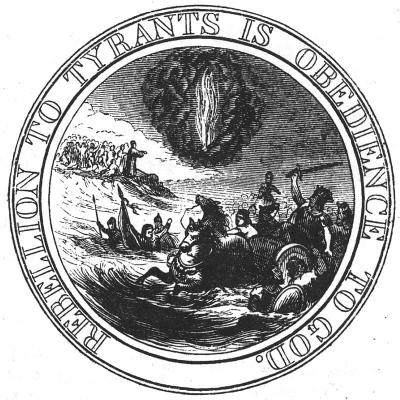 Thomas Jefferson and John Adams also turned to the Exodus story when imagining America’s identity. Their proposed seal featured the Israelites in the wilderness, guided by a pillar of fire and a cloud—an image of a people not merely escaping oppression, but being led toward law, purpose and nationhood.
The Founders understood that the Exodus was the great political story of the Bible: a slave people delivered from tyranny so it could become a nation under a higher law.
That same idea lies at the heart of Passover.
Passover is not simply about freedom; it’s about what freedom is for. The Israelites left Egypt to become a people, bound by covenant, disciplined by law and destined for a land of their own.
Every year, Jews are commanded to relive the Exodus, educating the next generation the founding story of the Jewish people.
And the story is not complete when Egypt is left behind.
The journey leads to Sinai, where Israel receives the Torah and its commandments. It then leads to the Land of Israel, where that Torah is meant to shape public life. That is why one of the Haggadah’s central passages, “My father was a wandering Aramean,” was originally recited by farmers bringing first fruits to the Temple in Jerusalem. In other words, the core text of the Seder points beyond liberation to restoration: a people settled in its land, cultivating it and giving thanks for national renewal.
The story is not finished until Jerusalem.
The Haggadah is unfinished by design. Redemption is not complete until Jewish life is restored in its own land, with Jerusalem rebuilt as the center of its national mission.
That is why the Seder ends with the words, “Next year in Jerusalem.” The Haggadah is unfinished by design. Redemption is not complete until Jewish life is restored in its own land, under its own institutions, with Jerusalem rebuilt as the center of its national mission.
The Exodus is not only about escaping Pharaoh. It is about ensuring that the Jewish people can survive, govern themselves and defend the national home that the story itself points toward. A freedom that cannot be defended is not yet secure. A Jerusalem that cannot protect its people is not yet fully rebuilt.
This matters right now. Israel isn't fighting Iran, Hezbollah, and their proxies for revenge. It's fighting for the right to exist without a missile pointed at every city, and to finally dismantle the network that has made Israel's destruction its entire reason for being.
The Jewish national project was never meant to end with bare survival. Restored in its land, Israel is meant to become a model society, joining freedom to justice, power to moral restraint and national life to sacred purpose.
No modern Jewish thinker expressed this idea more powerfully than Rabbi Abraham Isaac Kook, the first Ashkenazi chief rabbi of pre-state Israel and one of the most important religious Zionist thinkers of the 20th century. Rav Kook argued that the return of the Jewish people to their land was not just a political necessity or a refuge from persecution. It was a moral and spiritual turning point. In exile, Judaism survived, but only partially. In a Jewish state, he believed, the values of Torah could once again shape agriculture, language, law, culture and public life.
And that mission was not only for Jews. Rav Kook believed a restored Jewish commonwealth could elevate humanity by showing that national life itself can be guided by justice, holiness and human dignity.
That is the lesson the Founders saw in the Exodus story, and it is the lesson the Haggadah still teaches.
Passover is not just a holiday about being free. It is a celebration of what freedom is for: the transformation of slaves into citizens, of a multitude into a nation, and of suffering into a moral mission.
That mission still requires defending Jerusalem, from Pharaoh in one age, from Iran and Hezbollah in another, so that the story of redemption can continue toward its true end.












reminds me of another authors words: "sir, can I have more" - someone elses words are not enough, but endow us to find a personal status forward
GREAT!
Extremely great points made.Leaving slavery is great but what am I arriving to?Hashem lead with Fire and Clouds and His Abundance Of Instructions towards a Holy Spiritual Destination not just a geographical one.