Click here to buy
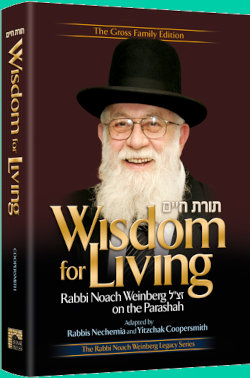
Wisdom for Living
Rabbi Noah Weinberg on the Parashah






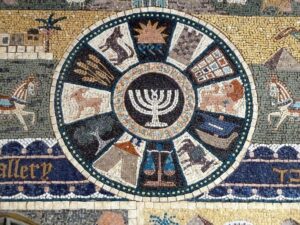
This week’s parashah describes the hierarchy of the Jewish people and the formation they traveled in. It identifies the nesi’im, the leaders of every tribe, and then describes how the twelve tribes are divided into four different camps, consisting of three tribes each, one of which led the camp. Finally, the sons of Levi are assigned their specific responsibilities vis-à-vis the Mishkan (Tabernacle) and its vessels, as well as their place of encampment around the Ohel Moed, the Tent of Meeting.
The Jewish People had been in the desert for over a year. Why did God wait until the Mishkan was constructed to delineate the structure and hierarchy of the Jewish People?
When appointing an individual or tribe to a position of leadership and prestige, you run the risk of diminishing those not chosen. Rav Yaakov Kamenetsky explains that God gave instructions regarding the hierarchy of the Jewish people only after the Mishkan was built, in order to mitigate this potential drawback (Sefer Emes L’Yaakov, Parashas Bamidbar). The Mishkan, which brought the palpable presence of God to the Jewish people, is the antidote to the jealousy and resentment that is often caused by organizational hierarchies.
The true measure of a person is not his position, power, or title, but rather the closeness to God he has attained through his own choices. You can be the king of Israel, the most powerful man in the nation, but still be completely evil, like Yeravam ben Nevat. Conversely, you can occupy the lowly position of wood chopper, like Hillel the Elder, and be counted among the greatest sages in Jewish history. Each person’s desire to grow in his or her relationship with Hashem is completely up to them and cannot be stymied by any other person or external factor. No position, hierarchy, or lack of power can impede your spiritual growth.
By creating the Mishkan first and placing it in the center of the Jewish People, Hashem was giving the Jewish People a tangible reminder not to be distracted by the positions and prestige of others, but to focus on what really counts – our relationship with Him. To that, we all have equal access. Once that realization is in place, Hashem can implement a hierarchy of positions without impinging on anyone’s sense of worth.
But the fact that we are all equally obligated to come close to God does not obviate the need for strong, clearly defined leadership that is accepted by all.
Throughout Jewish history, every generation had its leaders. Many were exceptional and led the Jewish people to great heights, while others caused enormous damage to the Jewish People by leading them astray. Leaders are not infallible, but they are necessary, and every generation must appoint a leader, despite the inherent risk that a person of low caliber will take the helm. As the Sefer HaChinuch explains (Mitzvah 71), the alternative – having no leader – would be far worse:
“It is impossible for a community of people to exist and function without making one among them the head over the others, to obey his order and carry out his decrees. For people are divided one from the other in their views, and no one will agree on any one view in order to do any one particular thing. The result will be a total standstill and the death of all activities. For this reason it is necessary to accept the view of one among them, be it good or bad, that they may successfully engage in building the world. Sometimes great benefit will result from his counsel, and sometimes the reverse; but all this is better than dissension, which causes a complete standstill.”
The formation of the Jewish people defined the place of each Jew as the nation travelled through the desert. No one was left guessing where they belonged.
Knowing your place is one of the 48 ways to acquire Torah (Avos 6:6). Doing so starts with understanding your personal makeup – your unique traits, talents, abilities, and knowledge, as well as your weaknesses and the limits of your knowledge. Having this requisite self-understanding helps you determine when it is appropriate for you to speak up or take action and when it is appropriate for you to remain silent or let others take the lead.
In order to respond to situations correctly, you need to know your place. Remaining on the sidelines when you are the most fitting person to take charge creates a leadership vacuum that damages the nation. On the other hand, rashly stepping into the fray when others who are more qualified have already taken responsibility is self-centered and can wreak havoc. Today, for instance, the internet has unleashed a wave of self-proclaimed experts and pundits offering unsound and wrongheaded advice on every topic imaginable, especially when it comes to Israel and the Jewish People.
The trait of recognizing your place is integral to Jewish leadership. When Moshe saw the Egyptian beating the Jewish worker, the Torah tells us that he “turned this way and that and saw that there was no man, so he struck down the Egyptian and hid him in the sand” (Shemos 2:12). The next day, Dasan and Aviram answered back to Moses, saying, “Who appointed you as a dignitary, a ruler, and a judge over us? Do you propose to murder me as you murdered the Egyptian?” Obviously, there were people watching when Moshe killed the Egyptian. What, then, does the verse mean when it says that he looked both ways and saw that there was no man?
The answer is that before Moses took action he first evaluated if there was anyone else willing and more capable to respond to the outrageous behavior of the Egyptian. Only after he determined that no one was more capable than he to take responsibility did he step in and act.
A true leader does not push himself into the limelight in order to gain attention and fame. He takes responsibility when there is a clear and definite need, but he is fully prepared to take the backseat when that is what the situation calls for. A leader who always needs to be at the forefront is driven by his ego, not by the cause. In contrast, a person who knows his place takes action when it is appropriate to do so and allows others to take the lead when that’s what’s best for the Jewish people.