






 For 44 years, Yehuda Katz’s Family Refused to Give Up Hope

9 min read
5 min read
7 min read




8 min read


A brief history of the Jewish instrumental music that originated in Central and Eastern Europe and is experiencing a revival.
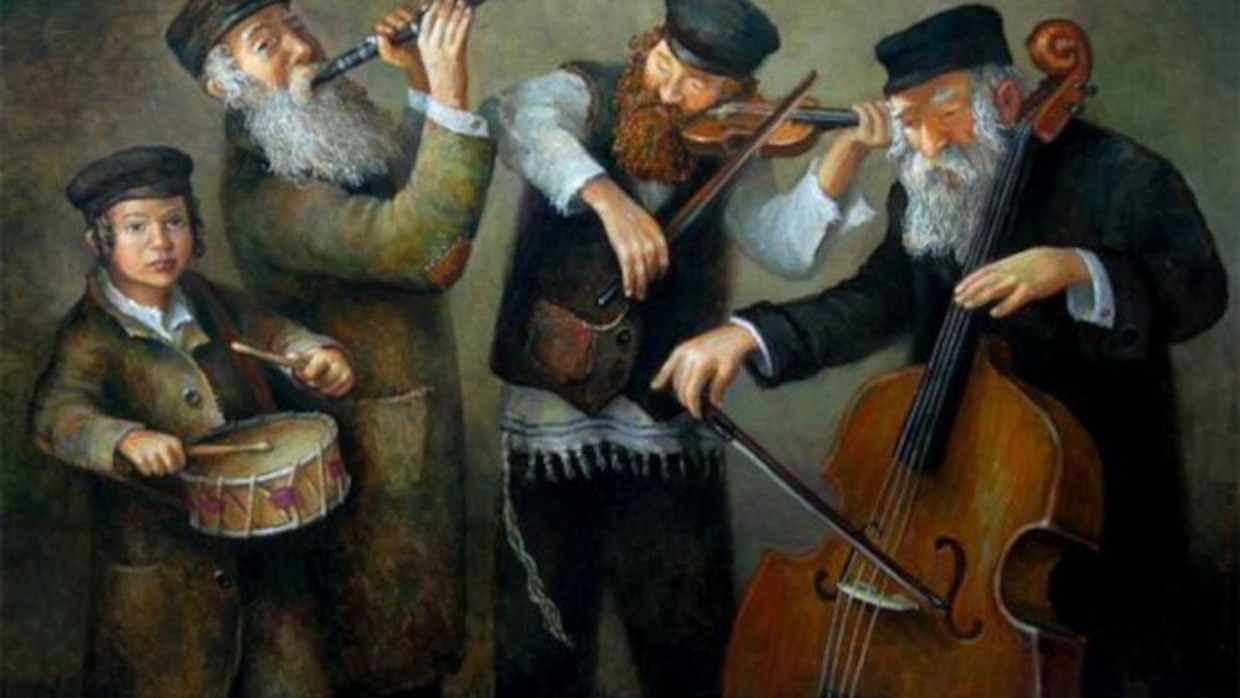
“Klezmer” is the name associated with the Jewish instrumental music that originated in Central and Eastern Europe. The instruments used, as well as the genre’s musical forms, vary from region to region, and draw heavily from local folk styles, in addition to the music of the Ottoman Empire.
That diversity is rooted in geography. Klezmer music, especially for Jews from the Russian Pale of Settlement—parts of modern-day Ukraine, Poland, Belarus, Lithuania, and Moldova—is a border music, as that region has changed hands multiple times between Ottoman and various European rulers. The result is that klezmer is a true synthesis of East and West, and incorporates a diverse array of elements and sounds.
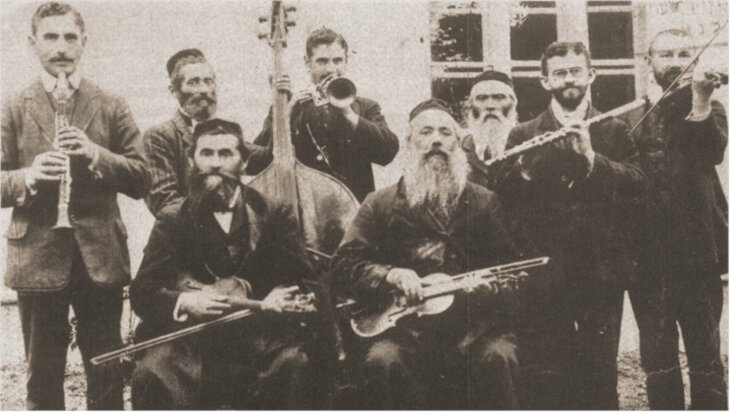 Jewish musicians of Rohatyn (west Ukraine)
Although klezmer music is a folk style and is usually performed at weddings and other celebrations, it borrows many musical devices from cantorial, or liturgical, music. Those affectations and embellishments are often what distinguish it from other local music, and give it its Jewish flavor.
In the twentieth century, klezmer made its way to Israel and the United States, although numerous factors, including changing fashions and trends in the new world, as well as the Holocaust’s impact on Eastern European Jewry, diminished its popularity and influence. Since the late 1970s, however, a klezmer revival has been underway, and today—in addition to being performed in a traditional style—klezmer is also synthesized with many other types of music including reggae, 1960s-era psych, punk, funk, heavy metal, and avant-garde jazz.
Klezmer, in general, is the term used to describe the music Eastern European Jewish musicians played at weddings and other celebrations (called simchas). The music was usually instrumental (without singing) and its main function was dancing. The term, klezmer, is a contraction of the Hebrew words, Klai (כלי), and Zemer (זמר)—meaning “musical instruments”—and klezmer musicians were called, “klezmorim.” However, for most of its history, the music itself was not called klezmer, it was simply referred to as Yiddish, or Jewish music. In the twentieth century, some ethnomusicologists began referring to the genre as “klezmer,” although the term wasn’t commonly used until the 1970s, when the klezmer revival was underway, and possibly with Andy Statman and Zev Feldman’s 1979 release, Jewish Klezmer Music.
Klezmer is a contraction of the Hebrew words, Klai (כלי), and Zemer (זמר)—meaning “musical instruments.”
Klezmer music originated in the villages, or shtetls, and ghettos of Eastern Europe in the early middle ages.1 It developed, and evolved to fit the changing needs of the Jewish community up until the Second World War, which marked the end of Eastern European Jewish life. Like most musical styles, klezmer didn’t develop in a vacuum, but incorporated the sounds and aesthetics of neighboring communities, and changed over the years as new instruments and approaches were introduced.
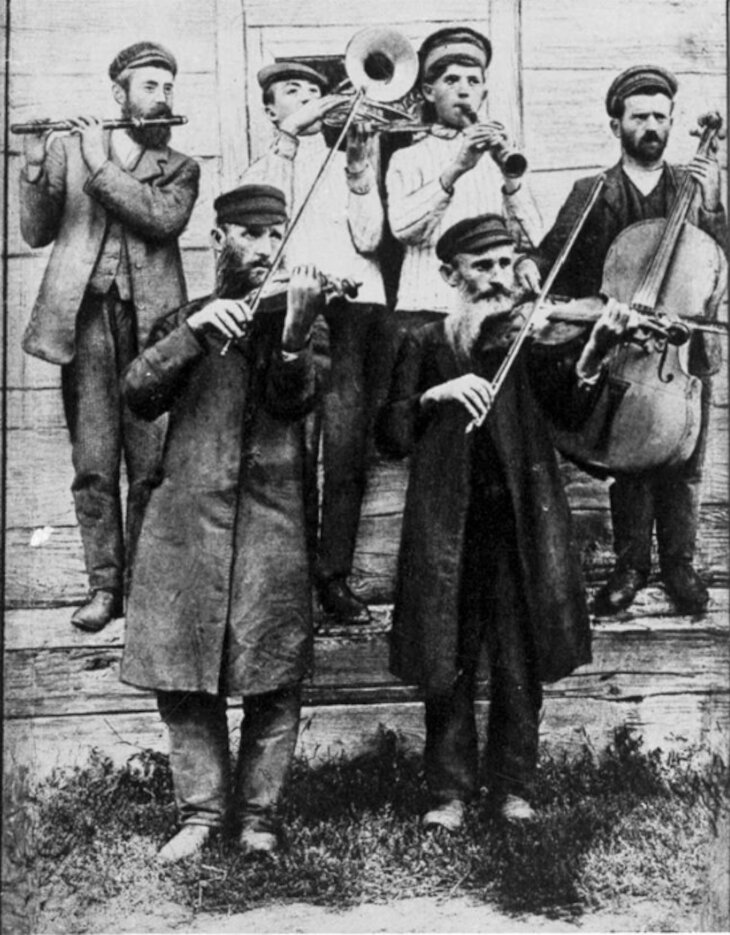 Klezmer musicians at a wedding, Ukraine, c. 1925
In general, the things that gave klezmer its “Jewish” quality had to do with tempo (for example, klezmer was often played at a slower gait than Gypsy, or Roma, music) and rhythmic feel—subtleties that most listeners intuitively appreciated—as well as various ornaments borrowed from the synagogue service, like a krechts (a type of sobbing sound), trills (rapid alternating notes), slides in and out of notes, and other emotive liturgical techniques.
For most of their history, the Jews of Eastern Europe were at the mercy of their non-Jewish neighbors, who often imposed restrictions on Jewish life. That included music, and for a time, music guilds, like those in the Carpathian Mountains, made it illegal for Jews to play loud music. As a result, Jewish musicians often played stringed instruments—like violins, and modified violas and cellos—as opposed to brass instruments and drums.2
Klezmer music comes from a large, diverse area, however, and instrumentation varies from region to region. Other common klezmer instruments include a type of flute; a tsimbl, or cimbalom, which is like a type of autoharp; the older, push-button version of the accordion; Turkish-style drums; among others. As times changed, and as Western influences made their way over to Eastern Europe, klezmer musicians began playing military band instruments as well.
The clarinet, which nowadays many consider a symbol of Jewish music, was not introduced until the mid-nineteenth century.
Klezmer music is a celebratory music, and that means dancing. A few famous klezmer dances include:
According to ethnomusicologist, Gordon Dale, “Klezmer usually refers to music that was largely played by itinerant musicians in Eastern Europe. They were playing at different simchas, which were happy occasions, like weddings, and the style of music they played was often for the occasion. Hasidic music, or the music of Hasidim, is broader … They have melodies that are sung around the shabbos table, and a tisch, where the rebbe [a Hasidic spiritual and community leader] is at the head of the table and creating these ecstatic singing occasions. And then, post-World War II, you have a whole genre of Hasidic popular music, and that creates its own thing. When we talk about the music of Hasidim, we’re talking about many different settings where the music can be performed.”4
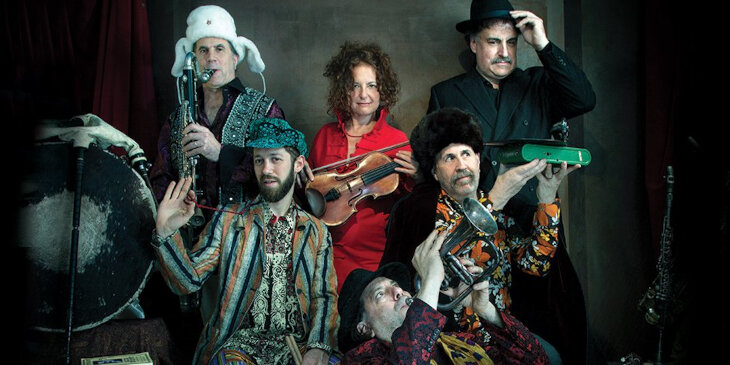 The Klezmatics
Hasidic music also includes nigunim, or songs without words. Some nigunim are slow and brooding, while others are raucous and lively. They're often repetitive and, depending on the situation, can be sung for a very long time. They serve as a practical spiritual tool, and the goal is for the singer to get lost in the singing, and to reach an ecstatic, and elevated, state of consciousness. Some nigunim are associated with specific Hasidic groups. Some rebbes also compose original nigunim, and some Hasidic groups even have designated composers. These nigunim are then sung at the rebbe's tisch, or table, at a farbrengen (joyous gathering), on the Sabbath, holidays, or other important gatherings.
Below is a small sample of different klezmer performers of diverse styles and backgrounds.
Dave Tarras was an important Jewish musician who emigrated from Ukraine to the United States in the early 1920s. He was a virtuoso clarinetist, and continued performing and recording despite klezmer's waning popularity following World War II. Many important klezmer musicians cite him as a primary influence.
The Klezmatics are a Grammy-winning klezmer band from New York City. They've released 11 albums, collaborated with Israeli violinist Itzhak Perlman, and continue to tour and record.5
Veretski Pass is a Bay Area trio that uses traditional instruments—violin, basy (a type of three-stringed cello), and button accordion—and is rooted in a more classic aesthetic, although they're not afraid to get adventurous or experimental.










One important name was left out of this article: Naftule Brandwein. He was my grandmother's first cousin, and was instrumental in not only bringing klezmer from Europe to America, but of making it a known entity in clubs throughout New York City and beyond. His recordings can still be found on Youtube.
Great article! Itzhak Perlman In the Fiddler's House was my first intro to KIezmer music.
Klezmer is continuing to grow into different areas. Joshua Dolgin is a Canadian rapper known as "Socalled" who composes Hip Hop Klezmer music. Also listen to David Krakauer.
I read an article that after the Holocaust the Gypsy musicians had the klezmer music of the Jews, before the war the Jewish musicians and Gypsy musicians played klezmer music at Jewish wedding, i think the story was in a supplement of the Jewish Press newspaper