







 The World Says You're a Jew. Now What?
Jewish Geography
Jewish Geography






For centuries, the Greek city of Thessaloniki served as a safe haven for Jews escaping the Inquisition. This vibrant Sephardic community was almost completely destroyed in the Holocaust.
Located on the sparkling blue Gulf of Thermai, the Greek city of Thessaloniki is famous for its busy commercial port. Before the Holocaust, it was also known for its thriving Jewish community, the largest in Greece. In fact, in the first half of the 20th century, the percentage of Jewish workers in the Port of Thessaloniki was so large that the port was effectively closed on Shabbat and Jewish holidays.
Jews have lived in Thessaloniki (also known as Salonika) for at least 2,000 years. Some claim that Jews were present at the city’s founding in 315 BCE. Not much information is preserved about the Jewish community of Thessaloniki in ancient times. Consistent records begin from the Middle Ages.
The 12th century traveler, Rabbi Benjamin of Tudela, visited Thessaloniki. He wrote in his diary1:
It is a very large city, with about 500 Jews, including the chief rabbi R. Samuel and his sons, who are scholars. He is appointed by the king as head of the Jews. There is also R. Sabbattai, his son-in-law, R. Elijah, and R. Michael. The Jews are oppressed, and live by silk-weaving.
In 1430, Thessaloniki was conquered by the Ottoman Empire. It remained under the Ottoman rule until 1912, when it became part of Greece.
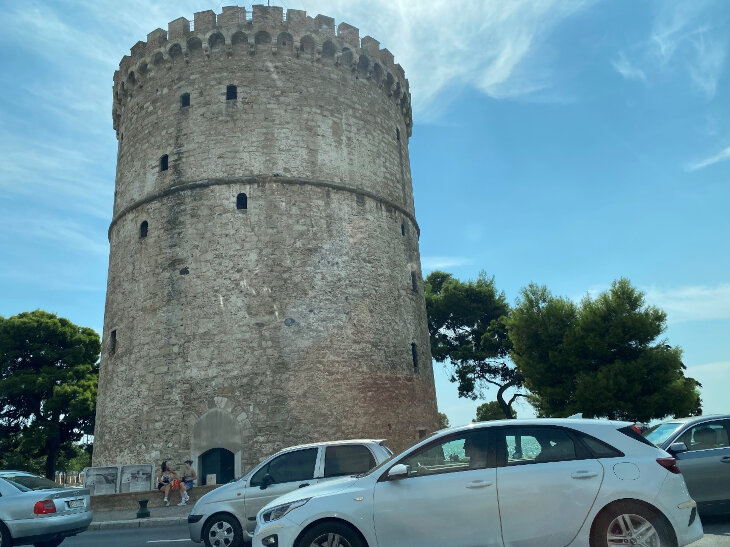 The White Tower of Thessalonik, built by the Ottoman conquerors in the 15th century CE.
The Jewish community of Thessaloniki grew significantly in the years following the expulsion from Spain in 1492. The Ottoman Empire welcomed the exiled Jews.
The Ottoman sultan at the time, Bayezid II, understood that his country could only benefit from the influx of the exiled Jews. He said to his courtiers2, “You venture to call Ferdinand a wise ruler – he who has impoverished his own country and enriched mine!”
Bayezid II sent his fleet to evacuate Jews from Spain and bring them to the Ottoman Empire3. He ordered all the governors of his provinces to give the Jews a friendly and welcome reception. Whoever refused to admit Jews or treated them harshly was threatened with capital punishment4.
Thessaloniki became a safe haven for Sephardic Jews. Between 15,000 to 20,000 Jews from Spain settled in Thessaloniki shortly after the expulsion. Historians surmise that it was Sultan Bayezid II himself who directed the Jews to Thessaloniki in order to encourage the city’s growth, but no proof of that has been found. Perhaps Jews from Spain got to Thessaloniki for practical reasons, as its port was the main port of the European portion of the Ottoman Empire5.
Jewish refugees from other European countries also settled in Thessaloniki. The synagogues established by newcomers were named after their places of origin, such as Provencia, Italia, Sicilia, Castilia, Lisbon, Calabria, and others.
By 1520, more than half of Thessaloniki’s residents were Sephardic Jews. That year, the community combined their resources and opened the Talmud Torah Hagadol, an educational institution employing 200 teachers and serving more than 10,000 students. In addition to the school and rabbinical academy, the institution maintained a communal treasury, a library, and a printing press6.
Thessaloniki became a center of Torah learning, famous for its scholars and attracting students from abroad. Some scholars specialized in Jewish law, others in Kabbalah, and yet others wrote poetry and liturgy. Medicine, science, and astronomy were also studied and practiced7.
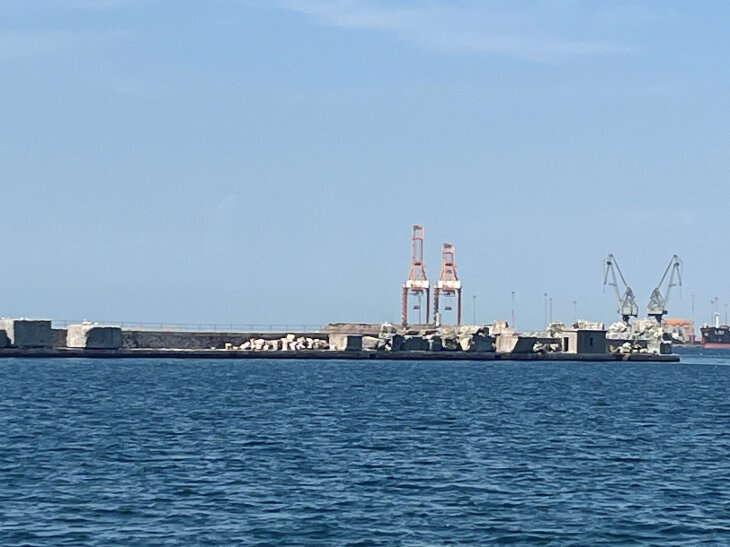 The port of Thessaloniki today
Many Jews of Thessaloniki found work in the textile industry. The wealthier Jewish merchants traded in wool and fabric dyes, while the working-class Jews were employed in weaving, brushing, and dyeing cloth. The Jews of Thessaloniki supplied the Ottoman army with uniforms and sold clothes throughout the empire8.
As the Ottoman Empire conquered more of Europe, Ashkenazic Jews also began to move to Thessaloniki. When the local authorities began silver mining outside the city, they brought Jewish metallurgists from Hungary to expand the silver production. Jews from Europe were also employed as miners. Within a few years, the mines became one of the largest producers of silver in the Ottoman Empire9.
The Jewish community maintained a good relationship with the Ottoman authorities. When a fire destroyed over a dozen synagogues in 1545, the community sent a delegation to the sultan, quickly obtaining permission to rebuild them10.
In 1562, the Jewish community of Thessaloniki sent a delegation to Sultan Suleiman the Magnificent to petition for a reduction in excessive taxes. The sultan received them favorably, and the extra taxes were abolished11.
Due to its central location, Thessaloniki grew and became a major commercial center. Jews were heavily involved in commerce, as well as politics, using their Ottoman connections to fight the Inquisition. British historian Mark Mazower writes12:
They combined commerce with espionage and ran the best intelligence networks in the entire region. So confident did they feel, that some threatened a boycott of Papal ports when the authorities in Ancona started up the auto-da-fe in 1556…
Over the course of the next few centuries, the Jewish community of Thessaloniki continued to grow, and the city earned the nicknames “mother of Israel” and “Jerusalem of the Balkans.” Thessaloniki remained the center of Jewish scholarship.
In 1913, after the Ottoman Empire was defeated in the First Balkan War, Thessaloniki became part of Greece. The Jewish community at the time numbered 75,000, the majority of the city’s population13.
The Jewish community’s reactions were mixed, and as Greek nationalism grew in Thessaloniki, the tensions between Jews and Greek Orthodox Christians increased.
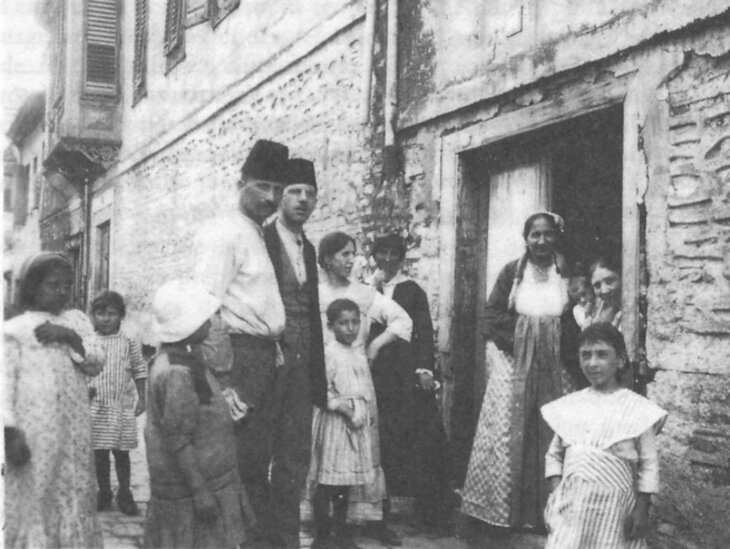 Jewish family of Salonika in 1917
In 1917, a terrible fire destroyed a large area of the city, including most of the Jewish district. 9,500 houses were destroyed, and over 70,000 people were left homeless. 56,000 of the homeless were Jews. Jewish communal institution, including the central Talmud Torah Hagadol, were burned to the ground.
An eyewitness, poet Yiorgos Vafopoulos, wrote14:
There where once the labyrinthine alleys of the Jewish district had spread out, were now only stones and smouldering ashes. In the other quarter, where the grand shops and hotels tower, tragic ruins reminded one of their former glory. And all these sad remains of a rich big city were swathed in heavy clouds of smoke. Deep in their basements the embers glowed for several months after the fire and, as we discovered later, so great was the force of the fire that all the glassware melted and amidst the debris of the pastry shops one could make out the jars of sweets transformed into a mass of burnt sugar and glass.
Though the Jewish community was devastated, the Greek administration saw this as an opportunity to rebuild the city in a more modern Greek fashion. They refused to allow the Jews to rebuild their homes, institutions, and businesses. Instead, they hired a French architect, Ernest Hébrard, who redesigned the destroyed area from scratch, without taking into account the previous locations of Jewish communal institutions. Thus, the site of the Talmud Torah Hagadol was turned into a marketplace.
Whether explicit or implicit, the reconstruction’s goal was to diminish the Jewish control of the city and to intersperse Jews with Muslims and Christians, rather than maintaining a distinct Jewish district15.
The leaders of the Jewish community, perceiving the reconstruction plan as a threat, complained to the Greek government, as well as to other governments.
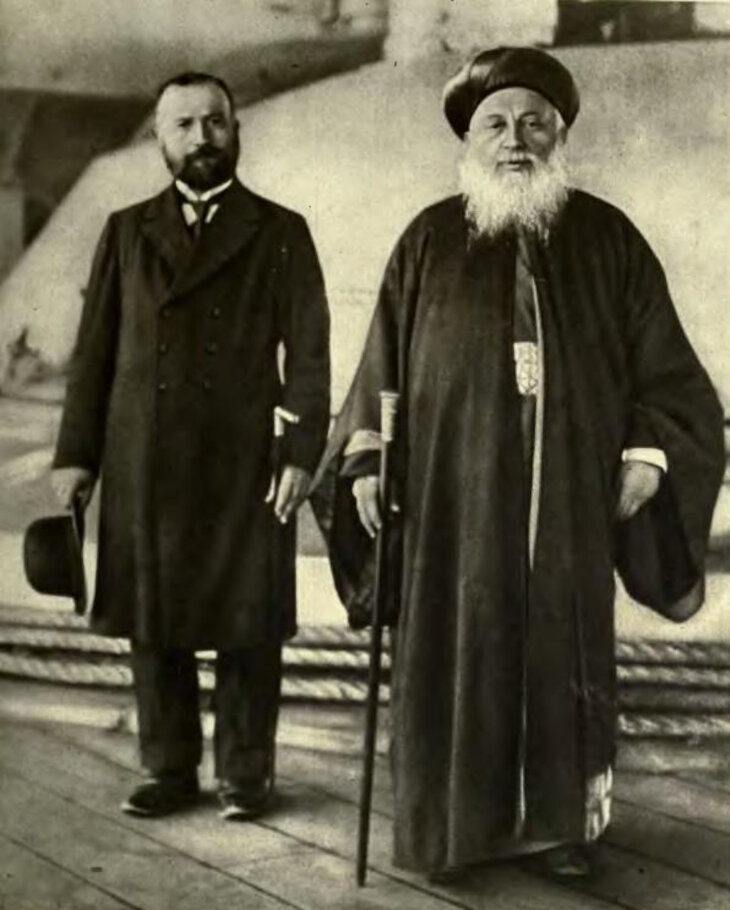 Rabbi of the city, 1918
Within the Greek government itself, there were differing opinions as to where to resettle Thessaloniki’s homeless Jews. The minister of foreign affairs, Nikolaos Politis, claimed that Jews should be distanced from Thessaloniki because they sought “to neutralize the national policies of the present government16.” On the other hand, the Prefect of Evros, Nikolaos Kalogeropoulos, claimed that settling Jews among Greeks would be dangerous because the Jews were not patriotic enough and expressed bitterness and resentment towards Greeks17.
Eventually, the Greek government compensated the Jews financially, but most of them were unable to remain in the former Jewish district. They were forced to relocate, some outside of Thessaloniki and others outside of Greece altogether18.
The wealthier Jewish families remained in the former Jewish district, rebuilding the synagogues and other communal institutions in different locations.
In 1923, the demographics of Thessaloniki changed even more significantly. Eager to turn their newly acquired territory into a true part of Greece, the Greek government negotiated a population exchange with Turkey. Around 1.5 Greek Orthodox Christians were transferred to Greece from Turkey, and about half a million Muslims were transferred to Turkey from Greece. For the first time in centuries, Jews became a minority in Thessaloniki, outnumbered by Christians.
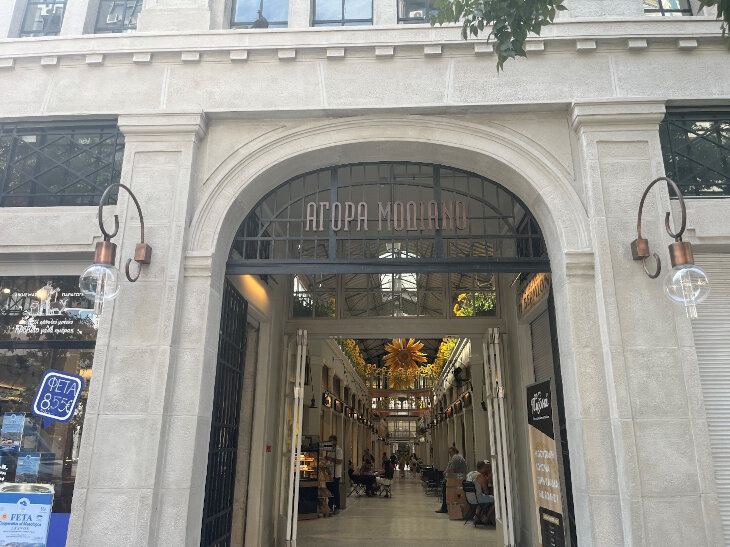 The Modiano Market, built between 1922-1925 on the ashes of the Talmud Torah Hagadol, which was burned down in the fire of 1917.
At the beginning of World War II, the Jewish population of Thessaloniki numbered 55,20019. The community had 59 synagogues located throughout the city.
In April 1941, Nazi Germany occupied Greece. Though the Nazis arrested the community leaders and robbed wealthy Jews of their valuables and synagogues of their Torah scrolls and other ritual objects, no one in the Jewish community had suspected that the Nazis were intent on their total extermination.
During German occupation, most of Thessaloniki’s synagogues were destroyed. The only one that remained intact was the Monasteriotes' Synagogue, built in the 1920s by Jews who immigrated to Thessaloniki from Monastir in Yugoslavia after World War I. During World War II, the Monasteriotes’ Synagogue was converted into a warehouse and used by the Red Cross.
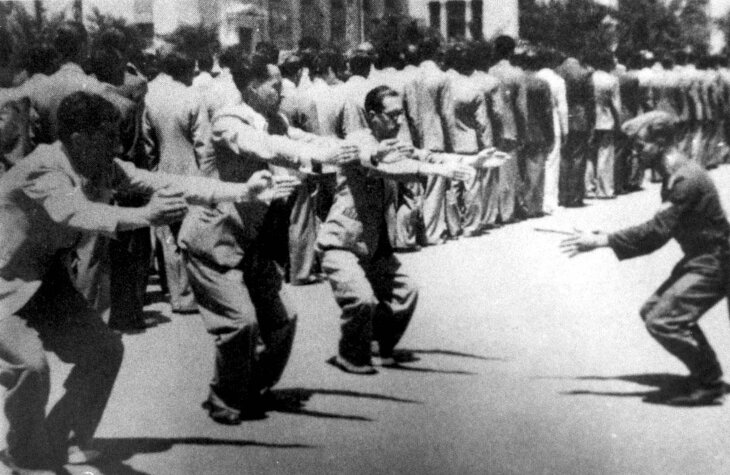 Jews being terrorized by Nazis in Salonika, July 11, 1942
For over a year, most of the Jewish community remained in their own homes. Then, in July 1942, all Jewish males between the ages of 18 and 45 were ordered to appear in the city square on what became known as the “black Shabbat.”
The 6,500 men that gathered in the square were subjected to public humiliation and deprived of water and shade. After four days of registration, the men were conscripted into forced labor. Many of them did not survive the severe work conditions and lack of proper nutrition20.
After the black Shabbat, many Jews attempted to flee Thessaloniki. Some managed to escape, but others were caught and executed by the Nazis.
In March 1943, the Nazis began deporting the Jews of Thessaloniki to Auschwitz. The deportations continued for five months. Altogether, 48,533 of Thessaloniki Jews were deported.
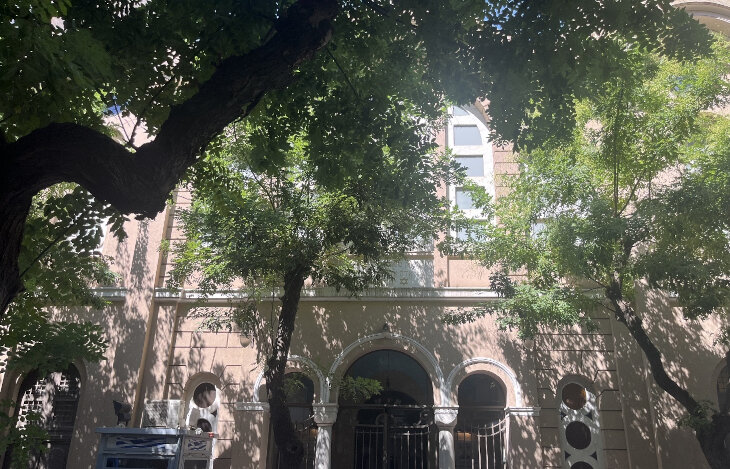 The facade of the Monasteriotes' Synagogue, the only surviving pre-Holocaust synagogue in Thessaloniki.
The conditions in Auschwitz were especially difficult for Greek Jews, who were not used to severe weather conditions in Poland. Moreover, they had difficulty communicating with the Nazis, because they spoke Greek and Ladino and not Yiddish, as their Ashkenazi counterparts. The vast majority of them did not survive the Holocaust.
By end of the Word War II, only 1,950 Jews of Thessaloniki remained alive. Most of them chose to leave Greece and rebuild their lives elsewhere. Only a few stayed in Thessaloniki21.
Today, the Jewish community of Thessaloniki consists of about 700 members. In addition to the Monasteriotes’ Synagogue, where services are conducted only on High Holidays and special occasions, Thessaloniki has another synagogue and a Chabad House that conduct regular services. The community also operates an elementary school.
The Jewish Museum of Thessaloniki depicts the history of the Jewish community of Thessaloniki and its destruction in the Holocaust.
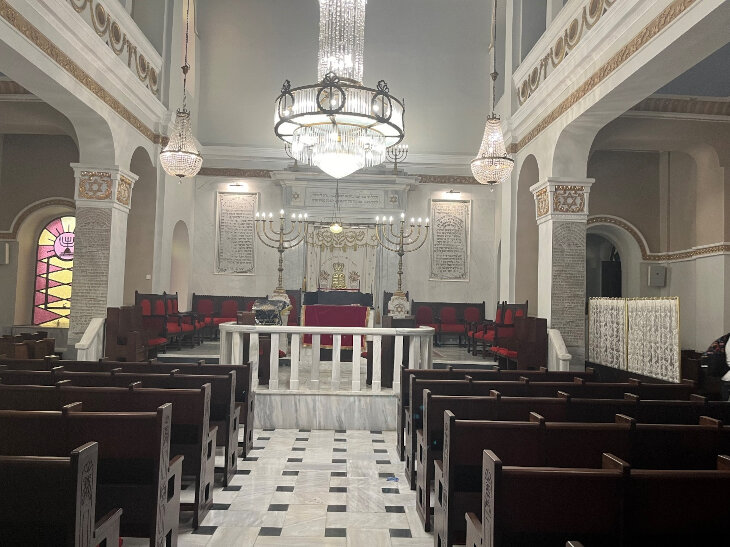 The interior of the Monasteriots' Synagogue, used today for High Holidays and special occasions






Very interesting article thank you!
Thessaloniki is well worth a visit.
Unfortunately, the Greek Jews that spoke Ladino, instead of Yiddish or German could not communicate with the other Jews, that knew what was going on in Auschwitz my mom(obm) told me a Greek tried to talk to her(obm) but there was no language in common, I wonder if anyone knew Hebrew
I'm sure they knew how to communicate, as people from the surrounds came into the hub to purchase goods. Which was a prominent Jewish hub. They had to know ladino.
Thessaloniki 2000 years ago was the capital of Macedonia not Greece get your history right