





 Biblical Imagery in Dolly Parton’s Music

15 min read
14 min read



5 min read


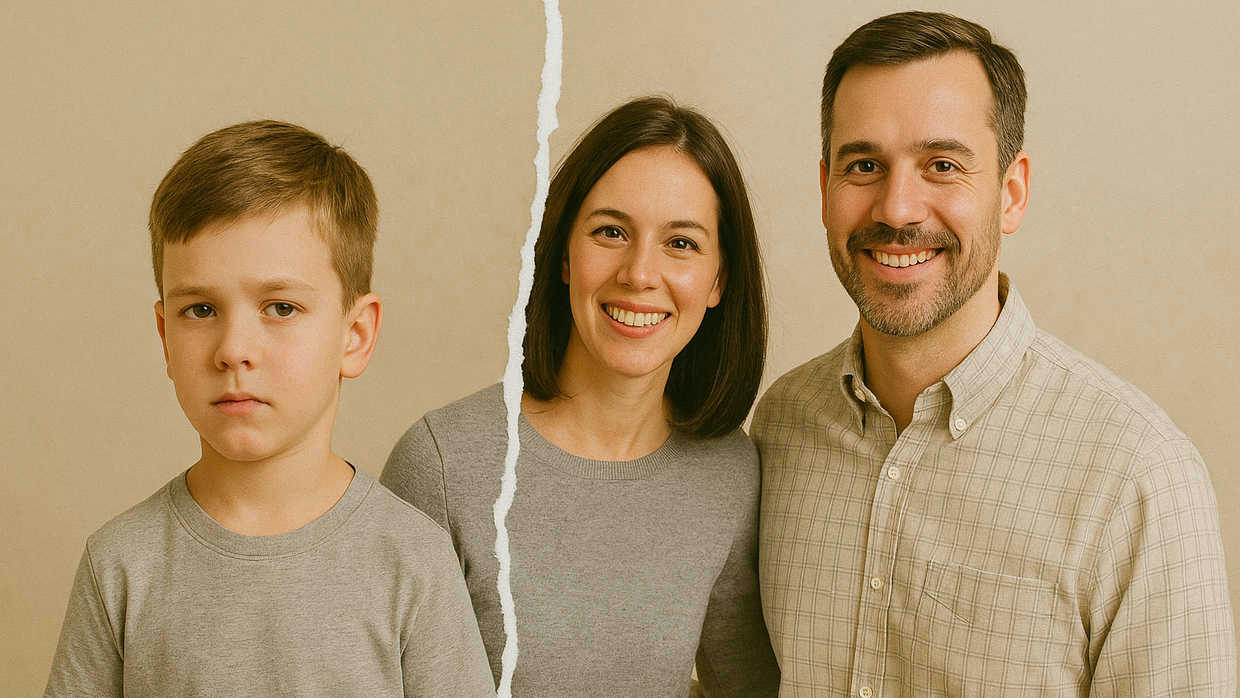
When honoring parents conflicts with protecting your health, setting boundaries and safeguarding your life come first.
“Honor your father and your mother,” one of the Ten Commandments of the Bible, is central to Judaism because it recognizes them as partners with God in giving us life, forming the foundation of gratitude and respect. But what happens when a parent is mentally ill, abusive, or makes demands that endanger us? How do we balance this mitzvah with the Torah’s demand to protect your health and dignity?
As both a clinician and someone who has personally wrestled with this mitzvah, I have seen the pain of adult children trying to navigate honoring parents who cause them harm.
When I was ten years old, I asked a teacher: “What if a parent tells you to do something illegal?” Startled, he replied: “Then it’s a mitzvah not to listen because your parents are asking you to sin against God.” That lesson stayed with me: honoring parents exists within the framework of other Jewish values and must be balanced with core principles such as preserving life, protecting mental health, and upholding the dignity of every person.
The Torah commands: “You shall keep My decrees and My laws, which a person shall do and live by them—I am the Lord” (Leviticus 18:5). The Sages explain this verse to mean: “and live by them—and not die by them” (Talmud, Yoma 85b). In other words, the mitzvot were given to sustain and enhance life, not to cause harm or self-destruction. For this reason, almost every commandment can be set aside when a person’s life or health is at risk.
Similarly, the Torah commands: “Every person must revere their mother and father, and you shall observe My Sabbaths. I am the Lord your God” (Leviticus 19:3). The Talmud explains that if a parent tells a child to desecrate Shabbat, the child must not obey—because both parent and child are equally obligated to honor God. This makes clear that honoring parents is not absolute; it is bounded by, and must yield to, other commandments.
The Talmud (Kiddushin 31a) teaches extensively about honoring parents, emphasizing that when a parent’s requests are degrading or harmful, a child is not required to obey.
Maimonides (Rambam, Laws of Rebels 6:8) cautions that while children are commanded to honor their parents, a parent must not impose an excessive burden or demand constant deference in a way that becomes an obstacle for the child. Parents are expected to relinquish some of their honor so as not to weigh their children down. Later (6:10), Maimonides addresses the case of parents who lose control of their mental faculties, ruling that if living with them becomes impossible, the child may step away and arrange for others to provide proper care. In this way, Maimonides recognizes that maintaining distance can sometimes be both necessary and appropriate.
Modern authorities in Jewish law echo these teachings. Rabbi Moshe Feinstein, of blessed memory—a leading 20th-century halachic authority in America and author of Igrot Moshe—ruled that children are not obligated to honor a parent when doing so would cause serious psychological harm. Rabbi Shlomo Zalman Auerbach, of blessed memory—a preeminent halachic authority in Jerusalem and author of Halichot Shlomo—together with Rabbi Asher Weiss, a contemporary rabbinic authority and author of Minchas Asher, likewise affirmed that emotional and mental well-being must take precedence, even if this requires limiting or avoiding contact with harmful parents—provided it is done respectfully and not vindictively.
Even with clear Torah guidance, some people continue to harm themselves in the name of honoring parents. Why is this so?
Psychology offers insight. Attachment theory teaches that children—no matter their age—naturally cling to their parents, often blaming themselves rather than risk breaking the bond. As a result, even those who were abused may grow into adults who feel compelled to sacrifice their own well-being in pursuit of a parent’s approval.
Social work further explains how intergenerational trauma and rigid family roles reinforce these patterns. Many adult children of dysfunctional homes take on identities such as caretaker, scapegoat, or peacekeeper. Over time, these roles become deeply ingrained, making it profoundly painful to step away—even when doing so is essential for survival.
By breaking destructive cycles, we honor our parents in the deepest way—by refusing to pass on damage and instead safeguarding the image of God within ourselves and in future generations.
And then there is communal pressure. In some Jewish families and communities, “keeping the peace” or preserving family honor is valued above individual well-being. This can create a powerful force that discourages setting boundaries. Many continue unhealthy relationships out of fear of judgment, criticism, or being labeled ungrateful or disrespectful if they choose to step back.
The Torah does not call on us to destroy ourselves in the name of mitzvot. At times, the truest act of honor is choosing healing over harm. By breaking destructive cycles, we honor our parents in the deepest way—by refusing to pass on damage and instead safeguarding the image of God within ourselves and in future generations.
Honoring parents is indeed a sacred mitzvah. Yet Torah, halacha, and psychology together affirm that real honor is never about enabling abuse or neglect. It is about holding respect alongside boundaries, and compassion alongside self-protection. Sometimes the greatest way to honor our parents is by living fully, with health, dignity, and faith.











Obviously, a very young child is incapable of stopping a cycle of emotional, sexual, or physical abuse. I was in a preverbal stage of development when mine started! My father, the main abuser, died when I was 19. He never asked for forgiveness, but my mom did. Knowing that she also was abused, i offered forgiveness, but she's passed, and I'm still working on it!
"...we honor our parents in the deepest way—by refusing to pass on damage and instead safeguarding the image of God within ourselves and in future generations."
Being a cycle breaker is a lonely path. Even my children, now young adults, will never fully understand, thank God. I feel heard and seen, and will carry this quote with me. There is a path beyond victimhood and blame; it is the 'road less travelled' without any map to guide us.
I kept ties, learned how to show respect with boundaries, built my sense of self and kept my kids protected while giving each of them the choice of whether to have a relationship with their grandparents. Life brings difficult relationships, and the best way to immunize my kids is to live by my values and be the "safe space."
Glad to see this topic finally addressed and acknowledged. My mother was a monster. My father was gentile, veteran and alcoholic. For my own sanity, I ended our relationship decades before she died. It was a huge relief. Child abuse from infancy on, attempted murder, you name it. She become evangelical and said I was going to burn in a lake of fire; and that Torah study was "satanic." Finally told her she was giving hitler a post-humous victory. Other abuses far too much to go into. But it was necessary for my survival and didn't want her anywhere near my kids. For those who think therapists are "pushing estrangement" there's another side of the story. We who have been abused are finally being heard in the Jewish community; instead of being told we're family and to put up with it.
Part 1: I tried reconciling with my parents for years. They hit me, screamed at me, even for things I did not do, I was forced to vacuum while having a migraine with aura as I was not believed, I did every chore, got high grades for them, stayed out of trouble. Then my high school opened their big mouths and said I was not talking enough and now my parents had something else to nitpick about, something that is subjective. I gave them real life examples of women who are not talkative but successful. It did not matter. I had to humiliate myself to show that I am talking with topics no one lese cared about. Imagine trying to talk about Marvel movies to the Amish. That is similar to what I was forced to do.
Part 2: I tried to reconcile with them. Asking them to apologize for the hitting and screaming as I am not turn the other cheek. I was ready to forgive and move on. They gave me sarcastic or defensive apologies, mocked me remembering the past. I tried multiple times. For those of you who wonder why some of us remember the past and dare to mock us for bringing it up and trying to reconcile with the sinner, well Judaism is all about remembering the past. And the Rambam says one must reconcile with a person for the bad done in the past to do teshuva. No turning the other cheek here.
Some of us children do attempt to reconcile with our parents instead of cutting them out of our lives. For those of you upset about those who cut off I am an example of one who attempts to reconcile instead.
Although I concur that what constitutes "abuse" may be too broadly applied in today's mental-health landscape, I also believe if a parent is truly abusive (physical, mental, and/or emotional) the child has the right, if not obligation, to distance him or herself from that parent. Asking your child to do normal chores, or saying "no" to a child's demand for a new car, does not constitute abuse. In my case, after my parents divorced, I was abandoned by my mother, and was emotionally and mentally (mostly), as well as physically, abused by my father. Although there were several stretches of time that my father and I were estranged, sometimes decades at a time, I was always the one who reached out to try and amend the relationship. Last time, Dad said, "Goodbye, forever." What's my obligation?
Sam, thank you for engaging with this very sensitive issue. I want to clarify that this piece was not written lightly or without grounding. In preparing it, I consulted halachic sources along with rabbis, psychologists, social workers, and other experts in Torah and mental health. I also drew on my professional training and clinical experience working with trauma patients.
Halacha is rarely black and white, especially in areas that touch on both mitzvot and human suffering. The Shulchan Aruch and later authorities indeed emphasize the mitzvah of honoring parents, even when they are deeply flawed, while also recognizing pikuach nefesh and the necessity of protecting one’s mental and physical health. The balance is delicate. I’d encourage you to truly read my words and the sources I used.
I think that some people took this article wrong,all it meant to say was -that sometimes we grow up with certain stigmas and we could very well be wrong and unnecessarily harming ourselves.
As far as I understood, this article intended to shed light on a topic with a view that we may have not known.
Each person who feels that they may still be suffering from child abuse due to their present relationship, should speak to a competent Rabbi.
Every situation is different,no "One size fits all"!!!
A lot of abusers would deny the fact they are abusing the victim, and use what is called gaslighting( like a name of a movie and the plot of the movie) technique to question your sanity, so some people that are complaining about this article didn't go through what I went through, and the abuser also thought it was funny when I got bully in a Yeshiva school I went to
A lot of the time the abusive parent acts nice in public and in behind closed doors is very abusive to your mother ( obm) and you, and after abusing you all the years gives your inheritance to your cousin, that saw him 2 years before he died and had dementia, and kept saying when I die I will get my inheritance and I wrote letters to him, even though I was abused and my mom( obm) I feel like I got scammed in life and his death, I don't want his name on my grave sites either
I agree with Sam. What some adult children consider "abuse" resulted from very complex child rearing situations that none of the so-called experts could help with at the time. Alas, this overly generalized UNHELPFUL article is therefore extremely troubling, because the terms are so vague as to be poisonous. Moreover it fails to take into account the current epidemic of adult children abandoning, ignoring or disrespecting their parents. You've added to the problem instead of helping to resolve it.
What about brothers? Is it OK to walk away from them if they are abusive as well?
Thank you for raising this important question. This piece focuses on the commandment of honoring one’s parents and draws on Jewish sources to help people navigate that mitzvah, especially in situations involving abuse or neglect. The goal is to clarify Torah guidance in these complex circumstances, not to provide a comprehensive guide for all family relationships. Abuse is never permissible from a Jewish standpoint, whether from parents, siblings, or anyone else. Regarding siblings, the Torah commands “love your neighbor as yourself” (Leviticus 19:18) and emphasizes respect and peace within the family. Rabbinic sources, including the Rambam (Hilchot De’ot 6:4) and Shulchan Aruch (Yoreh De’ah 240), stress protecting oneself from harm, even from relatives.
My brother told me that he felt guilty for leaving when I was being abused, but I told him to go to counseling, because I wasn't going to pay him on the back and say it was all fine!
Wow. Sounds like maybe counseling is in order to deal with that resentment. Your brother was not responsible for your parents abuse. Get help
This post is dangerously one-sided, implying that separation from one's parents is not only due to abuse by the parents, but is sanctioned by Torah as well. Neither is fully accurate.
I find myself in the situation of not speaking to my daughter. I have a grandson who knew me but lately hasn't been allowed to communicate with me, and I have a new grandson I have yet to meet. I was not a perfect parent, but this behavior is not justified by anything that has happened or been said or done by either side. This is the new woke agenda, blaming parents for anything and everything that isn't perfect in the children's lives, and urging separation. And SOCIAL WORKERS are the worst of the worst about pushing this agenda. If you don't know that, you should.
Horrible to use Torah like this.
The article clearly states that the subject refers to parents who are "mentally ill, abusive, or make[s] demands that endanger us." As a gyoret who was raised in an extremely abusive family, with parents who regarded their children as objects under their control, I found the article helpful.
However, I agree with you about the woke agenda. If you were not an abusive parent, but merely hold views that your daughter does not agree with, she is in the wrong. If she is blaming you for actions you did in the past, perhaps you can do some introspection and try to have a discussion with her about how your actions affected her. Just a thought.
You are right on the money, Moses!
Yes he is.
Moses, I’m truly sorry to hear about the pain in your family—that kind of separation is heartbreaking. I want to clarify that I have no “agenda” other than to educate and help people in genuinely abusive situations, where Torah is sometimes misused to excuse harm or silence victims.
There are always two sides to every story, and I do not encourage estrangement unless it is genuinely beneficial for the client’s well-being. In many cases, people return to dangerous situations because they have been misinformed or misinstructed that Torah requires them to do so. The mitzvah of kibbud av v’em is profound, but halacha also recognizes the need to protect a person’s physical and emotional health. My goal is to offer guidance grounded in Torah, psychology, and compassion to help people.
Moses I agree with you !
social workers, along with all other so called professionals need to reexamine their title position before they start advocating advising. Most of them have sever unresolved issues themselves therefore how in the world are they truly able to help others.
Moses Maimonides.... STRONGLY AGREE! Retired neuropsychologist and professor, and now rabbi, I could not agree more. In fact, I have written about how psychology has leaked strongly into religion and the last century of psychology (combined with human ego aka yetzer hara) is driving the narcissism pandemic we are witnessing and the complete inability to 1. manage pain and discomfort and 2. process it productively toward healing relationships rather than avoiding them. It's a sick world right now and medicine, including psychology, and religion are not insulated from it.
Parents are people just like everyone else and they shouldn't get a free pass because they're parents. Honor, along with love and respect, has to be earned and oughtn't to be assumed just because one has chosen to have children. I know it's cliche but children don't ask to be born and from day one are literally at the mercy of adults, G-d help them if their parents turn out to be indifferent to their needs, dysfunctional, or worse abusive to their very bodies. If you don't want children then don't have them and ignore societal pressures to become a parent.
I am a sandwich of both realities. I came from an abusive home in which I was tormented by my father, jeered at by my sister, and not supported during attacks by my mother. I was so happy to raise a big wholesome family with my husband who did not have my unfortunate experiences. As some of my children became adults, a new version of their childhood emerged . I didn't love them enough, which is the new definition of abuse. Back then. I didn't know about individual attention. My generation thought ourselves marvelous for listening and not hitting our children. Suddenly I was no longer worthy of respect and attention. My presence is tolerated but not welcomed. I do have contact with these kids and my grandchildren, but feel demoralized by our visits.
Thank you for sharing your story so openly. It’s important to remember that people don’t always understand what abuse is—or how it manifests differently across generations. The standards and awareness around parenting have evolved, but this does not erase the love, effort, and care you gave your children. Situations like yours can feel confusing and demoralizing, and it’s common for past and present experiences to collide. Therapy can be a helpful space to process these feelings, explore patterns, and gain perspective on both your experiences and your children’s reactions. Guidance from trusted rabbis or mentors can also provide clarity about boundaries, respect, and family obligations. Please know that seeking support is not a sign of failure; it is a way to heal and deal with life.
Thank you!!! I needed this article!!!
This resonates deeply. I often feel a sense of guilt for choosing to create distance between myself and my parents. My mother frequently reminds me of the commandment to "honor my parents," which has significantly influenced my thinking. For a considerable time, I believed that leaving would be a grave transgression against both G'D and my parents. However, thankfully, I ultimately prioritized my mental well-being and peace of mind. I am grateful for this insightful information regarding the Torah's perspective. 🙏
My husband is in his 80's and still complains about how his mother beat him with a broomstick handle. His prinary care physician says he suffers from childhood trauma. Your gentle advice will help people.
As a child of a very abusive home & growing up in a different religion I was only taught one side of honoring parents, with fear & shame used to control me. This is one of the many reasons I deeply love & value Judaism. The balance that I finally understood when I learned that it was okay to not accept abuse as love was a lifeline to me and helped in eventually establishing happy relationships with healthy boundaries with my Ma before she passed & Dad as well as my siblings. Re-connection & reconciliation are absolutely beautiful & a choice I've made. My life has blossomed & I've healed a great deal in this process, that will continue on. I thank you so much for this article and hope it helps others like me.
SIR HAS DONE LENGTHY RESEARCH INTO WRITTEN + ORAL WORD OF G-D!
I asked a Rav for a ruling (psak halacha) on this issue. He was very clear:
“When a parent is abusive, you have very little obligation in the mitzvah of honoring parents.”
Another Rav, gadol ha-ir in a big city told the following story. He had a student whose father murdered the mother, and later died in jail. The student asked what was his obligation for shiva and mourning and kadish. The answer was: none. He was an evil person.
While this is different than abuse; the
point is that Torah does not demand ignoring the facts in the face of what people view as mainstream halacha.
Each case is different and needs careful
consideration.
Very true. Each case is different; however, having sat in numerous sessions with both parents and children of diverse racial and religious backgrounds, I have noticed a great misunderstanding as to what abuse is. Murdering someone is a form of abuse, as are other things that people do not necessarily know. Abuse is not just physical or emotional.
I really did not get anything out of the article. What about parents who are plainly abusive with words that demean the child and destroy their self confidence for life? They are not telling to child to lie, to steal or anything else, just destroying the character of the child. Of course they might have had their own problems, but it does not give them the right to destroy a being under their care. In such cases, better keep away, it will never get any better.
As a therapist who specializes in trauma and mood disorders and has attended multiple trainings, I can tell you that what you are describing is abuse, and rabbis and other religious figures across the spectrum would tell you that in certain scenarios, the child has no obligation toward the parent in this situation. I have had multiple clients who thought they were "obligated" to show respect because of the commandment, but were advised to walk away from the person who called themselves "mom" or "dad".
Honoring someone does not mean that you have to do everything they tell you to do. In these times people are living longer but many elderly people have dementia and are so bad that they cannot even care for themselves. Both my parents who are in their early 90's are in this position. This is a constant problem for me as you can imagine. While I have other siblings they have basically washed their hands of the situation or they have their own mental issues so they incapable of dealing with my elderly parents. It is worse than dealing with a minor child because the child knows he or she is a child but both my parents think they have not changed so they do not need my help and are sometimes very contrary to say the least. I hope that I will not be such a burden on my own children.
As someone who has dealt with grandparents who had dementia and other such illnesses, I can say that I fully understand. Jewish law, as you can see, is not black and white, but nuanced. There are general laws that apply to all, but others, such as this, which are not clear, and things that one needs guidance in managing. I wish you the best and hope you have the support you need in dealing with this challenge.
Thank you! I needed this today. 🙏🏻✡️❤️
It appears your work may not be inclusive of both sides, and the pain of your own experience may taint objectivity. I'm not talking about dismissing true abuse. We're talking about therapists casually diagnosing and applying labels to people they have never met-- who may have been good decent parents.
Encouraging the punishment of abandonment of one's parents has become a far too frequent ill-advised 'fix' that is often entirely out of proportion to the adult child's complaint. Sometimes it could be a slight that is remembered, or non-compliance to a request.
It appears you have no experience with the growing population of grief filled parents who don't even know what they did wrong.
Thank you for your thoughtful comment. I want to clarify that my article reflects extensive clinical experience with diverse families, including adult children and parents across socioeconomic, religious, and racial backgrounds. My insights are drawn from patterns I’ve observed in therapeutic settings, supported by formal training, not solely personal experience. The goal of the piece is to highlight dynamics that can cause lasting harm when unaddressed, while encouraging careful reflection rather than blanket judgments. It is not intended to dismiss genuine parental grief or the complexity of individual situations. I strive to approach these issues with nuance, ensuring both parents’ and adult children’s experiences are acknowledged and respected.
It's important that you really understand as an estranged father for 13 years who never saw his two grandchildren, I know. Your clinical evaluation may be good enough to craft articles, but in the real world it sounds like you're spinning denial.
You are correct that every situation is unique. If your grandchild are over 18 years old in the USA you have a right to connect with them and their parents have no say in the matter. Whether or not they wish to connect with you is another story but my son in law meet his biological father and all his half siblings for THE FIRST TIME WHEN he was 27 years old. It is was not his father's fault that he son and he could not connect until then. It was a very tearful and wonderful reunion of the family and my brother in law is so glad that he made the effort to connect with his biological father. To say now being connected to his biological father and his half siblings has changed his entire life is not an exaggeration.
That’s pretty strong statement about the “growing population of grief stricken parents who don’t even know what they’ve done wrong…”
If a child abandons parents, it can be for any number of reasons that might or might not be due to abuse. But if abuse is the cause; part of the underlying problem with abuse is often that the abusers are unaware that their behavior is abusive. So of course they are bewildered about why their child has left them. They are too sick to realize that they are abusive and in that state there is often no point to explaining it to them. They wouldn’t “get it.” Chances are they were abused also. Or one parent is abused and the other is an additional victim-and therefore terrified to challenge the abuse of their mutual children in deference to their own safety.
Good point. They are not able to realize they are abusive. But that isn’t an excuse.
YES IT IS AN EXCUSE. A PARENT WHO ACTS crazy IS crazy.
The statement stands. Your observation, which probably represents a certain percentage it is not representative of the current nationwide epidemic. There are now multitudes of reasons being used to cut parents off that have little to nothing to do with real abuse. A slight that is remembered years later, or non-compliance to a request, even a re-write of history.
The reason why parents, more frequently than you can imagine don't know what they did wrong is because the adult child refuses to discuss it--- not even in the safety of a therapeutic environment.
You are probably also unaware of all the online groups that shame an adult child if they even mention attempting reconciliation.
Abuse is complex, and oftentimes, perceptions are tainted because we want to justify our behaviors. Having sat in numerous therapy rooms with parents and children of all ages and backgrounds, I can tell you how often both parties are not interested in hearing the other's truth. Therapy in this setting, as with any kind of therapy, only works if the person is willing to work on themselves. I've worked with clients who were court-mandated to attempt reconciliation, and in some cases, I've been able to help facilitate that, and in others, it would have been dangerous for the child or, in some cases, for the adult to be reunited. Having had multiple adult clients who experienced parents who physically, psychologically, financially, etc. abused them, I can say that you might be unaware of this.
You appear to be quietly advocating estrangement without having full knowledge of the complexity of such a topic. Before publishing such a one-sided article, it would have been to your readers great benefit had you consulted first with Joshua Coleman, a nationally recognized expert on the topic of estrangement between parents and their adult child.
Estrangement has become a national epidemic, and it is not because suddenly more parents are becoming abusive.
He would have easily schooled you on the factual information on such a complex life altering topic. There is also much to be said about a new breed of therapists that act like high priests assigning labels to parents without even bringing them into the office, but easily encourage cutting parents out of their lives.
Thank you, Karen, for sharing your perspective. Estrangement is a deeply complex and painful issue, and my article was not written to advocate for it lightly. My work draws on trainings, on Torah, research, conversations with rabbis, trusted mentors, and clinical practice—those who dismiss abuse often protect denial, not truth.
Thank you
in the 50's my mother was under cancer treatment (6 years) she was in great pain , and very drugged . I was 4-9. A psychologist tried to convince me my mother didn't love or want me and abandoned me, that I should "abandon her". My father an orphan worked 3 jobs to pay medical bills, stayed at the hosp with her lost his job, we were impoverished. He went into a diabetic coma, he had a breakdown, he remarried a psychotic women etc. a Psyc tried to persude me he had abandonned me etc. Some of the best parents I know have been given this advice , selfish , lacking compassion, lacking maturity, lacking wisdom. shameful. causing great suffering and harm in my opinion.
thank you Karen, I agree, this has become a national epidemic, adult children of all ages are abandoning their parents over any slight, disagreement, or responsibility.They are being persuaded by redit, WP, psychologists, counselors, friends and spouses that they have been abused, that too many demands are made on them , they are encouraged to blame rather than take responsibility for themselves and make the changes to be better persons, that they need to separate to find their authentic self, that independence and lack of ties to the past are their new directive. This is a very disturbing article. Teach communication skills , just like marriage, to speak and listen, to encourage understanding, many parents do not intend harm but both parties would gain with insight. and building bridges.
Thank you, Malka. I suspect the author was not expecting any pushback about what appears to be prejudiced views. Notice how they didn't even use the word 'estrangement.' A true recognized expert on this topic is Joshua Coleman.
Every situation is unique. You have no obligation to connect with parents who abused you as a child just because you are now an adult. However, it is worth reflecting on whether the abuse was intentional or neglectful or there was some other reason involved which may allow you to reconsider your actions.
I’m curious what Jewish thought is on a child of such a parent, let’s say a parent that was abusive and then abandon the child, needs to do when that parent dies. Are they required to sit Shiva?
From what I've seen in both my personal and professional lives, these situations are dealt with on a case-by-case basis, as nobody experiences the same thing. I have seen siblings who have received different answers in these situations. Remember, life and Jewish law are not always black and white.
This is a bit tangential, but it addresses some of the commenters who got poor advice from their therapists. Being a therapist is VERY draining work. I am a NY State licensed master level social worker, but I am not a psychotherapist. To the author and everyone else in this field. I hope you have consulted with your own therapists as well. There are many mental health professionals who enter this field for less than positive reasons. The author does not full into that category.
Thank you, Nancy, for your thoughtful comment and for raising such an important point about the challenges of this work. You are absolutely right—being in the mental health field can be both deeply rewarding and incredibly draining. I greatly value my own supervision and personal therapy, which have been essential to sustaining myself as a clinician.
I also want to note that in preparing this piece, I not only drew from my training as a licensed social worker in both NY and NJ and my ongoing training in trauma therapy, but I also consulted with mentors, my own therapist, and did significant academic research. Writing on such a sensitive topic requires grounding in both professional experience and evidence-based knowledge, and I appreciate the chance to clarify that here. Thank you again.
Thank you for your timely and well-written article. It resonated with me on a very personal level.
so very insightful. Thank God I've always had a good relationship with my parents, one where it is an privledge to honor them. However, someone very close to me was not so fortunate with his mother. This helps me reconcile to opposing Mitzvot in this case. Thanks so much.
Thank you so much. Your insights came at just the right time; you have no idea how much they helped me.
Thank You for speaking about it. My husband and I are both from abusive households. It was very difficult to endure it and we’ve broke out from both abusive parents. It was the only way. I hope that rabbis will understand and recognize that this problem exists and not all parents are holy, and like all human beings can make mistakes.
Over 20 years ago, I posed this exact question to my local Chabad Rabbi, who was also a dear friend. Together we found that the Talmud defines honoring one’s parents as: not embarrassing them in public; making sure they have sufficient food, clothing, and shelter; providing them with assistance if they have mobility difficulties. There is nothing there about agreeing with their values or opinions, or obedience. In fact, all of these obligations can be fulfilled from a distance, even by someone who has chosen to have no contact for legitimate reasons. In the US, we generally fulfill many of these commitments via Social Security and Medicare, which younger generations pay into while our parents receive benefits.
Terrific!That's a great solution in my case.From one side,keeping distance from them after getting married and at the same time caring permanently on them by phone.
Such a complicated topic. Thank you for your insights.
Thank you for your feedback. When I'm in Women's forums online or in sessions with clients, this topic comes up often amongst all populations, so I felt the need to address it.
Thanks for sharing your wisdom & insights supported by Torah sources & examples! Keep ‘em coming!
I appreciate your support and am glad that this piece resonated with you!
Mulțumesc pentru acest articol!
Pentru mine este exact ce aveam nevoie și a confirma că situația prin care trec nu este unică.
Acum înțeleg că nu este lipsă de respect.
Am ajuns la limită și acesta este un clișeu a celor care folosesc anumite noțiuni pentru a li se satisface egoul.
Very well written! Love how different sources connect.
I'm glad that this piece resonated with you. I aim to integrate my experiences as a social worker and Jewish educator into my pieces to educate Jews of all backgrounds.
Very nicely put 👌 Kol HaKavod !
Very nice article.
I'm glad that you enjoyed this piece.
Wow, this is so inspirational. Such practical advice for tough situations that a lot of people deal with.
Thank you for your words. I'm glad this spoke to you
As a practicing social worker,I have encountered this exact topic unfortunately many times.I have noticed that each person deep down wants to feel that their parents also have some goodness in them. After all, we were born from our parents and will forever be connected.This is no contradiction that in some cases a child must keep a distance in order to protect himself .
I also am a therapist, my experience is that that people are being convinced that their parents did not give them the love they wanted or needed, too much was expected of them, or they didn't get what other people got. they never seem to ask what they can or could do only what they did not get. many wonderful women in their 80's who had believed they had been good mothers, now have children who have cut ties, are, cruel, disrespectful, self indulgent and justify it by convincing themselves their mother was abusive. they never tell their mother this is why or give the opportunity to make amends. they prefer to blame.
Is it possible that some children are being misled by professionals into disrespecting caring parents, while others have genuinely suffered from parents with serious psychological issues? In your professional view, can both realities exist? Can articles like the one above provide real value for those struggling with complex childhood experiences? Do you believe every parent-child relationship can be healed simply by the child trying harder, or that parents are always right, regardless of underlying issues? Could your focus on one situation be limiting your ability to acknowledge another equally valid one?