







 The FlyDubai Miracle



5 min read
7 min read





Discover how Rebbetzin Henny Machlis, mother of 14 and host to thousands, mastered the spiritual discipline of happiness.
The day the hostages were released was the happiest day in Israel in living memory. Two years of anguish and tension gave way to jubilation, smiles, laughter, and dancing in the streets. Jews throughout the world cheered and celebrated. Joy rained downed on our parched and withered landscape.
I, too, was elated. Like millions of Jews, for two years I had prayed for the hostages name by name, recited psalms, cried, and hoped for their release. Sunday night, I checked the news throughout the night, and when, in the morning, I read the news that the first group of seven hostages had been handed over to the IDF and “they are all standing on their feet,” I shed tears of joy. I was bursting with happiness.
But then it happened. On my way to a pharmacy to fill a prescription, I realized that I didn’t have my magnetic health fund card. I couldn’t get the medication I needed. I got upset and my happiness evaporated just like that.
What happened? How can happiness be so hard to hold onto?
Of course, I reminded myself that this glitch is miniscule in comparison to the momentous event of the hostages’ release. But it took me a couple minutes of mental gymnastics to let go of my disgruntledness and reclaim the joy that had vanished from my heart.
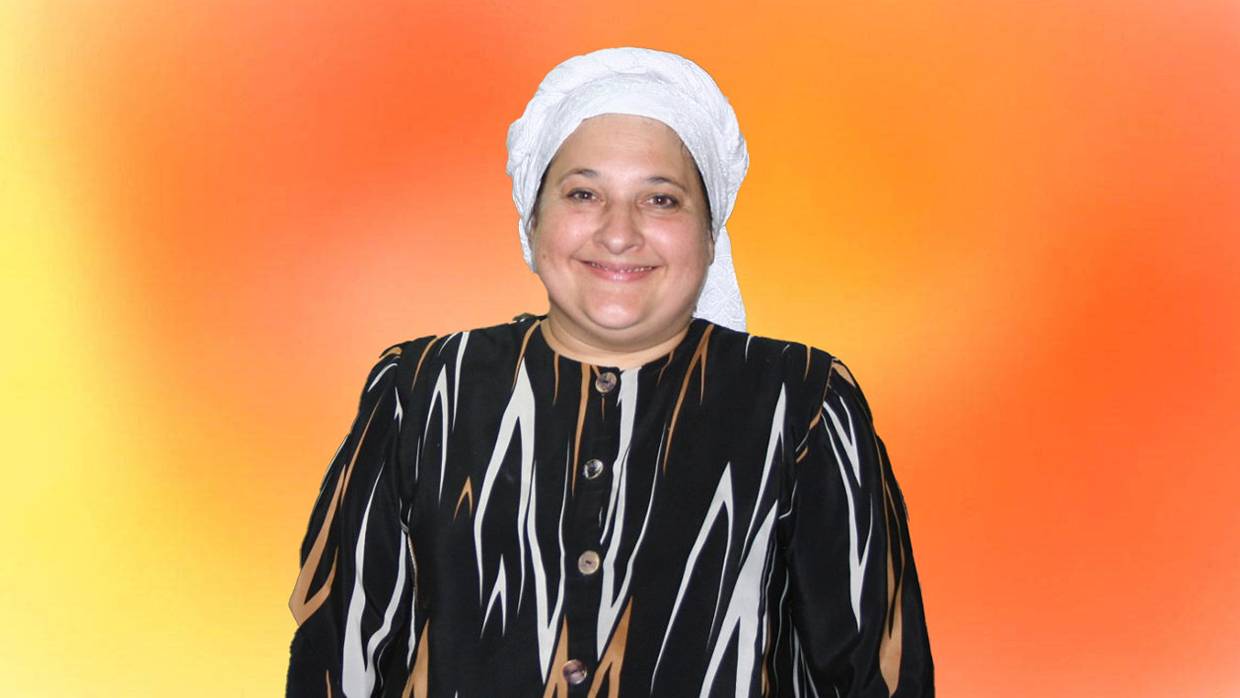
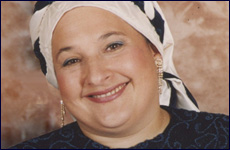
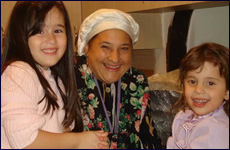
Rebbetzin Henny Machlis, whose tenth yahrzeit is this week, was the Gold Medal champion of happiness. A Brooklyn-born girl who became a Jerusalem legend due to her hosting hundreds of strangers in her home every Shabbat, Henny taught Torah classes, counselled even the most downtrodden people, made matches, and devoted long hours to prayer. Someone who lived with the Machlis family for two years testified, “I never once saw Henny unhappy. Even at 5 a.m., after being up all night, she may have been tired, but if something had to be done, she did it happily. Happiness was her big thing. She always said, ‘Everything is great, amazing.’”
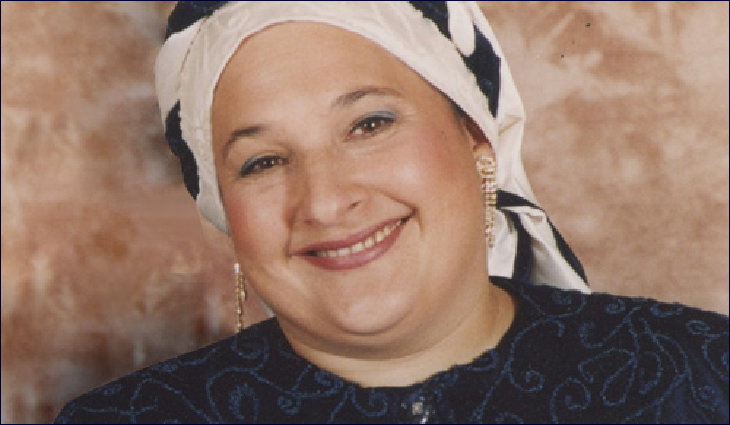
Was everything in her life great and amazing? Not from this biographer’s point of view. Henny and her husband Rabbi Mordechai Machlis had moved from New York to Israel shortly after their wedding in 1979. Henny gave birth to 14 children, nine of them by caesarean section, the youngest born with Down Syndrome and autism. In their modest Jerusalem apartment, they hosted over a hundred guests for lavish Shabbat meals, both at dinner and lunch, 51 weeks a year. Henny, with help from her children, did all the cooking. With the Machlis home open 24/7 to anyone who needed a couch (or mattress on the floor) to sleep on, little wonder that all of Henny’s jewelry was “borrowed”—the term she used because she would never accuse anyone of stealing. Money was always short. Privacy was nil.
Henny regarded happiness as a spiritual exercise that one needs to work on.
Given her challenging life circumstances, what was the secret of Henny’s unremitting happiness?
She worked on being happy. Most of us suffer from the illusion that happiness is a result of felicitous life circumstances. When we get what we want, we’re happy. Henny, on the other hand, regarded happiness as a spiritual exercise. As her husband, recounted, “Henny would work hard to be b’simcha [happy].”
Henny understood that our thoughts create our feelings. She would say to people, “Change the channel. You’re thinking about this stress and that stress; just change the channel. Channel 2 is sad. Let’s try Channel 4.” One of her mottos was: “You strengthen what you mention.” Instead of talking about problems and hardships, she would encourage people to talk about the good in their lives.
Like any virtuoso, Henny practiced specific exercises to perfect the skill of happiness. Here are a few:
Henny taught that when flooded with sadness, a person can just choose to declare, “I’m happy now.” As she counselled, “Don’t worry about being happy forever. Just take this one breath that God is giving you, and say, ‘I’m happy now.’ And for that second, you could be happy.”
Such happiness doesn’t solve your problems of a grouchy boss, looming bill, or leaking pipe. But just the awareness that you can CHOOSE to be happy by declaring yourself happy takes control of your mood away from your grouchy boss, your unpaid bill, or your leaking pipe. You can choose to be happy, even momentarily, by saying, “I’m happy now.” Say it often enough, and you will become the master of your mood.
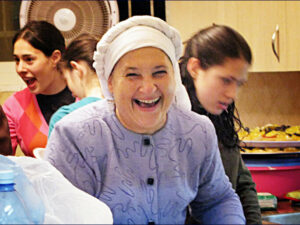
Another tool Henny employed was telling jokes. She would ask people to tell her jokes and she would delightedly tell jokes to others. Henny learned in a laughter workshop she attended that laughing heals many kinds of diseases. She believed in laughter.
Henny recommended that people should do what makes them happy: listen to music, dance, practice a hobby (Henny herself took up painting at fifty), or spoil yourself with a treat.
Her daughter Tamar testified: “My mother taught us not to say, ‘I’m suffering,’ because you strengthen what you mention. Instead, she would ask, ‘What can we do to make you happy? Go to the Kotel? Spoil yourself with an ice coffee? Should we put on music and dance? … It depended on each child. Whatever would make that child happy is what she’d tell them to do.”
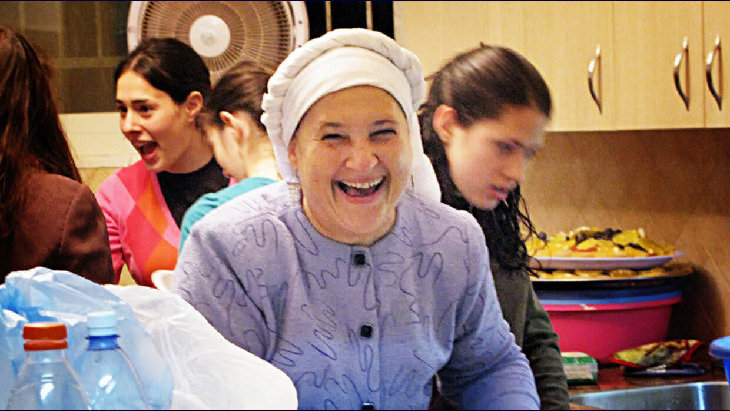
Just smile. No matter what you’re feeling, smile. Rather than regarding smiling as the result of happiness, Henny believed that the act of smiling itself causes happiness. She would say, “When you smile, you increase the endorphins and serotonin in your blood, which are hormones that make you feel happy.” In addition, smiling at someone lifts them up. “When you smile at somebody,” she would say, “you let them know, ‘You’re okay in my book.’”
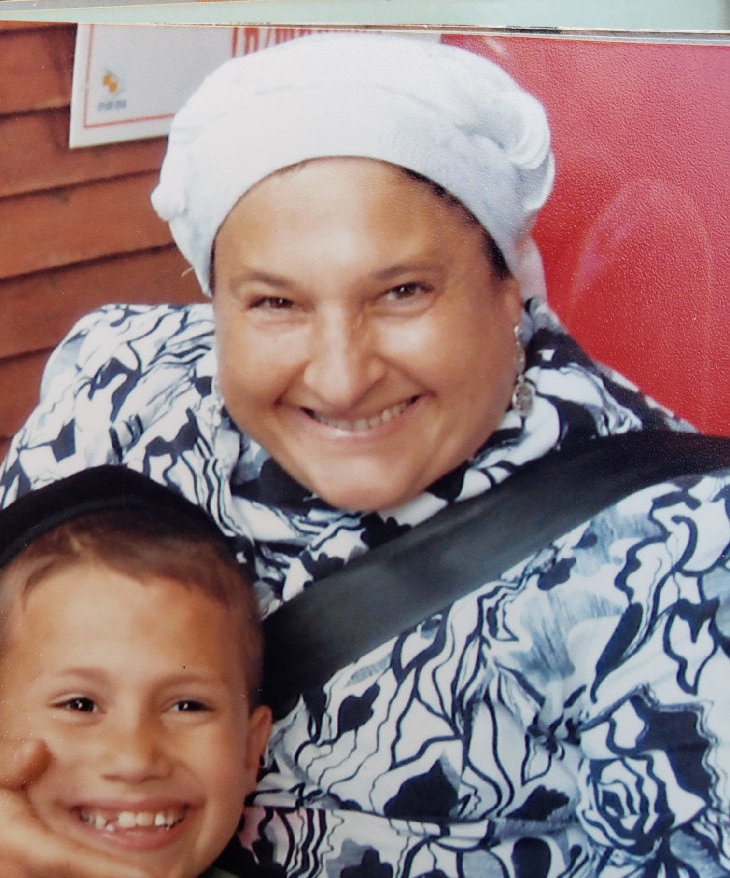
Henny practiced being grateful to God for every small thing in her life. She saw her glass not as half-full, but as overflowing. She taught: “If you’re always looking for how to be grateful, you’ll always be b’simcha.”
Henny used these tools to work on happiness, daily and hourly. She was serious about practicing happiness.
Ten years ago this week, Henny died of cancer at the age of 57. A few weeks before she died, she said to her daughter Yocheved that in order to be happy a person always has to reflect on someone who has less than they do. Henny told her:
“I was trying to think who would want to be in my position, so sick with cancer and we can’t find a cure yet. And I realized that I just heard about a man, a father of ten children, who died of cancer. And I realized that he would have LOVED to be in my position—still alive and able to daven [pray] and to try different clinical trials. I’m so lucky.”
Happiness is a spiritual exercise. Henny worked on it until the end.
Epilogue: The Machlis family continues to host 100 people every Shabbat night and another 70 or so for Shabbat lunch. The inspiring—sometimes life-changing—meals are conducted by Rabbi Machlis. The Machlis children, all grown and married, take turns cooking, serving, and cleaning up. Guests include lone soldiers fresh out of Gaza, and every meal begins with prayers for the hostages, wounded, and bereaved families.
Those who have been inspired by Henny Machlis, please light a yahrzeit candle for Henna Rasha bat Yitta Ratza on Friday (October 24) before sunset.
Those wishing to donate toward the Machlis Shabbat meals, click here: www.machlis.org.
Henny’s inspiring biography Emunah with Love and Chicken Soup can be purchased here: https://sararigler.com/books/emunah-with-love-and-chicken-soup/











I can't put down the book! She really is an inspiration.
Yes. I was privileged to be Henny's friend. Every word is true and not exaggerated. She still inspires me ! I miss her .
Great article! The book is even better.
I met Henny A"H and the Rabbi at Hadassah Ein Kerem following the Sbarros terror attack. I immediately became close. I think Henny would be happy to hear that I finally made aliyah.
May memories of Henya be forever a blessing... Amazing woman, amazing Neshama...
A most inspiring woman, a"h.