





 The Three Liberations of Passover





4 min read


A fearless 27-year-old Jewish lawyer forced Hitler to squirm on the witness stand. Years later, imprisoned in Dachau, Hans Litten’s defiance became a symbol of resistance.
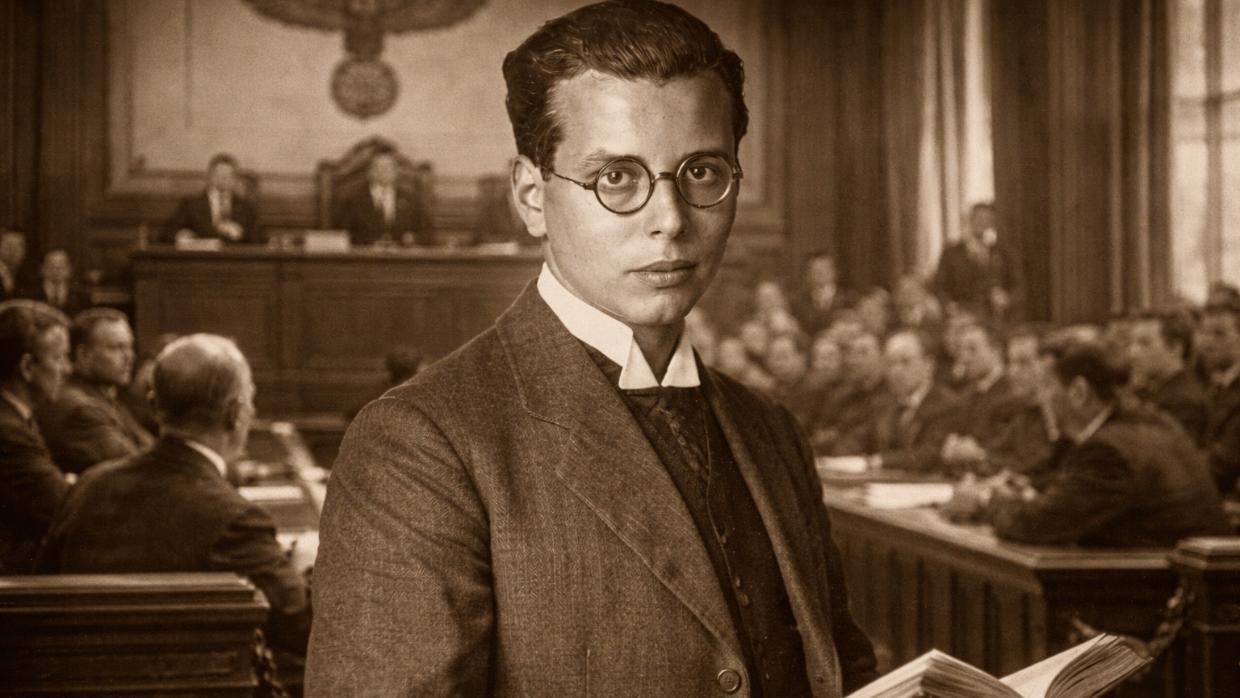
Hitler was on the witness stand for hours. He was flustered, sweating, stuttering and ticked off.
On May 8, 1931, his Nazi party was essentially on trial, the legality of its methods questioned after some of its stormtroopers had attacked a dance hall frequented by their political opponents.
Three were killed and nearly two dozen wounded in the premeditated attack at Berlin’s Tanzpalast Eden (Eden Dance Palace) in November 1930.
Six months later, 27-year-old Hans Litten was grilling the future despot he had summoned to testify, some two years before the Nazi rise to power.
Litten was well-prepared, intelligent, and belligerent.
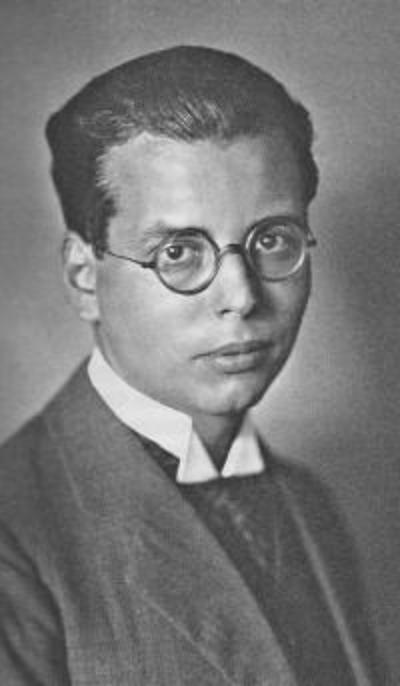 Hans Litten
He pushed Hitler, forcing him to “search convulsively for an answer,” according to a contemporary newspaper report.
The violent leader was out of his element, publicly humiliated by Litten, the son of an apostate Jew.
Like many German Jews of his era, Hans’ father had converted to Christianity in order to further his career, a move that succeeded in that regard as he became Dean of the University of Königsberg’s Law Faculty.
Yet from a young age, his son, who saw his father as a bourgeoisie opportunist, opted to reconnect with the Jewish roots his father had tried to sever.
Hans rejected the elite school his upper middle-class parents sent him to, decided to learn Hebrew, dabble in mysticism and become an active member in a Jewish youth group. He and a close friend even started a movement within the group called the Schwarzer Haufen (“Black Gang”) to “inject political awareness into what had largely been an apolitical youth league,” according to Knut Bergbauer, co-author of the biography Hans Litten – Anwalt gegen Hitler (Hans Litten – Lawyer Against Hitler).
Hans saw connecting with his Jewish heritage and social action on behalf of society’s weaker elements as two inherently intertwined aspects of his life and identity. They certainly played a role in the bold actions he took that brought Hitler to the witness chair, which wasn’t even his first swipe at the Nazis.
For years, in fact, “trial after trial, appeal after appeal, he waged a ferocious and single-minded legal battle… to expose the Nazis’ programmatic violence [and] hold their leaders accountable,” scholar Benjamin Carter Hett wrote in Crossing Hitler: The Man Who Put the Nazis on the Witness Stand.
Driven by his deeply-ingrained sense of justice, Hans didn’t just oppose Hitler and his party either; he took on anyone challenging or trampling upon the rights of innocent Germans. Two years before interrogating Hitler, for example, Litten sought to have Berlin police chief Karl Zörgiebel (who despised the Nazis and would later have his passport revoked by them) charged with incitement to commit murder following a brutal crackdown on protestors. The charges didn’t stick, but it was one of many legal actions the young lawyer would undertake during his brief yet rather high-profile career.
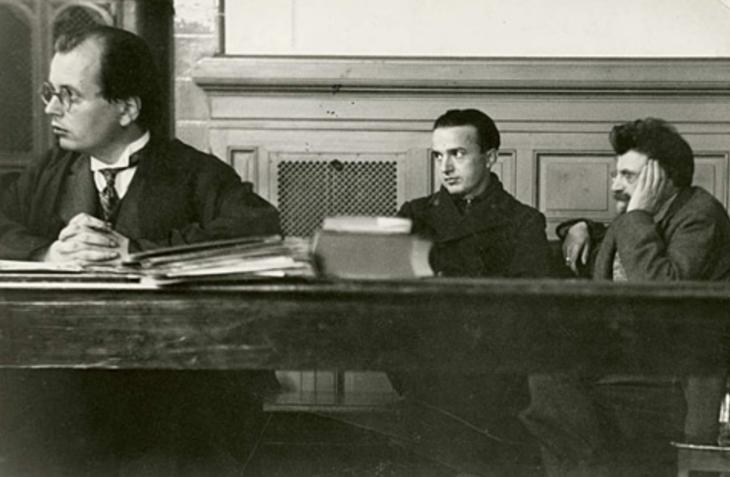 Litten in court. Photo: hans-litten.de
From the day he cross-examined Hitler, Litten would be a marked man, but more for the humiliation he had caused than because of his Jewish ancestry.
After the Nazis took control of Germany, Litten was one of the first rounded up, spending the rest of his life imprisoned, among the earliest victims of the concentration camp system.
Enslaved for half a decade until his death in Dachau at the age of 34, Litten reportedly lifted the spirits of his fellow inmates on many occasions, often reciting works of literature from memory and giving lectures on different topics. When he and his fellow prisoners were cynically required to produce something in celebration of Hitler’s 46th birthday, he recited a favorite, well-known poem he had committed to memory, entitled, “Thoughts are Free”, which includes the following words:
“Thoughts are free who can guess them?
They fly by like nocturnal shadows
No person can know them no hunter can shoot them
with powder and lead: Thoughts are free…And if I am thrown into the darkest dungeon
all these are futile works
because my thoughts tear all gates
and walls apart: Thoughts are free”
Though he died in captivity before even seeing the fully-realized extent of the Nazis' evil schemes, Hans Litten’s legacy, largely overlooked for decades, would be of a man unafraid of challenging the darkest, most violent elements in society, fighting injustice regardless of its price.
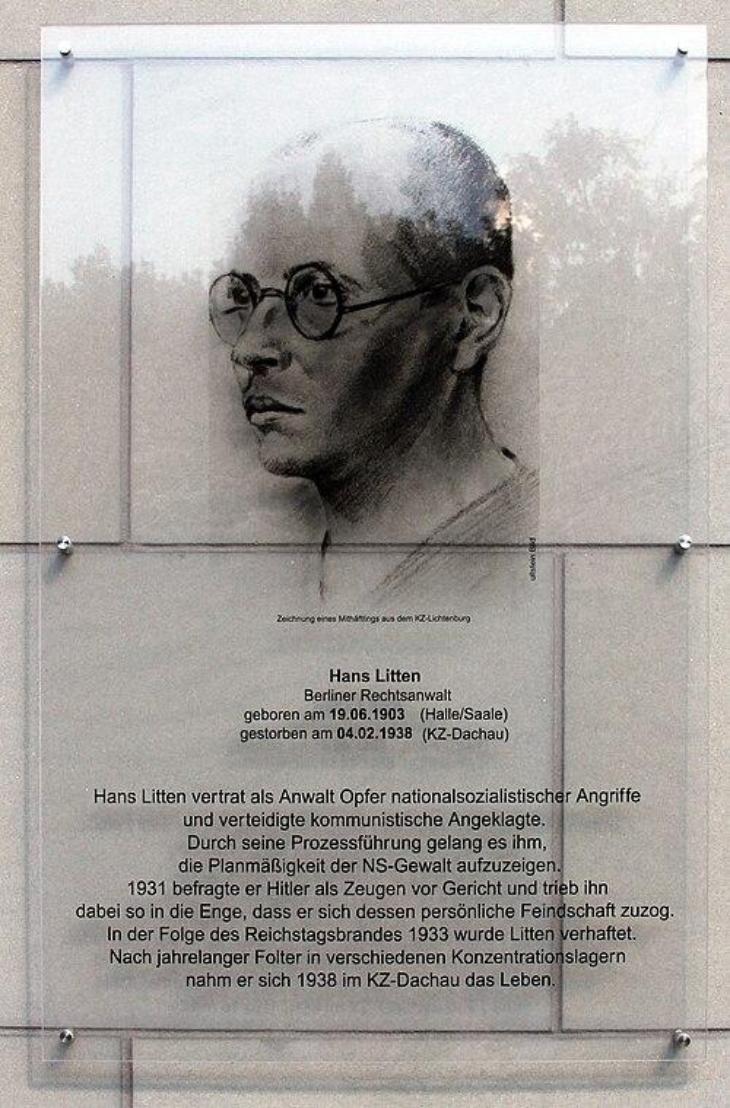 Memorial plaque of Hans Litten in Berlin












A wonderful story of a great amazingly brave man! Thank you for sharing his story!
Great article. While I had heard of Hans, I had never heard his story. Definitely a life defined by courage and independent critical thinking.
There are many Jewish heroes. We are a nation of hero’s. Throughout its existence, the Jewish people have survived all types of murders, tortures and degradation,and we are still here while other societies have perished. All this is by the grace of of Hashem, who may have better things in store for us.
A fascinating piece of history. Thank you! 👌💯🙏✡️
Thank you for this article. Die Gedanken sind frei" (Thoughts are free) is a traditional German song about freedom of thought. The original lyricist and the composer are unknown, though the most popular version was rendered by Hoffmann von Fallersleben in 1842. (wikipedia)
What happened to his parents?
How seldom are there articles about German Jewish opposition to the Nazis published!
Thank you so much for this article!
I as a proud Jew of proud “Yekkes” who recognized what the fate of their community would be and left the land they had lived, prospered and fought for for generations..am proud of this man, but sad that he was murdered for his recognition of what an evil National Socialism was to become in Germany!
Thank you for publishing this picture in time! I would like to know more about Hans Litten! MHDSRIP
Hi, I just wanted to say thank you for posting that article. I’ve never known about him. And it makes my heart happy to hear of such a person so young who took in Hitler like that and went back to his Jewish roots knowing it would bring him pain in where he lived. Thanks again for this article.
I think this article is oversimplifying a complex figure and it is a bit misleading. Nevertheless thank you for posting about him.
How is it misleading? Do tell...🙄
Because he wasn't actually Jewish (only his father was).