




 Would You Kill Baby Hitler?



7 min read


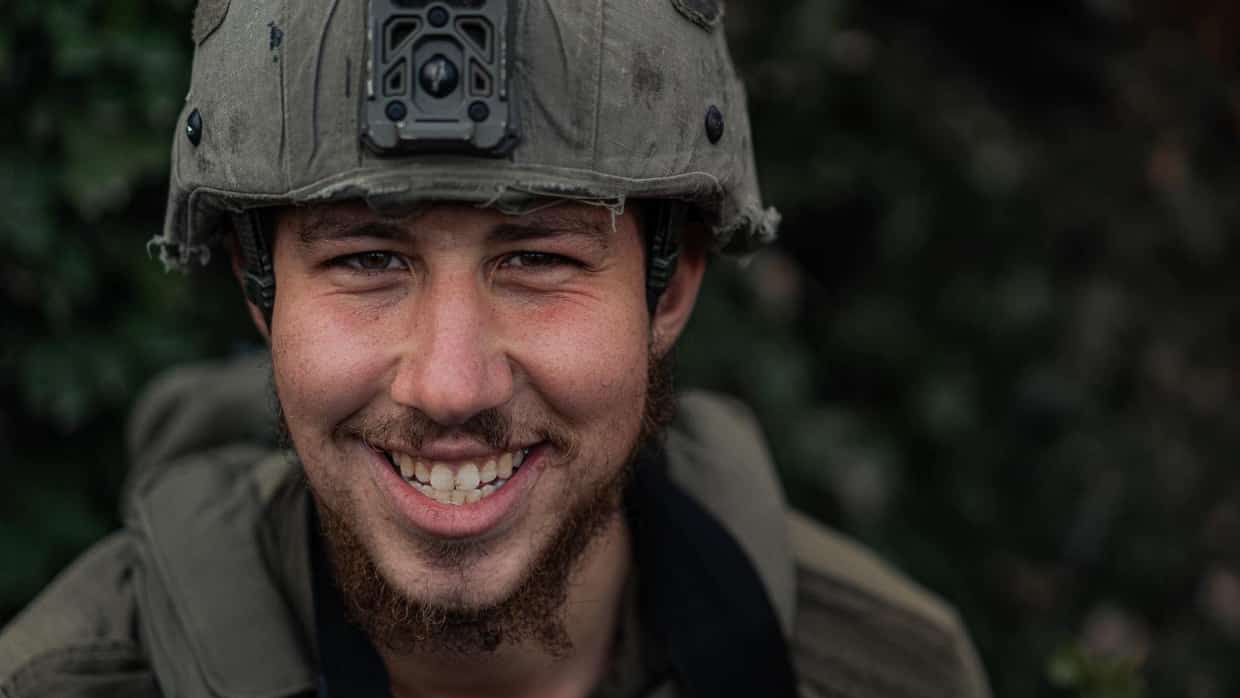
Moshe Katz grew up in New Haven, played basketball, and made friends easily. He gave up his life defending his people.
Growing up in New Haven, CT, Moshe Yitzchak Katz enjoyed playing basketball and baseball and getting together with friends. He could have lived a comfortable life in America but he responded to a higher calling and enlisted in the Israeli army.
“After October 7th, he felt there was a call, there was a duty, and he really wanted to make a difference,” says Moshe’s father, Mendy Katz.
Following in the footsteps of his older sister, Adina, who had served in the Israeli army’s Search and Rescue unit, Moshe left the American comforts behind and joined the IDF. He gave it his all, overcoming all the obstacles with a smile. On March 28th, 2026, during operations in southern Lebanon, a Hezbollah rocket strike hit his unit, killing him and wounding several other soldiers. Moshe fell in battle at age 22, giving his life for his people.
Moshe did not set out to become a hero. His childhood was pretty ordinary. “He made friends easily but he wasn’t a popular kid,” says his father. “He wasn’t somebody that went above and beyond. But this is something he became.”
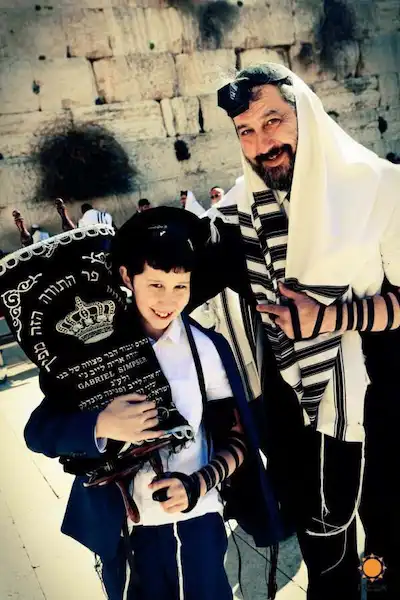 Moshe celebrating his bar mitzvah in Israel
Moshe grew up in the small and tight-knit Chabad Jewish community in New Haven. Moshe’s parents are very involved in the community, always available to help anyone in need. Mendy, Moshe’s father, credits his dedication to community to his own father, Binyamin, who used his photographic memory to smuggle close to a thousand Jews out of the Soviet Union on behalf of the Lubavitcher Rebbe in the 1960s.
Binyamin’s children and their families are continuing his legacy, volunteering in the Jewish community and helping those in need. Mendy is a member of Hatzalah, a volunteer emergency medical services organization, and his wife, Devorah, organizes meals for new mothers. “The sense of giving back to the community in our family is very powerful,” says Mendy.
Nobody demanded anything of Moshe. They just led by example and encouraged him to follow his dreams.
Moshe’s parents were surprised to learn that he wanted to join the IDF. It wasn’t something they expected from their laid-back, happy-go-lucky son. But they were also pleased.
“We thought it would be great for him,” says Mendy.
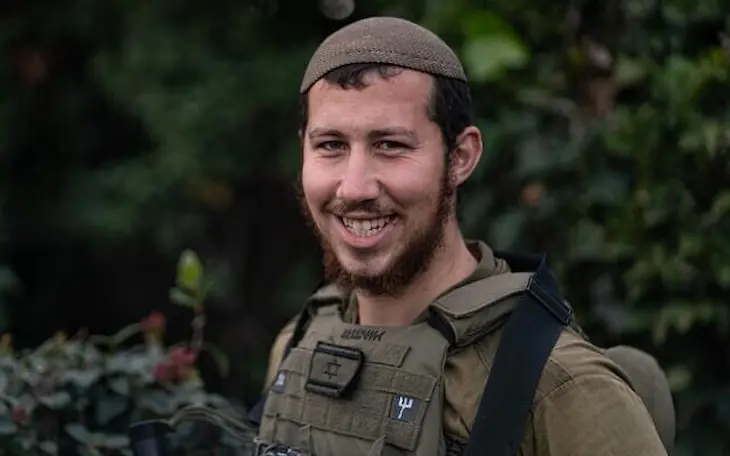
Moshe was determined to join a top combat unit, which is not easy even for native Israelis. His first step was the preparatory program where he studied Hebrew and gained the background knowledge. He worked very hard and he did very well. Even though he didn’t get into the elite unit he’d dreamed of, he was accepted into the paratrooper division.
With his warm smile and easygoing personality, he was liked by everyone he came in contact with.
“Our son was very strong, mentally and physically, and he wanted to be the best. During training, the soldiers do many difficult things, like sleeping in the mud or carrying heavy backpacks for 20 kilometers.” He embraced the hardship, staying focused on the goal of graduating. Even when others struggled, he kept a steady smile, encouraged them to keep moving, set the pace, and used his mindset to lift the team—helping them push through exhaustion and finish strong together.
Moshe was deeply religious, committed Jew who fully accepted everyone, regardless of their religious beliefs. “He never compromised,” says Mendy. “There were certain nights during training when the soldiers were not allowed to wear anything else except army-issued clothing. The only exception is tzitzit. Moshe would carry a couple of pairs in his knapsack. There were times when his fellow trainees were freezing cold. And when you're freezing cold, any layer will help. Moshe was able to give a few pairs of tzitzit to some of his friends because there was nothing else they could wear, and he was able to help them stay warmer in the cold desert nights.”
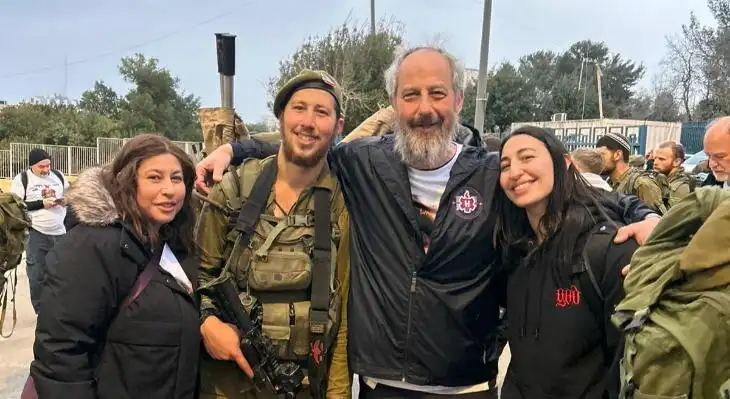
Moshe’s giving and caring nature was evident in everything he did. “When he would walk into a room, he would try to make a joke and try to make people laugh,” says Mendy. “He lived life with happiness. He lived life to the fullest. He understood that nothing is really such a big deal. It's all going to work itself out. God's got it all figured out.”
At the graduation ceremony after the completion of his training, Moshe exuded pure happiness at having achieved his goal. Mendy feels fortunate that he was able to attend the graduation and spend some time with Moshe.
Shortly after Moshe’s graduation, the war with Iran began. “He was called back to base,” recalls Mendy. “He had the option to come home.” After graduation, lone soldiers are allowed to go home for a month. He considered going to America or staying with his grandparents. “But when he heard that his unit was going into Lebanon, he wanted to be with them,” says Mendy. “They were his brothers in arms. He decided to stay.”
“We didn't know what day he was going in and what was going on,” says Mendy. “He was telling us he was preparing for it. And then, he had sprained his ankle an hour before he was killed. He could have gone home because, technically, he was injured. But he told his commander that he was fine, he was still going in.”
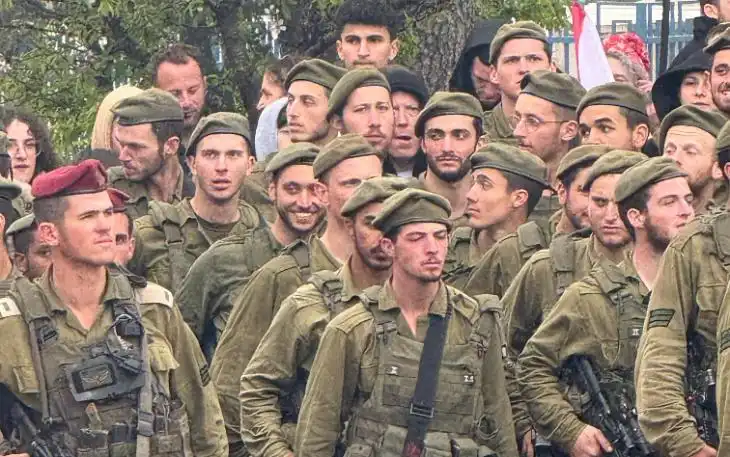 Moshe, in the top center, being inducted into the IDF
Back in America, Moshe’s parents worried about him. “There were times when I wasn't able to speak to my son because he didn't have his phone with him, due to army regulations,” says Mendy. “I think that for every parent, it's an unknown every single day, it's on the back of their mind. But nobody thinks this is going to happen to them. You just want to hear how their progress is going, and you want to support them. And it's difficult to really see what they're going through, because they're not sharing that much. The children will always say, yeah, it's fine, and I heard from other soldiers that it wasn't so fine. It's hard work to be a paratrooper.”
Moshe was killed in battle weeks after his graduation. His family is still trying to come to terms with their tremendous loss. Mendy says, “Of course, we don't know why God does what He does. I have received so much love from around the world.”
He recalls the tremendous support he received from the IDF, the thousands of people who showed up at the funeral, the numerous messages he’s been receiving from people all over the world, most of whom he’d never met. “On one hand, I have this horrible loss that I've lost my son, and on the flip side, I have just adopted thousands of other people,” says Mendy. “It's beautiful, it has protected my heart and not allowed me to cry.”
He adds, “My family is strong, my kids are slowly going back to school one at a time to make sure that they're okay. The IDF has been instrumental in making sure that our family is all set, getting back his personal belongings, and just sharing amazing stories about him, things that we never knew. Hearing them from the soldiers makes you feel really, really good. Of course, the hole is there, and it's something that you just can't replace. But the more I learn, the more proud I am. Moshe left behind a legacy of changing your lifestyle for the betterment of the Jewish people.”
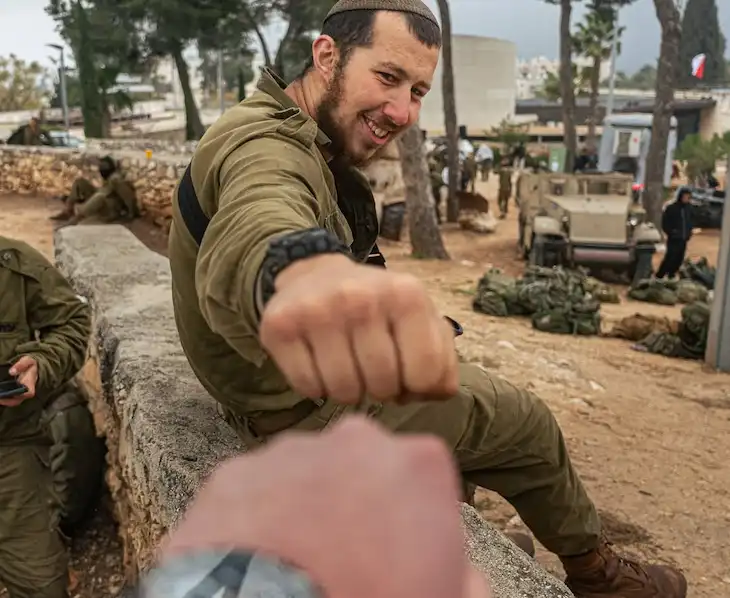
Another component of Moshe’s legacy is bringing together Jews from different backgrounds and uniting for a common cause. Mendy says, “During shiva, I had the opportunity to meet thousands of people from different walks of life. The unity that I experienced was something that my son was able to bring together. He was part of a group of soldiers that had very different religious backgrounds. Yet, they were all one family. They were all best friends. They all hung out together after training. They all shared together. They were like brothers. And this is what we need. We need unity, regardless of our differences, regardless of our uniforms, regardless of how we are perceived. We're all one soul, we're all one heart, we're all one family. And we have to find a way to unite and connect with each other more and more often.”











Heartbreaking.
My condolences to the whole family, the father Mendy sounds like a tzadik; and to his mother Devorah, a tzadekess with whom I was in school together
A beautiful boy, my most sincere condolences.
I appreciate this article. It's a loss we should never know - and one we can never forget.
What a strong family! May their son’s memory forever be a blessing.
An inspiring article, true to the legacy of Chabad. May you and your family be comforted and blessed by HaShem. And may we soon seed unity in our people bring about the Third Temple.
Amen!