




 The Three Liberations of Passover






6 min read


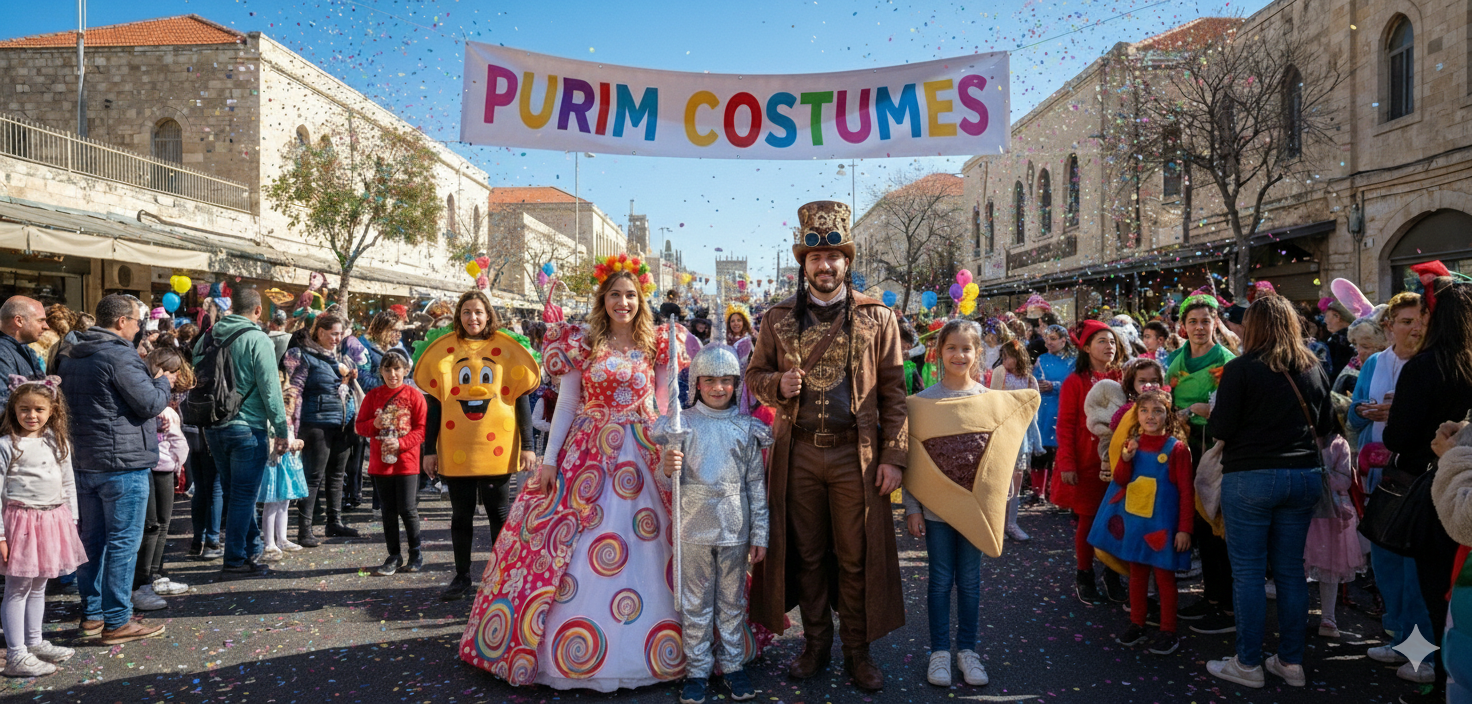
What is the reason many people wear costumes on Purim?
Interestingly, the custom to wear costumes on Purim seems to be relatively recent. The earliest mention of it we have is from early 14th century Italy – by a Rabbi Kalonymus, a scholar, philosopher and translator from Provence. Scholars from then and later noted with some consternation the practice of cross-dressing on Purim (as well as during wedding celebrations) – for men to dress as women and vice versa – which transgresses an explicit Torah prohibition (Deut. 25:2). (In practice, some authorities do permit it – since it is clearly done in jest and not for immoral purposes – but the majority frown upon it or forbid it entirely – see Rama, O.C. 696:8 with Mishnah Berurah 30.)
Being that such a practice appears to be less than a millennium old – quite recent by Jewish standards – we do not find early classical sources such as the Talmud addressing the practice or offering reasons for it. However, more recent authorities have come up with some insightful explanations. Below are the primary reasons I have seen:
Purim is in truth a hidden holiday. On the outside, it was a string of coincidences which saved the Jews – Ahasuerus’s choice of Esther as queen, Mordechai’s overhearing the plot to assassinate the king, Ahasuerus’s insomnia just before Haman arrived to request Mordechai’s hanging, etc. (See here for a brief summary of the story.) In fact, God’s name does not even appear in the entire Scroll of Esther (Megillas Esther, or more simply, the Megillah). Yet behind the scenes, it was the Hand of God which truly brought about the salvation. Those discerning enough to perceive it recognized God behind the veils – and understood that even when the world appears to function as normal, following chance and the laws of nature, it is truly God who is in control. Therefore, just as God was hidden during the Purim story yet in truth present, we hide ourselves behind our masks and costumes while we celebrate the salvation. In doing so, we remind ourselves that the world is not what it appears on the outside. Rather, the outside world is nothing more than a façade obscuring the true power of God behind it.
In a variation of the above, one of the main themes of Purim is the total reversal of the fate of the Jewish people. The Jews went from a helpless minority threatened with annihilation to a favored class, granted carte blanche to destroy their enemies. Wearing costumes – which entirely transform a person's looks – reflects the Jews' utter transformation – from victim to victor.
Some suggest a practical reason. Purim is a special day for giving charity. The Talmud writes that we give to “anyone who sticks his hand out” – without inquiring how needy the person actually is (Bava Metziah 78b). Thus, since the poor – and even people who would rather not become known as paupers – would be especially active going out collecting on Purim, the custom arose for them to wear masks to hide their identity and preserve their dignity (Sichos Chachamim, p. 30).
Since the Megillah is a story of royalty, crowns, regal robes, and a decorated palace, one of the ways in which we commemorate the miracle is in wearing fancy costumes. The Megillah contains many references to and descriptions of the royal garments the various characters of the story wore (e.g., 5:1, 6:8, 8:15) – as well as a providing a detailed account of the palace decorations during Ahasuerus’s party at the beginning of the story. Mordechai in particular went from wearing ash and sackcloth to royal robes; thus, our change of clothing from the ordinary to the gaudy encapsulates the entire Purim story.
At the end of the Purim story, when Mordechai and the Jews were ascendant, the Megillah describes how many gentiles feigned Jewishness in order to curry favor with the Jews (8:17). This led to the suggestion that our costumes commemorate this amusing historical anomaly. Just as the non-Jews hid their identity, pretending to be Jewish, so too do we wear costumes to hide our identities (Me’am Lo’ez; ArtScroll, Megillas Esther there).
One of the key elements which brought about the Purim salvation was unity. Haman threatened the Jews because he saw them as a nation “scattered and dispersed” among Ahasuerus’s kingdom (Esther 3:8). The Jews were contentious and disunited, many compromising their Jewishness in order to blend in with whichever one of Persia’s 127 provinces in which they lived. And as separate and isolated individuals, they were quite vulnerable to the threats of the great masses which sought to destroy them. In response, Esther said to “gather all the Jews” (4:16) – to bring them together, as a single nation, united in God’s service. We too wear costumes to hide our individuality. Nobody knows who’s inside a gorilla costume. By doing so, we obscure our separateness and individuality – and become a united nation. (See here.)
Hiding our identity behind a mask commemorates the fact that Esther did the same – not telling the king or anyone else she was Jewish (2:10,20).
See here for an interesting discussion on the significance of Purim costumes. See also here for a similar discussion by Rabbi Ari Enkin.
One final comment (at least for those of you who managed to read this far). Although Purim is a joyous day in which we feast and party, it is a holy day as well, in which we are especially close to God. Thus, Jewish authorities advise wearing Shabbat clothes throughout the day (Mishnah Berurah 695:3). This is especially appropriate for synagogue services, as a synagogue is a hallowed location and praying is a form of standing before the King. Thus, although children may certainly dress as they please the entire day, grownups who would like to dress up should reserve it for times of the day other than synagogue services.
→ Ask the Rabbi a Question ← Click here to comment on this article











Excellent survey of the topic. Thank you! ~ Gershon Wolf, Chicago, IL