






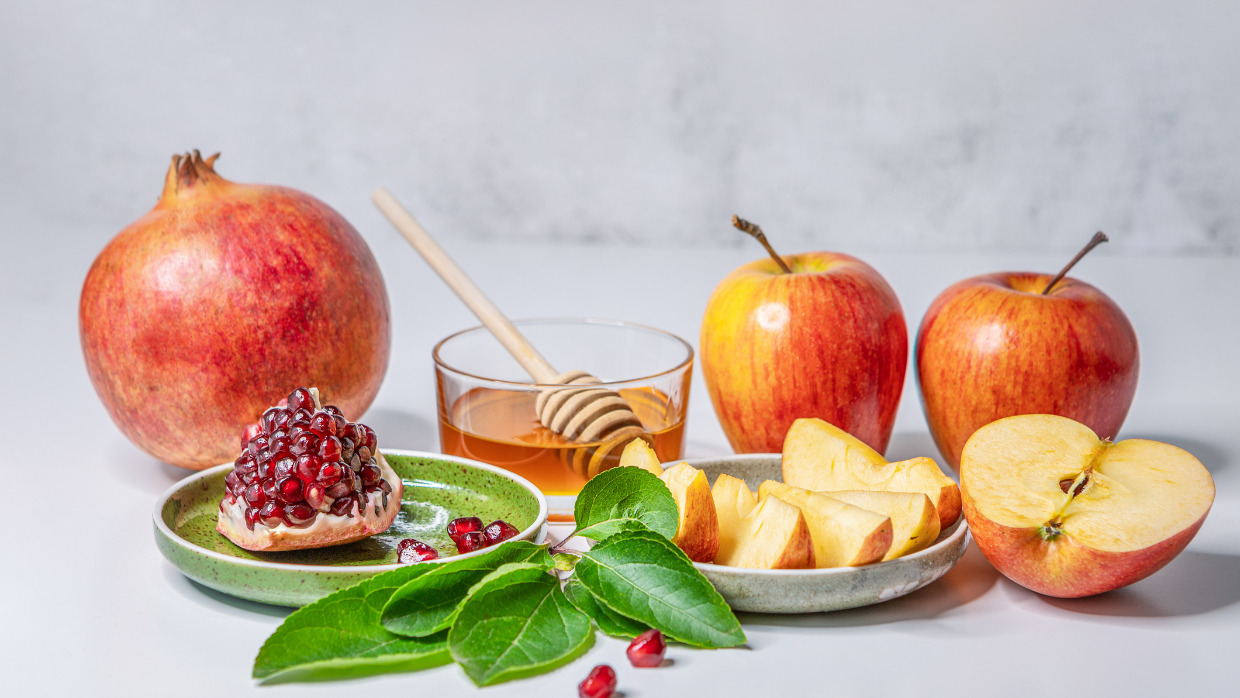
As Rosh Hashanah, the Jewish New Year, draws near, many Jews prepare themselves for attending long services at their synagogues and eating apples dipped in honey. Some may not associate it so much as a holiday that’s celebrated at home with family the way Passover is, but for many Jews around the world, having a Rosh Hashanah meal with family and friends is just as big of a part of the holiday festivities as hearing the shofar.
There are plenty of foods that Jews associate with their New Year holiday traditions, but those foods can vary depending on where you live or the background of each family. For many Ashkenazi families in the West, holiday meals will likely include a tender brisket with traditional sides such as tzimmes, a sweet carrot dish, and a sweet round raisin challah. Sweet foods are meant to represent the wish for a sweet New Year.
Many Sephardi and Mizrahi families have the tradition of doing a Rosh Hashanah seder, a practice that many others have begun to adopt in recent years as well. This seder includes symbolic foods, for which a prayer is said over each one, and some families will then incorporate these foods into recipes during the meal. These foods include dates, string beans, leeks, swiss chard or beets, squash or gourd, pomegranate, apples with honey, and a fish head.
Even among the symbolic foods for the seder, there are variations depending on the family's background. Some Mizrahi families, particularly from Iraq, use sheep’s head instead of a fish head. A head is meant to symbolize Rosh Hashanah being the “head” of the year, as well as the idea that we should “be like the head and not the tail.” The tradition of using sheep instead of fish has additional symbolism, as it represents the lamb that was sacrificed instead of Isaac in the Akedah, which is a story read from the Torah on the second day of Rosh Hashanah. For vegetarians or those who might be squeamish at the idea of an animal head on their holiday table, this can be substituted with a head of lettuce or a head of cauliflower.
Indeed, my Iraqi in-laws always serve a savory slow-cooked lamb every Rosh Hashanah (even if they don’t include the head), which was a change from the traditional holiday brisket I grew up with in my Ashkenazi home, but certainly not one I complain about. The simanim, symbols from the seder, are worked into the meal, whether it's with pomegranate seeds in the rice, dates used to cook the chicken, leek latkes, and more.
For Moroccan Jews, it is traditional to cook couscous with seven vegetables in it. The seven vegetables might vary, but the number remains consistent and is meant to bring luck in the new year, while the couscous grains represent numerous blessings. Portuguese Jews eat a savory pumpkin-filled pastry called rodanchas as part of their Rosh Hashanah seder, while Greek Jews have a special green bean and tomato stew called fasolakia.
In the Georgian Jewish community, it is traditional to make a special pomegranate chicken for Rosh Hashanah, which is made with pomegranate juice and molasses. Meanwhile, Persian Jews will cook meatballs in a sauce made from pomegranate molasses and beets. Beets are common to see at Rosh Hashanah meals as well, as some believe in eating them to ward off evil for the new year.
Honey famously makes an appearance in Rosh Hashanah traditions throughout the globe, whether it be dipping apples or challah into it or adding it to recipes. Ethiopian Jews make a drink called tej, a form of honey mead made by fermenting honey with water and some native grain, along with spices like cinnamon, cardamom, and ginger. However, in Turkey, as well as other communities, honey was avoided due to fear that it might contain the legs of bees, rendering it un-kosher. So, these communities dipped their apples in sugar instead.
The symbolism and meanings behind the different foods we all eat emphasize how we as a people connect to this holiday and what it means for us individually as well. No matter what food you’ll be eating at your Rosh Hashanah table this year, the beautiful part is that Jews are celebrating the holiday together worldwide, sharing the same hope and wish that we all have a sweet, happy, and healthy New Year. So, let us know what you’ll be serving on your Rosh Hashanah table, and have a Shanah Tova!















I'd like to add that in the Torah, "honey" is actually date syrup, or silan. Jews started using bee honey only about 1000 years ago
Great article!
miriam, we use green beans in our seder. So interesting all the differences
I wonder if the reason for some preferring sugar to honey is really bee-legs. The explanation I remember is that we do not want to use something which could also have negative connotations, and bees, as well as producing honey, sometimes sting. As an afterthought, excess sugar is reponsible for numerous health problems, and can be very addictive, so go easy.
Thank you, very interesting article. Just a small correction. One of the simanim is called rubia which is not green beans but black eyed beans.
Wishing you a sweet healthy year.
The pods of rubia (lubia) are certainly green.