








 The FlyDubai Miracle
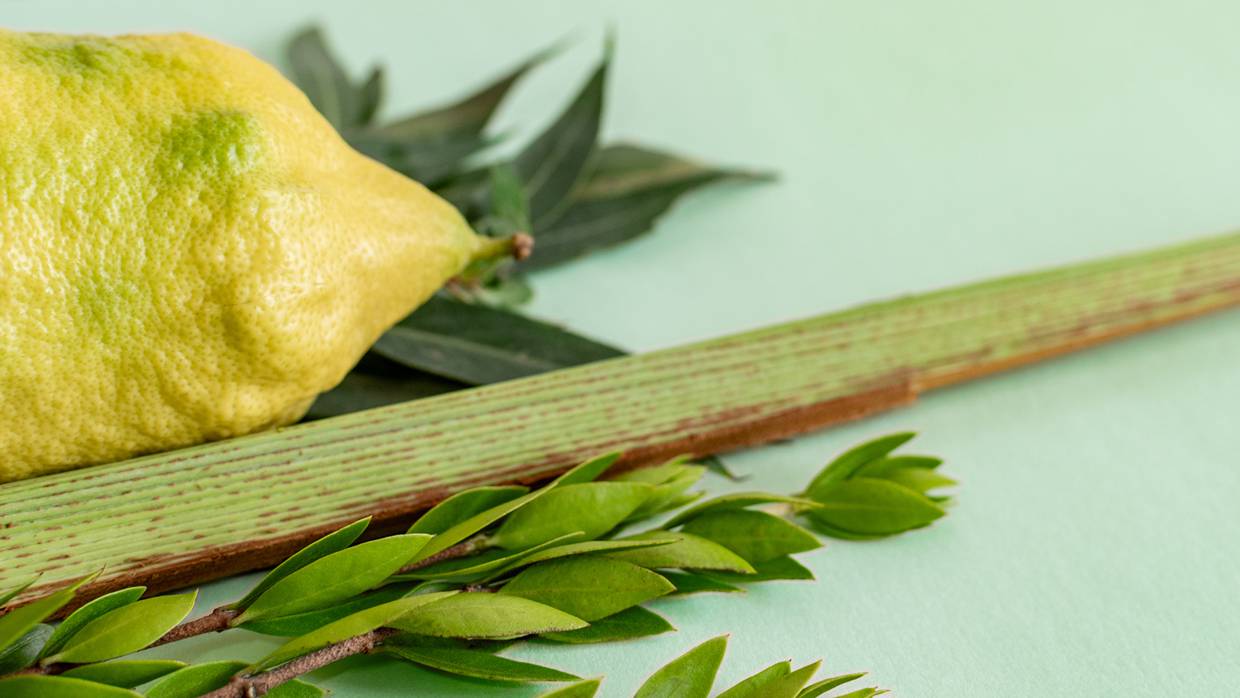








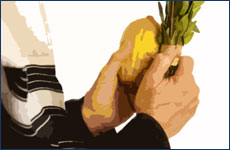
On Sukkot, we are commanded to wave the Four Species, each noted for its special beauty:
Following on the heels of the High Holidays is Sukkot, a seven-day festival (8 days in the Diaspora) characterized by the outdoor Sukkah-huts that we sit in, and the "Four Species" of plants waved together each day.
Sukkot is a holiday of immense joy, where we express our complete trust in God, and celebrate our confidence in having received a "good judgment" for the coming year.
On Sukkot, we are commanded to wave the Four Species, each noted for its special beauty:
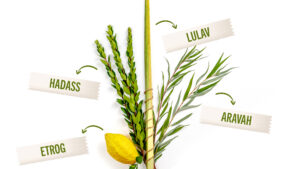
The citron, a fragrant fruit with a thick, white rind. It is often picked from the tree while green, and then ripens to a bright yellow.
The palm branch, which is defined in beauty by having a straight shape and leaves tightly bound.
The myrtle branch, which has a beautiful plated pattern of three leaves coming out from the same point in the branch.
The willow branch, which should have oblong leaves with a smooth edge.
Blessed are You, Lord our God, King of the universe, who has sanctified us with His commandments, and commanded us regarding taking the lulav.
בָּרוּךְ אַתָּה ה' אֱלֹהֵינוּ מֶלֶךְ הָעוֹלָם אֲשֶר קִדְּשָׁנוּ בְּמִצְוֹתָיו וְצִוָּנוּ עַל נְטִילַת לוּלָב

The Four Species are waved each day (except for Shabbat) in the synagogue, during the recitation of the Hallel prayers of praise. Hallel is followed by Hoshanot, where everyone circles a Torah scroll held on the Bima.
It is a special tradition to "beautify" this mitzvah by getting the nicest species available. At the very least, there are specific requirements to be valid for the mitzvah. Since the details are many and technical, it is not recommended to search through the forest on your own for these species! (Particularly the Esrog, which can easily be confused with a lemon.) Purchase a complete set from a reliable distributor; your local Jewish bookstore should have a "Four Species Set" with a rabbinical seal certifying their validity.
After the holiday, some have the custom to recycle the esrog as a "spice box" for use at Havdalah. In this way, the esrog goes "from one mitzvah to another." Here's how to do it: Buy a package of whole (not ground) cloves. Use an awl to make the holes, then place the cloves painstakingly into each hole. (Yes, this is a great way to keep kids occupied for hours on end.) Keep the cloved esrog in a box, to preserve the beautiful scent of the pungent citrusy etsrog mixing with the sweet 'n spicy cloves. (A plastic container carries a higher risk of mildew.)
We shake the lulav and etrog to express spiritual ideas tied to Sukkot. First, it symbolizes God's presence everywhere—we wave them in six directions (east, west, north, south, up, and down) to acknowledge God’s control over the entire world. Second, it reflects unity among the Jewish people, as the four species represent different types of Jews, coming together. Lastly, it’s also a prayer for rain and sustenance, that aligns with Sukkot’s agricultural roots.
Learn more about why we shake the Lulav and Etrog.
The Four Species symbolize the unity of the Jewish people by representing different types of individuals, each with unique qualities:
By holding all four together, we emphasize that every Jew, regardless of their spiritual level, is essential to the community.
Click here to learn how to properly dispose of the four species.









Thank you for the article, Rabbi Simmons. I thought that Sukkot is 7 days holiday also in the diaspora, because the 8th day is a separate holiday of the Shmini Atzeret, same as in Israel?
In the Diaspora, the first two days are full holidays, whereas in Israel the second day is already Hol Hamoed.
Shmini Atzeret is also two days in the Diaspora, such that Simchat Torah is celebrated separately on the second day, whereas in Israel both are celebrated on the same day.