In the western world, we often hear about “Jewish food” in terms of Ashkenazi specialties: kugels, gefilte fish, chopped liver galore. But Sephardi kitchens have created diverse, aromatic delicacies full of rich history for generations as well. If all the kitchen walls of all the Sephardi homes for millenia could talk, what a flavorful story of redemption and perseverance they would share!
“Sephardi'' is a general term for Jews throughout a broad geographical region– each Sephardi community has contributed to Sephardi cuisine. Sephardi Jews are the non-European Jews of the diaspora who lived largely in Mediterranean and Arabic cultures.
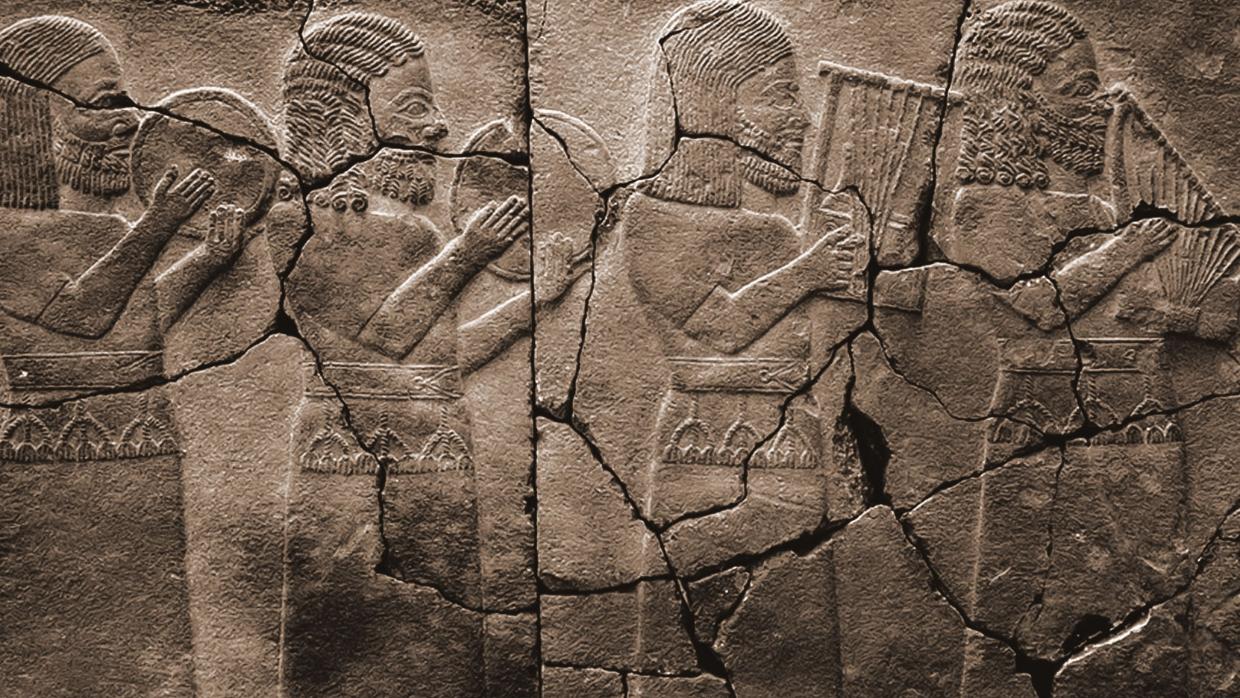
Sephardi Jews were highly regarded merchants in the time of the Silk Road (between the 9th and 11th century). They were responsible for bringing spices and recipes home with them that ended up greatly influencing the culinary techniques and results of the classic sephardi menu. We can thank the Jewish merchants of the Silk Road for introducing sweet and savory (often both!) dishes to Sephardi Jews.
Until the dark era of the Spanish Inquisition and eventual expulsion in 1492, many Jews also lived and flourished in Spain. When we were forced to leave the Iberian Peninsula we took nothing other than recipes out with us. Sephardi food incorporates Spanish, North African and Middle Eastern culinary traditions.
Jews have successfully adapted to culinary norms in all of the countries we have resided. We modify local cuisine to fit within the kosher dietary guidelines and our economic standing in our host countries.
On November 29, 1947, the U.N. voted to split Israel into two lands, one Jewish, one Arab. Prior to this, Jews in Arab countries were under considerable pressure, intimidation, and threat by their Arab neighbors to leave. This Jewish expulsion process picked up tremendously from November 30, 1947 and on– resulting in nearly a million Sephardi and Mizrachi Jews who fled from their homes in Israel’s surrounding Arab lands.
At this time, few countries welcomed another influx of Jewish settlers. Most fled to Israel, often by foot, with little but their memories and the clothes on their own backs. Not surprisingly, modern Israeli food is heavily influenced by tasty Sephardi dishes and cuisine these Jewish refugees brought with them back to our homeland.
Sephardi cuisine is full of lighter fruit and vegetable based dishes than its Ashkenazi counterpart. A combination of salads, fresh and dried fruits, stuffed vegetables, fragrant sauces,and aromatic spices highlight the ingredients that were readily available in the warmer, sunnier climates and well-worn trade routes of Sephardi communities.
 Source: JamieGeller.com
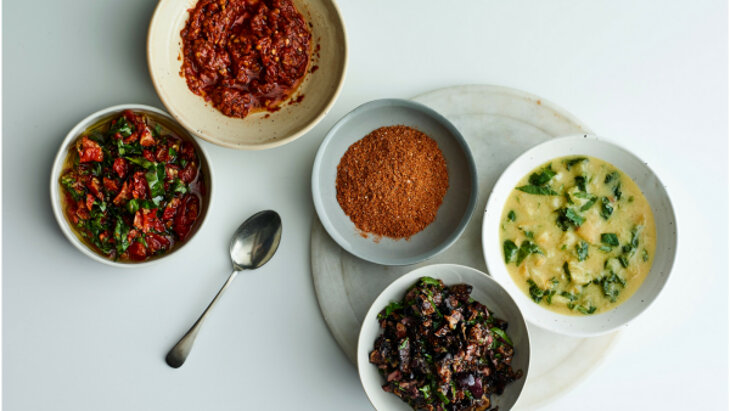
Pickles, dips, and fiery spice are all mainstays of the Sephardi kitchen. An assortment of pickled peppers, preserved lemons and other fruits and vegetables can accompany any meal. Schug is the hot sauce of Yemenite Jews. It comes in red or green, but regardless of its color, it’s ready to heat up any meal. Nowadays you can find it at most falafel and shawarma shops around Israel.
 Source: MarocMamama
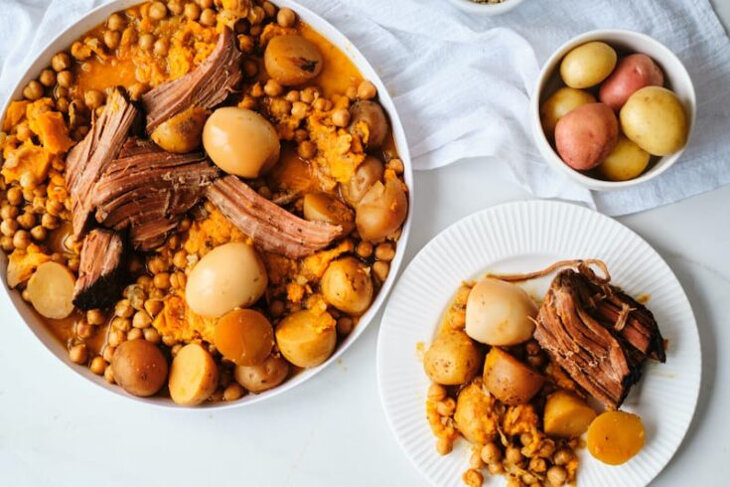
Spice aside, when literal heating up of food is not permitted (on Shabbat the Torah prohibits cooking), Sephardi Jews found ways to enjoy warm main dishes. On our day of rest, the cook rests too, but not the flavor. Sephardi cuisine accommodates our necessity to rest on Shabbat with slow-cooked meals like Hamin, also known as Dafina. Hamin originated in Spain and then immigrated as a culinary refugee to Morocco during the Spanish Expulsion, where it was renamed and adjusted for local ingredients until it became Dafina. Sometimes compared to Askenazi cholent, Dafina has a completely different flavor profile unique to the Sephardi kitchen (you’d be hard-pressed to find saffron in a traditional Ashkenazi cholent). While Dafina is a slow cooked meat and vegetable stew, it also commonly includes eggs that hard boil during the slow cooking process.
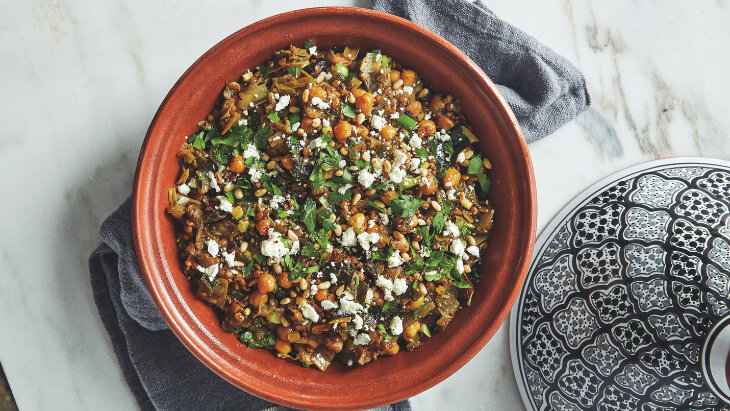
Moroccan Tagine is another Shabbat friendly dish. Traditionally slow cooked in a designated clay pot, Tagine can be made with lamb or chicken and a combination of dates, prunes, nuts, and olives. It can also be made vegetarian like this Leek, Lentil and Chickpea Tagine.
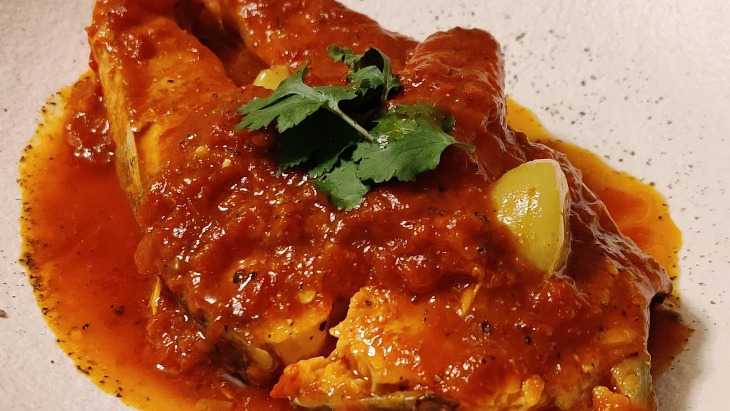
Also served on Shabbat, is Chraime, or Moroccan Fish– the vibrant fish dish that has an honored place on the menu. It’s like gefilte fish in that it is fish served specially for shabbat, but that’s pretty much where the similarities in presentation and flavor end. The spicy, often white fish (although salmon works as well) is stewed in a tomato sauce.

Sephardi desserts include a decent drink selection throughout the many sephardi communities. Turkish spiced coffee is served alongside small syrupy pastries like the delicate phyllo dough baklava. "Filo pastries'' stuffed with sweet or savory fillings, such as cheese, nuts, or fruit, are also a staple in Sephardi cuisine.

Other drinks like sachlav (so many spelling options for this one, you might know it as sachlab, or saklap) are enjoyed as a delightfully creamy winter drink (move over hot chocolate). The hot thickened milk flavored with rosewater is topped with cinnamon, nuts, and raisins. When left to chill it becomes a pudding known as Malabi. The treat is topped with syrup and sometimes more rosewater– a recurring flavor in Sephardi desserts.
Eating and drinking with company is a beautiful mainstay of the Sephardi home.
“My father was a really good cook. Take out was never a thing for us growing up. Like most sephardi homes, the food at home was much better than anything we could get out,” shared Natasha Malka.
Natasha grew up with the best of both worlds– her father was a Moroccan Jew and her mother a Russian Jew. She had a front row seat to enjoy both cultures and both kitchens.
“I’ve been privileged to try so many cuisines, but to me Moroccan is the best,” Natasha remarked. “It reminds me of my origin and it’s where I feel most at home. From a non-bias point of view, I think because Moroccan food has influences from Spanish, Jewish, Arab, Berber– it has so much flavor, so many variations. It’s the best palette for me.”
Sephardi food surely differs in flavor and variety compared to its northern Ashkenazi cousin, but the running theme through every Sephardi dish is celebratory resilience and dedication to using food as a connecting point for both family and community traditions alike.