






 The Scientific Revolution, Genesis and Jewish Mysticism



7 min read
7 min read




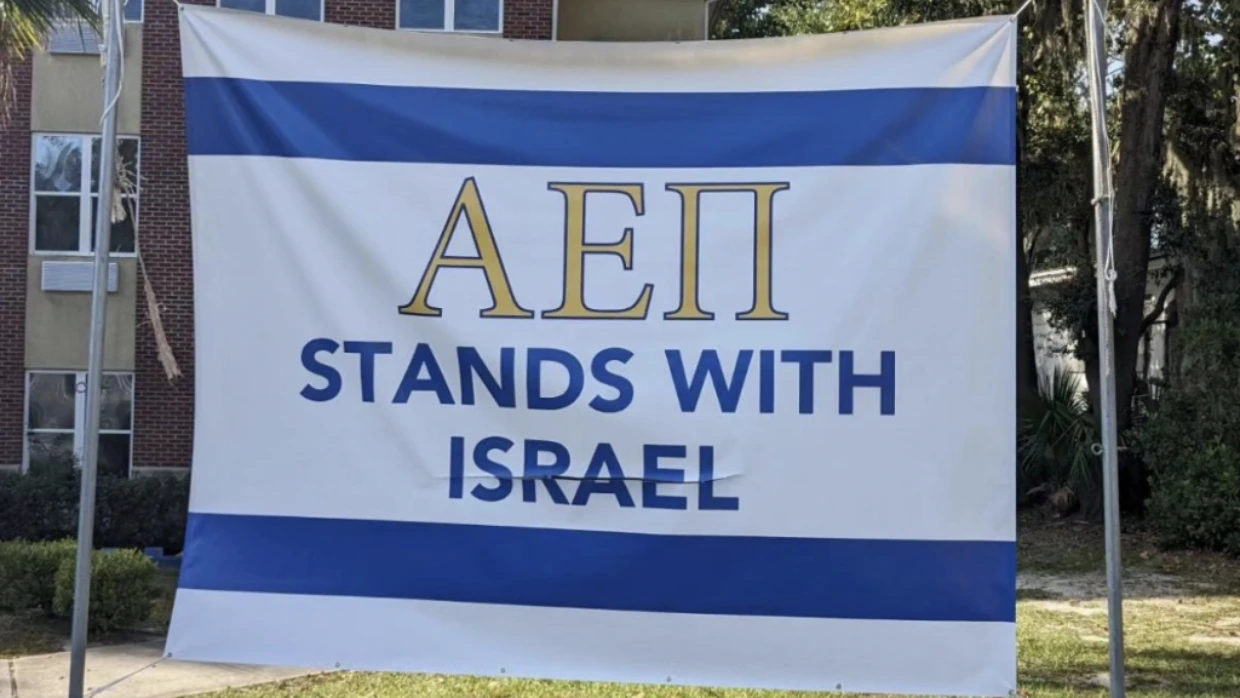
This should serve as a constitutional model for other universities nationwide.
Florida continues to lead the way with appropriate and constitutional responses to issues arising in the wake of the Israel-Hamas war. Campus protests have taken over numerous university campuses, and university administrators have failed to adequately respond while depriving tuition paying students of their safety and right to access public areas of campus. The First Amendment is basic to our Constitution, but it is not limitless, and universities have the right (and responsibility) to regulate the time, place, and manner of such protests to protect its students’ safety. As the University of Florida’s President, Ben Sasse, has explained: “Just as we have an obligation to protect speech, we have an obligation to keep our students safe. Throwing fists, storming buildings, vandalizing property, spitting on cops and hijacking a university aren’t speech.”1
Below is a short summary of some of the violence and unlawful conduct that has ensued from recent anti-Israel protests on campuses nationwide. Following October 7, 2023 and the inception of the Israel-Hamas war, Jewish students on campuses nationwide have been targeted with specific threats to their safety. For example, Tessa Veksler, the Jewish student body president at the University of California Santa Barbara found in her office at the multicultural center handwritten signs which stated: “You can run but you can’t hide, Tessa Veksler supports genocide”, “Get these Zionists out of office,” “Zionists not allowed,” “When people are occupied, resistance is justified[.]” 2 Veksler shared that her “parents fled the former Soviet Union, where they were discriminated against because of their Jewish identities. They came to the U.S. in search for a society in which they could live freely from antisemitism. A generation later, the same hate has reared its head[,] but I am not afraid, and I am not going anywhere.”3
Many of the anti-Israel protests have incited physical violence against students, professors, and guest speakers on campuses. At Yale, a Jewish student, Sahar Tartak, was stabbed in the eye with a Palestinian flag by an anti-Israel protester.4 “At the University of California, Berkeley, students were spat on and grabbed by the neck by anti-Israel demonstrators. When a small group of students held [an American and] Israeli flags in front of the Columbia protest, a young demonstrator, her face mostly masked by a kaffiyeh, stood in front of them with a sign that read, ‘Al-Qasam’s Next Targets,’ a reference to the wing of Hamas that led the Oct. 7 attacks.”5 Another student had his Magen David (Jewish star) necklace ripped off his neck by an anti-Israel protester.6
The violence spewed at anti-Israel protests extended to an Arab-Israeli journalist, Yoseph Haddad, who founded the interfaith group “Together Vouch for Each Other” and was scheduled to give a lecture at Columbia.7 When he arrived, anti-Israel protesters chanted “intifada” and he confronted them to explain that “intifada” means “violent uprising” and involves suicide bombing, car ramming, and stabbing to murder Jewish people.8 Haddad’s interaction is documented on video, and an anti-Israel protester shoved and punched Haddad in the face.9 A protester at a New York City anti-Israel protest shouted, “we are all Hamas, pig!”10
On April 30, 2024, students at Columbia violently broke into Hamilton Hall by smashing glass windows with hammers, barricaded the doors, sealed entryways shut with steel chains, and destroyed furniture “causing an untold amount of damage.”11 A Columbia facilities worker has shared that he was held hostage by the mob of anti-Israel protesters in Hamilton Hall against his will until the anti-Israel protesters finally allowed him to leave.12 After the anti-Israel protesters took over Hamilton Hall, Columbia noted that it was “left with no choice” and allowed the police inside to restore order and safety.13 A junior at Columbia, Eden Yadegar, explained that the anti-Israel protests have threatened the safety of Jewish students: “We have been attacked by sticks outside our library. We have been attacked by angry mobs and we have been threatened to ‘Keep f—ing running[.]’”14 She has noted that her parents moved to the United States from Iran to escape religious persecution and she attended Columbia to pursue the American dream, however that dream has “turned into a nightmare.”15
A ringleader of Columbia’s anti-Israel protests, Khymani James, has proclaimed on video that he believes “Zionists don’t deserve to live” and “be grateful that I am not just going out and murdering Zionists.”16 The protesters at anti-Israel protests have chanted “globalize the Intifada” and “there is only one solution; Intifada, revolution.”17 “Intifada is a reference to two historical periods in the late 1980s and early 2000s during which Palestinian terrorists committed indiscriminate acts of violence against Israelis, including suicide bombings, resulting in the deaths of more than 1,000 people.”18
In addition to violently taking over academic buildings and threatening physical violence against Jewish students, anti-Israel protesters have discriminatorily prevented Jewish students from entering public areas of campus. For example, Eli Tsives, a student at the University of California, Los Angeles, has shared a video of him wearing a Jewish star necklace as he attempted to peacefully enter the main entrance of UCLA’s campus to get to class and anti-Israel protesters blocking him from doing so, solely based on his religion.19
“The lengths administrators have gone to placate, encourage, and embolden the pro-Hamas protesters in the past weeks provide a signal reminder that there are at least two sets of rules governing elite universities today: one for the favored, protected class; the other for everyone else. And in case anyone has any doubt which category Jewish students fall into, the unwillingness of universities to enforce their own codes of conduct against pro-Hamas protesters in the months since October 7 should disabuse them.”20
In sharp contrast to Columbia and other universities around the country, the University of Florida has refused to let the anti-Israel protests escalate to the point of disruption and violence, and instead has implemented a constitutional policy that should serve as a model for universities nationwide.
The University of Florida’s policy unambiguously lists “Allowable Activities” including speech, expressing viewpoints, and holding signs in hands, and also lists “Prohibitive Items and Activities” including but not limited to “no demonstrations in buildings[,]” “no blocking ingress/egress,” “no violence[,]” and “no weapons[.]”21 The policy specifically delineates the consequences for noncompliance, including trespass and suspension.22
Steve Orlando, a spokesperson for the University of Florida, explained: “This is not complicated: The University of Florida is not a daycare, and we do not treat protesters like children — they knew the rules, they broke the rules, and they’ll face the consequences. For many days, we have patiently told protesters — many of whom are outside agitators — that they were able to exercise their right to free speech and free assembly. And we also told them that clearly prohibited activities would result in a trespassing order from UPD (barring them from all university properties for three years) and an interim suspension from the university. For days UPD patiently and consistently reiterated the rules. Today, individuals who refused to comply were arrested after UPD gave multiple warnings and multiple opportunities to comply.”23
Florida Governor Ron DeSantis stated ”When you are chasing Jewish students around, when you’re not letting a Jewish professor enter a building, when you are targeting people like that, that’s not free speech,’ DeSantis said. ”That’s harassment. That violates appropriate conduct and yet at Columbia, Yale, all these places, those guys, those folks rule the roost.… You do that in Florida at our universities, we are showing you the door.” he added.”24
The First Amendment to the United States Constitution and Article I, section 4 of the Florida Constitution protect against governmental infringement of an individual’s right to engage in free speech.
Not all expression is protected by the First Amendment which only applies to state action. Defamation, threats of violence, incitement directed at likely producing imminent unlawful conduct, child pornography, and obscenity are among the categories of expression that are not constitutionally protected by the First Amendment.
“[T]rue threats of violence” are a “historically unprotected category communications” and the United States Supreme Court has defined a “true threat” to be “serious expressions conveying that a speaker means to commit an act of unlawful violence.”25 “The existence of a threat depends not on “the mental state of the author,” but on “what the statement conveys” to the person on the other end.”26 Florida courts have concluded that “[t]rue threats of violence are outside the bounds of First Amendment protection and punishable as crimes. Therefore, ‘a defendant's First Amendment rights are not violated by laws prohibiting such threats.’”27 Indeed, Florida has a specific law which states: “It is unlawful for any person ... [k]nowingly to disrupt or interfere with the lawful administration or functions of any educational institution, school board, or activity on school board property in this state.”28 U.S. Representative Ritchie Torres noted: “No one has a First Amendment right to erect illegal encampments, blockade entrances, vandalize property, break windows and doors, block students from accessing campus, hold people hostage, and harass and intimidate ‘Zionists’ (i.e. most Jews). These are not activities protected by the First Amendment. These are crimes punishable by law.”29
If the government’s restriction on speech is content based, meaning if it regulates speech based on the topic, courts apply a strict scrutiny test requiring the government to show that its action is “narrowly tailored and serves a compelling state interest.”30 However, if the government action is content neutral, meaning that the restriction does not distinguish whether it applies based on what the speaker or protester is speaking about or protesting, then courts apply a time, place, and manner analysis.31 Therefore, public universities may “may establish time, place, or manner restrictions upon an activity which is otherwise fully protected by the First Amendment if the restrictions ‘[1] are content-neutral, [2] are narrowly tailored to serve a significant government interest, and [3] leave open ample alternative channels of communication.’”32 In short, the government can constitutionally restrict such expression, even in a public place, if the limitations on the time, place, and manner of the protected speech are reasonable.
The Eleventh Circuit Court of Appeals has noted that per the United States Supreme Court: “A university differs in specific respects from public forums such as streets or parks or even municipal theaters. A university's mission is education, and decisions of this Court have never denied a university's authority to impose reasonable regulations compatible with that mission upon the use of its campus and facilities. We have not held, for example, that a campus must make all of its facilities equally available to students and nonstudents alike, or that a university must grant free access to all of its grounds or buildings.”33 “[T]he First Amendment does not guarantee the right to communicate one's views at all times and places or in any manner that may be desired” and “[t]he Government, like any private landowner, may preserve the property under its control for the use to which it is lawfully dedicated.”34
As an initial matter, expression that constitutes a true threat of violence or incitement directed at likely producing imminent unlawful conduct is not constitutionally protected, and most of the expression/speech discussed above in Section A falls into those categories. The speech at the anti-Israel protests that do not fall into those unprotected categories can nonetheless be subject to policies which regulate the time, place, and manner of such protests.
The University of Florida’s policy allows for speech, holding signs, and expression. It is not a ban on speech. The policy is facially neutral, meaning it applies to all protests, regardless of the content. It does not discriminate in any way based on who the speaker/protester is or the nature of the topic that the speaker/protester wishes to address. The policy reasonably regulates the time, place, and manner of such protests while allowing for speech, holding signs, and expressing viewpoints. “A narrowly tailored time, place, and manner restriction on speech does not ‘burden substantially more speech than is necessary’ to further a significant government interest. So long as the policy is content neutral, the restriction ‘need not be the least restrictive or least intrusive means of doing so.’”35 The Eleventh Circuit Court of Appeals has recognized that a university “has a significant interest in ensuring safety and order on campus” and that significant interest supports reasonable time, place, and manner restrictions.36 Additionally, public streets and sidewalks outside of a university’s campus have been recognized alternative channels of communication.37
In conclusion, the University of Florida has properly regulated speech on its campus, and its policy should serve as a constitutional example for other universities. The policy strikes the proper balance in regulating the time, place, and manner of speech in a facially neutral policy while allowing for lawful protests on campus.
This piece was originally published in Florida Politics.












ironic that modern zionists are the nazis to the Palestinian people
In psychology it is called projection what they are they call us
It is impossible to divorce these laudable policies from the state's executive, conservative, republican governor Ron DeSantis. Perhaps as a corollary to the growing realization that the leftists and progressives are in fact no friends of the Jewish People, will be the realization that many conservatives truly are, and we will finally jettison our kneejerk antipathy toward them?
When a student matriculates (i.e, is admitted to pursue a course of study at a college or university) he should be given a handbook listing the rules and regulations of that institution. He should sign a document confirming that was given that handbook. The handbook should include the possible consequences for failing to follow those rules and regulations. Those consequences should include any suspensions or expulsions as well as recording onto his official transcripts the actions that were taken by the institution after any breaking of any rules and regulations. Later on, the student should be required to sign another document stating that he studied and understands the rules and regulations of that institution and the penalties that may be applied to him for not complying.
DeSantis is a Mensch. He capably handled the Covid crisis and is dealing with unruly protesters in the same manner. This is how things should be done in America. FJB!
Ive said before, students at Columbia, Rutgers, Penn, etc. should sue the Universities for at least half their tuition because the degree just became worthless in the workforce. When they go to apply, every employeer will now make their App. go to the bottom of the pile. They will be pigeon holed as a rioter now,, BECAUSE the administration did NOTHING to stop it (like Florida did).
If they did indeed riot, as most “protesters” are doing, they deserve the consequences. It’s the Jewish students who should sue - and for all the tuition!
Thank you Florida ! ! ! I hope other colleges and universities will follow your example.
I agree with this statement 100%