







 An Open Letter to Billy Crystal

10 min read
4 min read
4 min read




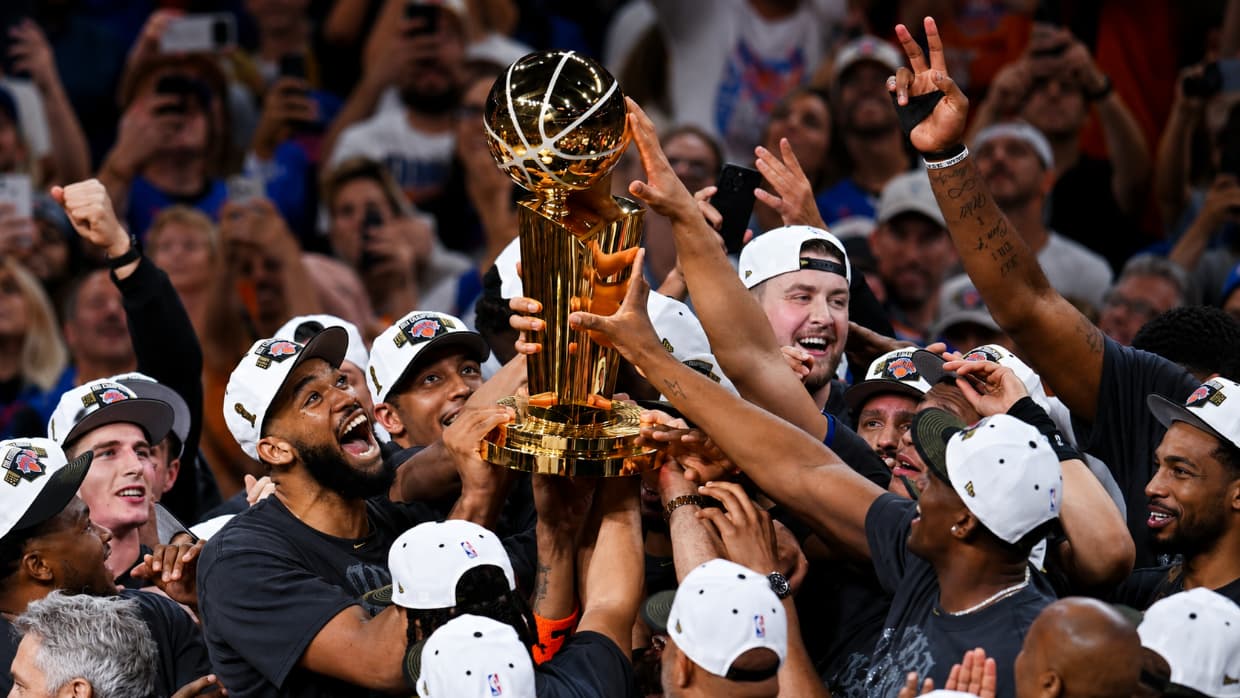
The Knicks just ended a 53-year drought with the greatest comeback in NBA history. The secret to how they pulled it off is one of the most powerful ideas in Judaism.
The Knicks actually did it.
After 53 years, the New York Knicks are NBA champions. Final score: Knicks 94, Spurs 90, Game 5. The city lost its mind.
This was a series that felt like it was written in Hollywood – comeback after comeback, the Knicks refusing to stay down, New York fans going from despair to delirium and back again, sometimes within the same quarter. A roster rebuilt from scratch over six years finally delivered what this city had been waiting for since before most of its fans were born.
But the game everyone will be talking about for years is Game 4.
The Knicks were down 29 points at halftime.
Most teams would have accepted defeat. Most fans had already written the story in their heads. But Knicks head coach Mike Brown had a different message built around four strong points.
And that message wasn't just about basketball. It's about life.
Players reminded each other to "stay with it" because they had overcome big deficits before and were a resilient group.
We all have ups and downs. Yet when we're in the middle of a challenge, we conveniently forget every obstacle we've already overcome.
Take a moment and look back. Remember the hardships you survived, the heartbreaks you healed from, the challenges that forced you to grow. The strength you need today may already be inside you, forged by yesterday's struggles.
The same is true of the Jewish people.
We've endured exiles, persecutions, expulsions, and unimaginable tragedies. Yet we've also experienced extraordinary triumphs, renewal, and rebirth. Jews are a people who know how to get back up.
The Hebrew word for resilience is cho-sen (חוסן) -- and it's no coincidence that it sounds exactly like "chosen." The Jewish people are chosen not for privilege, but for purpose. Chosen to be a light unto the nations, an example of morality and meaning in the world.
Becoming that kind of people requires endurance. Through millennia of agonies and ecstasies, the Jewish people have developed spiritual muscle. Whatever challenges we face today, we carry within us the resilience of generations.
Brown emphasized reversing the basketball, touching the paint, and making quick decisions on offense.
Sometimes we find ourselves stuck in a place we think we can't escape: a bad habit, a destructive relationship, an addiction, a character trait that keeps hurting the people we love.
Judaism offers a revolutionary idea: no matter how long you've been going in the wrong direction, you can begin again. Now.
The Torah calls this teshuvah -- often translated as repentance, but literally meaning "return."
Return to yourself, return to the person you know you can be.
We all get off track. We all hit dead ends and make mistakes. The question is whether you have the courage to turn around.
One good decision can change the trajectory of your life.
The team was told to lock in on assignments, put their chest on the ball, and challenge drives into the paint. Assistant coach Rick Brunson kept the team grounded by telling them to stop complaining about the referees and focus their energy on the court.
That's good basketball advice. It's also good life advice.
People generally fall into two camps: those who live in the past and those who live in the future.
Regret, blame, resentment, revenge – they all live in the past. Worry, fear, anxiety – they live in the future.
Show me the past. You can't. It's gone. Show me the future. You can't. It hasn't happened yet.
And yet we spend enormous amounts of emotional energy dwelling on one and fearing the other.
The only place life actually happens is right here, right now. Live in the present. When we drag yesterday's pain or tomorrow's worries into today, we poison the present. We become spectators in our own lives.
Stop arguing with the referees. Play the game.
Rather than trying to tie the game at once, Brown's directive was to chip away at the lead and give themselves a fighting chance going into the final period.
That's how every meaningful accomplishment happens.
I often tell my children, the thousands of women who travel with Momentum, and myself: you may not be where you want to be, but if you're pointed in the right direction, you'll get there.
Growth isn't a perfect circle – it's a spiral. Each year when we once again arrive at Rosh Hashanah, the Jewish New Year, we're hopefully not in the exact same place. Maybe we've moved forward three steps and backward two. But we're still one step higher.
Sometimes that's all it takes.
After all, as the Knicks know, you don't need to be ahead by 29 points. You only need to be ahead by one.
Congrats, Knicks. Congrats, New York. And congrats to each and every one of you who gets up every day, still in the game of life, ready to come from behind for the win.














STORY Power to Motivate Us?
We are human beings, not human doings!
Life is a story. I think if we look for the stories in our efforts, we can gain motivation.
As a child, I remember the story of "The Little Engine that Could" It is on YouTube.
The stories in Torah, can inspire us, to live the stories of our own lives, right now.
I never played basketball, or any other sport, but I can recall stories of my own efforts, and the stories of others. So, thanks to Lori for Inspiring us, with sports drama...
Very good take away from sports to life! Thank you!
Reading this article @ 6:11 AM gave me goosebumps. It is sooooo inspiring that I will read again tomorrow morning and the day after tomorrow.
Thank you!
Great Article...Lessson #5--We are responsible to put in the effort to reach a goal. G-D
controls the outcome.
Yes!
Very Gut Voch! Shavuah Tov! Rebbetzin Palatnik and to all of those making comments. I completely AND totally agree with Alan Ss comments. In the past Boruch Hashem I merited the honor of attending several Shabbatons where Rabbi and Rebbetzin Palatnik were among the highly respected guest speakers. Boruch Hashem Rebbetzin Palatnik has an amazing ability to relate a secular topic to the world of Orthodox Judaism in a manner and with language AND style that is understandable and relatable. This article is absolutely no different. Thank you for your wonderful insights. Kol tuv
Thank you so much!
Wonderful!
It is wonderful to read the wisdom of Rebbitzen Palatnik, even if it is only occasionally. The lessons she discusses in this essay about the NY Knicks are true life lessons.
Yishar Koachah!
Thank you ❤️
Great article… thank you for your insight.
My pleasure!
"EASY does it"
Lori, do you remember, when I gave you an EASY button, in Rochester, NY?
After I gave you the button, I started giving out more of them, over and over, again.
In time, I gave out over 100 EASY buttons. Now, I am pushing EASY buttons, again
EASY contains the same letters, as A YES. Thank you for starting my campaign, Lori.
YES I DO‼️‼️
Lori, thanks. Do you still have the EASY button, I gave you?
Staples still makes them.
I also have a SORRY button, for apologies.
I think it would be great if we said we are SORRY, more often.
Then, we might be more willing to ask people to listen and do things, often.
We might encourage more Torah observance, if we said we were SORRY, for asking. And we might resolve more arguments, with SORRY.
It is a pleasure to see your byline here! I don't see ot poften enough and I hope that will change. Shavua tov.
Thank you so much!
"His job is to shed light...not to master...."