








 I Will Not Apologize for Living
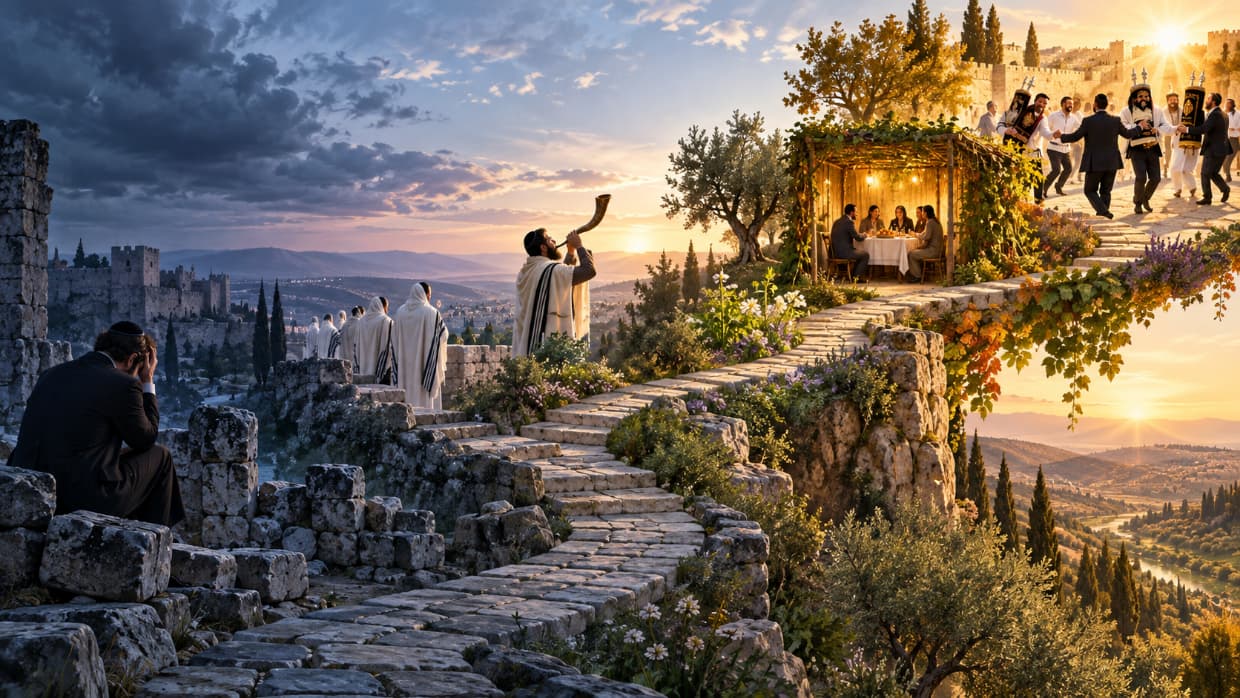






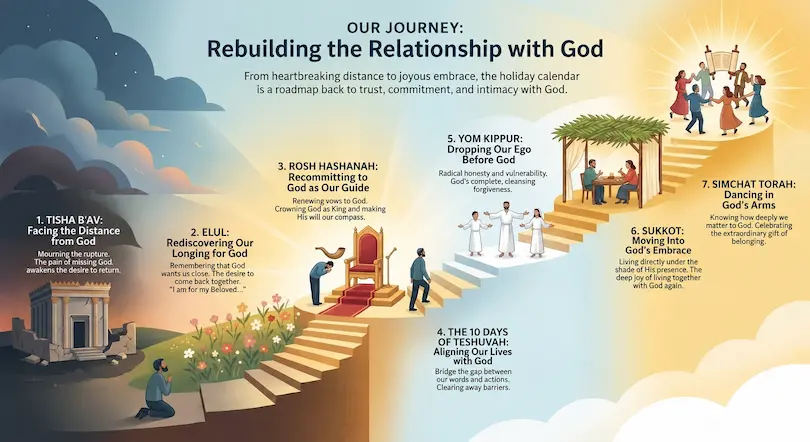
The Jewish calendar follows an arc that consists of a seven-stage journey, starting with a broken relationship and ending with the joy of reconciliation.
The Jewish holidays aren't isolated celebrations scattered across the calendar. Together, they form a carefully structured system of spiritual growth. Each holiday marks another stage in the development of our relationship with God.
We begin with distance and brokenness, gradually rediscover our longing for closeness, recommit ourselves to serving God, remove the barriers separating us from Him, and ultimately arrive at reconciliation, joy, and intimacy.
This journey has seven stops, beginning with Tisha B'Av and culminating in Shemini Atzeret and Simchat Torah.
The journey begins on Tisha B'Av, when we confront the painful reality that our relationship with God is in crisis.
The destruction of the Holy Temple wasn't merely the loss of a sacred building. The Temple was the place where God's presence among us was most clearly felt. Its destruction meant concealment, distance, and the breakdown of our ability to live together with God.
On Tisha B'Av, we don't yet talk about repairing the relationship. We first let ourselves recognize what's been lost. Before something can be restored, we have to understand its value. Our mourning reveals that beneath all the distance, we still care. We cry because the relationship matters to us.
Tisha B'Av is therefore the beginning of growth. The pain of separation awakens the desire for reunion.
That desire fully emerges during the month of Elul: "Ani l'dodi v'dodi li – I am for my Beloved, and my Beloved is for me."
Elul begins not with guilt, fear, or punishment, but with longing. After confronting the brokenness of Tisha B'Av, we realize we don't want to stay distant from God. Something within us remembers what the relationship could be and yearns to return.
This is the first essential step in teshuva, the process of repentance and return: deciding what we truly want.
A person doesn't change just because he knows he's made mistakes. Lasting change begins when he recognizes there's something better he deeply desires. Elul asks us: Do I want God to be central to my life? Do I want to feel guided by Him, connected to Him, dedicated to His purposes?
Before we can return to God, we first have to want the relationship.
Rosh Hashanah transforms the yearning of Elul into commitment.
A meaningful relationship with God begins by accepting His centrality. This is the idea behind Malchuyot, the section of the Rosh Hashanah prayers about recognizing God as King. A king isn't merely someone we admire. He's the authority around whom the kingdom is organized. Accepting God as King means His will becomes the organizing principle of our lives.
We declare that we're prepared to listen to Him and serve Him. We acknowledge that life isn't primarily about chasing our own comfort, status, or appetites. We were created for a purpose, and we discover that purpose by hearing and fulfilling God's will.
This is why Rosh Hashanah comes before repentance. Before examining our individual actions, we first have to determine the direction we want our lives to travel. Rosh Hashanah sets our destination: a life centered on God.
Once we've accepted God's kingship, the Ten Days of Repentance (Aseret Yemei Teshuvah) challenge us to realign our lives with that decision.
Rosh Hashanah clarifies what we want. The days that follow force us to ask whether our choices reflect it. We examine the gap between our values and our behavior, between the person we aspire to become and the person we've actually been.
Teshuva, then, isn't simply regretting individual mistakes. It's the work of realignment. We've recognized that we want a meaningful relationship with God, and now we have to identify everything in our lives that's inconsistent with that desire.
These ten days move us from inspiration to honesty. It's easy to declare God King in principle. The real test is whether that declaration changes how we speak, conduct our business, treat other people, use our time, and respond to temptation.
Yom Kippur brings us to the deepest obstacle in the relationship: the ego-driven, indulgent self.
Our ego convinces us we're self-sufficient, that our achievements belong entirely to us, and that we should be free to live without answering to anyone. Our physical appetites tell us the purpose of life is to relax, enjoy, and indulge ourselves. Together, ego and appetite push God away from the center.
On Yom Kippur, we temporarily withdraw from ordinary physical pleasures. We don't eat or drink, wear leather shoes, wash for enjoyment, or use lotions or perfumes. These restrictions aren't a rejection of the physical world. They let us discover who we are when the demands of the body grow quiet.
At the same time, the confession (vidui) breaks through the defenses of the ego. We stop justifying ourselves and acknowledge that we've failed. We accept responsibility without excuses.
Yom Kippur removes the two great barriers to closeness: the ego that refuses to surrender and the appetite that refuses to be restrained. When those barriers fall, the relationship can be restored.
After Yom Kippur comes Sukkot, the festival of joy.
This joy doesn't come simply from having been forgiven or freed from punishment. It's the joy of reconciliation. The relationship that shattered on Tisha B'Av has been repaired, and God invites us to live together with Him again.
The sukkah, the temporary hut we build and eat in during the holiday, symbolizes this renewed closeness. We leave the security of our permanent homes and enter God's embrace. We discover that true security doesn't come from strong walls, possessions, or our illusion of control. It comes from living in God's presence and trusting in His care.
Sukkot teaches that serving God isn't a burden we're looking to escape. It's the source of our greatest happiness. Having removed the ego and indulgence that stood in the way, we can experience the full joy of doing God's will.
The sukkah, then, is more than a fragile hut. It's the home of the renewed relationship, the place where God and the Jewish people live together once again.
The journey reaches its climax on Shemini Atzeret.
The sages (Chazal) describe God as saying to the Jewish people, "Your departure is difficult for Me. Stay with Me one more day." After all the universal offerings of Sukkot, God asks the Jewish people to remain alone with Him.
The message is extraordinary: we matter to God. He doesn't merely want our obedience or our accomplishments. He wants our presence and cherishes the relationship itself.
How do we express the profound joy of realizing we matter to God? Words are no longer enough. We take the Torah in our arms and dance.
Our dancing on Simchat Torah is the final expression of the whole journey. The Torah is God's will, wisdom, and gift to us. By dancing with the Torah, we're dancing with God. We celebrate not simply how much we've learned, but the privilege of belonging to Him and carrying His will through the world.
We began on Tisha B'Av sitting alone on the ground, mourning a shattered home and a distant relationship. We end on Simchat Torah standing together, dancing with God's Torah in our arms.
That's the system of growth built into the Jewish calendar: brokenness awakens longing, longing produces commitment, commitment demands realignment, realignment removes the barriers, forgiveness leads to reunion, and reunion culminates in joy.
The holidays guide us from mourning the loss of God's presence to discovering that He wants us close. They teach us that spiritual growth is, ultimately, the journey of rebuilding a relationship, until we can once again live with God, rejoice in His will, and dance in His embrace.










tssssThank you for a wonderful journey!
Beautiful!
WONDERFUL! And what a beautiful graphic too!