
 In Poland, Even Winnie-the-Pooh Has a Holocaust Story




12 min view


What makes Israelis so uniquely resilient, especially in the face of unimaginable trauma?
In this episode of Jamie In The Rova, Michael Dickson, Executive Director of StandWithUs, reveals the hidden psychological keys that have enabled the Jewish people to thrive through millennia of adversity.
From his ancestors who fled persecution in Europe and rebuilt vibrant lives to modern Israelis navigating constant challenges, Michael shares insights from his groundbreaking book on Israeli resilience and explains why October 7th marked a turning point in how we understand Jewish strength and community.
Michael unpacks three transformative principles that anyone can apply to their own life: radical empathy in moments of crisis, flexibility in problem-solving, and meaning-making from hardship. This isn't just about Israel—it's about how a people who've faced exile, persecution, and existential threats have not only survived but flourished.
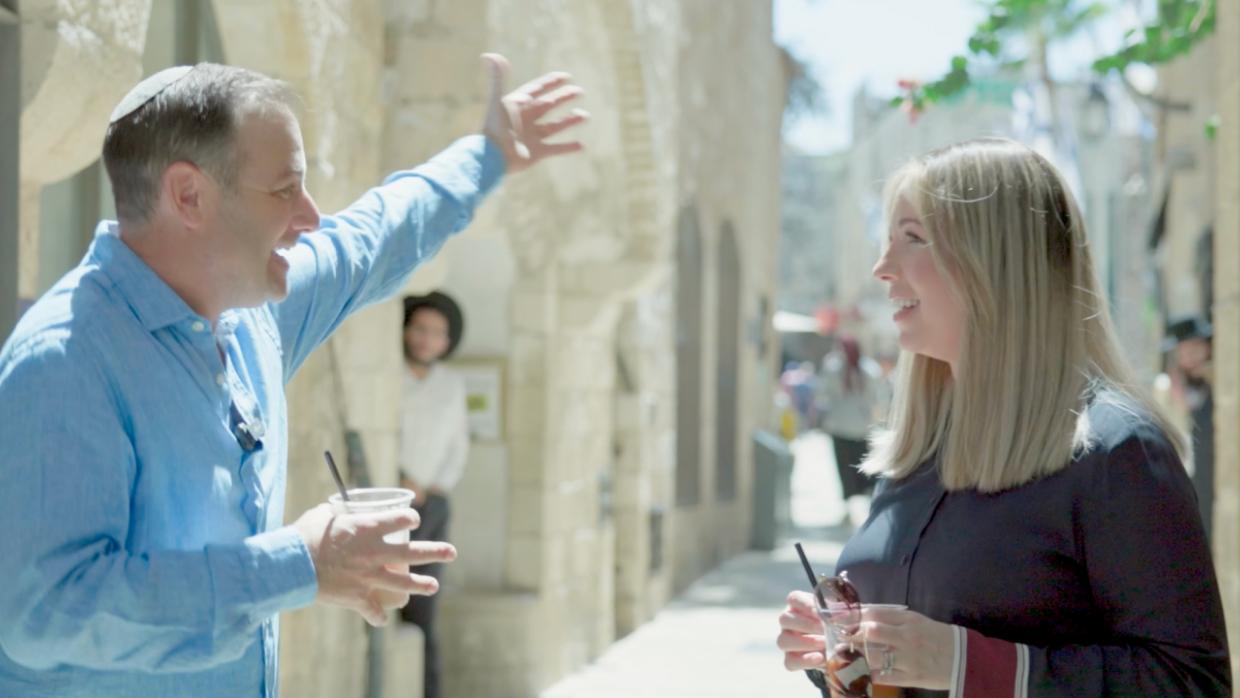
Michael: Whoa! How are you?
Jamie: Great. Do you have time to grab coffee and come with me?
Michael: Coffee? Absolutely. What’s your order of choice?
Jamie: I’d usually go for decaf… but I don’t think they have it here.
Michael: They don’t even believe in it!
Jamie: I’m just saying — you don’t get that in Starbucks.
Michael: It says “Warning: this coffee will bring good Mazel!”
Michael: I was born and raised in London, in a very proudly Jewish home. Israel was always central to our upbringing. We vacationed here, and it was always important to us.
I guess it was natural that at some point, I’d want to move here. I always say: Zionists are born with that heritage. Israel is central to Judaism — without Israel…
Jamie: I was going to ask you about that. Israel is so clearly part of your work. But how do you reconcile being a proud Jew with doing such Israel-focused work? How do you personally balance that idea of “no Israel without Judaism, and no Judaism without Israel”?
Michael: We want Jews to be proud of their identity — and Israel is central to that. We’re incredibly lucky to live in a time where there is an Israel, whether you live here or not.
Those two things are symbiotic. The more we talk about Israel to the Jewish people, the more proud they become of who they are.
Michael: At StandWithUs, yes, we work with Jewish audiences — but we also work with non-Jews. We want to build support for Israel everywhere.
I remember being interviewed by major newspapers in the UK and being asked: Why would any self-respecting British citizen move to a war zone?
And fast forward since then — we’ve had the Second Lebanon War, all these campaigns, and now October 7th… and even COVID in the middle of all of it.
Still, I wouldn’t change it. Not in a million years. It’s such a blessing to live here. It’s a privilege. Every day I thank God, and I don’t take it for granted.
Michael: After October 7th, we’ve been living through historic times. We’re experiencing national trauma here in Israel, and national Jewish trauma globally. It’s understandable to feel troubled and devastated by what we’ve witnessed.
But trauma and despair are not a strategy. You have to pick yourself up and think constructively: What can I do?
And especially now — this generation has more influence than ever before. Everyone has the ability to hold a megaphone. One voice can reach the world.
Michael: After October 7th, when I felt a little comatose — like we were all paralyzed, almost walking through the streets like the walking dead — I thought about my grandparents.
All four of them were Holocaust survivors. They rebuilt. They remarried. They restarted vibrant Jewish life in another country, another culture, and another language.
We’ve done this before. Holocaust survivors in 1945 rebuilt their lives — and now we have an independent Jewish homeland. A place you can go. A place you can live out a full Jewish life. They didn’t have that.
Jamie: What’s around the corner?
Michael: Exactly. What’s around the corner?
Jamie: Where did you go for your gap year?
Michael: I was actually on a yeshiva near Ashkelon. It was on a kibbutz.
Jamie: Wow.
Michael: And later I went to Rome — we stayed in the Jewish ghetto. There’s so much history there. There’s a vibrant Jewish community, and they’re very proud of their heritage.
And then you go to the Arch of Titus. You see the remaining arch — it shows them carrying the menorah. It’s unbelievable.
Jamie: Right… and they kept it as a symbol of conquest.
Michael: Exactly. And now we look at it and think: Where are they — and here we are.
Jamie: You’re an author too, right?
Michael: Yes — I’ve written eight cookbooks, and I honestly think there’s nothing harder than writing a book.
Jamie: I agree. It’s a labor of love.
Michael: It really is.
I had this idea after living here for a while: Israel is unique — and resilient. So I wanted to explore that. The book is called Israeli Resilience.
And I wanted to understand: What is Israeli resilience? Because I truly think Israelis can teach it.
Michael: One of the first interviews I did was with a pioneering Israeli psychologist in the field of resilience. She was so inspiring that she joined me on a journey where we met 14 inspirational Israelis from all different backgrounds.
From each of them, we extrapolated: What are the keys?
Jamie: Give me three keys.
Michael: Okay — three.
1) Empathy.
The ability to feel deeply and not push emotions away. Even in trauma, you feel what you feel. You don’t pretend it’s not happening. You don’t silence emotion.
2) Flexibility.
Israelis have a problem — they find a way around it. They adapt. They pivot. They don’t get stuck.
3) Meaning-making.
How do you take hardship and make meaning from it? That’s the story of Israel.
And you see it in abundance after October 7th — people showing up for each other, strengthening community.
Viktor Frankl said it in Man’s Search for Meaning: when you find meaning, you build resilience.
Jamie: You’re describing something very Israeli — but do you think it’s also a Jewish trait?
Michael: It is Jewish. But when Jews are living in Israel — with the history we’ve had, the neighbors we have, and the reality we’re living through — it becomes something even more intensified.
Michael: Community is huge. Israelis do it. Jews do it.
You can be walking down the street with a stroller and if your kid doesn’t have socks on, someone will tell you.
Jamie: Oh my gosh — totally.
Michael: Or if your hair is lighter or darker, someone will casually tell you they liked you better blond.
Jamie: Totally.
Michael: But by the same token — if you’re in trouble, people will be there for you.
That’s what builds resilience.
And that’s also what StandWithUs and Aish do: making sure people don’t feel alone. They find community online and in person. Jewish students don’t feel alone on campus.
Jamie: Okay, so this is the approach to the Dan Family World Center, the iconic headquarters of Aish across from the Western Wall.
Michael: You’ve been here so many times. We always say this is the home of the Jewish people.
And right away, you get hit with the view of the Western Wall — the Kotel. It’s incredible.
These are our drop-in classes for essentials. Anyone can come any day and learn. You’ll see retirees like my parents, you’ll see someone who looks 20 and just stepped out of a tattoo parlor, and you’ll see someone in Hasidic garb — all learning together.
Jamie: I love that.
Michael: Let’s head up to the rooftop — the iconic rooftop.
Jamie: Is there a celebrity who’s come to Jerusalem and not visited this spot?
Michael: This is definitely the spot. Come on.
Jamie: It never gets old.
Michael: Never. I’m here almost every day.
Jamie: Michael, you’ve spent so much time educating about Israel and Jerusalem. What strikes you when you’re here?
Michael: It’s so important to show people the centrality of Jerusalem — to Israel, and to the Jewish people.
Jerusalem is mentioned so many times in our liturgy, poetry, and prayers. We are not the Jewish people without Israel — and we are not the Jewish people without Jerusalem.
This is where our prayers point. This is where heaven and earth meet. Where God’s divine presence has never left.
Jamie: So what’s your prayer for the Jewish people, standing in this place?
Michael: My prayer is that we meet this moment.
Throughout Jewish history, despair gives way to hope. We need to be hopeful and positive — embracing our Jewish identity and embracing what Israel represents to all of us.
And from Jerusalem, light will shine around the world.
Jamie: I love that. Should we take a picture to commemorate the moment?
Michael: Of course.