








 The Red Cross’s Jewish Problem

6 min read





Judit Polgar faced down antisemitism to become Hungary's most beloved citizen.
Hungary’s volatile political scene is in the midst of turmoil. Prime Minister Peter Magyar came to office two months ago after a bitterly fought election, and recently has been trying to appoint a new president to serve in this largely ceremonial, highly visible role. “Our country needs unity, peace, and a president that all Hungarians can be proud of,” he explained.
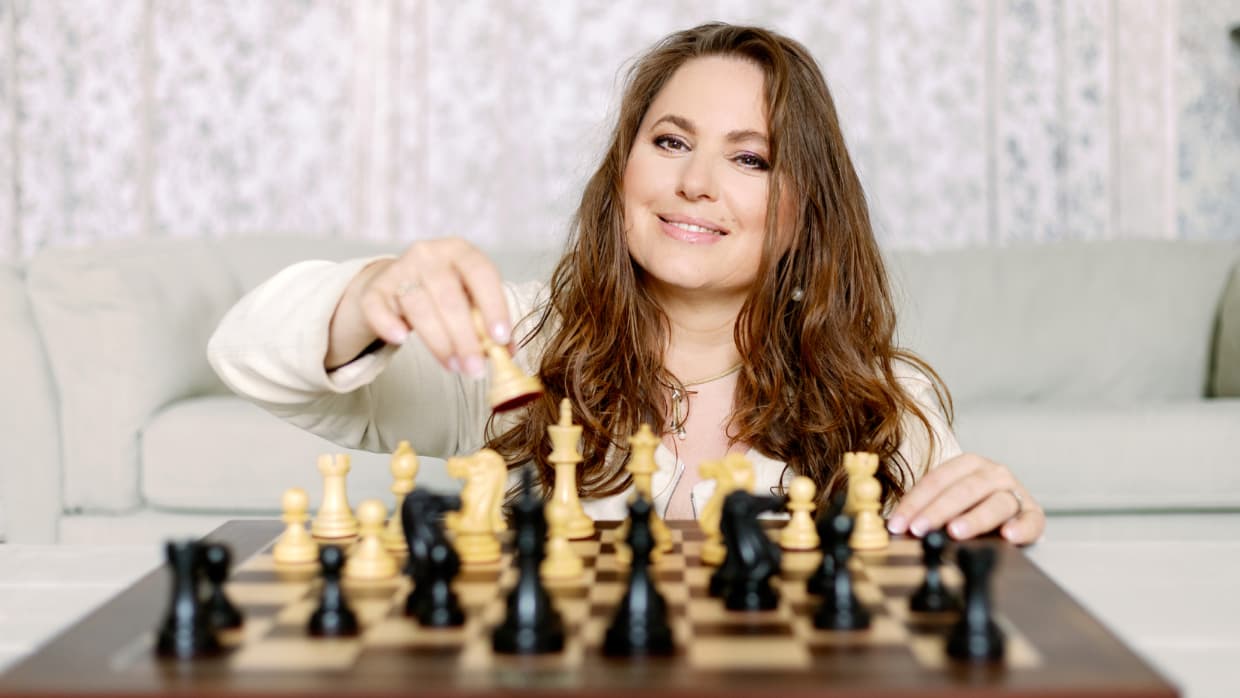
His solution? To recruit one of the most popular figures in Hungary to serve as his president: the proudly Jewish and Zionist chess champion, Judit Polgar. “Judit Polgar’s name has been synonymous with talent and perseverance for decades,” Magyar declared.
 Polgar declined the offer, saying, “I do not feel enough strength within me to take on the historic responsibility of uniting a divided nation.” Her consideration for the post of president has put a spotlight on the unique role Polgar holds in Hungary. Although she has been attacked and ostracized for being Jewish, she has become one of the most revered public figures in Hungary today. Her rise from reviled object of antisemitism to Hungarian heroine is remarkable.
Laszlo Polgar, Judit’s father, was born in 1946, a year after the Holocaust ended. His father Armin was traumatized: Armin’s parents, his first wife, and his six children were all murdered by the Nazis. After the war, Armin married a fellow Holocaust survivor, had Laszlo, and raised him in a household marked by loss.
His daughter Susan wrote in her autobiography that her mother’s parents survived the Holocaust and that their “fighting spirit…is running through my veins…. My grandparents were the ‘lucky ones,’ with the numbers tattooed on their arms and nightmares for the rest of their lives,” yet who still found the strength to go on and live fulfilling, dignified lives.
Laszlo and his wife Klara were determined to ensure that their children achieved greatness. They had three girls - Judit, Susan, and Sophia - and decided to turn all three girls into chess protegees. Laszlo credits his family’s Jewish lifestyle for this: “To get results, you have to work hard. The Talmud stays the same,” he noted in an Israeli documentary in 2017.
“My grandfather started studying Torah for several hours a day when he was just four,” he told The Jerusalem Report magazine. “It’s always been common practice among Jews to begin teaching children intensively from an early age. We’ve been so successful as a people not because we’re superior genetically but because we’ve always valued learning so highly.”
Laszlo worked as a child psychiatrist; he and his wife Klara decided to embark on a radical experiment. They believed that one could ensure that one’s children became geniuses through intense, innovative education. “In chess, your progress can be measured empirically,” he reasoned. “You either win or lose, and you can compete against players who are ranked based on their achievements.” The girls’ progress would be easy to measure and impossible to discount.
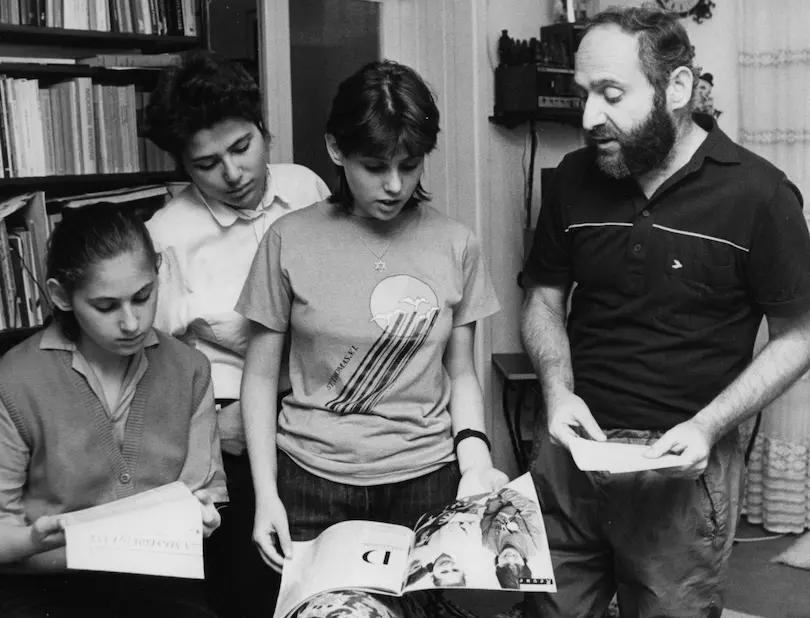 Judit, Susan, Sofia, and László
Judit, Susan, and Sophia were all home schooled, a move that was virtually unheard of in Communist Hungary. They spent three hours playing sports in the morning, then had lessons and practiced chess until 10pm each day. Their parents created cardboard catalogues analyzing 200,000 different chess games and had the girls study them. Even though the family was virtually destitute, they hired chess tutors to drill with their daughters.
When they were old enough, the sisters earned extra money by winning local chess tournaments. They were so poor they spent their winnings on fruit and other foods.
Laszlo remembered being bullied and attacked by antisemites when he was a child. These experiences made him more determined than ever to become successful. “I find it hard to tolerate antisemitism. Being a Jew gave me extra motivation to succeed.”
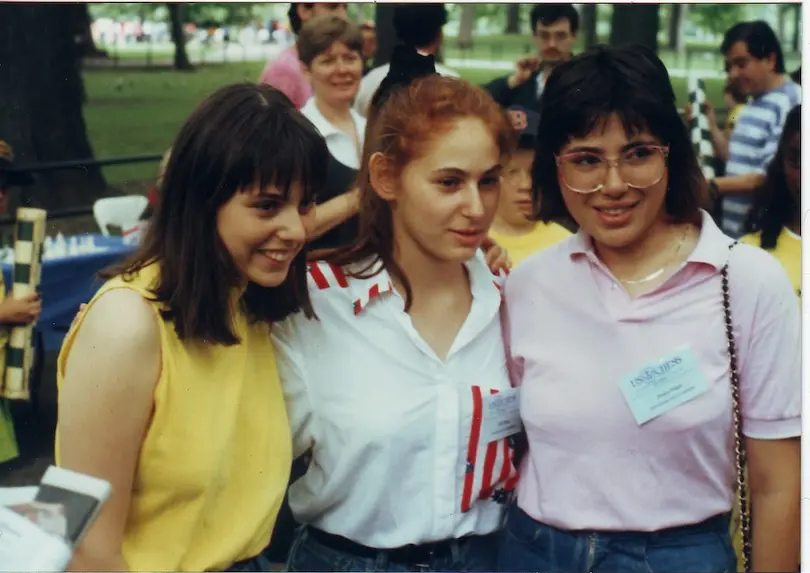 The Polgar Sisters
Growing up, Judit and her sisters experienced antisemitism, even in the intense, cloistered home atmosphere in which they lived. Susan remembers her father coming home from work to find a letter posted with no return address: “Inside was a photo of him with his eyes cut out… There was also a one-page handwritten letter, which he refused to let me read. He only said that it was dripping with antisemitic remarks and violent threats.” They were made to feel that they weren’t “real” Hungarians.
In 1988, Judit, Susan, and Sophia made up ¾ of Hungary’s female chess team that competed in the 1988 Chess Olympiad in Thessaloniki, Greece. (The fourth player was Ildiko Madl.) Susan was 19; Sophia was 14; and Judit was 12. They beat the long-reigning Soviet champions and became overnight sensations in Hungary and in the wider chess world.
At age 15, Judit became the world’s youngest grandmaster.
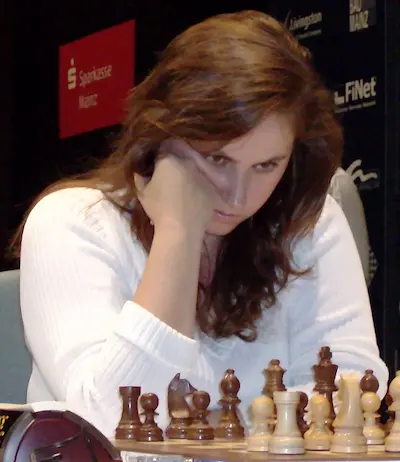
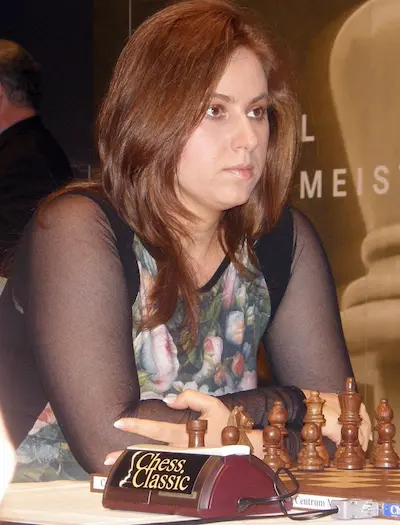
Judit began to distinguish herself as a truly revolutionary player, known for her incredible aggressiveness on the board. At age 15, she became the world’s youngest grandmaster. In 1994, when she was 17, she played Garry Kasparov, at that time the World Chess Champion. She lost that game and would eventually defeat Kasparov in 2001.
Judit was the top female player in the world for 25 years until she retired from the game in 2014. She is the only female player ever to have been rated the level of super grandmaster in chess.
 Susan and Sophia eventually left Hungary: Susan moving to the United States in 1994 and Sophia to Israel in 1999. Their parents soon followed, settling near Tel Aviv. Today, only Judit remains in Hungary, where she lives with her husband and two children.
Today, Judit holds a special place in the hearts of Hungarians, while proudly identifying with Jewish and Israeli causes. She holds both Hungarian and Israeli citizenship and visits Israel regularly to visit her family.
 When the Maccabi Games were held in Budapest in 2019, Judit proudly lit the opening flame. In 2024, Judit, along with her sister Sophia, participated in a massive chess event inside Berlin’s Parliament to raise awareness of the Israeli hostages being held by Hamas. Together, Judit and Sophia faced 40 different players, handily beating them in simultaneous games.
Judit Polgar’s place as a beloved symbol of Hungary is an inspirational example of a public figure proudly holding on to her Jewish identity. Even though she will not become Hungary’s next president, Judit Polgar’s remarkable achievements continue to inspire pride among her fellow citizens inside Hungary, and among Jews the world over.











Amazing achievement! I watched the documentary where Judith finally beat the condescending Kasparov. He was not pleased, to say the least.
Though they've been blessed with talent & subsequent fame. Thank G-D - that G-D's hidden hand & quiet help - in their success - did not go for naught. They've also gained respect of Non-Jews - as they quietly wore their Judaism proudly & successfully. May G-D help them expand the respect - & give other Jews - the hope that - they too - can be blessed by & with G-D's help - to be successful as well - & be - a role model of commitment to G-D's Written Torah Commandments & Laws - that allows G-D - to answer our prayers - & provide His BLESSING(S).