



 The Jewish Woman Who Founded Canada’s National Ballet


3 min read
7 min read





As a boy, Jeremy kept a file on his uncle's unsolved murder. Years later, that same drive for justice carried him to Gaza.
Jeremy Sofiev was too young to understand what happened when his uncle, Eduard Nektalov, was murdered on a busy Manhattan street in May 2004. But the tragedy would shape his childhood in ways no one could have imagined.
Growing up with stories of an uncle he barely remembered, Jeremy became determined to uncover the truth behind the murder and bring his family the closure they desperately needed. What began as a little boy's search for answers grew into a deep sense of justice and responsibility, one that would eventually follow him thousands of miles away, to the battlefields of Gaza.
Eduard Nektalov was a 46-year-old jeweler, a father of two, and a member of a Bukharian Jewish family from the former Soviet Union. On May 20, 2004, he was walking near his business in Manhattan's Diamond District when a gunman approached and shot him three times.
The murder devastated his family and shocked the local Jewish community. For years the motive remained a mystery, leaving his loved ones struggling with grief and unanswered questions.
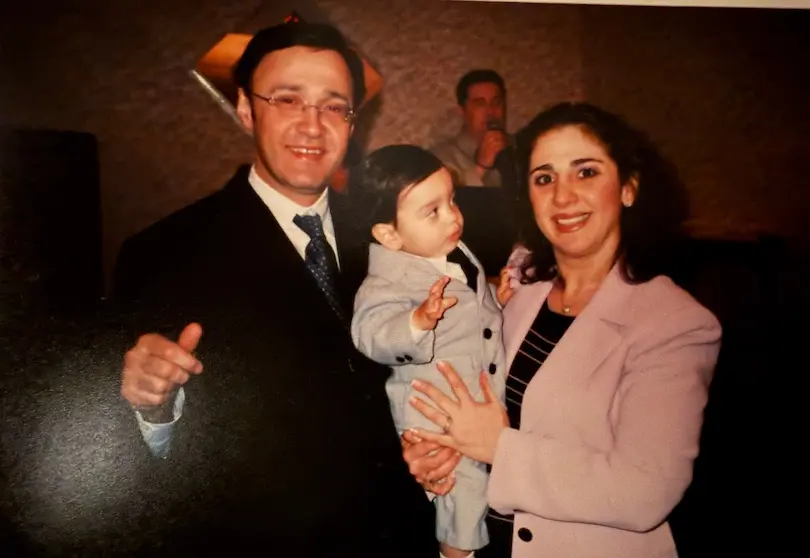 Jeremy and his aunt and Uncle Eduard at his 1st birthday party
Investigators eventually discovered that the killing had been arranged by a criminal figure connected to the Diamond District, following a dispute involving jewelry and retaliation. In 2017, 13 years after the murder, the man who ordered it was convicted.
But for Eduard's young nephew, those 13 years had already left a lasting mark.
Though Jeremy had few memories of his own, Eduard remained very much a part of the family's life. Through the stories his parents and grandparents shared, Jeremy felt as though he had known him personally.
While other children dreamed of becoming professional athletes or astronauts, Jeremy had a more unusual ambition: he wanted to solve his uncle's murder.
In middle school, he began researching the case, collecting newspaper articles, searching online, and building a file of everything he could find about the investigation. He hoped that one day he could give his family the answers they had been waiting for.
The experience awakened in him a strong sense of justice and a desire to protect others. In high school, those interests drew him toward law, government, and public service. He imagined a future in which he could help other families find the justice his own had sought for so many years.
Then, one cold November evening in 2017, his mother sat him down and told him the news.
His uncle's murder had finally been solved.
Jeremy remembers feeling relief, happiness, disbelief, and even some disappointment that he would never fulfill his childhood dream of solving the case himself.
Yet something important had emerged from those years of uncertainty. He had developed what he calls his "moral compass," an internal sense of right and wrong that would continue to guide his decisions.
As Jeremy grew older, his sense of responsibility expanded beyond his family.
His Jewish identity and connection to Israel became increasingly central to him. Having grown up connected to Chabad, he began thinking seriously about what it meant to belong to the Jewish people and what he could personally contribute.
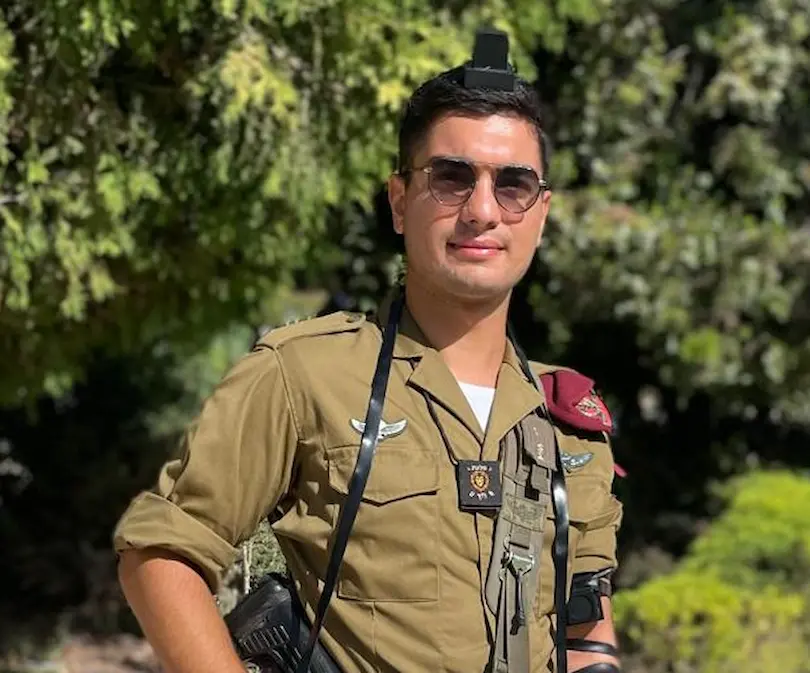
For Jeremy, Judaism is not simply one part of his identity but the foundation on which he builds his life. "My connection to Judaism defines who I am. It guides how I live," he explains. He takes pride in expressing his Jewish identity openly and strives to connect his daily actions to serving God, the Jewish people, and Israel.
He believes deeply in the inseparable bond between the Torah of Israel, the People of Israel, and the Land of Israel. In his view, all three must exist in harmony to ensure the continuity and future of the Jewish nation.
His commitment to observance deepened significantly during the year he spent in Israel before joining the army. Rather than letting the demands of military life weaken that connection, Jeremy made a conscious effort to keep growing spiritually throughout his service, a journey he sees as still reaching new heights.
For Jeremy, the very existence of the State of Israel is extraordinary.
"Our grandparents and ancestors were not as fortunate to have such a place," he explains.
Generations of Jews lived without a homeland where they could openly practice their Judaism and rely on an army dedicated to their protection. To him, Israel is a gift that should never be taken for granted.
Eventually, Jeremy decided to enlist in the Israel Defense Forces.
"I enlisted because of my natural connection to Israel and belief that every Jew has the obligation to serve the only Jewish state in the world in any way that we can," he says.
His family was understandably worried about his decision to become a combat soldier. But once he began serving, their concern was joined by tremendous pride.
Jeremy saw military service not only as a responsibility but as an expression of his faith.
"Being in the army is a mitzvah one performs with one's entire being," he explains.
His training was physically and emotionally demanding, but it taught him he was capable of far more than he had imagined.
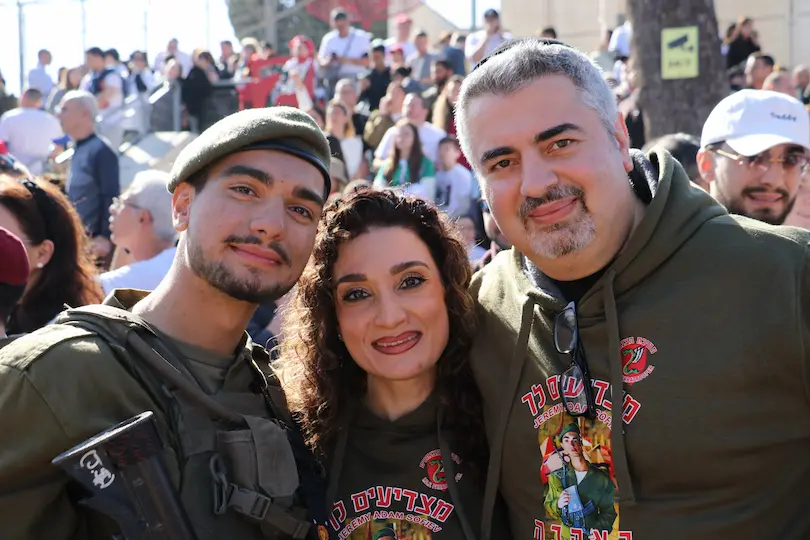 Jeremy and his parents
Following October 7, Jeremy completed two extended tours in Gaza, each with its own challenges and responsibilities.
His first lasted 45 days in the northern Gaza Strip, where his unit was tasked with confronting enemy forces and destroying military infrastructure. Operating primarily on foot, the soldiers moved through buildings, tunnels, and wherever else the mission demanded.
His second tour lasted 52 days in southern Gaza, where the focus shifted to locating hostages and gathering intelligence that could help bring them home. There, Jeremy worked alongside several units, crossing difficult terrain on foot.
Although he prefers not to discuss every detail, the two tours reveal the extraordinary responsibilities placed on young soldiers and the toll of serving in wartime. For Jeremy, these were deeply personal missions: protecting his people and helping bring fellow Jews home.
One of the experiences that left the deepest impression on him was the unity among Israeli soldiers. People of different backgrounds, professions, religious communities, and walks of life suddenly found themselves serving side by side.
"Age, status, profession, and geographic locations no longer carry any significance," Jeremy explains. "Everyone is in the same boat with the same mission and one goal."
It was a powerful reminder that the Jewish people are one extended family.
He was especially moved by the sacrifices of reservists, ordinary people who left behind their families, careers, and daily routines to serve.
"I see myself as one who simply fulfilled his duties," he says. "I had a job and I did it. I did not expect praise or anything else because it was my regular life. Just get up and go."
Jeremy believes every Jew has a role in supporting the Jewish people.
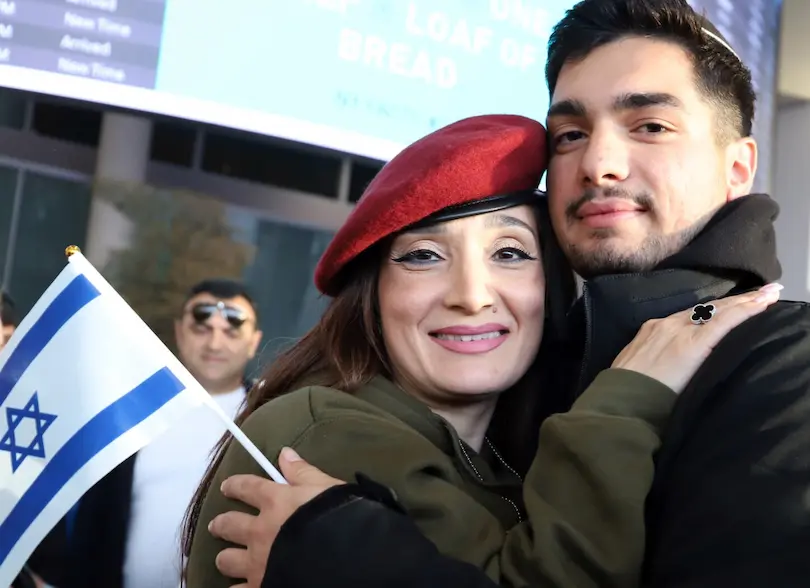 Jeremy being welcomed home by his mother after his tour of duty in Israel.
"Our job as Jews is to help one another and our only homeland, and one should not expect praise for doing his job," he explains.
He is equally clear that not everyone needs to wear a uniform to make a difference. "Whether it is by prayer, service, donations, volunteering or anything else, the unity of Am Yisrael during these times is remarkable and should continue."
We cannot always choose the painful experiences that enter our lives, but we can choose what we do with them. The great sorrow Jeremy’s family experienced nurtured his commitment to courage, compassion, and responsibility.