




 What Jensen Huang’s Downfall Teaches Us About Human Nature
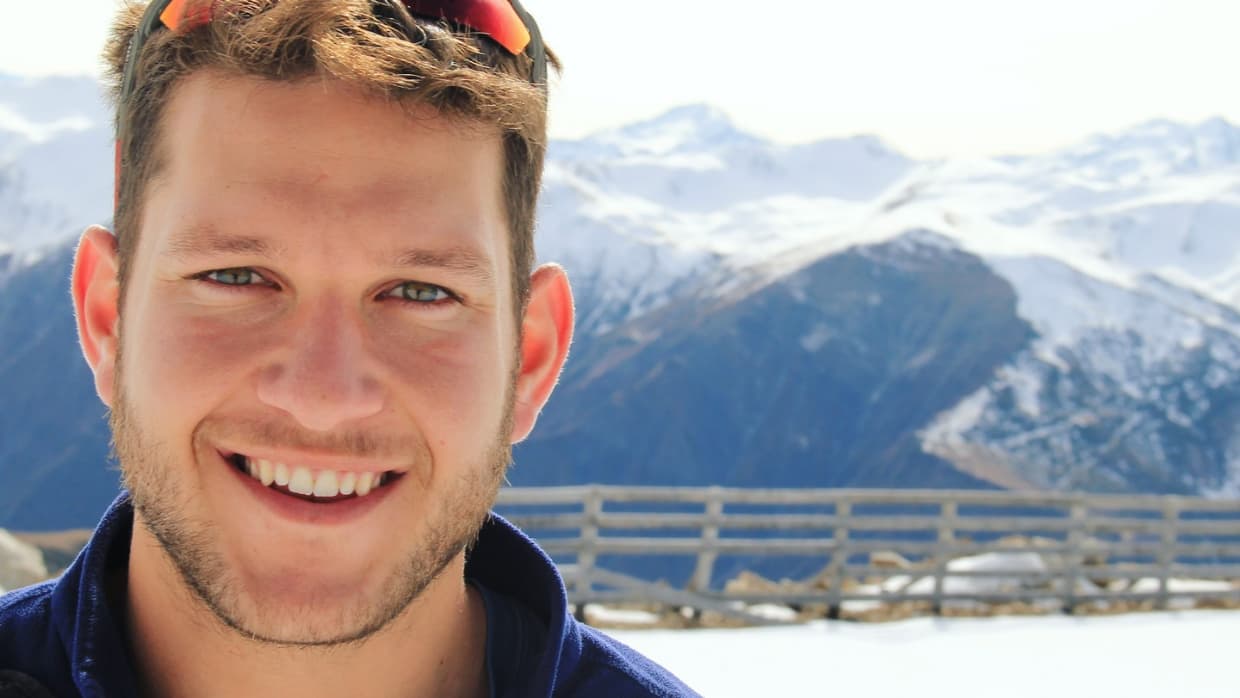

5 min read





Critically injured in battle, Itay Sagy co-founded an organization that brings Israel’s case to the campuses that hate it most.
On October 11th, 2023, four days after the horrific Hamas attack, 25-year-old Itay Sagy was on a mission to retrieve hostage bodies from Gaza. On active duty in an elite commando unit, Itay, together with his teammates, advanced towards Gaza, clearing the area of terrorists remaining in Israeli territory.
Things did not go as planned. On the way, one of the two military vehicles they were travelling in was struck by a mortar shell. “So we had to split,” recalls Itay in an Aish.com interview. “I advanced with half of the force, 12 guys.” They reached a bomb shelter close to the border and split up again, half of them entering the shelter and the other half keeping watch of the surrounding area. They had no clue that they had entered into an ambush.
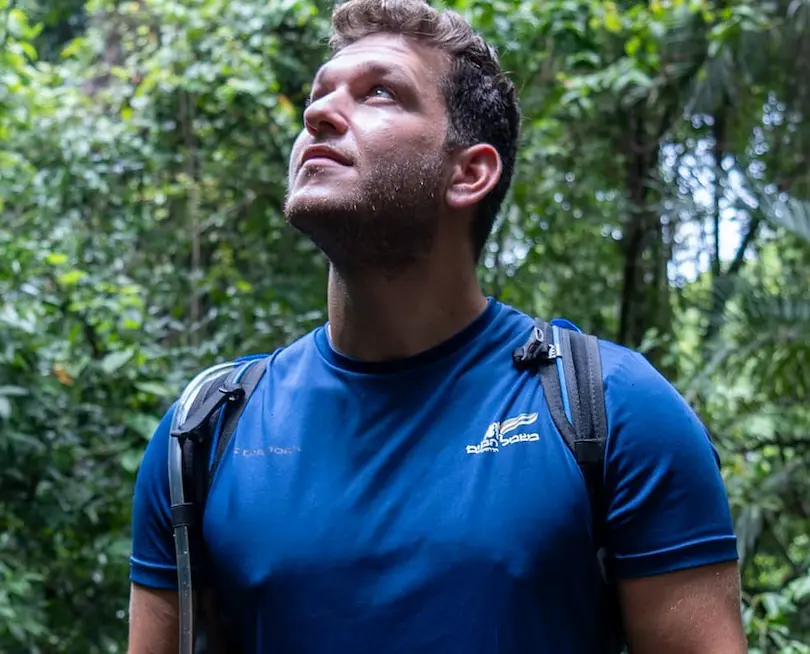 Itay Sagy
Terrorists opened fire from all directions at the soldiers outside the shelter. “Six of my teammates fell to the ground,” says Itay. “I was the only one who wasn’t hit, and I had to fight for a couple of minutes alone against the terrorists. I managed to take out some of them, until I was hit myself with a grenade.”
Itay was critically injured in his neck and arm. “Thank God, my teammates managed to take control of the situation and they managed to save my life. Somehow, we managed to hold the line.”
As his teammates emerged from the shelter and fought the terrorists, Itay, fighting for his life, experienced what he calls an awesome awakening. “I felt loved,” he recalls. “I felt like somebody was holding me. I didn’t feel like I was going to die. I just felt like everything was going to be fine and I was continuing on, going to the next step, from level A to level B. Nothing bad was going to happen. I was calm. I was in a good place.”
Itay prepared to leave this world, sensing that the next world was a better place. “But what changed my mind,” he says, “is that I saw my body from above, and I knew that I had to go back to fighting. I have to be with my team, I have to be there for my family. I can’t give up! And I decided to leave all this good and come back to this world.”
This near-death experience was life-changing for Itay. He understood “why I need to be in this life,” he says. “I knew that I had so much more to live for, and I felt so much joy.”
Itay was evacuated by helicopter to a hospital where he underwent multiple surgeries. “I woke up a day later, all bruised, everything hurting.” The most difficult news was that three of Itay’s teammates and close friends fell in that battle. Their names were Itay Moreno, Ido Kaslasi, and Daniel Kastiel. That day was the hardest in Itay’s life.
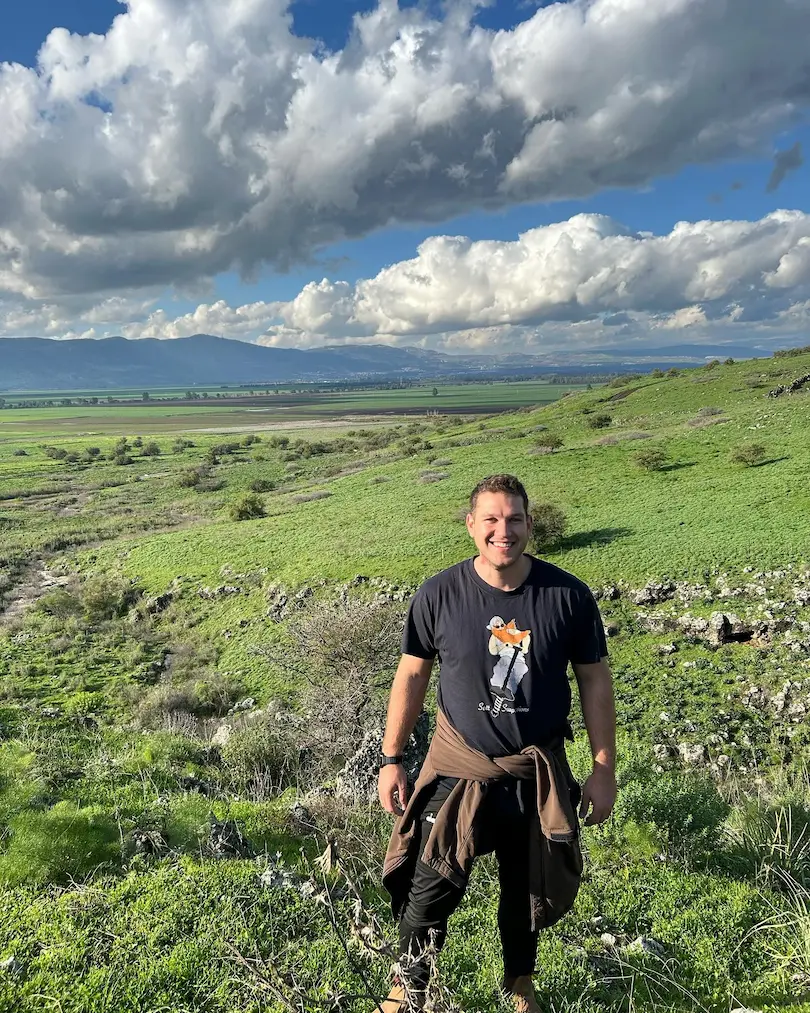 Travelling before October 7th
A call from a teammate brought Itay some comfort. “He told me that even though half the team was injured, they decided to continue fighting,” he recalls. Itay yearned to join them. “I was certain that after two weeks, I would be back there with them. Of course, I wasn’t aware of my physical situation. It took over half a year for the holes in my neck to close.”
Itay stayed in the hospital for four months. The first time he came home was the second hardest day of his life. He recalls, “I wasn’t in the hospital. I was home for the weekend, and I was still injured, still in pain. I looked in the mirror, and I saw the same Itay I saw in the hospital, not the Itay before the injury.”
At that point, Itay realized that the damage from his injury would remain permanent. He would never regain the strength and the top physical shape he’d enjoyed before. “I'm still learning how to accept myself the way I am right now,” says Itay.
Itay is still undergoing rehabilitation and through it all, he is “driven to become a better person.”
Throughout his hospital stay, Itay received a lot of care and support, and he desperately wanted to be back on the giving end. “I knew that I had to do something good for my people, because so many good people came and helped me, and showed me love,” he says.
Among numerous visitors to wounded soldiers in the hospital was the IDF spokesman. “He came to my room and asked if maybe I knew English and wanted to help,” recalls Itay. He volunteered immediately.
“Long story short, I met with hundreds of people.” Among them was the prime minister of Israel and other dignitaries. “I told my story again and again in the hospital,” recalls Itay. “That’s how it started.”
Itay realized that he wanted to continue this advocacy work. Even though he had originally planned to study computer science, he decided to switch to business and law, which would help him in this line of work. He began his studies while still recovering in the hospital. He says, “I had to do it for myself, and also, that’s my way to show the terrorists that they are not going to win, because we need to live, to do things. I didn’t let myself fall because I had so much that I needed to do. And I’m still in the same place, and I have so much to do! But I finally understand that I need to rest as well.”
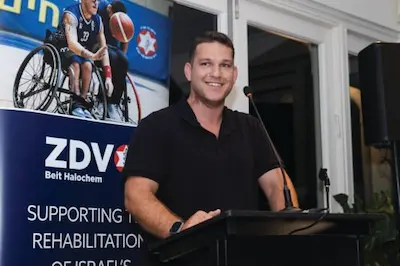
After he was released from the hospital, Itay continued speaking with the IDF Disabled Veterans Association and on his own. Then he received a phone call from Stav Cohen, another IDF special forces veteran. “He said, ‘Itay, I have a vision!’ I said, ‘Let’s do it!’”
Together, Stav and Itay founded Frontline Advocates, an organization devoted to public advocacy for Israel. Its motto is “From Defense to Offense: Reclaiming the Narrative Where It Matters Most.” Frontline Advocates deploys trained Israeli advocates into the hotbeds of anti-Israel hostility, such as college campuses, where they engage in “debating, educating, and standing shoulder-to-shoulder with Jewish communities under fire,” according to their website.
“We started with a training program,” says Itay. “And then we started flying people to the States to do debates on campus, Charlie Kirk-style.” The organization recruits and trains “amazing individuals who saw the atrocities and experienced the war firsthand,” says Itay. “And we send them to the frontlines of advocacy.”
In this work, Itay feels that he is continuing the battle for Israel that he’d begun in the IDF. The encounters he’d had on college campuses were eye-opening. “I saw the same hate that I saw on the faces of terrorists,” he says. “And I knew we had to fight that with the unapologetic truth. That’s what I’m doing now, full time.”
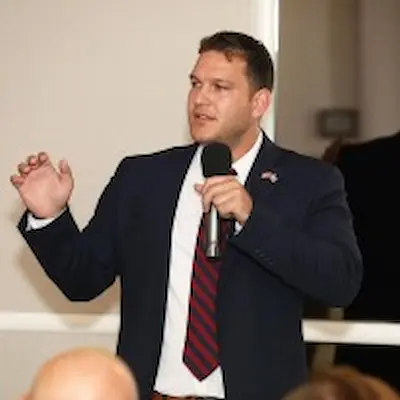 Itay has a grueling travel schedule, visiting communities and college campuses throughout the United States and Canada. “We go where we need to be,” he says. “We don’t go where it’s easy.” In addition to college campuses, the advocates meet with Christian congregations. On weekends, they allow themselves to relax by visiting synagogues and Jewish communities where they receive a warm hero’s welcome. But the rest of the time, “we go to universities where people hate us.”
When visiting a college campus, Itay and other advocates set up a table with Israeli and American flags, signs, and flyers. “A lot of people come to scream, to debate. And a lot of Jewish students come and say thank you,” says Itay.
Though some of the people who approach their table are simply spewing hatred, many others are willing to engage in conversations and listen to rational arguments. Itay finds such encounters especially gratifying.
For example, in Canada, a student claimed that Canaanites rather than Jews were indigenous to Israel. Itay questioned whether any remnants of the Canaanite society were still around today. “He didn’t know what to tell me because there aren’t any Canaanites anymore,” says Itay. “And I told him that the last culture that exists since then is the Jewish culture. And then he actually agreed with me and went to argue with the [pro-Palestinian advocates] that set up a table next to us.”
Another point that comes up frequently is the accusation of genocide. When students throw numbers of victims around, Itay asks them, “Can you show me a war where people are not getting hurt?” Then he explains that Israel has the best civilian to terrorist ratio in the world. “We work very hard to get this ratio,” he says. “And I am not sorry for fighting a war that they started. I’m not sorry for defending my country. When you attack a country, expect retaliation. War is terrible, but we didn’t start it, and we are not sorry for winning it. We need to show them this truth as well.”
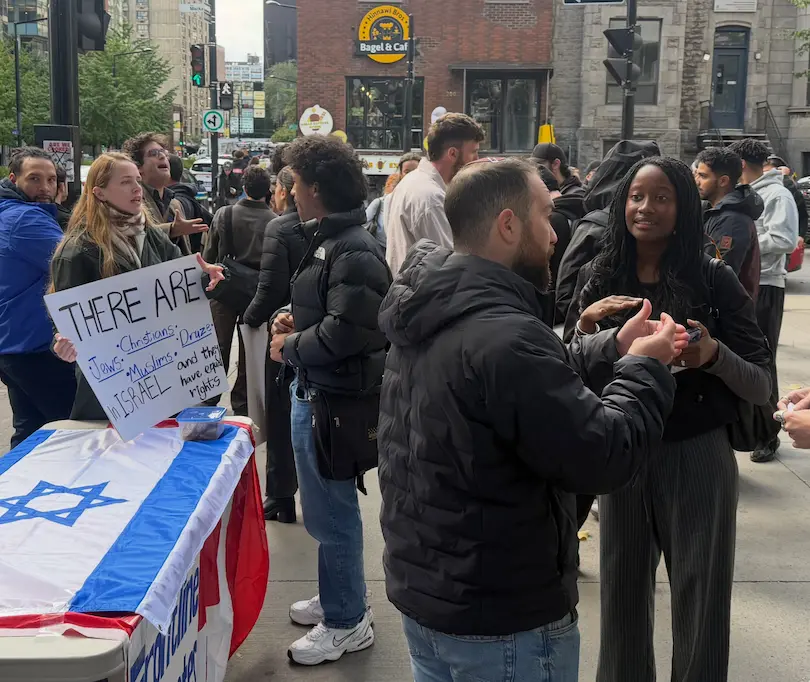
When people approach them with hatred in their eyes, “they try to dehumanize Israelis and the Jewish people,” says Itay. “And what we do is we humanize Israelis, we humanize the Jewish people again. We show them that we are nice people, we are also students. We are not apologetic, we stand for who we are, but we are very approachable.”
The advocates try to make the interactions personal, asking the students for their names and courses of study and introducing themselves and their own studies. “You take the conversation to a whole different place, just having a nice conversation between people,” says Itay. “It doesn’t work every single time.” Not everyone is willing to engage rationally, but neutral observers who have not yet formed strong opinions on the subject can see which side is being more reasonable.
Itay believes that most students they encounter on college campuses truly want to make the world a better place. Often, they are misinformed by anti-Israel propaganda that has become too common. “We need to show them that Israelis are actually good people,” says Itay. “And the only way to do it is with boots on the ground.”
He describes a violent encounter with a student who screamed and threw things at them. Itay asked if he wanted to talk. The student refused and continued screaming. “And then he saw that I wasn’t afraid,” says Itay. He agreed to a conversation. “We had a really long talk,” says Itay. “I don’t know if we changed his mind, but we shook hands. He understood where we were coming from and why we do what we do. And that’s a win, from violence to respect.”
Overall, Itay and his fellow advocates see much success in their work. They’ve had many conversations with people who were willing to at least hear them out.
Even though Itay’s life is turning out very differently from what he’d imagined before his injury, he is using his circumstances as an opportunity for personal growth.
His army service imbued him with a yearning to grow as a person. During the intense training that lasted a year and a half, “I learned a lot about myself, and I learned a lot about not being in the center,” he says. In the army, Itay learned to see himself as part of a greater whole: the Jewish people and the State of Israel.
Itay’s teammates in the army were also a source of inspiration. Each of them put his own life in danger numerous times in order to help and protect the others.
His near-death experience also contributed to his desire to grow. “I believe that God gives us signs on how to be better,” he says. “Ever since then, I see much better what I need to do. And I’m not afraid to jump into the water because I know that the worst thing that could happen is that I fail. I’m not afraid of failing.”
Itay explains that while he does everything he can to stay alive, he is no longer afraid of death. “I felt God’s love,” he says. The love he felt was unconditional. “He loves all of us, religious or not,” says Itay. His relationship with God is built by “being a good person and helping others.”
Today, Itay continues to put his own needs and desires aside as he makes his rounds of hostile college campuses. His advocacy work “gives me a reason to get out of bed,” he says. It’s not easy. “I lost so much. I lost teammates, I lost a part of myself. It’s been very hard for my family as well, and my brother is still in the army. You have to find a way to continue. And for me, it’s making the world a little bit better, not only in my name, but in the name of my teammates who gave everything. And this work helps me keep going.”