






A hundred years ago, the markets of Budapest and cozy kitchens of Jewish homes were brewing with savory aromas and succulent stews. But looking now at the vacant residential areas and synagogues where Jews once lived, and you see a ghost town of lost memories and forgotten moments. To understand the ways in which the culinary world in Hungary has changed, we’ll need to go back nearly 2000 years to the first Jews to immigrate to Hungary and learn about the signature dishes that the Jewish community in Hungary made their own.
If there’s one ingredient that defines Hungarian cuisine, it’s Paprika, which is why it features so prominently in two of the most iconic Hungarian dishes, Goulash and Paprikash.
Let’s start by diving into Paprikash. Hundreds of years ago, most Hungarian households would keep several chickens to hatch eggs for them throughout the week. Once a chicken would get too old to continue laying eggs or the family had a reason to celebrate, into the Paprikash, it would go.
In Jewish kitchens, the dish is prepared by cooking onions in schmaltz for hours and we leave out the sour cream because of the kashrut laws that prohibit the mixing of meat and milk.
Paprikash became a hit in the U.S. when Hungarian immigrants brought the dish to America in the late 19th century. There are still many Jewish delis that dish out this delicious meal. And to many Hungarians, chicken paprikásh remains a great comfort food as well as festive fare. Traditionally the dish is served alongside cold cucumber salad and noodles.
Moving on to the other infamous Hungarian dish, Goulash.

While both Paprikash and Goulash rely on a base of onions and paprika, Goulash instead utilizes beef and has a very different texture. This dish dates back to the Nomadic era before the ninth century, when stews were cooked over campfires in portable cauldrons called bogrács. What started as a meal for shepherds based primarily on onions and rehydrated pieces of dried meat has become a cultural force in Hungarian society. These humble origins gave the dish its name as Goulash literally means “Herdsmen,” this savory stew eventually found its way to the poorer areas of Hungary and was adopted by local peasants. Around the 16th century Goulash really separated itself from the pack (of Eastern European stews, that is) with the introduction of the aforementioned paprika to Hungary. Some Hungarian cooks even add fresh paprika peppers and tomatoes to intensify the signature red tinge. A stew cooked low and slow made it the ideal dish to serve on Friday nights and holidays for Hungarian Jews.
In the 19th century, Goulash began to spread to other countries nearby, like Austria and Czechoslovakia. There, the dish took on different forms, The Viennese preparation of the dish is thicker and uses less liquid. Whereas Czechs make the stew with steamed dumplings. In Romania, they replace the paprika (blasphemous!) with horseradish and garlic for a spicier kick.
While those are the two most famous dishes, no Hungarian feast would be complete without Galuska, the iconic Hungarian dumplings that have prompted many natives to say that anyone who can’t cook Galuska can’t cook Hungarian.

Galuska finds the sweet spot between dumplings and pasta with their unique one-of-a-kind texture and shape. To adapt Galuska to the kosher diet, Jews removed the lard and milk traditionally used in the dough. In Hungary, Galuska is served in soups and stews like the aforementioned Paprikash. In addition to Galuska, there are a few other dumplings prominent in Hungarian cuisine, like Gombac, large plum dumplings which can be eaten as a dessert, a meatless main dish, or side dish.

To conclude any proper Hungarian meal is to end with Aranyagluska. Which, when translated directly, means “Golden Dumpling,” but believe me, this Hungarian coffee cake is unlike anything you’ve ever tried before.

Originating in Jewish homes in Hungary, Aranyagluska is essentially the original pull-apart cake, this cake is coated in cinnamon sugar and crunchy nuts. When served everyone takes an individual dough out of the loaf and digs in. You may know the dish as Monkey Bread, the name it adopted after the Hungarian coffee cake spread throughout mainstream America with the Hungarian Jewish immigration following World War II.

Flodni is another Hungarian Jewish classic. Flódni is a traditional Hungarian Jewish pastry filled with layers of apple, walnuts, poppy seeds, and plum jam, historically enjoyed on Hanukkah and Purim. In 2012, Hungarian Jewish chef Rachel Raj helped bring Flodni back into the public eye when she made 1,600 pieces of Flodni in one day as a publicity stunt to bring people to her bakery.
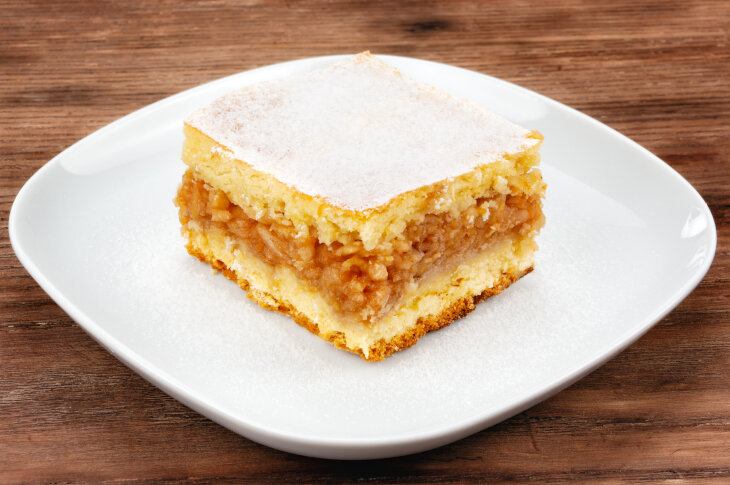
To end this wrap-up with a sweet taste in our mouths, we have the Hungarian Jew's favorite sweet treat, Pite. This tart has a sour cream and apple filling sandwiched between two layers of pastry, making for a wonderful blend of tangy and sweet. These delectable treats are usually served on Shabbat and Sukkot. Soft cheese Pites are commonly served at Hungarian Shavuot celebrations, where dairy products are customary to remember the revelation at Mount Sinai.
Even following the tragic events of the Holocaust that led to the deaths of over half a million Hungarian Jews, there remains a large Jewish population in Hungary, with over 100,000 Jews. Despite all the hardship they’ve endured, Hungary remains a mecca for old-world Jewish food and delicious dishes like Goulash, Paprikash, Aranyagluska, Kiorrtush, and Pite. These dishes and the wealth of Hungarian recipes that live on in the kitchens of Hungarian Holocaust survivors and their children are proof that we survived, that we made it.,















As a Jew I have always been interested in the various Jewish immigrants that made their way to the United States and the foods they brought with them and how far back these foods go, as so many of them started out in another religion and made their way into the homes of our people, I love making many of the foods from our ancestors that came to American and brought with them their heritage and foods. I have passed on so much of this to my grown children that also have a love of cooking
Recipes PLEASE
Hi--I found that if you click on the highlighted name of the dish you are interested in, it will take you to a recipe. Hope that helps