




 Why Does the Word “Zionist” Still Exist?

14 min view
5 min read



6 min read


Five powerful lessons from the life of Siggi Wilzig.
The story of Siggi Wilzig’s extraordinary life, portrayed in the biography Unstoppable by Josh Greene, is both heartbreaking and inspiring. There is so much to learn from his experiences surviving horrific conditions in the concentration camps and from his life afterward, in which he defied all odds to rebuild himself and create a lasting legacy.
Here are five of the most powerful lessons from Siggi’s incredible journey.
When Siggi arrived in America, he made three vows: he would never go hungry again; he would always stand up for and support the Jewish people; and he would relentlessly speak out against injustice. Greene describes Siggi’s determination to imbue his life with meaning: “Survival alone wasn’t enough. He needed his life to stand for something.”
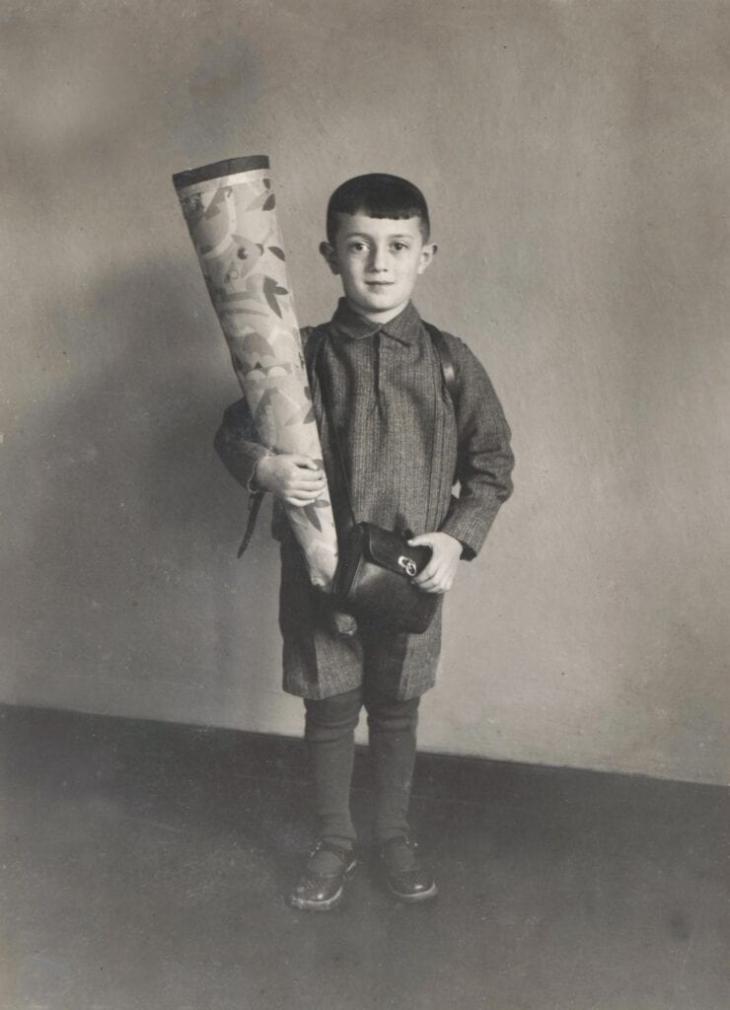 1932: Siggi, age six, holds a candy-filled cardboard cone, a traditional gift from parents, to celebrate a German child’s first day of school.
This was also why, as soon as Siggi arrived in America, he made his way to the home of the parents of his closest friend who had survived the concentration camp beside him. Although his friend had not yet made it to America, Siggi had promised him that he would find his parents as soon as he reached New York and tell them about the harrowing years they had endured together. Before Siggi even found a place to live, he traveled through an unfamiliar city in a snowstorm to keep that promise.
When Siggi first came to America, he was penniless, with no skills and only a limited grasp of the English language. The day after he arrived, a massive blizzard hit New York and Siggi’s first job was shoveling snow off sidewalks for two dollars a day. He later worked in sweatshops and at countless other menial jobs before becoming a successful businessman.
Greene wrote: “Every morning he chose to live, to work, and to move forward—no matter what yesterday had taken from him.” In the first sweatshop where he worked, the floors were made of rough wood, forcing workers to wear thick shoes to protect themselves from splinters, and the fumes from the machinery filled the loft with an overwhelming stench all day. Nevertheless, Siggi persisted without complaint and even begged his boss to let him clean the toilets after long workdays so that he could earn an extra $1.50 a week.
Siggi’s life embodied the idea that strength and courage are forged through suffering. He lost 59 members of his family in the Holocaust and witnessed unbearable pain and loss. In Auschwitz, Siggi found his father in the infirmary, but he could do nothing to save him. He tried to feed him extra potatoes, only to later discover they had been poisoned. For the rest of his life, Siggi believed he had helped kill his own father.
Yet his suffering only strengthened his determination. Siggi often said, “Never give up. Only death is permanent. Everything else can be fixed.”
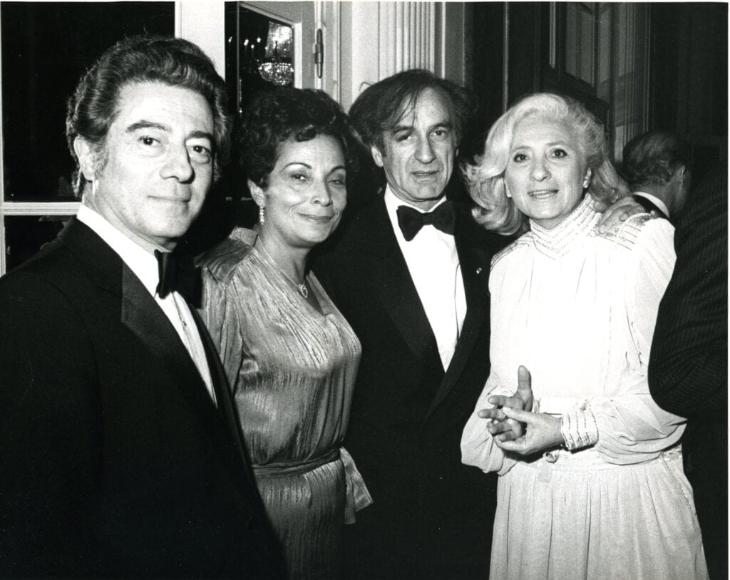 Left to right: Siggi & Naomi Wilzig, Nobel Laureate Elie Wiesel, and wife, Marion. In 1978, Siggi and Elie were both appointed by President Jimmy Carter to the President’s Commission on the Holocaust.
Greene wrote: “He learned that fear loses its power the moment you decide it will no longer run your life.” This courage enabled Siggi to survive the concentration camps by claiming he was a bricklayer—even though he had no idea how to lay bricks. Later, he used the same courage to succeed in business, willingly starting ventures and learning as he went.
Siggi believed it was his mission to speak about his wartime experiences so that no one would deny or forget the atrocities of the Holocaust. Greene wrote about Siggi’s passion for confronting silence and Holocaust denial: “Silence helps the oppressor, never the victim. To deny the Holocaust was to murder its victims a second time.”
Siggi believed that his survival carried a responsibility to speak, act, build, and confront lies. He was instrumental in building the U.S. Holocaust Memorial Museum in 1993 and became the first survivor to speak to cadets at West Point about his experiences in the concentration camps.
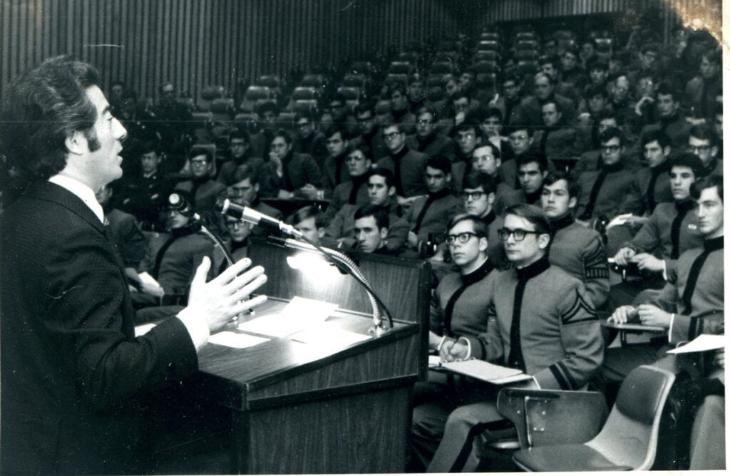 Speaking at West Point Military Academy
He also spoke with deep emotion at Kean University in honor of Yom HaShoah: “Holocaust denial is the worst thing that can happen to a survivor. For someone who still hears the screaming of children, who still has nightmares of babies being torn from the arms of their parents and thrown into the crematoria, the cruelty of having to read such statements by deniers in newspapers…”
Siggi didn’t just survive prejudice; he deliberately placed himself in environments where discrimination was so widespread that no one believed he could succeed. Through vision and relentless determination, he defied every expectation. Siggi often said, “The last person to threaten me was Hitler, and no one is going to do it again!”
When Siggi needed to present before the board of Wilshire Oil—an industry that had no Jews at the time—he was unafraid to reveal who he truly was. He rolled up his shirtsleeve and showed them the number tattooed on his arm from Auschwitz. Then he said: “Gentlemen, you are looking at a man who had the foxlike instincts to survive history’s darkest hour, a man who has no fear of adversity and who cannot be intimidated by overwhelming odds. The Almighty has given me a second chance at life, along with the skills to make great fortunes. My partners and I look forward to doing business with you.”
Siggi would go on to become Wilshire’s president, chairman, and CEO.
He rose to prominence by acquiring distressed and undervalued companies and transforming them into highly profitable enterprises. In an industry dominated by old-money elites and rampant antisemitism, Wilzig broke through barriers that were considered impenetrable for an immigrant Jew with his background.
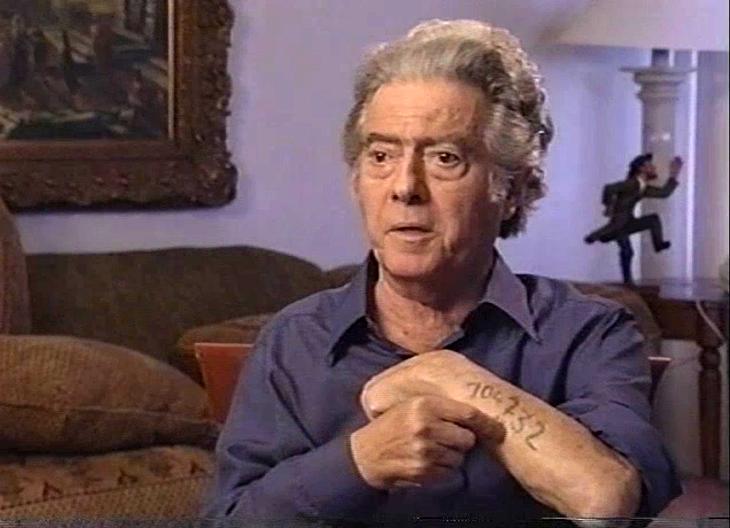 In 2002, Siggi shows an interviewer from the Shoah Foundation the number that was tattooed on his arm soon after his arrival in Auschwitz.
His fearlessness set him apart on Wall Street. Having survived Auschwitz, Wilzig often said that no boardroom intimidation could compare to what he had already endured. He negotiated aggressively, trusted his instincts, and was willing to take calculated risks others avoided. That courage helped him engineer deals that reshaped companies and generated enormous value.
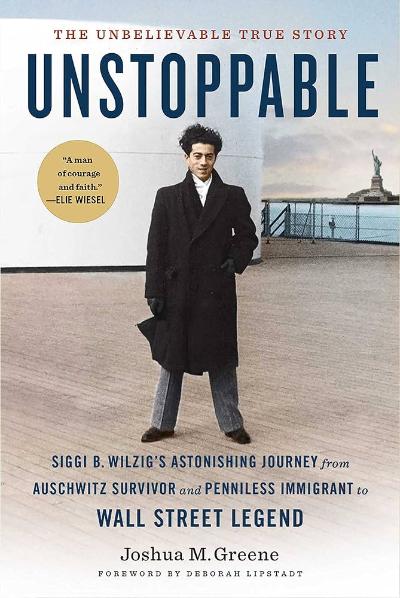 By the time he became president, chairman, and CEO of Wilshire Oil, Siggi Wilzig had earned a reputation as a man who could not be intimidated, outworked everyone around him, and turn adversity into advantage. On Wall Street, where pedigree often matters more than grit, Wilzig stood out as living proof that resilience, vision, and relentless determination could outperform privilege—making him a true legend.
His relentless determination to fight injustice and stand up for the Jewish people can inspire us to speak up when we witness today’s senseless hatred and misinformation. May we all find ways to turn our own pain into purpose and make choices that build greater resilience each day.












The contents of this article tell me nothing that i hadn't read before. Nevertheless, I found it interesting, well-written and convincing. Thank you!
Incredible story. As are the the many that describe the incredible lives these survivors (e.g. my uncle Paul) led despite the odds.