




 The Miracle of Jewish Independence Today
5 min read
8 min read


8 min read


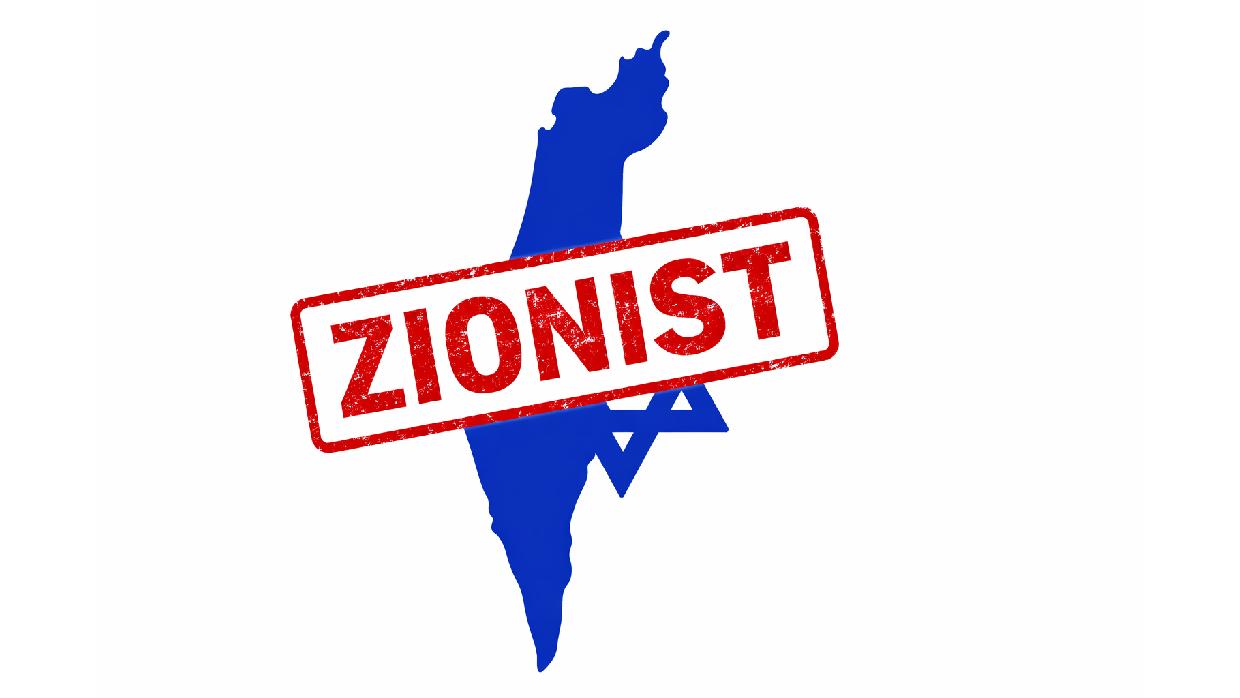
No other nation needs a special label for believing it has the right to exist. The persistence of “Zionist” reveals how Jewish sovereignty alone remains disputed rather than assumed.
The writer and thinker Coleman Hughes recently posed a thoughtful question to his guest on his “Conversations with Coleman” podcast.
Why, he wondered, is the word “Zionist” still in use?
Hughes, a supporter of Israel, explained why the use of the word puzzles him:
“The word ‘Zionist’ meant something very specific between 1880 and 1948 — it meant somebody who wanted to establish a Jewish state somewhere in historic Palestine,” he said. “I would have known what you meant if you called yourself a Zionist in 1880 or 1920 or 1946. But once the state is there — nearly 80 years old and recognized by the United Nations — why does there still need to be a word for a person who thinks it should continue existing, or have the right to defend itself?”
The word “Zionist” now seems mainly to serve Israel’s enemies, allowing them to portray Israel as something provisional or illegitimate.
If Australia were attacked by enemies bent on its destruction, Hughes noted, he would support Australia without hesitation, yet no one thinks it necessary to invent a label for that position. In practice, he suggested, the word “Zionist” now seems mainly to serve Israel’s enemies, allowing them to portray Israel as something provisional or illegitimate. The term has become “a slur rather than a meaningful word,” he told his guest. “So that's why I don't identify with the word ‘Zionist.’ I don't actually know what it means.”
I’m an admirer of Hughes; I wrote about his excellent debut book, “The End of Race Politics,” in 2024. To be honest, it isn’t a question I had ever thought about before. But once I heard it framed, I could easily understand why it might prompt the same bafflement in many people who are instinctively sympathetic to Israel — and are therefore perplexed by the persistence of a term that so often seems to do only harm.
Here’s how I would answer the question.
It is true that in most cases, the names of political movements fade once their central aim is achieved. “Abolitionists” did not remain a living political category after slavery was abolished. Neither did “Risorgimento” — the movement to unify the Italian peninsula into a single nation — once the Kingdom of Italy was established. By that logic, the term “Zionism” should indeed have become merely historical after 1948.
So why didn’t it? Four reasons suggest themselves.
First, Zionism arose to solve a problem that didn’t end when the Jewish state was declared.
Most campaigns for nationhood, even those that are bitterly challenged, usually resolve into peaceful acceptance once the nation is securely established. Who today still fights to undo the sovereignty of Bangladesh or Bosnia? Zionism is unusual because Israel came into being under immediate siege and has never enjoyed the taken-for-granted legitimacy extended to almost every other country.
Zionism is unusual because Israel came into being under immediate siege and has never enjoyed the taken-for-granted legitimacy extended to almost every other country.
From its first day, powerful states and movements have implacably opposed not merely the policies of the Jewish state, but its right to exist at all. That makes support for Israel’s continued survival, rather than something banal and obvious, a contested moral and political stance. Nearly eight decades after Israel’s birth, the right of Jews to a sovereign state is still treated as uniquely suspect, even in the United Nations that admitted Israel as a member.
So the label “Zionist” today functions less as a descriptor of a political project than as a marker in a moral argument: Are Jews entitled to sovereignty in their historic homeland — yes or no?
A second reason for the continued relevance of the “Zionist” label is that the modern Jewish state is not simply another postcolonial creation. It represents something unheard-of in the annals of statecraft: the return of an indigenous people to its ancestral homeland after nearly two millennia of exile — a diaspora during which Jewish identity, language, law, and memory were preserved with extraordinary tenacity. The revival of Jewish self-rule didn’t close a chapter so much as resume one that had been violently interrupted.
That resumption remains, even now, a source of wonder.
The revival of Jewish self-rule didn’t close a chapter so much as resume one that had been violently interrupted. That resumption remains, even now, a source of wonder.
“In the last half-century, over 100 completely new independent states have come into existence,” the noted historian Paul Johnson wrote in 1998. “Israel is the only one whose creation can fairly be called a miracle.”
Speaking in Parliament in 1949, Winston Churchill described Israel’s modern rebirth as “an event in world history to be viewed in the perspective … of a thousand, two thousand, or even three thousand years.” Again and again Churchill referred to himself as a Zionist, never questioning the ongoing fitness of the term years after 1948. “I am a Zionist, let me make that clear,” he told reporters in 1954, praising the revival of Jewish statehood as “a most wonderful thing.”
For Churchill, as for millions of other self-described Zionists, the word didn’t merely signify opposition to Israel’s elimination, but gratitude, awe, and attachment to that improbable renewal.
That points to a third reason for the continued vitality of “Zionism.” The word expresses more than assent to Israel’s legitimacy; it is a term of affirmation. One can strongly support Israel’s right to defend itself against military, diplomatic, or intellectual enemies while feeling no particular emotional or historical connection to what the modern Jewish state represents.
Zionism gives a name to that connection — to the sense that the restoration of Jewish sovereignty was not only justified, but momentous. For those who readily embrace the term, it conveys their attachment to an achievement that reshaped Jewish history and altered the moral landscape of the modern world.
Finally, Hughes is of course right that “Zionist” has become a slur in many quarters. But that weaponization is precisely why supporters of Israel refuse to abandon the term. To surrender it would be to concede that Jewish national self-determination is uniquely problematic — that alone among the world's peoples, Jews require a special ideological label to justify their sovereignty. The fact that enemies of Israel have turned “Zionist” into an epithet is not a reason to retire the word, but to reclaim it.
For many who wield “Zionist” as an insult, the word is simply a dysphemism for Jews — a way to express antisemitic animus while maintaining a veneer of political respectability. As Martin Luther King Jr. observed during a 1967 visit to Boston, “When people criticize Zionists, they mean Jews. You're talking antisemitism.” The substitution has become so reflexive that “Zionist” now performs the same work once done by terms like “cosmopolitan,” “rootless elite,” or “globalist” — allowing bigotry to masquerade as political critique.
“Zionist” names an ongoing commitment to defend a state whose right to exist remains contested, honors the historical miracle of a people's return to sovereignty after two millennia of exile, and expresses gratitude for an achievement that reshaped Jewish history.
For all that, however, the word endures primarily because of what it affirms. “Zionist” names an ongoing commitment to defend a state whose right to exist remains contested, honors the historical miracle of a people's return to sovereignty after two millennia of exile, and expresses gratitude for an achievement that reshaped Jewish history. Those who embrace the term do so not because enemies have baited them into defensiveness, but because “Zionist” captures something they consider worth celebrating. To abandon it in the face of mockery would be to concede that Jewish national self-determination is indeed suspect — that it requires, uniquely among the world's peoples, a posture of apologetic justification rather than straightforward affirmation.
Hughes’s puzzle is understandable. In a just world, “Zionist” really would be obsolete, no more necessary than a term for “someone who supports Australia’s right to exist.” The persistence of the word is a symptom. It endures not because of the passage of time, but because of what hasn’t yet passed: the refusal, in too many quarters, to grant the Jewish people what is granted as a matter of course to everyone else.
The term will fade when the acceptance it describes is finally universal. Until then, it names something that still requires naming — a position that should be unremarkable, but remains, nearly 80 years on, fiercely contested.
This op-ed originally appeared in “Arguable,” a weekly newsletter written by Boston Globe columnist Jeff Jacoby.














If u look at a traditional Jewish prayer book going back over a 1000 years, u will find the phrase "and return our eyes to Your return to zion".
Israel is the only 3rd class member state in the UN that cannot even be a rotating member of the Security Council.
So much for acceptance at any period of Israel's rebirth.
Besides being a supposedly new word, the word Zion in Hebrew is in the Torah in many places, there is even a saying " from zion came out Torah, and the word of G _ d from Jerusalem", isn't Zion another name for Jerusalem, also there is a Mountain in Israel called Zion, if anybody has a problem with a Jewish homeland they are anti Jewish/ anti semitic, the UN a bolgna entity said Zionism is racism" but in fact saying " from the river to the sea free Palestine " that is beyond racism our enemies want to murder the Jews and take over all our land and in reality Jews are the authentic and real Palestinans the others are Arab Muslim terrorists imposters, I don't get it when non religious and very religious Jews have a problem with the word zionist,
I wear the name “Zionist “ with pride. I have been a Zionist since I was 14 and I am 87. To me it just means I love and support Israel. ( Even now for the first time I do not agree with her government.)
I'm sitting here trying to get reports out for tomorrow and chatting with Rabbi Farkas in Canada. Yes this is a great article but I am moaning to the Rabbi that Zionism is a 2400 year old concept. Zionism is not a new idea it is deep at our soul. This writer, as gifted and relevant as the writer is, in not acknowledging its true nature as a hope and dream and a yearning to return......misses much of the value of the concept to each of us !!
Jeff, It's also strange Jews aren't allowed to pray on the Temple Mount. Is there another group in the world who are forbidden to pray in their holiest spot (assuming they aren't physically prevented from doing so, which isn't the case here)? The Redemption will rectify both problems, but will have to wait until Moshiach. Until then, keep calling yourself a Zionist but don't expect the situation to change.
Excellent piece. Communism and Islam, 2 ideologies that have been a thorn in the side of Israel since it's creation, both backed by the antisemitic U.N..
Why, just recently at the Winter Olympics Israeli athletes were the only ones who were booed. China, Saudi Arabia, Iran. Crickets.