







 After the Manchester Synagogue Attack, They Danced Through Their Tears

12 min read
7 min read
7 min read
6 min read




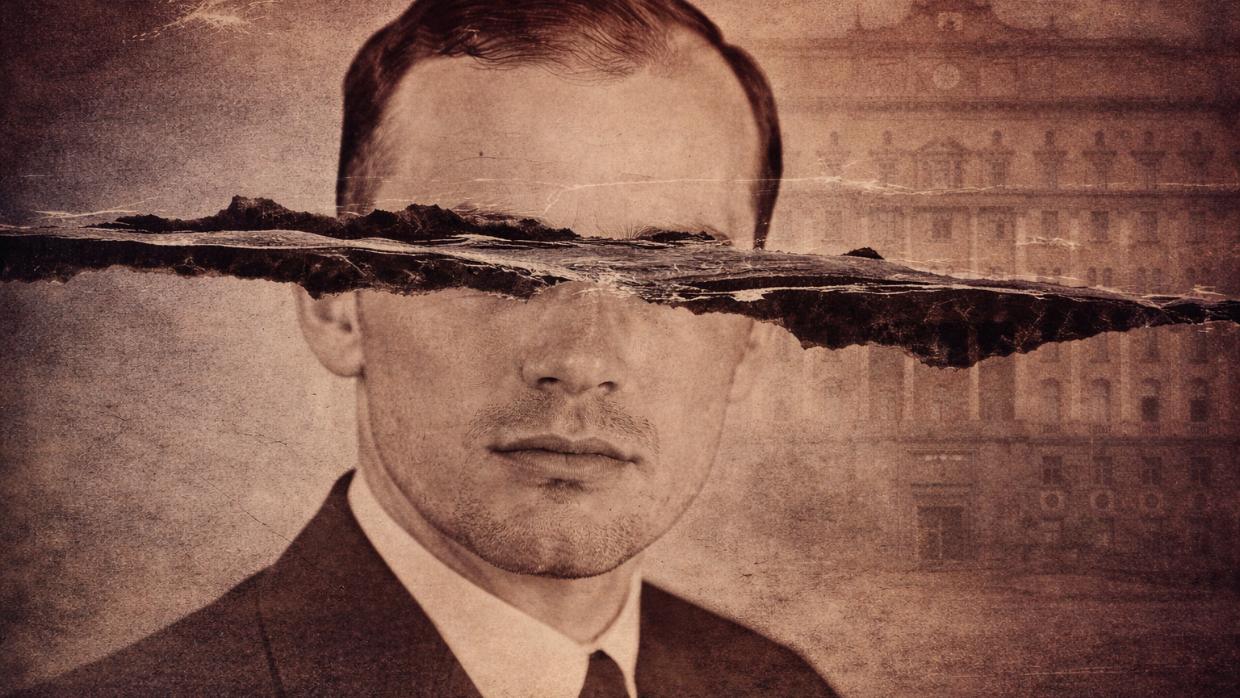
A fearless Swedish diplomat saved thousands of Hungarian Jews in WWII and then disappeared into Soviet captivity, leaving behind a mystery of courage, betrayal, and unanswered questions.
“Raoul Wallenberg: Missing Inaction” is a powerful documentary that delves into the remarkable life and mysterious disappearance of a courageous man who saved thousands of Hungarian Jews during World War II. An up-and-coming architect, diplomat and scion of a prestigious Swedish banking family, Raoul Wallenberg risked his life, covertly leading a humanitarian mission to Budapest to rescue the city’s last surviving Jewish ghetto.
The film conveys Wallenberg’s story through interviews with his family, history experts, the Holocaust survivors he rescued, politicians, Russian spies, and actual letters from Wallenberg, his mother and grandfather. Voice narration by Jake Gyllenhaal, Jamie Lee Curtis, and Brian Cox chronicle the immensity of Wallenberg’s heroism.
As a young man, Wallenberg was close to his paternal grandfather, Gustav, a well-traveled Swedish diplomat who had tragically lost his son, Raoul’s father, to cancer, while his mother was still pregnant.
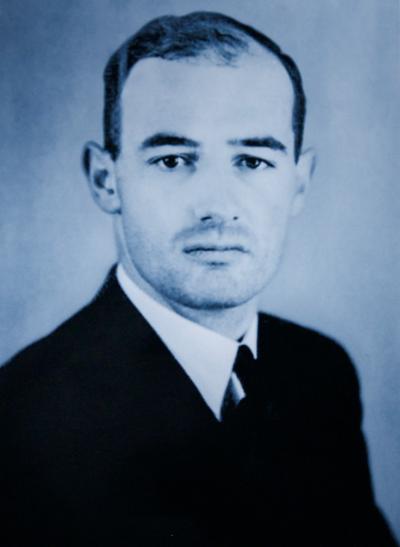 Raoul Wallenberg
“It was a tragic loss both for Raoul, who grew up in the shadow of a man whom he had never met, as well as for his grandfather, who in turn, invested his time and energies into shaping and guiding his grandson’s upbringing,” the documentary’s director, Brian Mait, said.
“His grandfather was instrumental in guiding that pathway forward, planning his education abroad at the University of Michigan (1931-35) as a means for Raoul himself to capture the essence and promise that America promoted, and thereafter, real world practicality working abroad, first in Capetown, South Africa focusing on sales, and then later in Haifa between 1935 and 1936, with a focus on banking.”
In Haifa, Wallenberg learned first-hand about Jewish persecution in Nazi Germany, meeting young German Jewish refugees who had fled. Their stories had a deep impact on him.
“It was in Haifa that Raoul began to question his understanding and passion in banking, the profession which was at the foundational core of the Wallenberg Family Dynasty,” noted Mait.
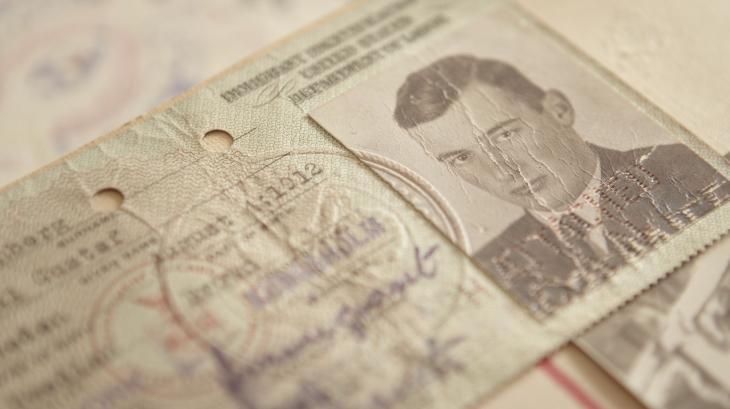 Wallenberg’s ID card
When his grandfather suddenly passed away in 1937, much of his career goals for grandson were left not realized, and Wallenberg struggled to find work. His uncles, Jacob and Marcus, who ran their family’s business, did not give him a banking job. Eventually, Jacob referred him to a friend at the Central European Trading Company in 1941, an export-import company partially owned by Kálmán Lauer, a Hungarian Jew, and he was hired.
As a Jewish man, Lauer was not allowed to travel throughout Europe. So Wallenberg, his business partner, travelled frequently in his place. In “Missing Inaction,” it’s mentioned that when Lauer tells him that his family was taken away by the Gestapo, this is when Wallenberg felt directly connected to what was happening.
It was at this time that President Roosevelt started the War Refugee Board to save the last Hungarian Jewish community. But since the Americans could not officially send a representative to Nazi-occupied Europe, they asked several neutral countries to get involved and only Sweden said yes.
Iver C. Olsen, a representative of the Board, had an office in Stockholm next to Lauer, and the two of them would have conversations about the mission to Hungary.
“He asked me if I could recommend a man that could be placed as a humanitarian attaché in Budapest with the help of the Ministry of Foreign Affairs,” Lauer said in interview footage. “I responded spontaneously, ‘Yes I can, my colleague, Raoul Wallenberg.’”
In searching for a higher purpose in his life, Wallenberg immediately agreed to becoming a diplomatic envoy and was on his way in just four days.
Arriving on July 9, 1944, the day the last deportation train left Hungary for Auschwitz-Birkenau, Wallenberg took on his post as third secretary at the Swedish legation. With World Refugee Board funds, using his drawing skills, he created and distributed Swedish protective passes to thousands of Jews, preventing their deportation from Budapest. Taking advantage of Sweden’s neutral status, he intervened numerous times to secure their release, and worked tirelessly to save as many people as possible.
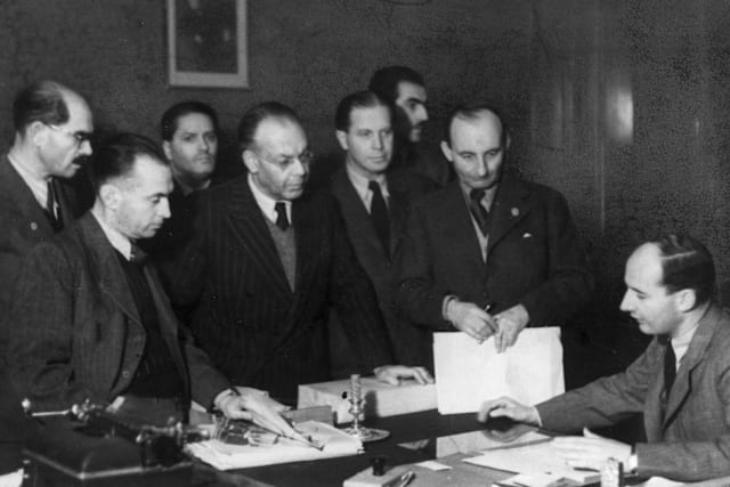
Wallenberg was quite savvy in his quest to help Jewish people. He quickly expanded the small embassy into a larger organization and hired Jewish typists to create more Swedish passes. As a result, the people who worked there were also saved and no longer needed to wear the yellow star that identified them as Jews.
In addition, Wallenberg started renting and buying houses throughout Budapest, which flew Sweden’s royal flag. This meant they were protected under the auspices of their embassy. He regularly brought food in to feed the Jewish people there, and implemented a hospital, with Jewish doctors who were in hiding.
As the war ended and Russian troops had taken over Budapest, Wallenberg went to greet them, perhaps because he felt invincible after achieving so much. It’s mentioned in the documentary that several Jewish survivors he had saved were worried and asked him not to go. He didn’t listen to them, miscalculating that they were going to put in place a completely new structure. He was immediately arrested by the Red Army, on Stalin’s orders, shortly after they entered the city in January, 1945.
On suspicion for being a U.S. spy, Wallenberg was detained and taken to Moscow’s infamous Lubyanka prison, despite his diplomat status. He disappeared into Soviet custody, never to be heard from again. While his family desperately tried, repeatedly and relentlessly for several years, to find out more information and get him released, they were never successful.
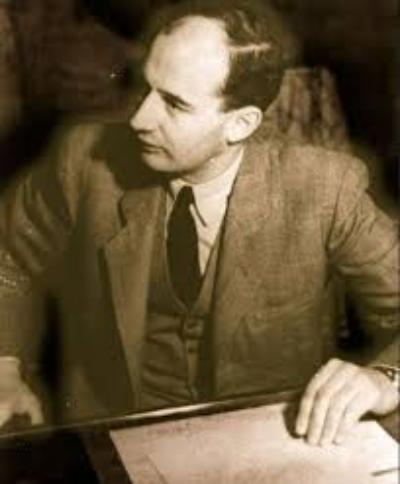
Years later, the Soviets claimed he died in 1947, but there was no proof of a death certificate or his remains, and the circumstances have never been confirmed. Even more confusing: prisoners who were in Soviet prisons would insist that they had met him there while in captivity.
“The question was not why he was arrested. The question is why he was not released,” Swedish biographer Ingrid Carlberg acknowledged in the film, which provides several plausible, insightful explanations as to what could have happened.
Wallenberg’s frequent connection with Budapest anti-Nazi resistance groups made the Russians wonder about his true motives. One theory stated by Louise von Dardel, one of Wallenberg’s nieces, was that the Soviets kept the Swedish humanitarian as a bargaining chip, but when he refused to be turned into a Soviet secret agent, they killed him.
Another hypothesis, which Wallenberg’s half-sister, Nina Lagergren, stated, was that the Swedish government didn’t take enough action to investigate/get him out of prison due to a fear of straining relations with Russia.
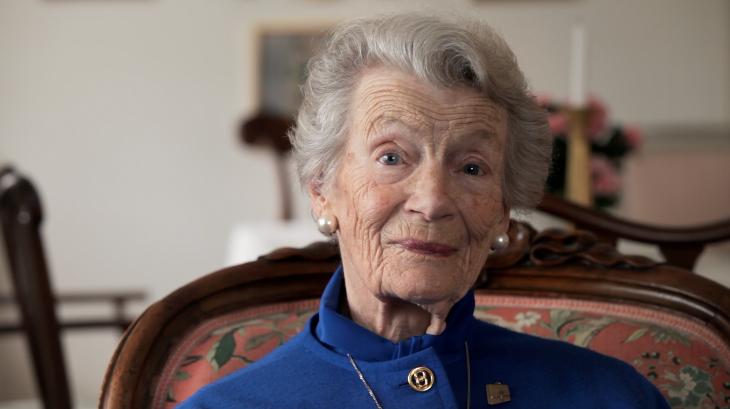 Nina Lagergren, Raoul’s half-sister
The documentary shows news footage on Taj Erlander, who was the Swedish prime minister during Wallenberg’s captivity, acknowledging that his government had failed him by not nonstop pushing for his release.
“It has been a fight against a giant, and as far as we understand it they have been lying all the time,” Lagergren said, accusing Russia of giving misleading information about Wallenberg’s death.
The frustration of not knowing what happened to their son took a toll on Wallenberg’s mother Maj von Dardel and his stepfather Fredrik von Dardel. They killed themselves by overdosing on prescription drugs in 1979, emotionally destroyed by the numerous conflicting circumstances about Wallenberg’s death.
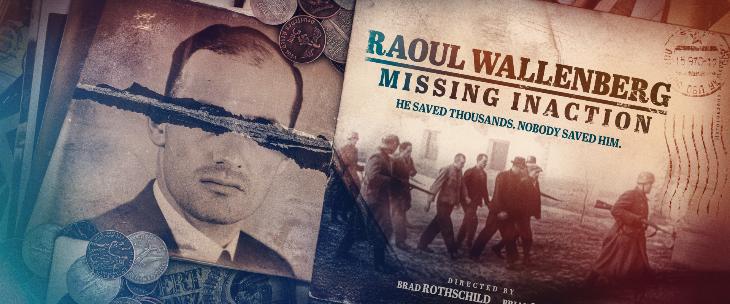
After making its North American premiere at the Palm Springs Film Festival, "Raoul Wallenberg: Missing Inaction” is headed to the Atlanta Jewish Film Festival on February 25th. The directors are in discussion with US streamers for a debut later this year. The International Raoul Wallenberg Foundation, a US based organization committed to continuing fighting for human rights and educating new generations about Wallenberg and the Holocaust. You can find more information about them here: https://www.raoulwallenberg.net/










He gave papers to my father several times which delayed his deportation to Bergen Belzen.He was a true hero. Breznev was the leader of the Russian army who took him in captivity.
He was a big Car collector ,he took his Black Merzedes that might have a lead of his disapperance,
There is so much detail in this article that I and many other Descendants of Holocaust Survivors did not know. I had no idea he was in America and Israel before the war. Now I see why he saved thousands of helpless Hungarian Jews. Russia is responsible for the death of this Righteous man.
I did finally hear about what actually happened to this man, however, it is still not 100 proof I guess. He was was captured by the Russians/Soviets. They did not believe him when he was swearing that he was not an agent of the Third Reich, so they killed him. It is certainly a reasonable theory. At that time no one really knew who was on whose side and he had no means of proving he was not a german spy so they assumed the worst. As they say no good deed goes unpunished.
There is an amazing musical (no, not a musical comedy, more like an uplifting musical drama/tragedy) called Wallenberg. Check it out: https://www.wallenbergthemusical.com/
One of my heroes. Fantastic book Righteous Gentile about his exploits is well worth tracking down.
What a great article to honor such a mensch as Raoul Wallenberg. I do not have a lot of heroes, but Raoul is one that is one of them; at the top. The unbelievable courage it would have taken. He devoted his life to help save Jewish people, when so many had not only turned their backs on us, but in some cases, joined in the pursuit to destroy us, to destroy our children, our legacies. It is nice to read quotes from his family. I did not know what befell Raoul's mom and step-dad. Very sad. I could not imagine not knowing what happened, but just knowing the suffering that would have been involved. I look forward to seeing this documentary.
What a Godly Brave Man. I recently read "Why The Jews" by Dennis Prager and Joseph Telushkin where the book was dedicated to Raoul Wallenberg.
Here in Monsey, NY, we have to adjacent streets dedicated in his honor. One street is called Raoul and the other street is called Wallenburg. I do not know how this came about but I wonder if there are any other towns did it.
Monsey was and still is a community of houlacoust survivors and their descendant. I believe that was one of the motives of honoring him.
This is very cool. I did not know that about Monsey. Our rabbi is from Monsey, and still visits his family there.