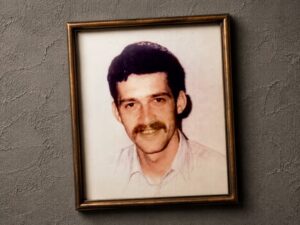




 For 44 years, Yehuda Katz’s Family Refused to Give Up Hope




10 min read


GOOD MORNING! Studies have shown that people tend to best remember the beginning of something (first impression) and the end of something (last impression), while the middle is largely forgotten or remembered hazily.
Meaning, human memory does not preserve an encounter or relationship as a continuous recording. Instead, it selects key moments and later reconstructs the experience from them. The beginning benefits from what’s known as the “primacy effect,” which establishes the framework through which later behavior is interpreted. The ending benefits from the “recency effect” because short term memory is fresh, accessible, and doesn’t suffer from displacement by new details.
Emotional experiences are also shaped by the “peak-end-rule.” People tend to judge an experience largely by its intense moments and by how it concluded. The middle is not necessarily forgotten; rather, repetitive and uneventful periods become compressed into a general impression. In relationships this means that people often remember how the relationship began, several emotional high or low points, and particularly how it ended. A painful breakup may make years of happiness seem false, while a tender ending may soften memories of earlier difficulties.
One of the best pieces of advice that I have seen regarding public speaking is based on both the primacy effect and the peak-end-rule: Start with a powerful and inspirational story, end with a question or a takeaway for your audience to consider and, most importantly, make sure the beginning and the end are fairly close together. I have heard many rabbis’ sermon go on and on while the congregants feel trapped like hostages. By the end, I doubt they could even recall the sermon’s topic.
This “peak-end-rule” affects us in many areas and generally causes us to have long-term perspective amnesia; we lazily view the quality of our lives by how we are feeling today. This is why many people unhappily look at their personal and business relationships and say, “What have you done for me lately?”
Still, knowing that we have this very human issue of perspective deficit, we can also use it to our advantage.
This upcoming Shabbat is the last Shabbat of the Hebrew year 5786. Let’s use it to define the past year. May I suggest that you do something to make it a memorable Shabbat on which to end the year? Perhaps make an effort to add some extra spirituality to it or elevate the physical experience with beautiful flowers or specialty foods and wines. Perhaps most importantly, a special effort should be made to spend it in the company of close family and friends.
Last Shabbat we read the portion of Ki Tavo, which is replete with dire warnings and explicit descriptions of punishments that result from not following the Torah and sinning against the Almighty. The punishments that follow from straying from God and behaving immorally are truly horrible. In fact, in the portion of Ki Tavo the Torah commits over 50 verses to detailing the depths to which we will fall and the nearly unimaginable suffering we will endure as a result of our misdeeds (e.g. financial and societal ruin, horrible diseases, starvation to the point of cannibalism of one’s own children, etc.).
Our sages in the Talmud (Megillah 31b) inform us that Parshat Ki Tavo is purposefully read annually prior to Rosh Hashanah. The Talmud states that Ezra the Scribe (who lived circa 450 BCE) instituted the practice of reading the terrible punishments and afflictions that appear in Parshat Ki Tavo prior to Rosh Hashanah: “So that the year would end along with its curses.”
In other words, Ezra the Scribe enacted a powerful mechanism to remind the Jewish people that Rosh Hashanah is a time to turn the page. Yes, the past year may have had its difficulties – perhaps many things didn’t go our way or maybe we were confronted with situations in which we are not proud of how we reacted or behaved – nevertheless, Rosh Hashanah is a time to turn the page and recreate our reality.
Still, it must be pointed out that although Ki Tavo is read before Rosh Hashanah, it isn’t the last portion. This week’s double Torah reading includes Parshat Nitzavim and Parshat Vayelech and they act not just as a respite between the curses and punishments of Ki Tavo, but as a promise of the future. This week’s reading reaffirms the Almighty’s commitment to His people.
The famous Biblical commentator Rashi teaches us the essence of this week’s Torah portion:
“You are being brought into a covenant with Hashem your Lord […] He is establishing you as His nation and He will be your God as He swore to your forefathers Abraham, Isaac, and Jacob” (Deuteronomy 29:11-12).
Rashi explains that when the Jewish people heard all the horrific consequences that would be visited upon them if they strayed from God and failed to follow the Torah, their faces turned white with fear. Moses comforted them by saying, “Although you have angered the Almighty quite often, you are still standing before me today. God has promised that you will endure as a people, that no matter what travails may come, you will survive.”
Thus, in this week’s Torah portion, we find the origins to the strength and longevity of the Jewish people. Most nations are an amalgamation of peoples or tribes bound together and defined by geography. This explains why when a storied nation (Babylonians, Assyrians, et al.) gets overrun and exiled from their lands they simply disappear.
As we’ve discussed, the mere existence of the Jewish people is a living miracle – a nation that has not only survived being exiled from their homeland and enslaved (twice!), but has also retained their heritage, culture, and identity. Shockingly – and likely a much bigger miracle – the Jewish people have even returned to their ancestral homeland, reclaimed it, and built a nation state. How is this even possible?
It is because the Jewish nation has an entirely different national definition. They were founded on the vision of their forefather Abraham; that the purpose of mankind is to bring God and His truths into this world. The Jewish people are bound together not by geography but rather by a set of beliefs. This unified vision raises the Jewish nation to the status of a singularity – a corporate entity if you will. It is a unified body made up of many millions of member cells.
Our sages teach us that in last week’s Torah portion the Jewish people became responsible for one another. Similarly, in this week’s Torah reading we find that we are responsible to respond when our brethren stray from the proper path. Much like a physical body that has many different parts, but an illness in any part affects the entirety, so too the Jewish people are responsible for the wellbeing of one another – the entirety of the corporate entity.
Akin to a physical body in which cells die off and are replaced while the individual’s identity remains the same, so too generations of the Jewish people pass and are replaced, but the nation’s identity, as defined by our Torah and world vision, remains the same and endures. This is the secret and miracle of the longevity of the Jewish nation.
But there is an even deeper, more powerful message here.
As we have established, the Jewish people have a mission to bring the ultimate revelation of God and His Torah to the world. We are charged with the responsibility of bringing the world to its completion: the day when the entire world accepts God as the true King and unifies all of creation.
To be sure, the Jewish people have an illustrious past, a history of great people with remarkable accomplishment and the wisdom of past generations is unmatched. Likely as not, the legendary scholars, leaders, and personalities of previous generations will never quite be equaled again.
But every succeeding generation embodies the concept with which we began this column, the “peak-end-rule.” The last generation will ultimately define who we are as a people. In other words, for all their greatness, the previous generations need us; every single Jew who has ever lived needs succeeding generations to step up and complete the mission that has been assigned to the corporate entity of the Jewish people.
While we may be standing on the shoulders of giants – it is us who now comprise the corporate entity of the Jewish people. It is us who must take the responsibility to see this mission fulfilled. The very definition of what it means to be a Jew is in our hands.
The entire history of the Jewish nation is relying on us to bring the ultimate fulfillment of our forefather Abraham’s mission for the world. It is in the power of each one of us to accept this and commit to making this founding principle our own life’s mission. When we commit to bringing the Almighty into our world and making His reign and presence palpable in this world, we will be worthy of the messiah and the ultimate redemption for the Jewish people and the entire world.
On the day of Moses’ death he assembles the whole Jewish people and creates a Covenant confirming the Jewish people as the Almighty’s Chosen People for all future generations. Moses makes clear the consequences of rejecting God and His Torah as well as the possibility of repentance. He reiterates that Torah is readily available to everyone. He warns us against idolatry (thinking anything other than God has power) and assures us that eventually the Jewish people will do teshuva (repent) and will be redeemed and brought back to the Land of Israel — and those who hate the Jewish people and pursue us will get their just recompense.
Nitzavim concludes with perhaps the clearest and most powerful statement in the Torah about the purpose of life and the existence of freewill: “I have set before you this day life and good, death and evil […] the blessing and the curse. Therefore, choose life that you may live, you and your descendants.” (Now that's a real Quote of the Week!)
Vayelech begins with Moses passing the torch of leadership to Joshua (Yehoshua). Moses then gives Joshua a command/blessing, which applies to every Jewish leader: “Be strong and brave. Do not be afraid or feel insecure before them. God your Lord is the One who is going with you, and He will not fail you nor forsake you.”
Moses writes the entire Torah and gives it to the Cohanim and Elders. He then commands that in the future at the end of the Shmita (Sabbatical Year) the king should gather all the people during the Sukkot festival and read to them the Torah so “[…] that they will hear and learn and fear the Lord your God and be careful to perform all the words of the Torah.”
The Almighty describes in a short paragraph the course of Jewish history (that’s starting from Deuteronomy 31:16 for the curious). Lastly, before Moses goes to “sleep with his forefathers,” he assembles the people to teach them the song of Ha’azinu, the next weekly Torah portion, to remind them of the consequences of turning against the Almighty.

Every ending is a beginning.
We just don’t know it at the time.
- Mitch Albom
Dedicated in Loving Memory of Our Parents’ Yahrzeits
Herbert Schnider – Chaim ben Yosef 25 Nissan 5674
Muriel Schnider – Miriam bat Sarah 25 Elul 5778