







 Surviving 9/11: Four Jewish New Yorkers Remember That Day

6 min read
9 min read





Five simple ways to bring unconditional love into everyday family life.
The Three Weeks, the mourning period leading up to Tisha B'Av, mark the destruction of both Temples in Jerusalem. The Talmud teaches that the Second Temple fell because of baseless hatred (sinat chinam) among Jews, so this is the time of year we focus on its opposite: unconditional love (ahavat chinam). We usually picture that as how we treat our neighbors, friends, or fellow Jews. But perhaps the greatest opportunity to practice it happens inside our own homes.
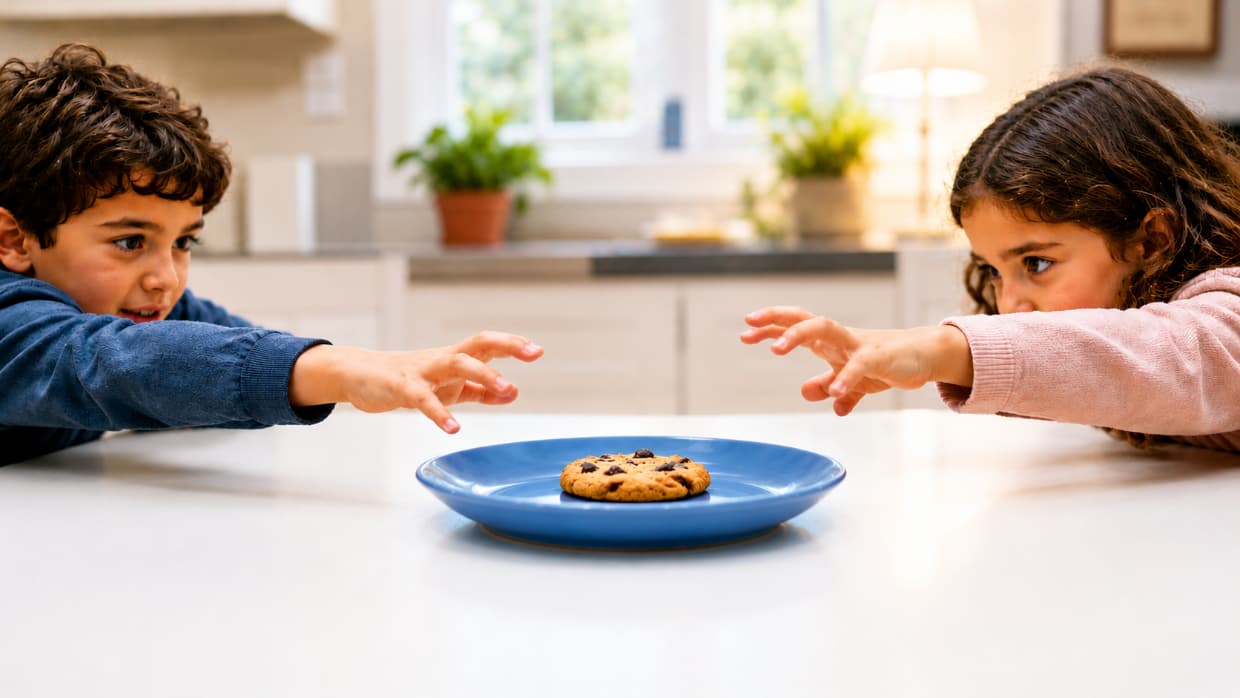
After all, siblings don't usually fight because they dislike one another. They fight because they live life together. They share bedrooms, bathrooms, toys, parents, car rides, and attention. Conflict is almost inevitable.
Kids are going to argue. The goal is to raise children who know how to work through disagreements with kindness and respect.
Here are five simple ways to bring unconditional love into everyday family life.
Instead of talking about unconditional love only at synagogue or around Tisha B'Av, make it part of your family's everyday language.
This week, choose one family goal: looking for ways to help one another, speaking respectfully, or noticing acts of kindness.
When my children were younger, we kept a marble jar on the kitchen counter. Every genuine compliment, thoughtful gesture, or peacefully solved disagreement earned a marble. When the jar was full, we celebrated together.
Were some compliments a little over the top?
Of course.
"You're the greatest brother ever!"
"You're the prettiest sister in the whole world!"
But that wasn't the point. We were creating opportunities for our children to practice looking for the good in one another.
You could also start a nightly tradition where everyone shares one kind thing a sibling did that day. Even children who argued all afternoon can usually think of one positive moment before bedtime.
Many sibling arguments begin with children trying to convince us who is right.
"He took my charger!"
"She won't let me finish!"
"He's making noises on purpose!"
Instead of investigating every detail, which never works, shift the focus to something more solution oriented.
"It sounds like we need some rules around chargers. What ideas do you have?"
"You're both frustrated. How can we solve this together?"
"What would be fair for everyone?"
Children often surprise us with their creativity.
Older children might decide to create a shared charging station, so no one has to search for a device. One family might use a timer for bathroom turns. Siblings can decide that weird noises are relegated to the bathroom or basement.
The more children practice solving problems, the less they depend on parents to settle every disagreement.
Children often jump to conclusions.
"He ruined my Lego tower on purpose!"
"She ignored me because she's mean."
"He never lets me have a turn."
Sometimes those assumptions are true, especially with siblings, but sometimes they aren't.
Instead of immediately agreeing, or playing judge, gently encourage curiosity.
"I wonder if it was an accident."
"Let's ask before we assume the worst."
"Is it possible there's another explanation?"
Teaching children to pause before judging someone's intentions is a lifelong skill. It helps siblings become more patient with one another and prepares them to build healthier friendships, marriages, and communities in the future.
Parents naturally notice arguing because it demands our attention. Kindness, however, is often quiet. A brother waits while his sister finishes tying her shoes. A sister saves the last brownie because she knows her brother loves them. One gives her sister a hug because her friend left her out.
Make sure to mention these moments:
"You waited for Sara. That was thoughtful."
"You saved Eli the last brownie."
"Shana was so sad, she really needed that hug."
The more we recognize kindness, and point it out, the more children begin to see themselves as kind people.
In the middle of an argument, children rarely hear long explanations.
That's why simple family phrases work so well.
You might say:
"Teasing hurts."
"Name-calling isn't how we solve problems."
"Kind words, please."
"Let's look for a solution."
"In this family, we build each other up."
These short reminders communicate your family's values without turning every disagreement into a lecture.
We often think unconditional love is about extraordinary acts of kindness. More often, it's found in ordinary moments: waiting an extra minute outside the bathroom, sharing the last cookie, letting someone else choose the game.
If our homes become places where children learn to solve problems, assume the best about one another, and practice kindness every day, then we're doing more than reducing sibling rivalry. We're sending our kids out into the world where they can help rebuild the kind of relationships that strengthen Jewish families and, ultimately, strengthen the Jewish people.














Wonderful!