




 Steal This Idea: Why Judaism Says No to Microlooting

8 min read


5 min read


Through faith and resilience, an American-Israeli hiker survives nine impossible days lost in the Indian mountains.
It began as a routine two-hour hike in the Indian Himalayas, one my 44-year-old friend Samuel “Sam” Vengrinovich had completed many times before. But when a thick fog suddenly rolled in, Sam became disoriented and separated from his group. In a desperate attempt to descend the mountain before nightfall, he made a fateful leap between boulders—and fell.
The fall left him with a broken arm and fractures in his knee and leg—but his spirit remained unbroken.
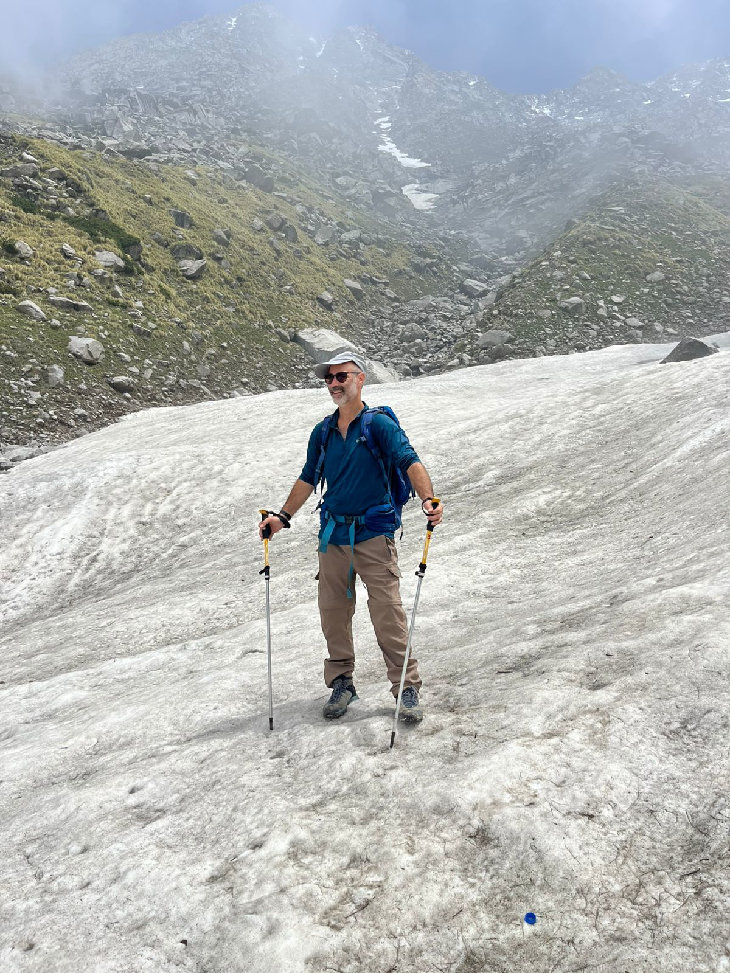 Sam trekking in the Himalayas days before getting lost
Stranded on a remote mountainside with no food, water, or way to call for help, Sam would survive nine harrowing days before finally dragging himself – with one arm and one leg – to a distant village and finding rescue.
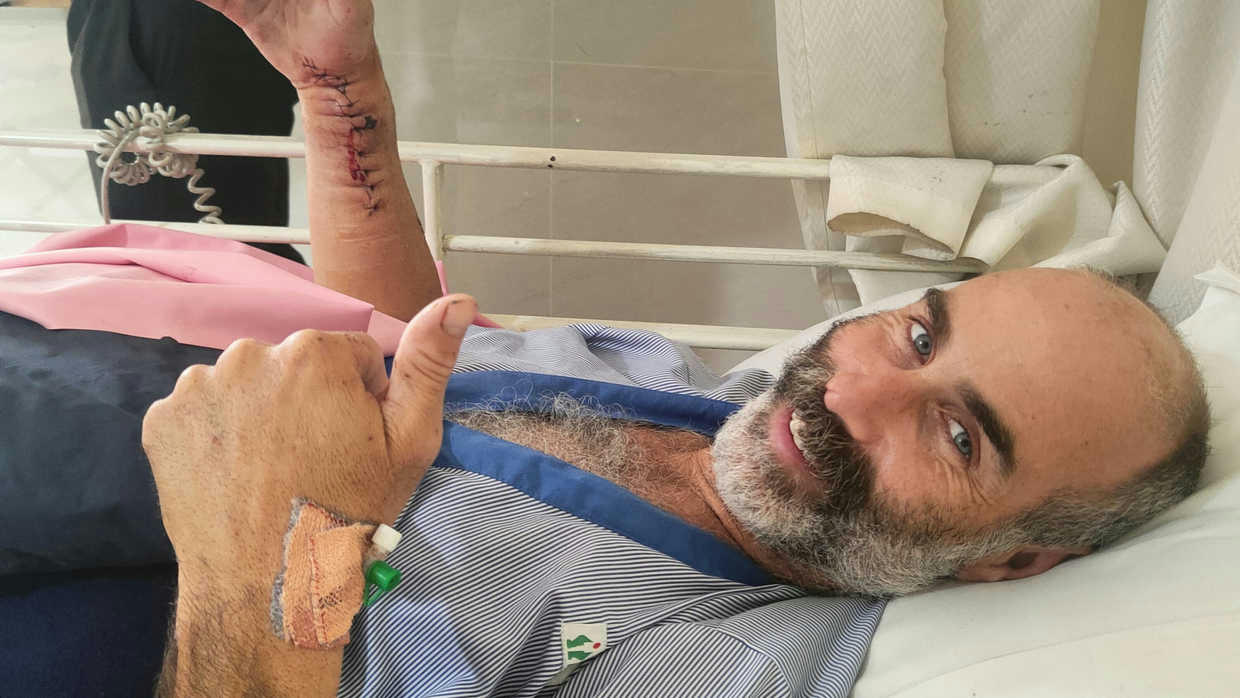
Now recovering in an Indian hospital and undergoing multiple surgeries, Sam is beginning to find the words to describe how he stayed alive—through daily prayer, radical self-love, and the strength of a global Jewish community.
This is his story of how he endured the impossible—and chose to live, with faith.
After “laying down for like 12–13 hours—super long nights,” Sam would awaken in deep pain, his broken body stiff and cold. But before attempting the agonizing task of moving, he began each morning with a simple yet powerful act: prayer.
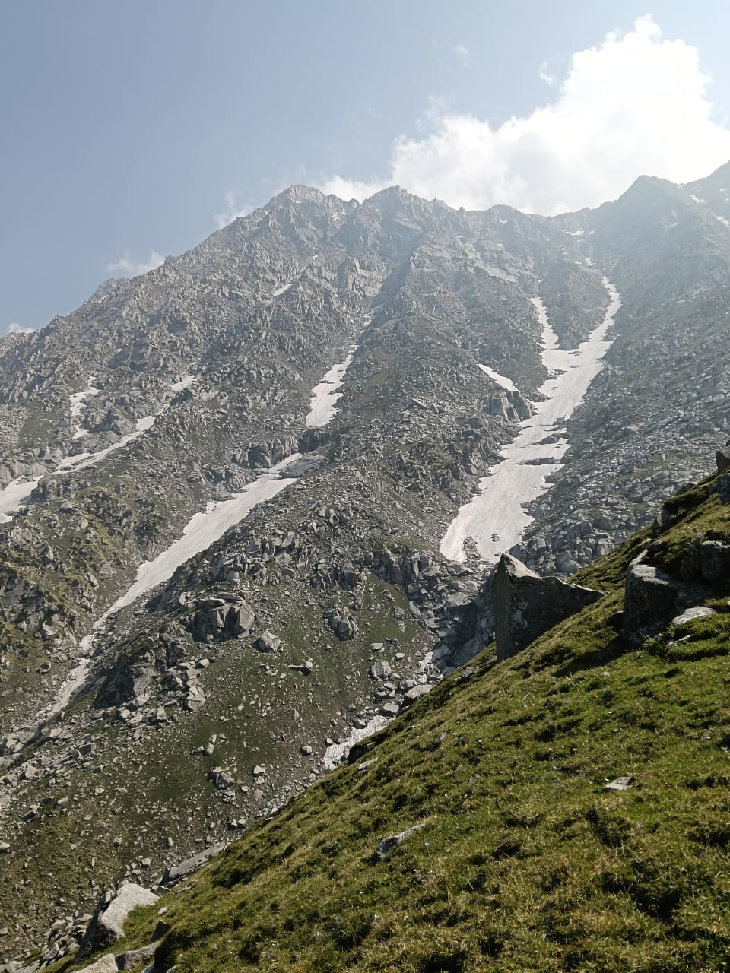 The steep mountain terrain that Sam descended, while injured, to find water and rescue.
“I was always praying to God as soon as I woke up,” he told me from his hospital bed in India. “I’d ask Him to bless me with calmness, to bless me with safety over speed. Every step I took, every decision I made—I had to be extremely careful. So I prayed for wisdom, for safety, for the right choices.”
Sam had no prayer book, no formal liturgy—just the raw, heartfelt plea of a Jew speaking directly to his Creator. In those moments, Sam was practicing a deep spiritual discipline rooted in the Jewish belief that even in the darkest places, God is with us, and we are never alone.
As Sam lay injured and alone on a remote Himalayan mountainside, something remarkable was unfolding half a world away. His family had realized something was terribly wrong when he stopped answering messages, and they immediately began mobilizing for his rescue.
All across the Jewish world, people rallied. WhatsApp groups buzzed with updates. Helicopter searches were arranged. His family launched an international fundraising campaign. A Chabad house in India set up a mission control room to centralize local rescue efforts. His friends in Jaffa organized a prayer vigil on the beach.
In America, his mother Tinah made a decision rooted in centuries of Jewish tradition: she would take on a new Hebrew name for herself, reflecting her new identity as the mother of someone in mortal danger. She chose Anael – meaning "God has answered."
"May this name bring divine response from heaven," she wrote to family and friends, "and help us pray for Sam with more strength."
In Jewish mysticism, a name isn't just a label—it's an expression of the soul. To change or add a name during times of crisis is to call forth new spiritual energy, to create a fresh channel for divine intervention. While Sam was praying each morning on the mountain for guidance and survival, his mother and community were invoking heaven on his behalf with this newly empowered name.
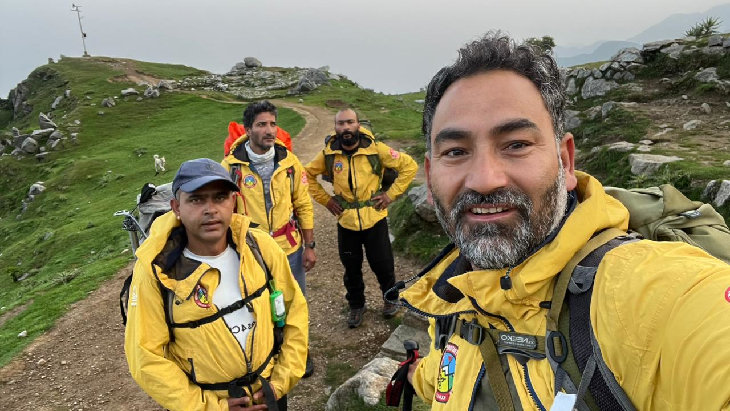 Some of the local rescue team, who coordinated with Israeli rescuers and volunteers
"I only found out afterward how many people were praying for me," Sam told me. "It means the world to know how many people cared."
One of the most remarkable aspects of Sam’s survival was how he related to his own suffering—with compassion, encouragement, and love.
“What kept me alive is that I tried to generate so much self-love,” he explained. “I was giving myself compliments every time I moved ten meters. I’d say, ‘Good job, Sam.’ I talked to my legs like they were my children: ‘It’s okay. I know it hurts. We’re working together as a team.’”
The Torah teaches, “Ve’ahavta l’rei’acha kamocha”—love your neighbor as yourself. But as our sages point out, this commandment begins with the self. To love others deeply and sincerely, we must first recognize our own worth and care for ourselves as creations made in the image of God.
In the most extreme circumstances imaginable, Sam lived out this teaching—becoming his own support system, his own cheerleader, and his own parent.
On the ninth day, Sam spotted a village across a river. He screamed for help. Locals heard him, sent rescuers, and finally brought him down the mountain.
When he realized he had been found, he wept—not just from relief, but from gratitude. “It was the first time I realized I wasn’t alone anymore,” he said.
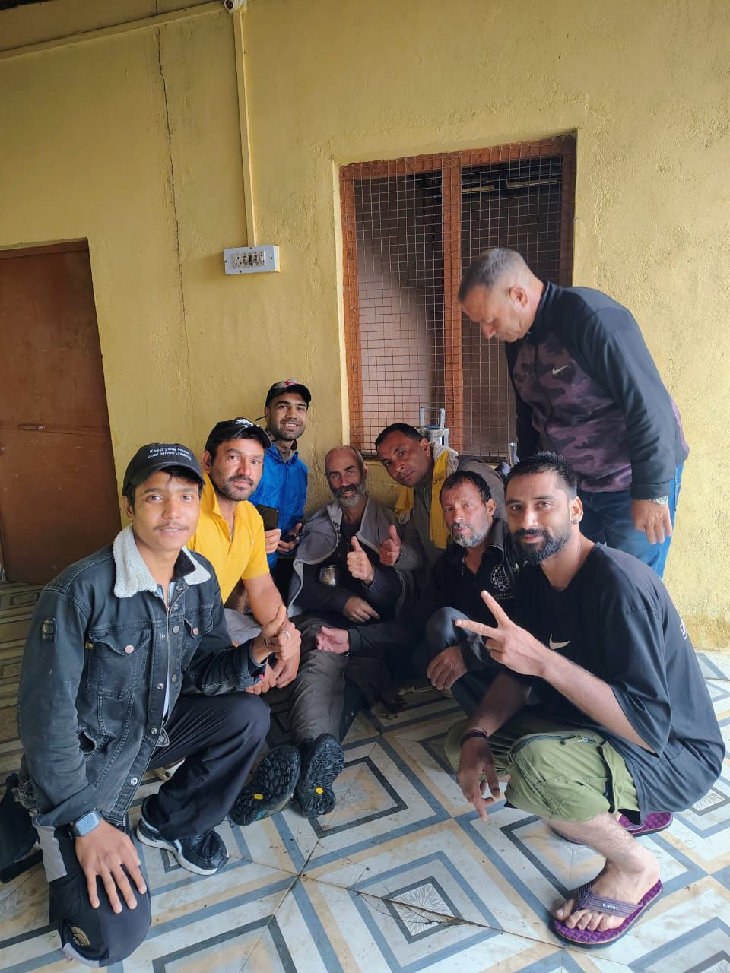 Sam immediately after being found, with some of his rescuers
Physically broken but spiritually intact, Sam now faces multiple surgeries. He also plans to hike again.
His message?
“Never give up on yourself. Try to love yourself as much as you can in this life. When you fall, be compassionate. Be kind to yourself.”
Shmuel Ben Anael is currently recovering in India and undergoing surgery. His family continues to seek assistance supporting his continued recovery expenses through GoFundMe.










After a miracle,and G-d answering your crying for help,NOW is the time to devote your life to helping other Jews.......Our people is facing very difficult challenges.In Israel,wide antisemitism and many more! Use your energy for that .You will find that in building others 'one is also rebuilt.The mountains can wait.Am Yisrael needs you now!
Inspiring!
And the group didn't notice he was gone and alert the authorities?
Good point. Guess the article didn't bother with the oversight...
I think they did - how else would his family know he was missing? There’s very little WiFi in the Himalayas.
It may not have been possible in a remote part of the Himalayas.