





 Three Things Every Jew Needs to Hear at the Seder This Year





7 min read


At the height of the Ottoman Empire, behind the scenes Jewish women wielded great power.
The extravagant harem of the Ottoman sultans, with its tall decorated ceilings, exquisite fountains and luxurious baths, was a gilded cage for its occupants. The women, usually captured as slaves in distant countries and brought to the harem by force, were not permitted to interact freely with anyone outside of it. And yet, some of the women managed to acquire power and influence over the sultans, to the extent that historians named the time period between 1534 to 1683 the “Women’s Sultanate.”
The women, either queen mothers or the favorite wives of the current sultan, accomplished this feat with the help of their kyras – the eastern equivalent of ladies in waiting, a female personal assistant. Due to the restrictions placed on women in the Muslim society, it was convenient for an Ottoman queen to employ a kyra who was not Muslim. Thus, a number of these kyras were Jewish, since Jewish women were able to interact with the outside world and serve as a bridge between it and the harem’s residents.
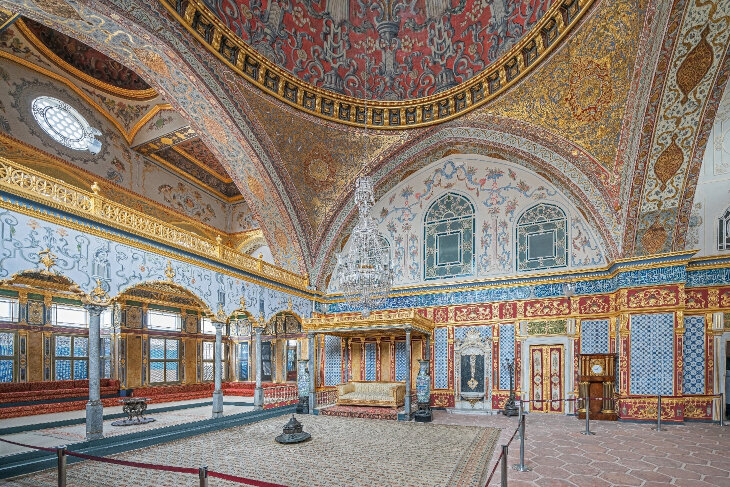 Imperial Hall in Harem of Topkapı Palace in Istanbul, Turkey. A.Savin, FAL, via Wikimedia Commons
Perhaps the most famous Jewish kyra was Esther Handali. Though not much information is available about her early life, historians presume that her parents had been exiled from Spain. She was married to Rabbi Eliyahu Handali, who traded in jewelry, cosmetics, and various trinkets. During the reign of Sultan Suleiman the Magnificent, Esther began visiting the harem and selling these items to its residents on her husband’s behalf.
Unfortunately, her husband died early and Esther was left to fend for herself and her three sons. She continued her ventures into the harem, becoming friendly with the influential women there. Besides her merchandise, Esther brought them news from the outside world, stimulating conversation, and warm companionship. With time, she became indispensable to the women of the harem. Her duties varied from assisting them in childbirth to writing letters on their behalf and delivering them to the intended recipients.
In 1539, when Esther must have been still in her twenties, Sultan Suleiman officially recognized her services and issued a firman, a royal decree, exempting her and her descendants from taxes and granting them other special privileges.
With time, Esther’s power and influence grew. A contemporary Hebrew chronicler writes1, “All the officials bowed down and prostrated themselves before her, and all those who desired aught from the sultan came and went forth at her bidding.”
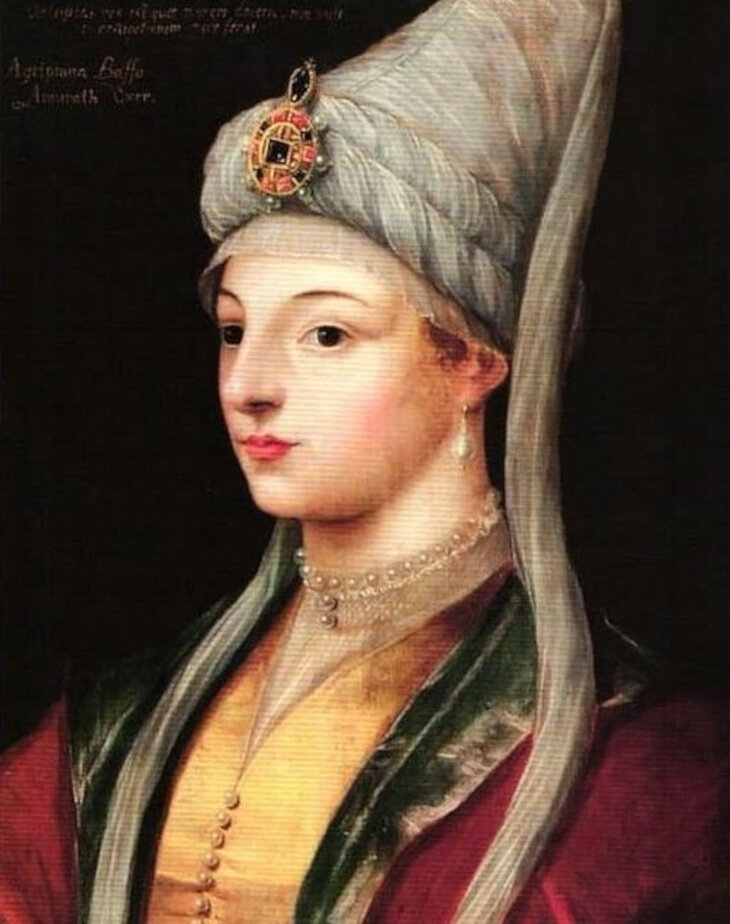 Safieh Sultan. Unknown source, Wikimedia Commons
Over the course of her career, Esther acquired much wealth. She is remembered by the Jewish community for her philanthropy. The poor were welcome at her table. She supported Jewish scholars, as well as publication of Jewish books. She often helped victims of anti-Jewish riots. Legend has it that when Sultan Murad III threatened to destroy the Jewish community, Esther interfered and saved her people, just like the Biblical Esther.
In September 1569, a terrible fire burned down the Jewish quarter of Istanbul. In fact, this fire is known as the greatest fire of the 16th century2.
The fire is believed to have started at a Jewish bakery. That year, the summer was very dry, with no rain for five months straight. The flames quickly spread through the overcrowded Jewish quarter. It didn’t help that the chief military commander was ill at the time, and in his absence, the soldiers attempted to loot the neighborhood rather than put out the fire. None of the houses in the Jewish quarter survived the fire. A European ambassador reported that 36,000 houses total were destroyed3.
Esther came to the assistance of the Jewish quarter residents who’d found themselves homeless. Already tremendously wealthy at that point of her career, she spent much money and effort to help them rebuild.
During the reign of Sultan Murad III, Esther became a close confidant of his favorite wife, Safieh. She maintained Safieh’s diplomatic correspondence, acting both as a translator and a spy.
In 1584, Esther maintained the correspondence between Safieh Sultan and Catherine de Medici, the Queen Mother of France, who sought the Ottoman Empire’s support against Spain4.
In 1587, Esther was rewarded for her diplomatic efforts with Venice with the right to start her own lottery in the Venetian republic5.
Unfortunately, as often happens, Esther’s power and influence arose much jealousy in the Ottoman court. After the death of Sultan Murad III, the Ottoman Empire was embroiled in intrigue and unrest. The new Sultan, Muhammed III, wanted to assert his own power by decreasing his mother Safieh’s influence.
No longer deterred by Safieh, Esther’s enemies conspired against her. In 1600, while well in her eighties, Esther was dragged from the imperial palace, attacked, and brutally murdered. At least two of her sons were also murdered in this attack. The fate of her third son is unknown6.
Esther’s vast fortune was confiscated upon her murder. Years later, in 1618, the new sultan, Osman II, restored Esther’s wealth to her grandchildren7.
Another Jewish kyra active during the period known as the Women’s Sultanate was Esperanza Malchi. Historians believe she was originally from Italy. Not much is known about Esperanza’s personal life.
A younger contemporary of Esther Handali, Esperanza also maintained correspondence between Safieh Sultan and European rulers. Especially well preserved is her letter to Queen Elizabeth of England, written during the reign of Sultan Muhammed III, Safieh’s son. The letter begins with8:
As the sun with his rays shines upon the Earth, so the virtue and greatness extends over the whole Universe, so much so that those who are of different nations and laws desire to serve your Majesty. This I say as to myself, who being a Hebrew by law and nation, have, from the first hour that it pleased the Lord God to put into the hearts of this our most serene Queen Mother to make use of my services…
The letter describes the gift exchange between the two queens. Safieh sent “a robe and a girdle, and two kerchiefs wrought in gold, and three wrought in silk, after the fashion of this Kingdom9,” as well as jewelry, which, writes Esperanza, “by my own hand I have delivered to the illustrious Ambassador10.”
In return, Esperanza requests for her mistress “distilled waters of every description for the face and odiferous oils for the hands, your Majesty would favor me by transmitting some by my hand11.”
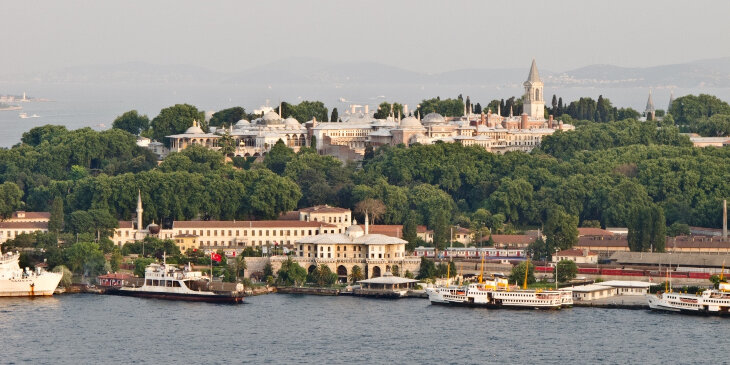 Topkapı Palace, the royal residence and harem, in Istanbul, Turkey. Carlos Delgado, Wikimedia Commons
Other Jewish kyras are mentioned in various correspondence, but their names are not known. In 1622, a Jewish kyra promoted a certain candidate for governor of Moldavia. In 1709, another Jewish kyra facilitated the communication between the Jewish physician Daniel de Fonseca and the mother of Sultan Ahmed III, bringing about the Ottoman Swedish alliance against Russia12.
Likely, there were other Jewish kyras, whose names and deeds are not preserved by history. The kyras used their considerable diplomatic talents to promote the interests of the Ottoman Empire, while at the same time they took advantage of their positions of power to help out their Jewish brethren.

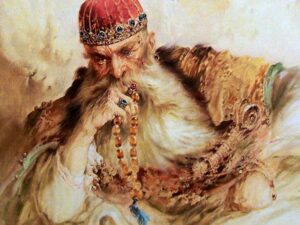










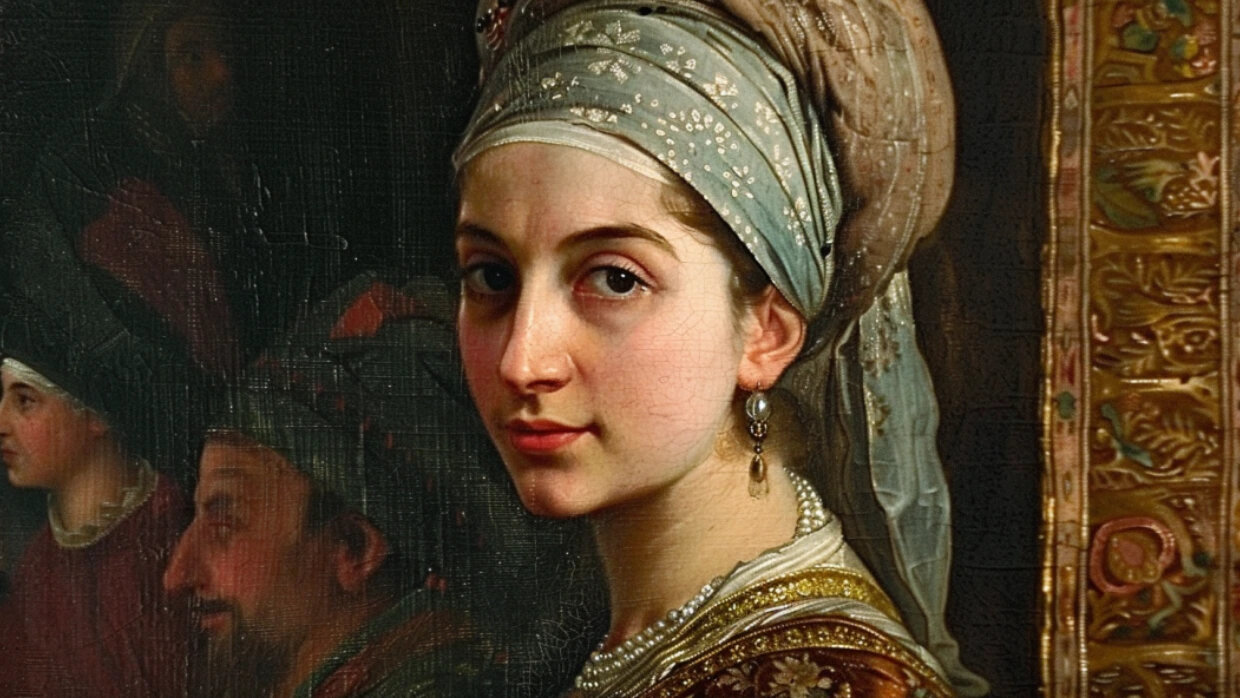
Anyone know of where the painting at the top of the article is by, and the title of it?
Fascinating! Thank you
Thank you for this article.
Informative interesting article.