






 The Red Cross’s Jewish Problem


17 min read
9 min read




Ariel Moyal toured with a punk band—now he’s building a courtroom-style case for Judaism. His radical journey may change how you think about truth, faith, and meaning.
Raised in San Diego by Israeli parents, Ariel Moyal grew up in a traditional, culturally Jewish home. “We made Kiddush Friday night and then watched a movie,” he says from his home in Israel where he now lives year-round.
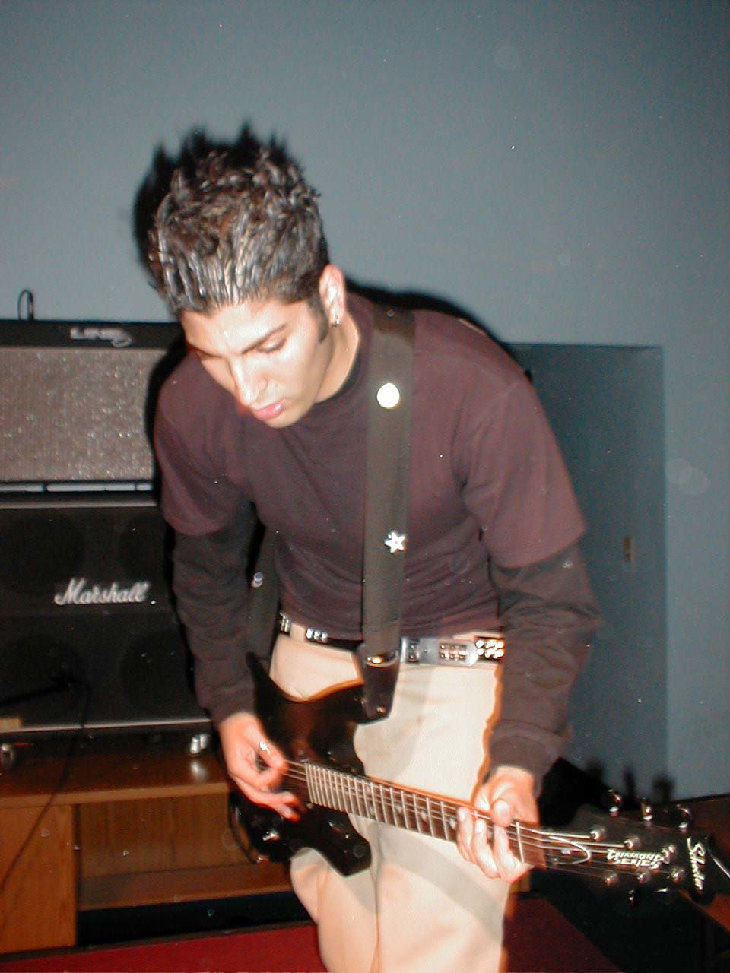
By high school, his life had taken a hard left—into the loud, rebellious world of Southern California punk rock. He was part of a thriving scene in Poway, the same suburb that produced Blink-182. “Their younger siblings were in our classes,” he recalls. “Everyone knew each other.”
 Ariel Moyal (second from right), with his former bandmates
By 19, he was on tour, earning real money, playing packed shows. His band signed with a major L.A. management firm. From the outside, it looked like success. But something underneath was cracking.
“You see the darker side of things. The lifestyle wears you down. Every show, every party—after the adrenaline fades, there’s this emptiness. I started asking myself: is this it?”
 Moyal, on the right, playing in California
The shift began when his mother, a former model, attended a Jewish educational seminar run by the Israeli outreach organization Arachim.
“She stopped driving on Shabbat and started learning about Judaism,” he recalls. “There was a calm about her, like she had tapped into something deeper. She kept talking about the meaning of life, about the soul. All these questions I had already started thinking about.”
At first, he dismissed it. But every Shabbat dinner he attended, the contrast became harder to ignore. The chaos he was used to had been replaced by peace, purpose, and presence.
Eventually, his curiosity won out. He attended a seminar to see what it was all about. And it changed the trajectory of his life.
"It totally upended my preconceptions about Judaism. I realized it wasn’t just tradition for tradition's sake. It was evidence-based. It had a rational framework with real-world consequences.”
Ariel pushed back. Embracing Judaism meant more than just adopting customs and traditions—it meant a dramatic lifestyle change. And he didn’t want to abandon the life he'd built. But the more he studied, the more convinced he became. “I couldn't unlearn what I had learned. A new world opened up to me where every answer led to more questions."
The idea of learning in a yeshiva was completely foreign to him—and intimidating. But he decided that if he truly wanted answers, he had to go straight to the source. He enrolled in a yeshiva in Monsey, New York, where he immersed himself in full-time Torah learning and built the intellectual foundation he’d long been missing.
“It was a very humbling experience. I had to be honest with myself. All those rabbis I used to dismiss as weird—they actually knew what they were talking about."
He was surprised that Judaism didn’t just allow scrutiny—it demanded it.
“People think religion is something that requires you to abandon your critical thought. But with Judaism, it's the exact opposite. The Rambam [one of the most renowned Torah scholars in Jewish history] insists that Jews don't believe blindly. We're required to use our intellect. The first commandment is to know God is real, not to accept it on blind faith. Our relationship with God is built on education, not blind faith."
Eventually, Moyal got married, moved to Israel, and became a licensed attorney in both California and Israel. His experience—combined with his legal training—led him to write the kind of book he wished he’d had when he first began his search.
 Ariel Moyal
The result is Judaism: A Rational Approach, a courtroom-style case for the Divine origin of the Torah, distilled from over a decade of lectures and debates across Israel and the U.S.
Structured like a legal argument, the book presents a cumulative case for the Torah’s divine origin—drawing on historical transmission, prophecies, national revelation, and even traces of scientific foresight embedded in the text.
“It’s a similar method I used as a litigation attorney,” Ariel says. “You follow the evidence, strip away emotion, and ask: what holds up?”
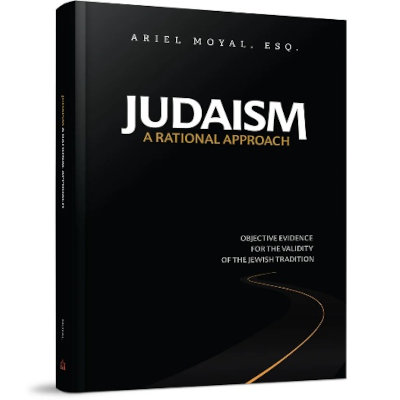
Moyal wants readers to examine the gamut of evidence, like a court case. “It’s a cumulative case,” he says. “You can pick apart any one argument if you want to. But take them all together, and the picture becomes impossible to ignore."
He urges readers not to take his word for it. “Use the book as a springboard. Do your own research. Challenge the ideas. Don’t rely solely on me—verify the evidence yourself.”
Moyal argues that the process of determining truth in religion is no different than the process we use to make decisions in every other area of life.
“We make decisions all the time based on probability. When you fly on a plane, everyone knows there’s a small risk, but they still board the plane, because the odds are overwhelmingly in their favor. The same applies to everything else you do. How do you know the Holocaust happened? How do you know Abraham Lincoln was President? How do you know your mother is really your mother? We evaluate the evidence—eyewitness testimony, historical documentation, letters and artifacts—and we go with what’s most probable.”
In his book, Moyal applies that same standard to the question: Did God write the Torah and give it to the Jewish People at Mount Sinai? He invites the reader to act as the jury, and to remain as objective as possible.
Moyal believes that making the case for Judaism isn’t the biggest obstacle. “People don’t resist Torah because the evidence is weak. They resist it because if it’s true, they have to change."
He knows this from personal experience.
"I didn’t come to Torah because I wanted it to be true. I came kicking and screaming. I wanted to keep playing music. I wanted my freedom. But once I saw the evidence, I couldn’t unsee it.”
Still, he’s not trying to guilt-trip anyone into belief—he just wants honesty. And he’s channeling that same rebellious spirit that once fueled punk rock to speak out in a world that generally shies away from controversy.
“There is too much chaos in the world, too many lies", he says. "People need to be honest with themselves if they want to heal. Their worldview comes from the environment they grew up in, which is fueled at best by ignorance and at worst by corporate interests. Most people never stop to ask: why do I believe what I believe? When you investigate the evidence, ask yourself: where is this skepticism coming from? If you truly think the evidence is weak, then keep digging—ask questions, challenge ideas, talk to experts. But if the real issue isn’t the evidence, but the life changes Judaism demands if it’s true, then you’re facing a different question: are you going to do what’s true, or what’s easy?"

Moyal understands the resistance. He knows what it’s like to favor comfort over truth—to cling to familiar narratives because they’re easier to live with. But, he argues, that comfort comes at a cost. “That is not the path to attaining peace,” he says. “Dishonesty breeds dissatisfaction. And we see that dishonesty all around the world today. Deep down, the soul knows when it’s being lied to."
"Growing up, my teachers in Hebrew school meant well. But the message was more tradition than truth. They’d say, ‘Judaism is beautiful.’ And I’d think, okay… but so is Buddhism. So is jazz. So is punk rock. Beauty isn’t a basis for belief.”
Moyal wasn’t looking for sentiment—he wanted substance. Something he could test, cross-examine, put on trial.
“We’ve created a culture where subjective feelings outweigh objective truth. Facts no longer matter if someone can just say, ‘Well, that’s not how I feel', and ends the conversation.
For Judaism, he warns, that kind of relativism is catastrophic to our national identity. "Our tradition is built on facts, history, and evidence. If a Jew can say, ‘Well, I wasn’t raised that way, so I believe something else,’ and we treat that as valid reasoning, then we’re basically giving them permission to redefine Judaism on their own terms. It’s no wonder we’re seeing massive assimilation and a breakdown in Jewish education—when you remove objective truth, distortion is inevitable.”
His goal isn’t just to defend Judaism intellectually—it’s to empower Jews emotionally and spiritually, and to bring awareness to the problems facing the Jewish world today.
“When you genuinely understand the foundations of your beliefs, you stand taller, more resilient in your Jewish identity. You see that pride more naturally in Israeli Jews because they're forced to confront their history daily, whereas Jews outside of Israel are often too comfortable to ask the hard questions."
The distractions, he argues, are endless. "Netflix, TikTok, YouTube—people want dopamine hits every few seconds. But the soul doesn’t care about any of that. It longs for meaning.”
And that longing, he says, is getting louder. “People are waking up. They want something real.”
Moyal wrote his book with the aim to present the foundations of Judaism with authenticity, not apologetics. He hopes it will serve as a spark for further inquiry, not an endpoint.
“I want readers to walk away thinking, ‘Maybe there’s more to this than I thought.’ That curiosity is the engine for exploring the depths of Judaism.
In a generation drowning in doubt, Ariel Moyal is handing out lifeboats.













Wonderful, thank G!d!
WOW! kol hakavod... so looking forward to reading this book!
So satisfying to read , highlites the need in the diaspora to educate your children from nursery on in Torah way of life and education to have that understanding ( not from Hebrew school ) from the beginning of your life .. as the guide and blueprint for your life …..it is a gift from Jewish parent to child
Need to reach u in order to hire u as lawyer and help getting this book onto amazon bestseller list.
incredible! such an inspiring read.