





 How The Three Stooges Humiliated Hitler


6 min read
7 min read


5 min read


Iranian by blood, Israeli by birth, Yasmin Sayeh says the Iranian regime is the enemy of both peoples.
Weeks ago on a bright afternoon along the Tel Aviv boardwalk, a group of Iranian-Israelis gathered beneath blue-and-white flags and the pre-revolutionary lion-and-sun flag of Iran. They sang Hatikvah. They held signs reading “Free Iran” and “Trump Act Now.” And they marched toward the American and French embassies with a message that carried both urgency and hope.
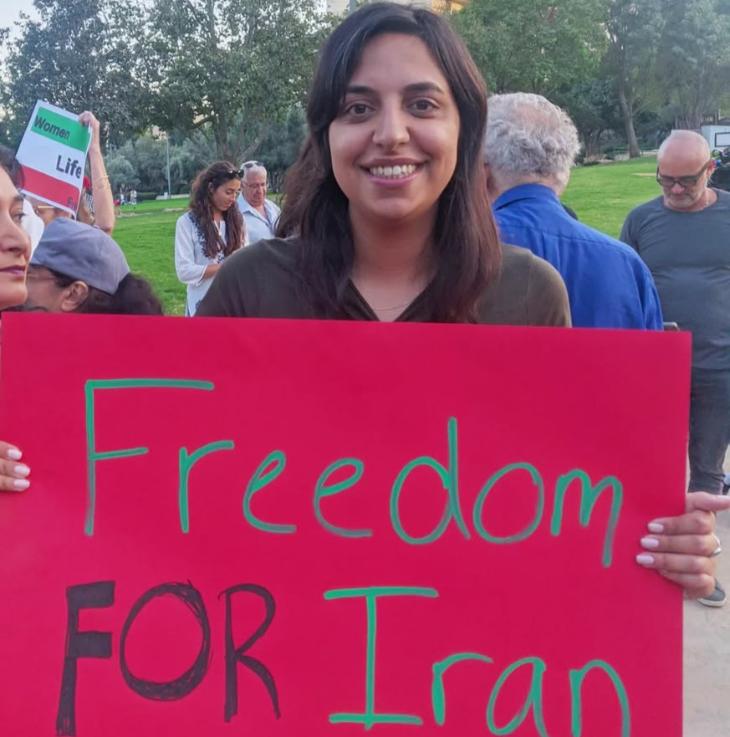
For Yasmin Sayeh, who helped organize the march, the last 24 hours has felt historic, a first step towards fulfilling her protest’s wishes.
“This is a new dawn,” she said on Sunday afternoon. “A new day. We have to understand that the Iranian people need our support to end this regime.”
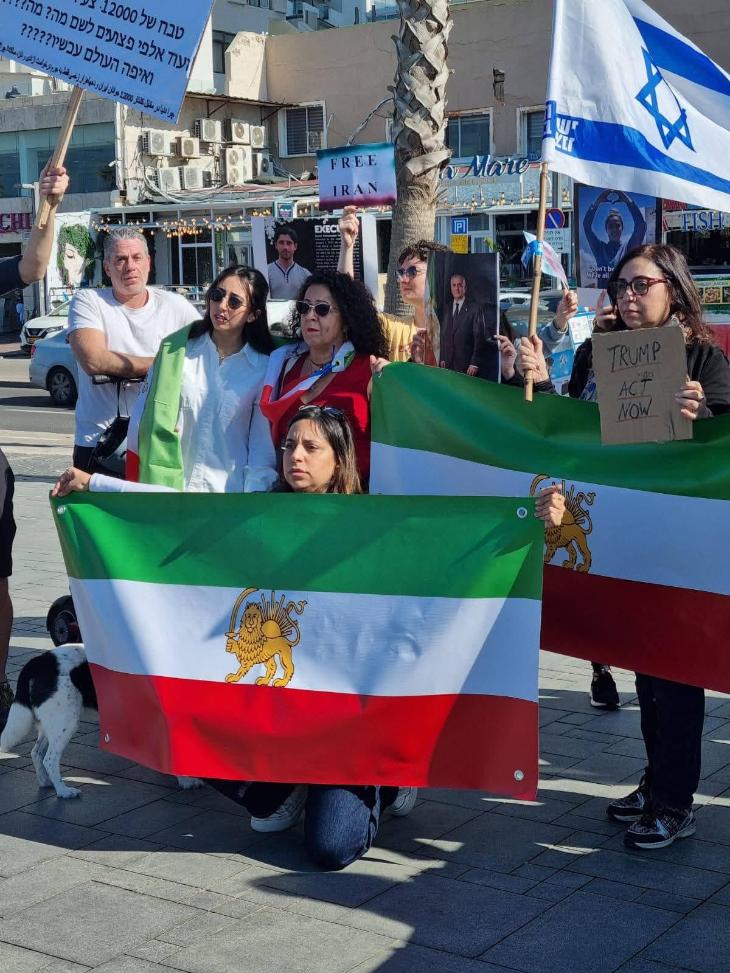 Iranian Israelis marching in Tel Aviv
Sayeh, 35, lives in Modi’in. She was born in Israel — the first in her family to be — after her parents immigrated from Iran following the Islamic Revolution. Farsi was spoken at home and Iranian cultural holidays were celebrated alongside Jewish ones. “We are very Israeli and very Zionist,” she says, “but also deeply connected to our roots.”
That dual identity — Israeli and Persian, Zionist and culturally Iranian — gives her a unique vantage point on this moment.
For nearly five decades, Iran’s Islamic regime has defined itself in opposition to Israel and the Jewish people. It has funded and armed Hamas and Hezbollah. It has called openly for Israel’s destruction. But Sayeh insists that the regime does not represent the Iranian people.
“The regime is not good for Israel. It’s not good for the Jewish people. But more than that — it’s not good for the Iranian people inside Iran. For 47 years, they have been suffering.”
In recent months, as protests inside Iran were met with violent repression, Sayeh began receiving messages from Iranians across the world. Many wrote in Farsi. Some were inside Iran itself.
“They say, ‘Thank you. We love Israel. We hope this brings something new.’ It’s very emotional for them,” she explains. “They grow up hearing that Israel hates them. And then they see Jews and Israelis walking in Tel Aviv, asking for freedom for the Iranian people. It moves them deeply.”
Not everyone in the Iranian-Israeli community felt safe attending the march. Many still have close family in Iran. Public identification with anti-regime activism can carry real risks for relatives back home.
“For some, even having their photo taken at a protest is dangerous,” Sayeh says. “They support us, but they must remain in the shadows to protect their loved ones. If they can’t be the voice, then we must be the voice.”
That tension — pride mixed with fear — is woven into the Iranian-Jewish experience. Jews have lived in Persia for over 2,500 years, dating back to the time of Cyrus the Great. Even after the 1979 revolution, a small Jewish community remained in Iran. According to Sayeh, until recently many lived “relatively comfortably,” so long as they avoided any public identification with Zionism.
“There’s no problem being Jewish in Iran,” she explains carefully. “There’s a problem being a Zionist.”
Today, however, the situation is far more fragile. Sayeh cites staggering numbers of protesters killed and imprisoned in recent months. Independent verification of figures is difficult, but reports of mass arrests, executions, and brutal crackdowns are widespread.
“Women want basic rights,” she says. “Young people want freedom. And the regime answers with hangings.”
For Sayeh, this is not only a geopolitical struggle. It is personal.
“My grandfather waited years to come to Israel,” she says. “Being Zionist is in our blood. All of my family members have Jewish names. This identity, it’s who we are.”
Yet she speaks with equal warmth about Iranian culture. “Iranians are warm people. Positive people. We love our language, our food, and our traditions. When we visit the Iranian-Jewish community in Los Angeles, it feels like the closest thing to Iran we can experience freely.”
Sayeh believes the stakes of this past weekend extend far beyond Israel.
“This regime supports terror everywhere,” she says. “Ending it would change the Middle East. It would affect America. Europe. The whole world.”
At the same time, she does not romanticize the cost. During our conversation, air-raid sirens sounded in parts of the country. An Iranian missile had struck a civilian building in Beit Shemesh, killing nine Israeli civilians with dozens injured.
“We are strong,” she says quietly. “We will protect ourselves. But it has a huge price.”
And so she looks outward, to Washington, to Europe, to what she calls the “liberal world.”
“We hoped there would be change. We hoped the regime would fall. We hope leaders will act. Every day they hang more people. They cannot continue like this.”
At the end of our conversation, Sayeh paused and offered a quiet prayer.
“Ken yehi ratzon,” she said. May it be God’s will.
Then, without hesitation: “Am Yisrael Chai.”
For Iranian Jews like Yasmin Sayeh, this is not a moment of triumphalism. It is a moment of yearning, that the ancient sun once emblazoned on Iran’s old flag might rise again, illuminating a free people and the dawn of a new peaceful Middle East.
Photos by Yasmin Sayeh, https://www.instagram.com/yasminsayeh/?hl=en









We are living in a Psalm 2 fulfillment era in my opinion."Why do all the nations make a tumult and people devise an empty scheme?The kings of the earth set themselves,and the rulers consult together against the Lord and His Anointed,saying.Let us tear their restraining bands apart,and let cast their shackles from us".He Who Sits In Heaven Laughs:the Lord derides them.Then He speaks to them in His Indignation and terrifies them by His Fury.I have indeed set My King upon Zion,My Holy Mountain.I will tell of the Decree:The Lord said to Me,Thou art My Son,this day have I begotten Thee.Ask it of Me and I will make the nations thing inheritance and the ends of the earth Thy possession.Thou shall break them with a rod of iron,Thou shall dash them in pieces like a potters jar."Read on.