


 Biblical Imagery in Dolly Parton’s Music

7 min read
6 min read
7 min read



9 min read


Some of the beloved performer’s most moving songs contain timeless Jewish references.
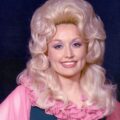
Dolly Parton, who has died at the age of 80, was one of the most prolific and beloved songwriters and performers. In her long career, Parton penned some 3,000 songs, sold 100 million records, and reached over a billion music streams.
Parton was also a noted philanthropist. Her Imagination Library program distributed over 325 million books to children worldwide, and was the inspiration for a similar Jewish program, the PJ Library, which has given away over 50 million Jewish-themed books since its establishment in 2005.
A brilliant singer, lyricist, songwriter, businesswoman, and philanthropist, Parton was outspoken in her strong Christian belief, which was reflected in much of her music. Yet some of her most beautiful songs contain references to the Jewish Bible and Jewish imagery, as well. Here are the back stories behind some of them.
Parton’s 1971 hit Book of Life is about her Christian faith, yet the song’s title phrase, the “Book of Life,” is borrowed from a key Jewish idea about Rosh Hashanah, the Jewish new year, and Yom Kippur, the Day of Atonement, which falls ten days later. The Book of Life is an ancient Jewish phrase that’s been associated with Jewish liturgy and learning for millennia.
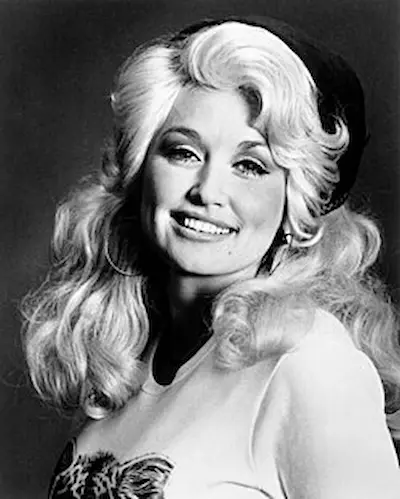 Dolly Parton in 1970
The High Holiday liturgies are filled with references to the Book of Life. The poetic image of a “Book of Life” comes from the Talmud (Rosh Hashanah 32b), which describes God sitting in judgment during this period, with two books open before Him: a Book of Life and a Book of Death. Our actions - and any promises we make to change our ways and do better in the future - determine in which book our name is written for the coming year.
After laying out the full panoply of Jewish mitzvot, or commandments, God tells the Jewish people: “I have set life and death before you, blessing and curse. Choose life, so that you may live - you and your descendants” (Deuteronomy 30:19).
By fulfilling our unique purpose and living meaningfully, we are “choosing life.” Parton’s opening lines in her song Book of Life describe this:
Is my name written there on the pages bright and fair / Is my name written in the Book of Life / If you want to be up there then down here you must prepare…
The choices we make determine whether we will truly be inscribed in the “Book of Life.”
Parton wrote the beautiful song Coat of Many Colors in 1969 and described it as one of her favorites. It tells the true story of her mother making a coat for her out of small pieces of rags, which was all they could afford. Parton’s song recalls the “coat of many colors” described in the Torah:
As she sewed, she told a story from the Bible she had read / About a coat of many colors Joseph wore and then she said / “Perhaps this coat will bring you good luck and happiness” / And I just couldn’t wait to wear it and momma blessed it with a kiss.
This episode is described in the book of Genesis. The patriarch Jacob had 12 sons and one daughter; Jacob made no secret of the fact that he preferred Joseph and considered him his favorite. Jacob “made him (Joseph) a coat of many colors” (Genesis 37:3). (Unlike Parton’s song, in the Torah this act of flagrant favoritism had dire consequences, igniting a burning jealousy in Joseph’s brothers.)
There’s some confusion about what was so colorful about Joseph’s coat. The Torah describes it as a ketonet (a cloak or other garment) that is passim. While the Hebrew word passim can mean colorful, it might also mean that it was decorated with embroidery or stripes, was long, or even that it was made of particularly fine fabric such as linen or silk.
This 2003 song envisions an ideal world of peace. Many of its Biblical references are taken from the Torah, starting with its title and plaintive refrain: When the raven of darkness turns into a white dove of peace. This refers to two birds mentioned in the Book of Genesis.
The Torah describes how after creating the world, God “saw that the wickedness of man was great in the earth, and that every imagination of the thoughts of his heart was only evil continually…” (Genesis 6:5). God resolved to destroy most of the people and animals He’d created and begin again. Only one righteous person - Noah - and his family were saved. God instructed Noah to build an enormous ark, in which he placed different animals. A huge deluge then covered the world, destroying all living things who weren’t in the ark.
After forty days of floods, Noah landed on dry land at the top of a mountain. He opened the door of his ark and let a raven out. After flying far and wide, the raven returned: she hadn’t found any other patch of dry land on which to rest (Genesis 8:7). Noah repeated this exercise several times. Eventually, after releasing another bird - a dove - from the ark, she returned with a branch from an olive tree in her beak, indicating that the floodwaters had finally receded enough for vegetation to return to earth (Genesis 8:11).
The song contains the line “Weapons to plowshares, hate turns to love,” a reference to the Book of Isaiah. Isaiah was a prophet and a member of the royal family of Judea during the time when the Empire of Assyria threatened the Jewish people. He foresaw a time one day in the future when there will be perfect peace and when everyone will come to worship in Jerusalem. Nations will have no need for war: “They shall beat their swords into plowshares and their spears into pruning hooks; nation will not lift sword against nation and they will no longer study warfare” (Isaiah 2:4).
Parton also included another reference to Isaiah’s prophecy. The song mentions “when lambs walk with lions, and a child tames the beast.” This echoes Isaiah’s prophecy of perfect peace: “The wolf will live with the sheep and the leopard will lie down with the kid; and a calf, a lion whelp and a fatling (will walk) together, and a young child will lead them. A cow and bear will graze and their young will lie down together; and a lion, like cattle, will eat hay. A nursing baby will play by a viper’s hole; and a newly weaned child will stretch his hand toward an adder’s lair” (Isaiah 11:6-8).
This 1971 song also refers to Torah’s description of Noah and the flood, as well as another episode described in the Book of Daniel. The Master’s Hand is about having faith in God, and Parton used a powerful image from the Torah to illustrate God’s protection. The song describes:
Three Hebrew children in days of old / Were marched into the fiery coals / ‘Cause they would not deny the Lord / Would not obey command. / And the furnace roared like a mighty storm / But the Hebrew children saw no harm / The flame was smothered by the Master’s hand / The Hebrew children loved their God / And with them in the flames He trod / To show the world that He was King / And ruler over man. / Shadrach, Meshach, and Abednego / Had no fear of the fiery coals / ‘Cause they were holdin’ to the Master’s hand.
Parton’s lyrics perfectly describe the fiendish plot hatched by Nebuchadnezzar, (605 BCE - 562 BCE), the feared Babylonian ruler who conquered the Kingdom of Israel. The Hebrew prophet Daniel describes Nebuchadnezzar erecting a massive golden statue and ordering all of his aids to bow down to it as an idol. Anyone who failed to do so would "immediately be thrown into a fiery, burning furnace” (Daniel 3:6).
One of Nebuchadnezzar’s advisors told the king that his three Jewish advisors - men by the name of Shadrach, Meshach, and Abednego - had refused to bow. Incensed, Nebuchadnezzar called for them and insisted that they bow to his idol. The Jewish advisors replied: “Nebuchadnezzar, we are not worried about replying to you about this matter. Behold, our God Whom we worship is able to save us; He will rescue from the fiery, burning furnace and from your hand, O king” (Daniel 3:17).
Furious, Nebuchadnezzar ordered a super-hot furnace to be built, seven times hotter than an ordinary furnace, and threw the three Jewish advisors in. The furnace was so hot, Daniel records, that the men who threw Shadrach, Meshach and Abenego in were themselves burned to death. The three Jews who refused to bow, however, miraculously emerged from the furnace unscathed.
Dolly Parton wrote Hello God in 2002, in the aftermath of the September 11, 2001 terror attacks. She describes longing to connect with the Divine:
Hello God, are you out there? / Can you hear me, are you listening anymore? / Hello God, if we’re still on speaking terms / Can you help me like before? / I have questioned your existence / My resistance leaves me cold / Can you help me go the distance? / Hello God, hello, hello?
As the world digests the news of Parton’s death, these haunting lyrics can help us each put our own feelings into words. Especially now, in the weeks before Rosh Hashanah, the beautiful songs that Parton has left us feel even more visceral. Now is a time when Jews the world over are reaching out to the Divine, asking Hello God…Can you hear me, are you listening…. Dolly Parton’s songs help us put our longing into words, giving us ways to think about life and our place in it.