 On the Ground in Venezuela




5 min read


Jeremiah was mocked, imprisoned, and called a traitor for telling the truth. Today, his warning about a crumbling society still hits home.
The destruction of the First Temple did not begin when Babylonian soldiers breached Jerusalem's walls. It began years earlier when justice gave way to corruption and the Jewish nation stopped listening to God's call.
As we mourn the destruction of both Temples, Jewish tradition asks us not only to remember what happened, but also to reflect on why it happened.
Jeremiah was born more than 2,600 years ago in the priestly village of Anathoth, just outside Jerusalem. Although the son of a priest, God had prepared a very different future for him.
"Before I formed you in the womb I knew you, before you were born I set you apart; I appointed you as a prophet to the nations." (Jeremiah 1:5)
Still a young man, probably in his late teens, Jeremiah began his prophetic mission during the reign of King Josiah, only decades before the destruction of the First Temple.
Built by King Solomon nearly four centuries earlier, the Temple stood as the spiritual heart of the Jewish people. It symbolized God's presence among Israel and the covenant between God and His people.
Few could have imagined that this magnificent sanctuary would one day lie in ashes.
Jeremiah never married. God instructed him, “You shall not marry or have sons or daughters in this place." (Jeremiah 16:2)
His unmarried life became part of his prophecy, symbolizing the devastation that war, exile, and the destruction of the First Temple would soon bring to countless families.
As Nebuchadnezzar II, king of the Babylonian Empire (modern-day Iraq), advanced towards the Kingdom of Judah, whose capital was Jerusalem, Judah's rulers placed their hopes in military alliances and political strategies.
Jeremiah watched leaders abuse power, judges distort justice, and the wealthy exploit the poor.
However, Jeremiah saw a far greater danger within the walls of Jerusalem. He watched leaders abuse power, judges distort justice, and the wealthy exploit the poor. God's command through Jeremiah was unmistakable:
"Do what is just and right. Rescue from the hand of the oppressor the one who has been robbed. Do no wrong or violence to the foreigner, the fatherless or the widow." (Jeremiah 22:3)
He also challenged those who believed the Temple alone guaranteed God's protection: "Do not trust in deceptive words and say, 'This is the Temple of the Lord...'" (Jeremiah 7:4)
Jeremiah understood that a nation can appear strong while its moral foundations quietly crumble. His warning was timeless: No society can endure if it abandons justice, compassion, honesty, and responsibility.
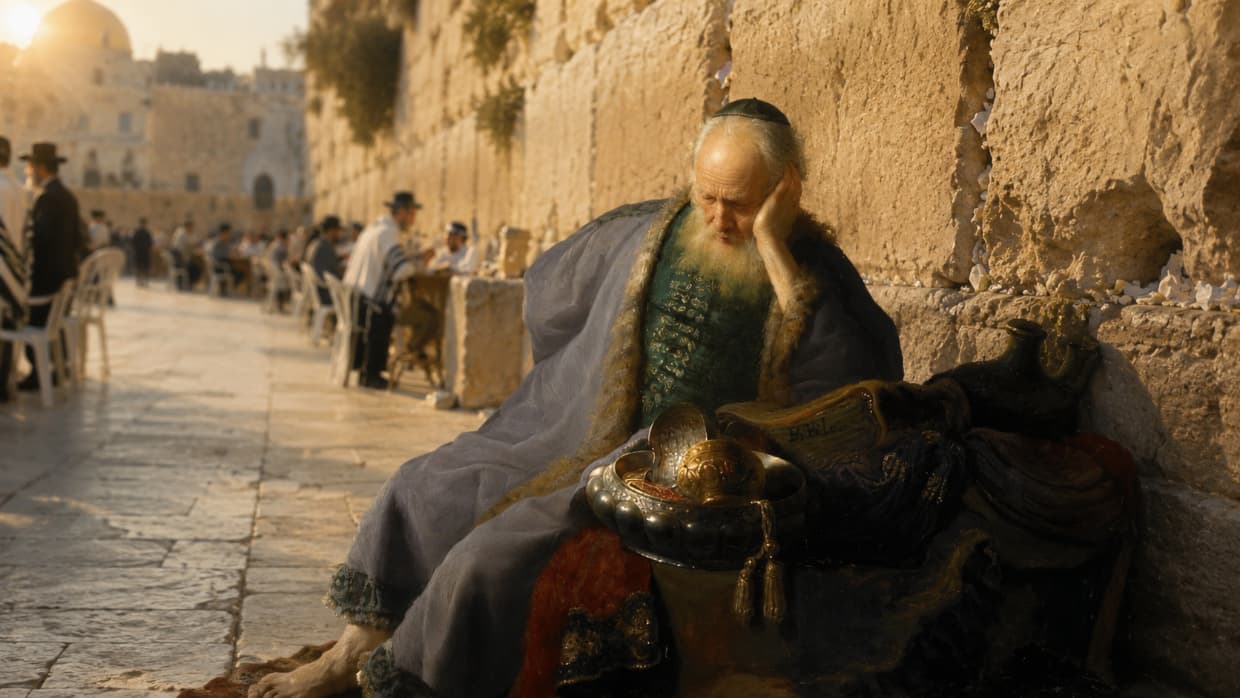
Jeremiah loved his people so deeply that their suffering became his own, which is why he is remembered as the Weeping Prophet: "Oh, that my head were a spring of water and my eyes a fountain of tears! I would weep day and night for the slain of my people." (Jeremiah 9:1)
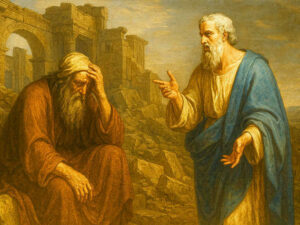
Jeremiah was mocked, imprisoned, threatened with death, and branded a traitor simply because he refused to tell people what they wanted to hear.
His tears were the measure of his compassion. Jeremiah wrestled openly with God, expressing fear, loneliness, disappointment, and exhaustion. He was mocked, imprisoned, threatened with death, and branded a traitor simply because he refused to tell people what they wanted to hear.
Jeremiah redefines courage. He openly admitted fear and despair, yet continued speaking because remaining silent would have betrayed his calling.
He described that struggle in one of the most unforgettable verses: "His word is in my heart like a fire, a fire shut up in my bones. I am weary of holding it in; indeed, I cannot." (Jeremiah 20:9)
To me, this is one of the greatest descriptions of courage. Courage is not the absence of fear. It is remaining faithful to one's purpose despite the fear.
Jeremiah's resilience came from believing in the mission God had entrusted to him. His life reminds us that genuine leadership is measured by the willingness to stand alone when conscience demands it.
Perhaps that is why Jeremiah still speaks to us today. He did not stand above his generation in judgment; he stood among them in grief. He pleaded with them because he loved them.
Despite everything Jeremiah witnessed, corruption, rejection, imprisonment, and ultimately the destruction of Jerusalem, he never surrendered to despair.
"For I know the plans I have for you," declares the Lord, "plans to prosper you and not to harm you, plans to give you hope and a future." (Jeremiah 29:11)
These words were written to a nation living in exile. Jeremiah reminded them that God's story for the Jewish people was not over. Beyond destruction lay the possibility of repentance, renewal, and redemption.
The more I study Jeremiah, the more convinced I am that his story speaks to every generation.
Today we enjoy extraordinary advances in science, medicine, and technology. Yet despite these remarkable achievements, we continue to struggle with division, loneliness and declining trust. We celebrate achievement, wealth, and influence, yet too often overlook humility, integrity, kindness, and compassion.
If Jeremiah lived today, he would challenge us to examine our own heart while reminding us that a society rises or falls through the collective choices of its people.
Are you helping to heal your society or to deepen its divisions?
His question would be as uncomfortable today as it was then: Are you helping to heal your society or to deepen its divisions?
Jeremiah understood that nations do not collapse overnight. They weaken gradually, one compromised value, one act of injustice, one ignored warning at a time.
More than 2,600 years after Jeremiah first walked the streets of Jerusalem, his challenge remains as urgent as ever. Every generation stands at its own crossroads and must decide whether to ignore difficult truths or courageously confront them.
Jeremiah stood alone so his nation could one day stand together again. Will we?