




 The Red Cross’s Jewish Problem

4 min read
4 min read
5 min read
6 min read





Her teacher says she’s an angel, then she walks through your door. Here’s what’s really going on, and how to make the switch from school to home easier.
Your child’s teacher tells you she is delightful at school. She follows directions, gets along with her classmates, participates in class, and rarely causes a problem.
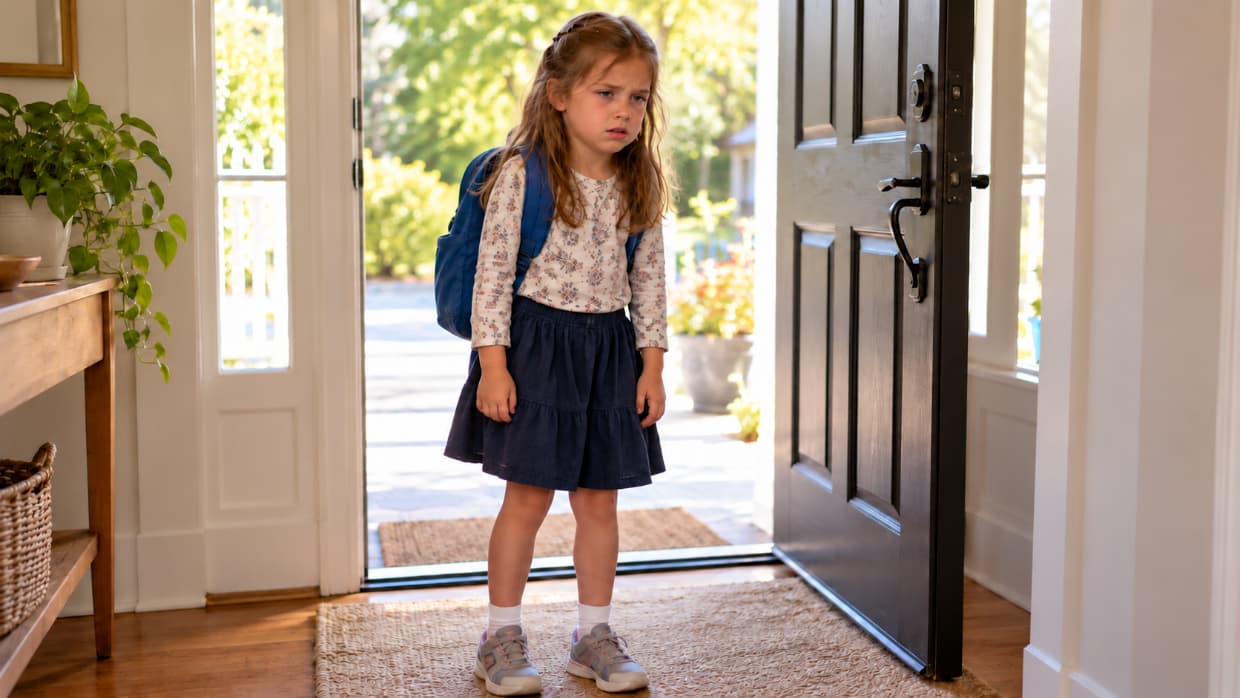
Then she walks through your front door.
Suddenly the shoes are being kicked across the floor, the snack you prepared is unacceptable, her brother is annoying her, and the suggestion that she start her homework brings her close to tears.
If she can behave so well for her teacher all day, why can’t she hold it together for another hour at home?
The answer may be that she has been holding it together all day.
Children use an enormous amount of energy at school. They have to listen when they would rather talk, sit when they would rather move, wait their turn, follow rules, transition from one activity to another, manage friendships, tolerate frustrations, and do work that may be difficult for them. Even children who love school can come home emotionally depleted.
Home is often the place where all of that effort finally catches up with them.
Understanding this doesn’t mean that parents need to accept hitting, screaming, or disrespectful behavior. Limits still matter. But it can change the question we ask ourselves. Instead of immediately thinking, How do I stop this behavior? we can first wonder, What does my child need in order to make the transition from school to home?
The first few minutes after school are often when parents have the most questions.
“How was your day?”
“Do you have homework?”
“Did you remember your library book?”
“Why is your lunch still in your backpack?”
“Go hang up your coat.”
None of these questions is unreasonable. The problem may simply be the timing.
Imagine coming home after a long workday and immediately being handed a list of questions and responsibilities before you have even put down your bag. Most adults instinctively create some kind of transition for themselves. We get a drink, change our clothes, sit down for a few minutes, check our phones, take a walk, or simply enjoy some quiet.
Children need a transition too.
Experiment with making the first 20 or 30 minutes after school a decompression period rather than a productivity period. Homework, backpacks and chores can wait a little while if your schedule allows.
That small shift can prevent parents from getting pulled into a power struggle just as a child is running out of emotional energy.
Children regulate themselves differently. One child walks through the door starving and needs food before she can handle anything else. Another has spent most of the day sitting and desperately needs movement. One child needs to tell you every detail of what happened at recess, while her sibling needs twenty minutes without anyone talking to him.
Your child may need a snack, outdoor play, music, Legos, drawing, reading, jumping on a trampoline, sitting quietly in her room, or simply spending a few minutes near you without conversation.
Sometimes parents unintentionally make things worse because we offer the regulation strategy we would want. We tell an active child to sit and relax, or we pepper an introverted child with questions because we're trying to connect.
Instead, observe your child. What seems to help her body settle? When does he seem ready to rejoin the family?
You can even ask when things are calm: “I've noticed that right after school is sometimes hard. What helps you feel better when you first get home?”
Children don't always know the answer, but together you can experiment.
Parents often want to hear about the school day. Unfortunately, “How was school?” is not always the question an exhausted child wants to answer.
Connection can be much quieter.
Put out a snack and sit nearby. Give your child a hug if she likes hugs. Drive home without filling every silence. Let him show you something when he is ready.
Later, you may hear much more than you would have heard at 3:30.
This is especially helpful for children who become irritated when parents ask too many questions. Their reluctance to talk does not necessarily mean they don't want connection. They may just need to come down from the day before they can engage.
Suppose your daughter walks in and announces, “I hate this snack! Why do you always give me food I don't like?”
It’s tempting to respond, “You ate it yesterday,” or, “Then get something yourself.”
Sometimes what she is really communicating is simply, I'm done.
You don't have to agree that the snack is terrible or rush to prepare something else. You can acknowledge the feeling underneath the complaint: “Looks like you had a long day.”
Or your child may look at his homework and say, “I'm not doing this. It's too hard.”
Instead of immediately reminding him that it will only take ten minutes, you might say, “Homework feels like too much right now. Let's give you a little time before we figure out the plan.”
Empathy does not mean removing every expectation. It means helping a child get regulated before expecting problem-solving.
Understanding why a child is falling apart does not mean allowing unsafe or hurtful behavior.
A tired child may still need to hear, “You can be angry. I won't let you hit your brother,” or, “You don't have to like the snack, but you may not speak to me that way.”
The difference is that we don't need to lecture in the middle of the meltdown.
When children are overwhelmed, long explanations about respect, gratitude, homework habits, or sibling relationships are unlikely to be useful. Keep the limit short, help everyone stay safe, and save the teaching for later.
Once your child is calm, you can talk about what might help next time.
Sometimes the after-school meltdown is telling us something useful about the schedule itself.
A child gets off the bus, rushes through a snack, does homework, changes clothes, and heads directly to an activity. Dinner follows, then more homework, a shower, and bedtime.
There may simply be very little space in the afternoon.
Of course, families are busy, and many activities are important and enjoyable. We don't need to eliminate everything. But if the same child falls apart at the same time every day, it is worth asking whether there is anywhere in the schedule where she gets to stop.
Even 20 minutes can make a difference.
Our job is to teach appropriate behavior, set limits, and help children handle responsibilities. But the best way to get there is not to demand more self-control the minute they walk through the door. Give them a little room to land first.