



 NBC’s Outrageous Antisemitic Ad



7 min read
>20 min read
10 min read




A family legacy: from the liberation of Dachau to standing against antisemitism.
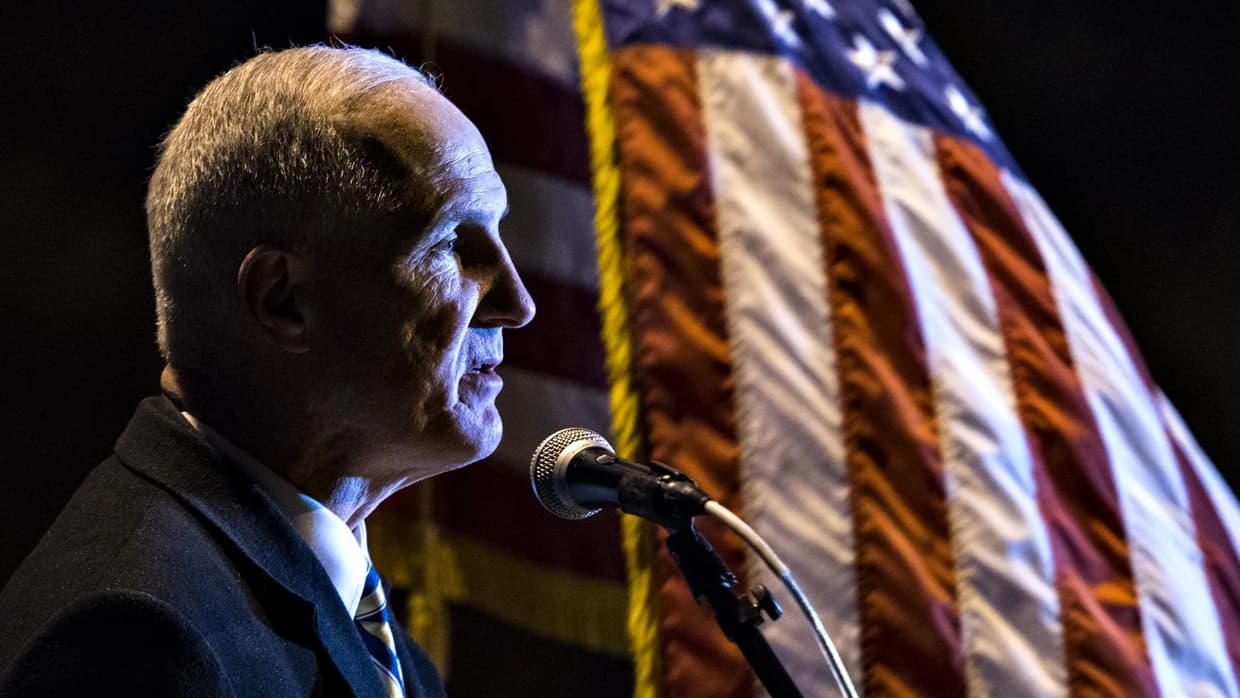
I met the Honorable Judge Thomas Murt at a Philadelphia event commemorating the victims of the Babi Yar massacre, where Nazi forces murdered nearly 34,000 Jews over two days in September 1941, in a ravine outside Kyiv, Ukraine, one of the largest single massacres of the Holocaust.
"The Holocaust and Babi Yar did not happen in a vacuum,” the judge said. "They were a direct result of centuries of ongoing and worldwide antisemitism, from ghettos to inquisitions, and from pogroms to forced conversions."
I was struck by the passion and conviction with which he spoke about the dangers of antisemitism and society's responsibility to confront hatred and intolerance.
"We also remember Babi Yar because even the oldest democracies can be fragile, and the most cultured and advanced societies can sometimes not stop the savagery that can be brought on by unchecked hatred and prejudice," he told the audience.
For Judge Murt, standing against antisemitism is not simply a public responsibility but a deeply personal commitment rooted in his family's history, his Catholic faith, and the values passed down to him by his father and uncle, both of whom witnessed the consequences of Nazi atrocities.
Thomas's father, James Joseph Murt, known as Jim, was born in Philadelphia in 1926 to James and Margaret, both of Irish descent. He came of age during the Great Depression when economic hardships cost his family their home, an experience that made him especially empathetic toward people who struggled.
While still in high school, Jim hoped to enlist in the Navy or Marine Corps, but his fragile health prevented him. Childhood illness and malnutrition had left him with weakened lungs. Nevertheless, shortly after graduating from high school in 1944, he was drafted into the United States Army.
After basic training at Camp Blanding in Florida, Jim was sent to Europe and assigned to the Third United States Army under General George S. Patton. He served in combat during the Rhineland and Central Europe campaigns, military operations aimed at defeating the Nazi war machine.
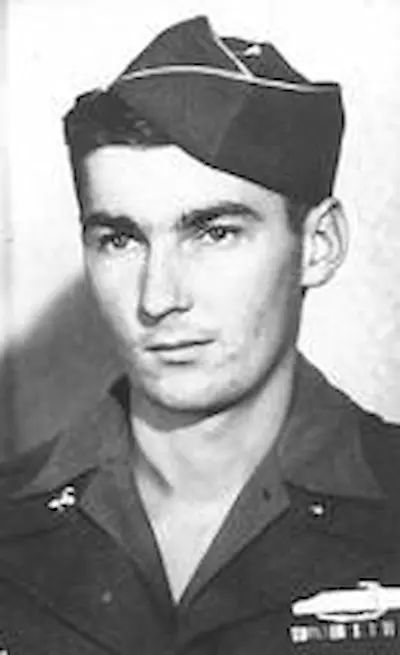 Jim Murt
At 18, Jim, like so many young men of his generation, was forced to grow up quickly, confronting realities no teenager should ever face. For his service, he received the prestigious Combat Infantryman Badge.
In the spring of 1945, Jim was among the American soldiers involved in liberating the Dachau concentration camp complex near Munich. What he witnessed there stayed with him for the rest of his life.
In 1950, Jim married Theresa Brown. He worked as a union plumber and together they raised five sons, instilling in them the fundamental values of honesty, respect, tolerance, and compassion. All five sons went on to raise families of their own, maintaining strong ties to their Catholic faith and belief in God.
Thomas Murt, Jim's fourth son, who today serves as a district judge in Montgomery County, Pennsylvania, recalls how reluctant his father was to discuss the war.
"Growing up, I remember my father not wanting to speak about the details of what he witnessed during the war and liberation. Yet I distinctly remember how upset he would get if he heard anyone deny the Holocaust. He forever remembered seeing people as thin as skeletons, dressed in striped clothes. Since his own health was never very strong, he had a special empathy for people who looked so incredibly malnourished. He had a sensitive heart.
"My father was an easygoing, calm person, yet Holocaust deniers made him furious. He couldn't understand how anyone could have the audacity to deny such factual cruelty. He saw it with his own eyes and shared this experience with us despite not wanting to recall those painful memories. He felt the need to speak up despite his own trauma."
For Jim, staying silent in the face of Holocaust denial would have meant abandoning the memory of those whose suffering he had witnessed. Although speaking about the past was painful, he understood that his testimony carried a responsibility that reached beyond his own lifetime.
Another member of the Murt family had a profound connection to Jewish history.
Jim's younger brother, Ed, was drafted after World War II ended and served in Germany with the United States Constabulary, the force that kept order during the postwar occupation.
There, he had the extraordinary opportunity to attend the Nuremberg trials. Not long before, he had won a history award at Northeast Catholic High School in Philadelphia. Now he was watching history being made as Nazi leaders were held accountable for their crimes.
Thomas remembers his uncle's descriptions of the courtroom:
"My uncle saw Hermann Göring wearing his best Nazi uniform, standing in the middle of the courtroom. He often mentioned how these criminals wore sunglasses inside the courtroom, hoping not to be recognized. He remembers how Rudolf Hess spoke, discounting his involvement in the Holocaust.
"Ed felt privileged to witness such an important historic event, and perhaps his recollection of that experience influenced my own decision to become a judge," Thomas reflects.
While one brother witnessed the devastating consequences of unchecked hatred, the other witnessed the international community's effort to hold its perpetrators accountable. Their experiences became part of the moral foundation on which the next generation of Murts was raised.
Decades later, Thomas would encounter hatred and intolerance through his own military service.
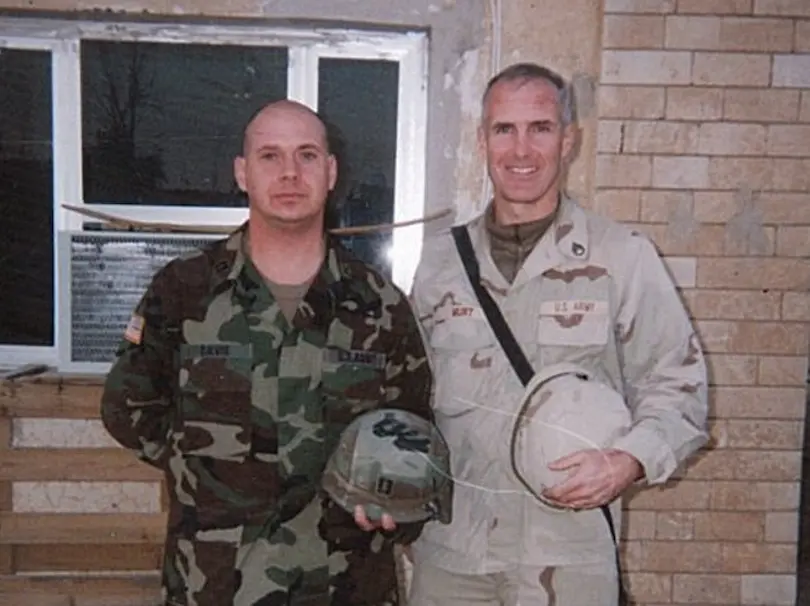 CPT David and SSG Murt in Tikrit, Iraq
Before becoming a judge, Thomas served as a staff sergeant in the United States Army in Iraq from 2003 to 2004. Assigned to civil affairs, he took part in humanitarian work and gained firsthand insight into the complexities of the Middle East.
"In 2003 and 2004, I served in combat in Iraq, and I witnessed the hatred that exists in parts of the Middle East towards the Jewish people," he shared in his Babi Yar speech.
My father was adamant that we always remember how bigotry and hatred can evolve into something as horrendous as the Holocaust.
Those experiences deepened his appreciation for the State of Israel, which he regards as a beacon of democracy and freedom in a particularly volatile region.
"My father was adamant that we always remember how bigotry and hatred can evolve into something as horrendous as the Holocaust. Having Israel as a strong beacon of freedom and sanctuary for the Jewish people and the world is crucial to world peace."
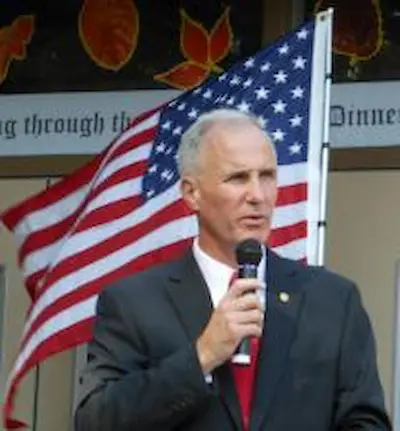
For Thomas, Holocaust remembrance cannot be separated from the challenges Jewish communities face today: the persistence of antisemitism, the intimidation of Jewish students on university campuses, and the security of schools and synagogues.
The Murt family reminds us that preserving the memory of the Holocaust and standing against antisemitism is not the responsibility of the Jewish people alone. It belongs to everyone who believes in human dignity, justice, and the sanctity of human life.
As Judge Murt said, "We cannot pay tribute to the memory of Holocaust and Babi Yar victims without standing up against antisemitism today, here and now."