


 Shame and Porn Addiction




8 min read
10 min read




I spent years asking God for more light. A year of forced stillness taught me to ask a different question.
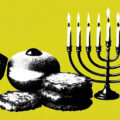
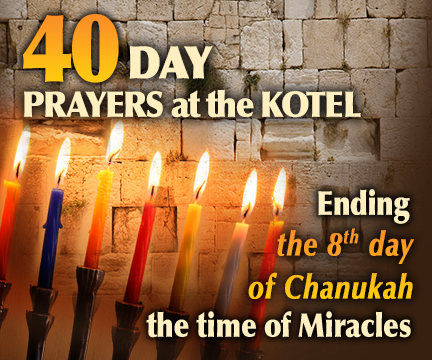
As Hannukah approaches, I am thinking about the miracle of the light and the courage it takes to kindle it. In my own spiritual life, I spent years searching for it.
When I began my path toward Judaism, I knew I wanted to live differently and I constantly prayed for God to show me what He wanted from me.
The deeper I studied, the more I questioned my expectations. I asked God to show me what to do, but part of me was waiting for Him to do all the work.
I kept coming across stories that challenged my perspective. At the Jordan River crossing, for example, the Israelites had to step into the water before God opened a path. The Hannukah story carries the same lesson. The Maccabees faced overwhelming odds when they rose up against the Syrian-Greek forces. They didn't know whether their struggle would end in victory, yet they chose to act anyway.
These stories made me wonder why I kept asking God to open a door while I stayed safely on the other side. Maybe I had spent too much time waiting for an answer when He was asking me to act without knowing the outcome.
A few months into my conversion journey, life brought my momentum to an abrupt halt when an accident left me with a severe shoulder and arm injury. Surgery and recovery would consume more than a year of my life.
For months, I lived in a sling, in pain much of the time. Writing had supported me for years but now most days I could barely finish a paragraph. As I worked less, my income declined and I watched my savings slowly dwindle.
I hated how much independence I had lost. No matter how determined I was, I couldn't make myself heal any faster.
Before the accident, I had planned to move within walking distance of my synagogue so I could become more fully observant. I was moving toward the Jewish life I had worked so hard to build when, almost overnight, everything stopped.
Instead of asking when God would restore what I had lost, I began wondering what this forced stillness was revealing about me.
My first instinct was familiar: pray harder, heal faster, get back to work, get my plans moving again. I wanted God to take away the pain and restore the life I had been building.
But my recovery refused to follow my timetable.
As the months passed, I had no choice but to slow down, something I've never been very good at.
Eventually, the question shifted.
Instead of asking when God would restore what I had lost, I began wondering what this forced stillness was revealing about me.
That new question changed how I understood an idea I had encountered in Kabbalah, an ancient tradition of Jewish mysticism: the relationship between Ohr (Divine Light) and the Kli (the Vessel, or one's will) capable of receiving it.
In Kabbalistic teaching, Hannukah is associated with Ohr HaGanuz, the Hidden Light. Jewish tradition describes this primordial Light as concealed since Creation. Hannukah's mystical significance lies in our opportunity to reveal some of that Light in the physical world.
Consider what happens when we light the menorah. Before we can kindle the flames, we have to prepare the oil and wicks so everything is ready to sustain the Light. I began to see a parallel in my own spiritual life. Perhaps the work wasn't about asking God to send more light, but about preparing myself to receive what was already there.
For so long, I'd focused on what I wanted God to give me: healing, peace, direction, clarity. Yet I'd given little thought to whether I was able to receive those gifts.
Gradually, I realized I had spent so much time seeking the Light when the deeper work involved the Vessel. Jewish mystical teachings describe Divine Light as continually available, rather than a reward God switches on once we finally pray correctly or perform enough mitzvot.
Maybe I didn't need to keep looking upward and asking for more. Perhaps I needed to look inward, at the Vessel.
That was much harder.
Kabbalah offers another image for what interferes with our ability to receive Divine Light: klipot, usually translated as shells or husks.
When I'm anxious, hurting, or going through a hard stretch, it's easy to feel as though the Light has disappeared. But it hasn't gone anywhere. Sometimes I'm simply carrying so much fear, pain, or worry that I can't recognize it.
Once I understood that, I began looking at my own barriers, my own klipot. What had I accumulated that was narrowing my Vessel or hiding the Light?
Some of these were hard to recognize because I had lived with them so long that I mistook them for strengths. I saw relentless self-criticism as discipline, filling every hour with work as responsibility, and replaying my mistakes as accountability, when I was actually punishing myself.
Throughout my year-long conversion journey, I was always learning something new. Another mitzvah, a new Hebrew prayer. Eventually, I had to ask whether doing more necessarily meant growing spiritually.
When I immersed in the mikvah to finally convert, a time I had learned is especially powerful for prayer, I asked God to help me release my fear of lack and my tendency to react negatively to other people's words. As I entered the living waters, I prayed that these deeply ingrained patterns would be washed away once and for all.
Then I made a declaration that felt even harder. I forgave my past and chose unconditional self-love as I stepped into this new beginning as a deeply grateful Jewish soul held by God.
This time, prayer wasn't only about asking God to change something for me. I took action. I stepped into the mikvah and said the prayers, returning to my Jewish ancestry and taking my place among the Jewish people. In that sacred moment, God granted me a Light that still feels miraculous today.
My Hebrew name, Shuvi, means "return." For me, it represents returning to God and learning to receive the Light that had been there all along. But if I want my Vessel to keep growing, I have to keep making room for the Light it was meant to hold.
I wish I could say this new understanding permanently changed every old pattern.
It didn't.
The shells have a way of rebuilding themselves. Old fears resurface. A negative reaction can still appear before I catch it. Ego can slip quietly through a side door and settle in before I notice it's there.
But I recognize those patterns sooner now.
For me, those small moments of catching myself have become some of the clearest evidence of spiritual change.
When I find myself asking why I can't feel the Light I'm praying for, I try to change the question: What might be keeping me from receiving it?
My prayers haven't stopped. I still pray for God’s will, healing, guidance, protection, and peace. What changed was my assumption that prayer starts and ends with my requests.
Most often, the first step is mine.
I'd still prefer to see the water part before putting my foot in, and an open door is certainly more comfortable than one that requires me to reach for the handle. But faith has become less about waiting for certainty before I move.
Now, when I find myself asking why I can't feel the Light I'm praying for, I try to change the question: What might be keeping me from receiving it?
Even in my darkest hour, through the worst of the fear, pain, and immobility, the Light was never absent. I'm still learning how to become a Vessel capable of holding it.