 On the Ground in Venezuela
8 min read
11 min read
5 min read



6 min read


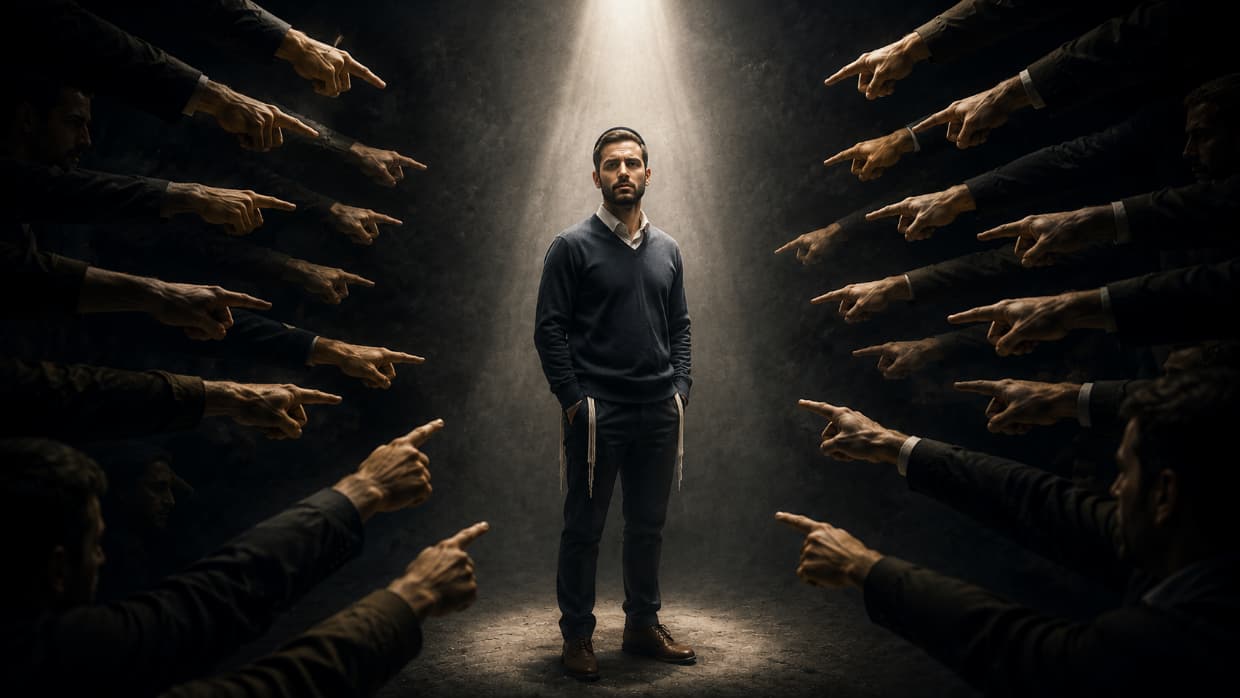
Antisemitism isn't random nor new. Understanding it can turn fear into strength.
Jews around the world are facing a wave of hatred, slander, intimidation, double standards, and moral confusion. Israel is accused of the very crimes committed against her. Jews are told that their history is false, their homeland is illegitimate, their self-defense is aggression, and their very existence is a provocation.
The situation creates fear, confusion, and sometimes shame.
But there is another way to see this moment.
The hatred aimed at the Jewish people is not random, nor is it new. It’s part of the oldest story in the world. If you understand why this is happening, you can draw strength from it and face this moment with hope, resilience, and pride.
The anti-Jewish tsunami hitting Jews today is painful proof that the world still senses who they are meant to be.
The Talmud says that the name Mount Sinai, where the Jewish People received the Torah, comes from the Hebrew word for hatred, sinah. When the nation was charged with the mission to bring God’s moral vision into the world through the Torah, hatred came down with it.
Human beings are called to live with justice, holiness, compassion, restraint, and responsibility. That message is beautiful and ennobling. It’s also threatening.
The Torah demands moral accountability. It tells the world that power is not enough, appetite is not enough, conquest is not enough, and success is not enough. Human beings are created in the image of God and are therefore called to live with justice, holiness, compassion, restraint, and responsibility.
That message is beautiful and ennobling. It’s also threatening.
The body resists the soul. Power resists accountability. The immoral part of humanity resists the demand to become moral.
And the Jewish people, by carrying the mission of the Torah, have always stood at the center of that struggle.
This is why the resistance to the Jewish people begins long before modern politics. It’s not about 1948 or 1967. It’s ultimately not about borders or settlements. The pattern of this ancient hatred begins in the Torah itself.
As the Jewish people move toward the Land of Israel, opposition rises. Amalek attacks them in the desert. Edom refuses them passage. Sihon and Og block the way. The message is clear: do not come forward, do not enter the land, do not become the people you are meant to become.
When physical force fails, the strategy changes. Balak turns to Bilaam, not to defeat Israel militarily, but to curse Israel spiritually. Bilaam tries to delegitimize the Jews by turning their very identity into a curse. That fails too.
So the enemies of Israel try another strategy. They attempt to seduce the Jewish people into immorality and idolatry, to detach them from their God and their covenant.
This is the recurring pattern of Jewish history.
First, they try to kill and destroy the Jews.
When that fails, they try to curse them, convert them, assimilate them.
If that fails, they try to demoralize them and make them forget who they are.
Rashi, commenting on the verse in the Torah commanding the Jews to confront the Midianite nation, makes a stunning point: one who stands against Israel is, in truth, standing against God.
That is the essence of antisemitism, whether people like to admit it or not.
Antisemitism is not merely dislike of Jews. It is not simply racism or political hostility. At its core, it is a revolt against the Jewish mission, a rebellion against the idea that there is a God who cares about human behavior, that morality is objective, and that the Jewish people have a role in bringing that truth into the world.
That is why antisemitism is so irrational, and why its justifications shift with every generation. Jews are hated for being too religious, then too secular. Too capitalist and too communist. Too weak and too powerful. Too separate and too influential. And now — genocidal baby-killers and colonial oppressors. The charges change. The hatred doesn’t.
Before the Holocaust, as the Jewish people began returning in large numbers to the Land of Israel and rebuilding Jewish sovereignty, the same ancient struggle entered a new phase.
The genocide murdered one third of the Jewish people. But it did not achieve its ultimate aim.
Then the attempt to destroy Israel on the battlefield failed again and again. In 1948, 1967, 1973, and beyond, Israel survived.
If Israel could not be destroyed physically, it would be attacked morally.
Then the fight moved increasingly from the battlefield to the world of narrative. If Israel could not be destroyed physically, it would be attacked morally. The Jewish state would be accused of racism, colonialism, apartheid, genocide, and every other cardinal sin of the modern moral vocabulary. The Jewish people, indigenous to the Land of Israel, would be called foreign occupiers. The victims of genocidal hatred would be called genocidal. Those defending themselves against terror would be accused of aggression.
This is Bilaam in modern language. It’s an attempt to curse the Jewish people in the eyes of the world, to make Jews lose confidence in the justice of their cause. It is an attempt to separate them from their history and mission.
And it’s working.
When hatred comes from the outside, it is painful. But when that hatred enters the Jewish mind and heart, when Jews begin to wonder whether maybe their enemies are right, whether maybe our existence really is the problem, that is an even greater danger.
That is why clarity matters so much right now.
Jews are an ancient people carrying an ancient mission. The Jewish people were told from the beginning that this mission would arouse opposition, that they would be few in number, vulnerable, misunderstood, and often alone.
But they were also told the end of the story.
It does not end in isolation and persecution. It ends with the nations recognizing God, with the Jewish people flourishing in their land — as is already happening — with Jerusalem becoming a source of light, and with humanity finally living in peace.
That is not naive optimism; it is the cornerstone of Jewish faith.
Despite all the pain and danger, Jews are living in one of the most remarkable moments in Jewish history. After thousands of years, the Jewish people have returned to the Land of Israel. Jerusalem has returned to Jewish life. Prophecies that seemed impossible for centuries are unfolding before our eyes.
In order to repel the demoralization that is intentionally being leveled at them, Jews need to understand who they are and why they have a homeland.
And precisely because the end of the story is drawing near, the opposition becomes more intense.
In order to repel the demoralization that is intentionally being leveled at them, Jews need to understand who they are and why they have a homeland. They need to understand Jewish history and Jewish wisdom, to have a connection with their ancient texts.
With a resilience born from knowledge and wisdom, Jews can then stand with courage, pride and hope.