 Why the Messiah Is Born on the Darkest Day of the Year




3 min read


Why does saying a blessing over bread cover the other foods of a meal? Are there any exceptions to this?
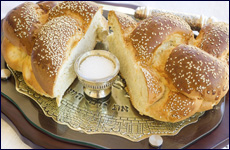
The reason for this is that bread is considered the main part of every meal. In Talmudic times, bread practically was the entire meal. Other foods were primarily “condiments” – what the bread was dipped in in between bites. For this reason, even other “main course” foods not typically eaten with bread – such as meat, rice, potatoes – are considered secondary to the bread – the meal’s main filler. Even though our eating habits are not identical to those of Talmudic times, this has remained the established law. Nevertheless, if a person is really not interested in eating bread and is primarily having a meal of other foods, later authorities rule that he should not begin his meal with a slice of bread solely to cover the other foods and then continue with a basically non-bread meal.
This principle that bread covers other foods also applies to drinks consumed during the meal – since we generally drink to wash down our food; hence, the drink is also secondary to the bread. If, however, a person arrives at his meal especially thirsty, he should preferably take a sip of his drink before washing (making a blessing on the drink, of course), and then continue with his bread meal since in such a case it is not clear that the drink is only coming to accompany the bread. (Note that if he consumes a large quantity of drink first, this would possibly obligate him in an additional after-blessing before he begins his meal. Thus, the ideal is to drink a very small amount first – less than the size of an olive – in order to cover his drinking during the meal but not obligate him in an extra, easily avoidable after-blessing.)
The primary exceptions to this principle are wine (and grape juice) – an important drink warranting its own blessing, and many dessert foods – which are not eaten as part of the meal (i.e., to fill oneself up), but are typically eaten for pleasure.
(Sources: Shulchan Aruch O.C. 177:1 with Mishnah Berurah; 174:1,7, MB 1; V’Zot HaBracha 8:1-4.)
See the Laws of Blessings course at the Aish Academy for an in-depth study of the laws of blessings.
→ Ask the Rabbi a Question ← Click here to comment on this article