




 Boy George's New Song Is an Act of Moral Bravery


13 min read


4 min read


My childhood brittle bone condition inspired me to correct the tropes of the meek Jew.
Breaking a bone is a painful experience for anyone. As a child with a brittle bone condition, I broke 16 bones and can assure it was downright life altering.
If most children fell and ended up bruising a limb, they’d recover easily. On the same fall, I’d break bones. I spent my childhood summers sequestered from other campers who got to play sports. During the school year, I was required to sit in the library during Phys Ed. It was no one’s intention but I spend a great deal of time alone, stirring inside with self-awareness of my shortcomings. I grew up entombed in casts, spending much of my early life in hospital beds and inside the mechanical whirl of Xray machines.
For some time, I did try to play sports. When I was five, I played soccer on a junior league, but it was hard to keep up with the other kids. I tried practicing martial arts many years later, but my low self-confidence was my greatest adversary.
Faced with uncertainty when my next break would happen, I constantly practiced hypervigilance because it took so little for me to end up in a hospital room again. Despite feeling anxious by the next looming break, I learned to be resilient at a very young age and take each bone break as a mission I had to overcome.
While wrapped in a perpetual slew of casts and braces, I saw in the media ubiquitous examples of Jews as physically underdeveloped and ready to complain about the smallest discomfort. Take Family Guy’s Mort Goldman as one example. The Wikipedia fan page for the character reads, “Mort’s defining characteristics are stereotypically Jewish, sich as his whiny neuroticism, his chronic hypochondria, his wimpy attitude and his general gawkiness.” This cruel trope taught non-Jews that Jews fail to endure adversity. It conveyed this meek caricature to Jews too.
When I was ten, my parents found a specialist who could properly diagnose my disease and offer a treatment. The only catch was the treatment required six years of quarterly medicine infusions in a city hundreds of miles away from my home. The specialist who helped me was a Jew, who into his eighties continued to go on ski trips when he wasn’t transforming kids’ lives for the better. He inspired me to continue fighting my disease. I can assure you he was nothing like Family Guy’s Mort Goldman.
The treatment required me to sit with a needle in my arm for up to 12 hours at a time—and I was utterly terrified by needles. I was ten years old and my parents gave me a choice: it was up to me whether to proceed with the treatment. For a moment I stood at a fork in the road and I pictured my adult-self live bound to wheel chairs, wishing for a life of freedom. I swore I’d overcome my needle fears to improve my future.
I said goodbye to bone breaks.
Since my recovery, I took up weightlifting and archery and finally felt the freedom my ten-year-old self dreamed I would one day experience. After high school, I had many falls and bruises, but no more breaks.
Years later, I even took up skiing. I thought fondly of the Jewish doctor who changed my life and who loved to ski. On the mountains I had plenty of falls and bruises, but no more breaks.
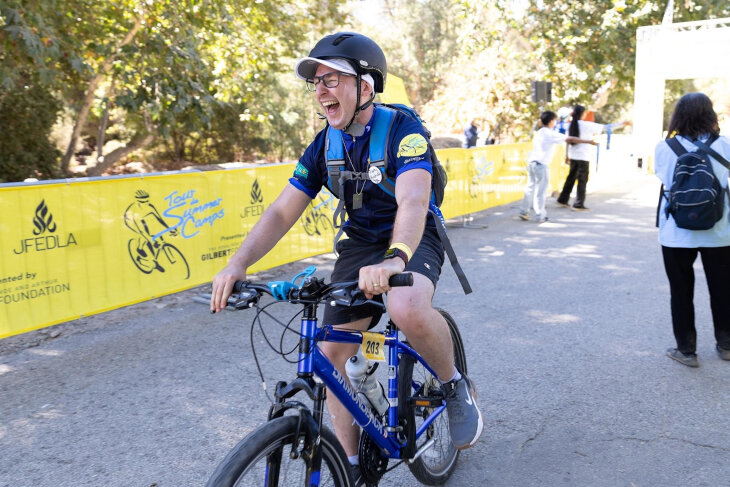
By the time I was well into my professional career and broken bones were just a distant memory, I heard about Tour de Summer Camps, a charity bike ride organized by the Jewish Federation of Greater Los Angeles to support Jewish families with scholarships to send their children to Jewish summer camps. I didn't know how to ride a bike because of my childhood breaks and the ride sounded like a daunting task.
I believed in the mission and soon enough started to believe in myself.
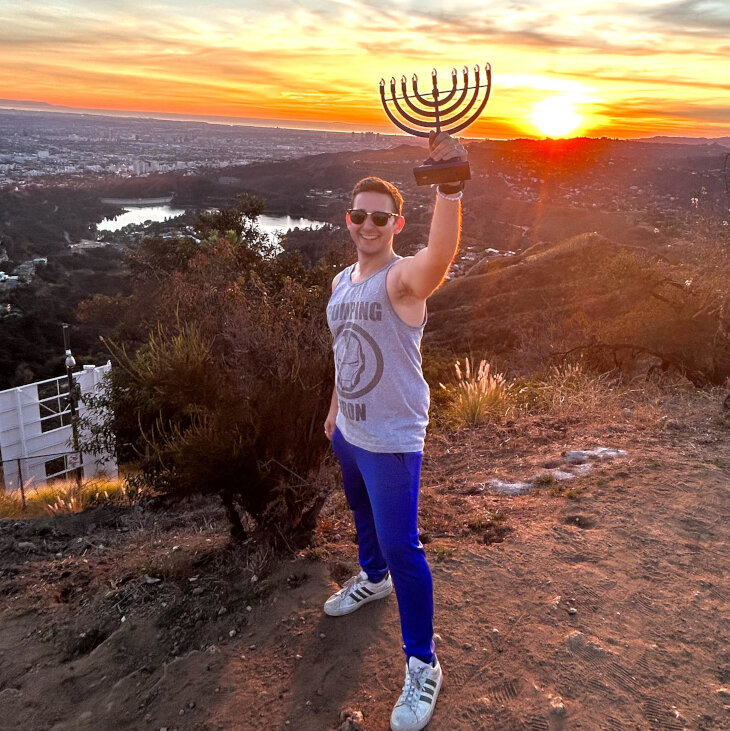
When I ride my bike today, I want to teach other Jewish kids that we are resilient. Despite the negative tropes in the media, kids need to learn that both Jews and non-Jews can overcome physical challenges when they believe in themselves.
Reflecting on my 16 breaks, the bike has become a symbol of the freedom I desired to experience as a child but feared bone breaks. Now, I own the ride. I own my Jewish narrative.










James: On many levels and endeavors, you are a (my) hero and an inspiration. Well done, my friend.
James as your Mother and of course your Dad we were by your side for each of the 16 broken bones
Difus spoke to you when you were two just to make sure we weren’t beating you
Words can not express how we feel about your reselience
We love you
G-d bless you.
As his Mother- thank you
Very uplifting
As his Proud Mama thank you
Beautifully written James! May you continue to be proud of your heritage, and of your courage, resilience and zest for life! You are an inspiration!
How proud of you… we are.