
 After the Manchester Synagogue Attack, They Danced Through Their Tears







A middle-of-the-night alarm in our house during Sukkot gave us a deeper appreciation of the meaning of the holiday.
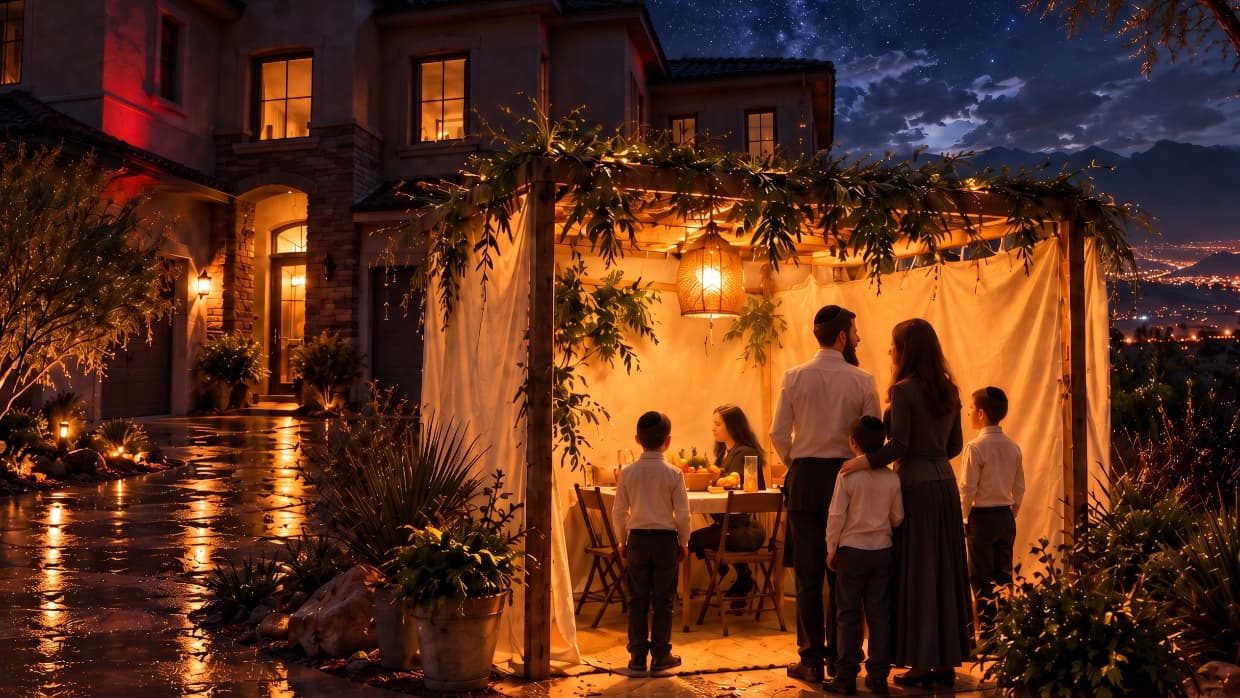
Henderson, Nevada is beautiful. We have sunshine nearly every day of the year. The skies are almost always blue and bright. It rarely rains, but when it does, it comes in sudden, dramatic bursts. Last year, those torrential downpours came pouring down Friday night during Sukkot.
Instead of having our meal in the sukkah, we ate inside. While Jewish law said we were exempt, it was a letdown to celebrate the Shabbat meal in our home instead of in the sukkah.
That night, even after the rain stopped, the sukkah still dripped. Water seeped through the thatched roof, and reluctantly, we went to sleep inside. My boys were disappointed and I couldn’t blame them. We went to bed, as our sukkah remained empty.
In the middle of the night, a loud alarm jolted us all out of bed.
My wife and I scrambled throughout the house searching for the source. It wasn’t any of our fire alarms, those were quiet. The sound was coming from somewhere on the first floor, toward the back of the house.
Finally, we found it: a carbon monoxide detector my wife had bought years ago. She’d purchased it as a precaution because we have a meat smoker near the back door, and she’d thought it wise to have an extra layer of protection. At the time, it had seemed almost unnecessary.
That Sukkot night, her decision helped save our lives.
I quickly called 911 (saving a life overrides Shabbat and Yom Tov prohibitions). The firefighters arrived, confirmed that the carbon monoxide levels were dangerously high, and told us to wait outside until the house cleared.
As we stood outside under the cool desert sky, one of my sons looked at me and said with a smile on his face, “So the sukkah is actually the safest place in the house.”
That’s the essence of Sukkot, isn’t it? We leave our sturdy, secure homes with their roofs and locks and alarms, and step into a fragile hut covered with branches. We remind ourselves that our true protection doesn’t come from walls of brick or steel, but from God Himself.
The sukkah is temporary, vulnerable and open to the elements, yet in it, we are under God’s shelter. Sukkot is the holiday of joy precisely because it teaches us that the deepest happiness doesn’t come from what we build, but from the trust we place in God.
Last year that message was brought home to us in a powerful way. Our walls, our ceilings, even our fire alarms, none of them could truly protect us. But the foresight, perhaps Heaven-sent, that led my wife to buy that carbon monoxide detector did. And as we stood outside, just a few feet from our sukkah, it was clear: the airy, flimsy, makeshift hut, susceptible to rain, bugs, and the elements was, in truth, the safest place in the house.