




 The Jewish People’s Undying Connection to the Land of Israel
5 min read
3 min read
4 min read


4 min read


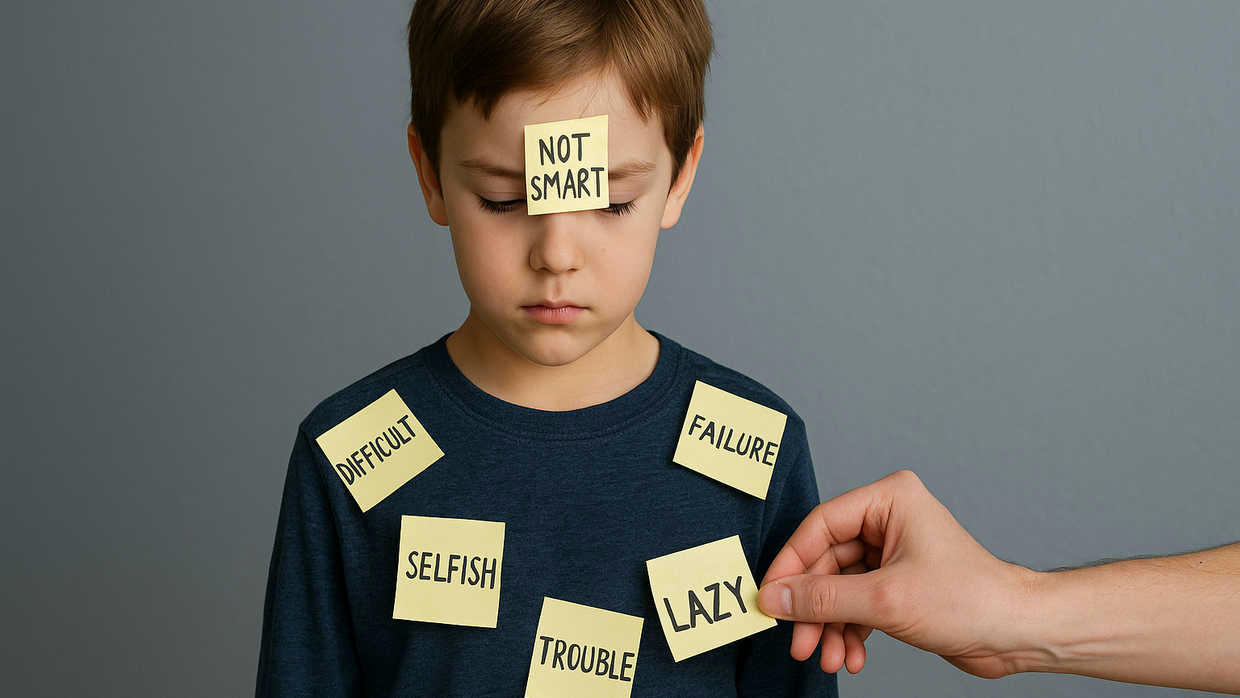
You're lazy. You're selfish. You're not enough." What if these weren't judgments… but self-fulfilling prophecies?
Imagine standing before a door that leads to the treasures of life—wisdom, happiness, spiritual success, and endless potential. But the door is locked. Iron-clad, coded, unyielding. At first, you shake the handle. You shove it hard. But eventually, you walk away, defeated. Why attempt the impossible?
For many, this isn’t metaphor—it’s life. So many carry a deep yearning to grow, to rise, to become who they were meant to be. Yet something paralyzes them. Not laziness. Not incapability. But the quiet, devastating echo of voices from the past:
“You’re not good enough.”
“You don’t have what it takes.”
“You were never destined for greatness.”
Whether spoken aloud or silently implied, these messages can become embedded in our identity. A child who hears “You’re lazy” enough times will grow into an adult who believes it. A teen constantly reminded of his “selfishness” may become a man paralyzed with guilt for simply taking care of himself.
Labels are powerful. They shape how we see ourselves, and how we act. A fascinating study once told teachers their students were academic prodigies—randomly chosen, not based on ability. By year’s end, those students had soared. Not because of inherent genius, but because their teachers believed in them—and so, they believed in themselves.
Contrast that with the tragic story of a mischievous Israeli schoolboy whose teacher once snapped, “You’ll end up in prison.” Thirty years later, they met again. He had, indeed, spent his life in and out of jail. “I didn’t know who I was,” he told her. “But when you said I’d go to prison, I believed it. And that’s who I became.”
Most stories are quieter, but no less impactful. A disappointed parent sees a low test grade and says, “You’re just lazy.” The child doesn’t argue. He internalizes it. That label becomes a lens, shaping every future challenge.
Years later, he wants to study Gemara. Or open a business. He gets excited… but then the voice returns: You’re lazy. You’ll fail. Don’t even try. So he doesn’t. Not because it’s too hard—but because he believes he’s not worthy of success.
Even worse are labels that don’t describe behavior—but character. Not “You acted selfishly”, but “You are selfish.” These wound deeply. They whisper: You’re bad. You’re unlovable. You’re broken. And soon, every mitzvah, every act of giving, is tainted by guilt. Am I doing this for attention? Does it even count? Joy becomes sin. Growth becomes shame.
Ever heard how circus elephants are trained? As babies, they’re tied to a peg in the ground. Too weak to break free, they give up. As adults, though fully capable of escaping, they don’t even try. They believe they can’t. And that belief becomes reality.
People are no different. A child shackled by painful words will grow into an adult who no longer tries—not because he lacks strength, but because he no longer believes in it.
We often look at someone wasting their life and judge them. “Why doesn’t he get his act together?” But if we could see inside his heart, we’d see a battlefield—scarred, bruised, abandoned. For some, criticism wasn’t occasional—it was constant. Love was absent. Positivity was foreign. And in that world, success feels unnatural. Even terrifying.
Those blessed with healthy upbringings may struggle to understand. “So your childhood was tough—get over it!” But for others, trauma doesn’t just hurt. It defines. And unless we approach these souls with compassion and patience, we’ll never help them rediscover their inner light.
We all hold tremendous power. As parents, educators, friends—we shape lives. Our words can uplift or destroy. So let us be intentional. Let us build, not break. Let us see people not as they are—but as they can be.
We must replace shame with encouragement. Replace “You are lazy” with “You can grow.” Replace “You’re selfish” with “You care deeply—don’t be afraid to show it.”
Most importantly, let us believe in each other. Because the greatest key to that locked door… is knowing it can be opened.














While I agree with the principles of this article, my sympathy goes out to the teacher who snapped. No one can be endlessly patient and she no doubt had been dealing with that child’s misbehavior for considerable time before loosing her temper. To throw all subsequent bad decisions made by the criminal on a moment of exasperation by his teacher is unjust and unjustifiable.
Of course. every person is responsible for their actions, and the teachers can in no way be blamed. At the same time, negativity can certainly leave its mark. There are many ways the teacher could have responded, frustrated as she may have been. Labeling the boy a criminal wasn't the only choice.
True, but he seems to have made it his excuse for not doing better. Should someone say such a thing to me I'd have pleasure in proving them wrong, not using it as if getting permission to behave badly.
You are speaking as an adult, not an impressionable child. There were other ways of dealing with this child which would not have involved name calling. Btw--I had an aunt who used to act surprised when I told her I was going to college. "A four year college?"she asked in amazement. None of the other adults in my life shut down her abusive remarks. Language is rich and we need to think before speaking.