






 What Two Hebrew Words Reveal About Israeli Democracy

7 min read
4 min read
6 min read
4 min read





A four-year-old in pajamas asked one question that reframed everything I thought I knew about marriage.
It wasn't a therapist or a rabbi. It was a four-year-old in pajamas.
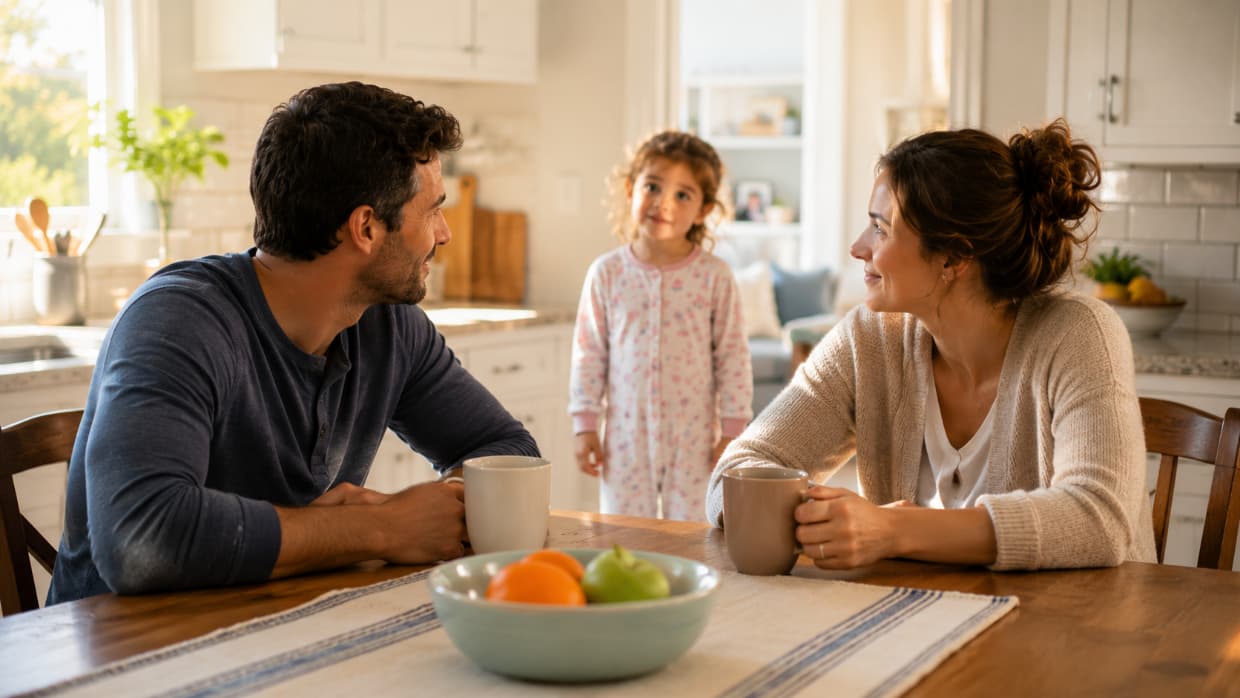
One evening, my husband and I had a disagreement. Nothing dramatic — just two tired adults talking past each other, each trying to be right. Eventually the tension fizzled, we cooled off, and dinner carried on.
A few minutes later, our daughter wandered into the kitchen, looked at us, and asked: "So… are you two friends again?"
I smiled. "Of course," I said.
But after she ran off, I couldn't stop thinking about that question. She hadn't read anything about conflict resolution or attachment theory. She couldn't explain active listening. Yet somehow she'd cut straight to the only thing that mattered: Are you friends again?
Adults are remarkably good at complicating relationships. We keep mental scorecards, replay conversations, rehearse closing arguments in the shower. We become experts at proving why our reaction made perfect sense.
Kids aren't interested in any of that. They don't measure a good relationship by how few problems it has but by how quickly people find their way back to each other.
That difference changes everything. Because the real test of marriage is what happens after the argument.
Do you stay stuck? Do you let yesterday's frustration quietly become today's distance? Or do you find your way back?
One of the quiet dangers in marriage is forgetting you're on the same side. A disagreement becomes a competition. Understanding gets replaced by winning, and connection gets sacrificed so someone's ego can score a point. But if you zoom out, most of what we fight about isn't worth the distance. It's usually tiredness, stress, or two valid perspectives colliding at the wrong moment.
Judaism has a phrase for what a marriage should feel like: shalom bayit — peace in the home. But the goal was never a home where nobody disagrees. That's impossible. The Hebrew word shalom (peace) shares a root with shalem, meaning whole. Peace, in this sense, isn't the absence of friction. It's repair. It's becoming whole again after the break.
There's a reason Aaron the High Priest is remembered as someone who "loved peace and pursued peace." Peace has to be actively rebuilt. Pride creates distance; repair requires someone willing to cross it first.
Sometimes that means an apology. Sometimes it's a softer tone than you feel like using. Sometimes it's just making your spouse a cup of tea after a hard conversation and letting silence do more than words. Those gestures rarely solve everything but they rebuild connection faster than conflict can erode it.
The happiest couples I've seen are the ones who repair fastest. They don't stay stuck in the argument longer than they have to. They know how to soften, how to return, how to come back before distance starts to feel normal.
"So… are you two friends again?"
That little question still catches me off guard on the hard days, when I'm convinced I'm right and my ego is quietly suggesting it's the other person's turn to move first. In those moments, I try to remember: the goal was never to win. It was always just to find my way back.
Are you two friends again?
That's the only question that matters.














Wonderful!
Marriage is a union where two souls complement each other’s character flaws, balance karma, practice selfless love, and move toward a state of unified consciousness.
Karma determines whom you meet and the fundamental nature of the relationship—whether it is one of loving harmony or rife with conflict—effectively setting the length of the tether; however, the day-to-day trajectory and ultimate outcome of the marriage are determined entirely by your present thoughts, actions, and choices.
Even in a marriage burdened by negative karma, practicing forgiveness and selfless giving can break the cycle of suffering; conversely, constant bickering and retaliation will only deepen entanglements in future lifetimes.
The best advice about marriage I ever got came from my father: If you're old enough to get married then you're old enough to figure it out for yourselves. He was right and we're going strong after 43 years without help from either side of the family.
Wow! That brought tears to my eyes. A good simple thought to always keep in mind, whether in familial situations or at work.
Well written. Thanks.
Simple sound advice for life