






Hiding in the slums of Mumbai and packed markets of Bombay are the echoes of ancient Jewish stories and recipes waiting to be uncovered and recreated. The pungent spices and flavorful aromas serve to imbue these dishes with such powerful memories and tastes that even after the majority of the Indian Jewish community has left, these recipes remain cultural touchstones for Jews around the world.
These flavors have given the small but robust Jewish community in India a rich culinary history, one that is often overlooked in favor of other, more prominent cuisines.
According to legend, over 2000 years ago, a small group of Jews fled Israel by sea in an attempt to evade their enemies. They lost control of their ship and got shipwrecked off the Western Indian coast. The 14 survivors adopted their Hindu neighbors' customs, names, dress, and foods and became known as Bene Israel or “Children of Israel,” India's largest Jewish community. The Bene Israel Jews were oil-pressers, and since they refused to work on the Sabbath, they became known as ‘Saturday-Oil-People.”
Indian Jewish Dishes
When the first Jews made their way to India, they discovered a whole new world of spices and herbs that they had never seen before. Turmeric, cumin seed, coriander, hot chili, fenugreek (hilbeh), cardamom, mustard seed, and fresh ginger became available to Jews for the first time. These flavors began to be incorporated into the traditional Jewish dishes of old to bring about new creations that would be at the forefront of Indian Jewish Cuisine.
Dishes like Fish Alberas, a green fish curry with hints of mint and chilis, and Sandan, a steamed rice cake served alongside rich chicken curries, stick out as some of the most scrumptious Indian Jewish culinary revelations.
Kashrut laws also helped shape the flavors of Jewish Indian Cuisine. This is why so many Indian curries enjoyed by the Jewish community are based on coconut milk, which can be enjoyed with chicken or fish. Beef was never a major part of their diet as a way to respect their Hindu neighbors who didn’t eat red meat for religious reasons.
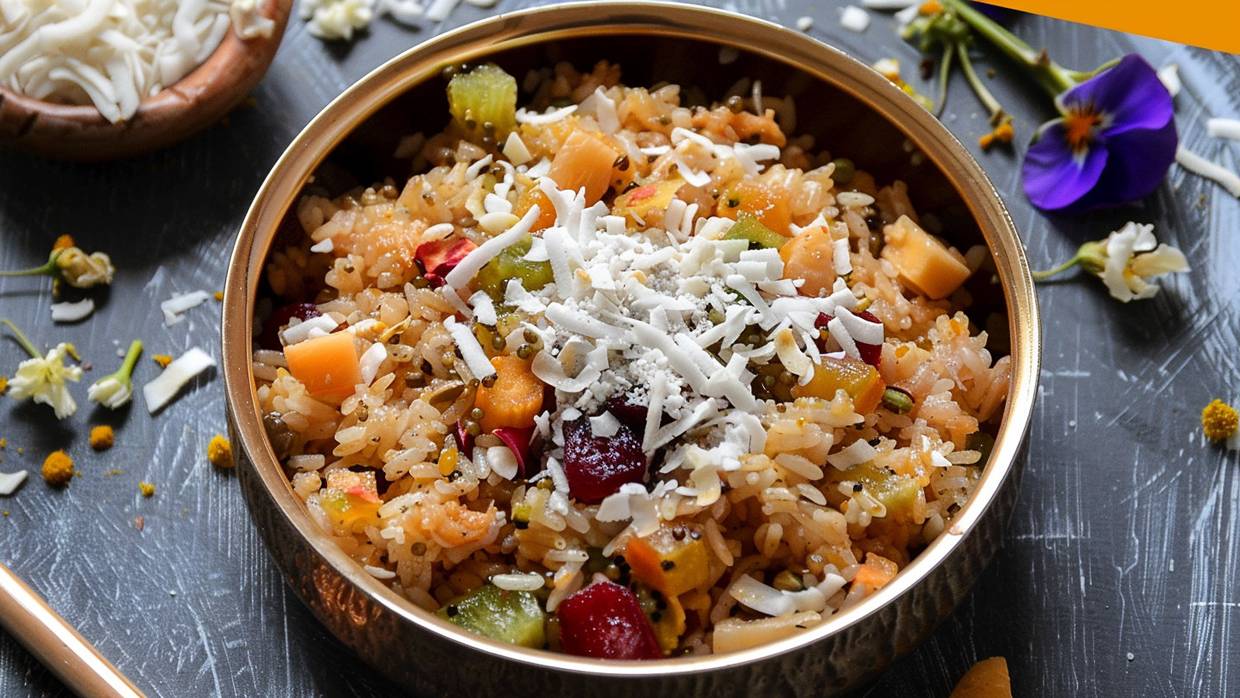
Malida
In the Bene Israel community, a special Thanksgiving celebration called Malida takes place at important events like Bar Mitzvahs and weddings. This ritual began a few hundred years ago in a very different cultural landscape. According to oral history of the time, all religions lived harmoniously in India. The Hindu Brahmins, Muslims, the Kolis, and the Jews all celebrated each other's holidays with one another. Diwali, Holi, Rosh Hashanah, and Eid all had their moments to shine and each community would join in for the celebrations.
When they came together to celebrate the other religion's holiday, each community brought a special dish. The Muslims brought Shir Kurma, a sweet condensed milk pudding with dried fruit. The Indian fisherman (Koli) brought Puran Poli, a sort of sweet tortilla. The Jews, however, couldn't settle on which dish they wanted to make their signature dish.
Some suggested Poha, flattened rice cakes with coconut and sugar, a Jewish Indian staple. Others wanted to bring Khanavali, a shabbat cake made with Jaggery (a natural Indian sugar with a bit of tang). After days of arguing and fighting, they settled on a compromise. They decided to combine elements of all the suggestions and came up with an entirely new dish called Malida. The flattened rice from Poha and the fresh fruit and nuts from the local markets are topped with jaggery and cardamom pods and festively decorated with flowers, dried dates, almonds, and shredded coconut. Bene Israel gather together to pray and offer the platter of malida to Elijah the Prophet in thanksgiving. After the ceremony, the malida is passed around for guests to enjoy.

Esther David, the author of the cookbook Bene Apetit explained in an interview with Gastro Obscura the motivations behind Malida. “An Indian Jew is surrounded by a multitude of gods of different Indian communities, so our ancestors must have decided that we needed a form [of worship] to keep us away from outside influences and preserve our Jewish identity in a multicultural, multi-dimensional, and multi-religious country like India, where one can get attracted to other forms of worship with their music, songs and colorful festivals.”
The Bene Israel community has proposed to make Malida a national holiday for the Indian community in Israel so they can properly give thanks to God for opening the door of the state of Israel for them.
Indian Shabbat and Holidays
The Indian Shabbat table looks very different than most others. Instead of Challah rolls and wine, blessings are made on chapatis (round Indian flatbreads) and Sharbat, the Indian Jewish community’s replacement for Kiddush wine which is made by soaking raisins in water.
Food plays a role in many of Bene Israel's holidays as well. Like the seven-layer fried crepe filled with coconut, raisins, and pistachios, called a sweet puri, on which the congregation breaks its Yom Kippur fast.
With dessert being such a focal point of Indian cuisine, it makes sense that the rose-colored Chik-Cha Halwa, an Indian take on Halva, would be a cherished sweet reserved for festive meals. Chik-Cha Halwa, made with wheat extract and coconut milk that gets cooked down until it reaches a velvety consistency and has a subtle sweetness, is one of Indian Jewry’s biggest culinary contributions to the region.
Puri is another Indian classic, usually enjoyed during the High Holidays. For many of the Jews in Mumbai, it was common to fill the Puri with coconut and almonds. Despite Puri being a popular dessert all over India, the connection between Puri and Rosh Hashana, the beginning of the Hebrew year, is not without reason. For Indian Jews, the round shape of the Puri symbolizes the circularity of time that we celebrate on Rosh Hashanah.
The demographics of Indian Jews in the 1800s shifted massively when a large wave of Iraqi Jews immigrated to India. They brought with them many of their favorite recipes from back home. This influx of new Jews gave rise to a new hybrid cuisine, fusing together the flavors of Baghdad and India. Arook rice balls with garam masala, Pantras, and beef-stuffed pancakes sprinkled with turmeric, ginger and Garam Masala are great showcases of the fusion at play. There’s also hanse mukhmura, a duck-based dish where the meat is cooked with almonds, raisins, bay leaf, tamarind paste, and ginger root, which is a favorite Shabbat dish for many in the community.
Now India’s Jewish community has dwindled down to just around 5,000, with the vast majority emigrating abroad to Israel and the United States. However, the traditions and recipes are still critical parts of Indian Jewish culture and help shape their identity. This brief overview of some of the major dishes in Indian Jewish cuisine barely scratches the surface of the different Jewish sects and their unique meals. The diversity of India and its Jews is precisely what Indian Jews try to celebrate with every Malida and celebration. Promoting unity, togetherness, and tolerance of what each group brings to the table, is a core aspect of being an Indian Jew.
While it may be a struggle to preserve the recipes and memories of the Indian Jewish community, it's important to try to hold on to as much as we can. Otherwise, we’ll lose a beautiful world of flavors and spices that simply doesn’t exist elsewhere.













I was bothered that you said Bene Israel adopted their Hindu neighbours' customs, names, dress & cuisine, so I did some due diligence w/ChatGPT & found these 4 Bene Israel dishes are NOT shared with ANY other group:Malida, ceremonial offering from sweetened flattened rice, grated coconut, sugar, fruits, & nuts, integral to "Malida" ceremony, dedicated to Prophet Elijah. אטלס אובסקורה
Chik-Cha Halwa, chewy, gelatinous sweet from wheat extract, sugar, coconut milk & edible rose coloring, for Rosh Hashanah. New Lines Magazine
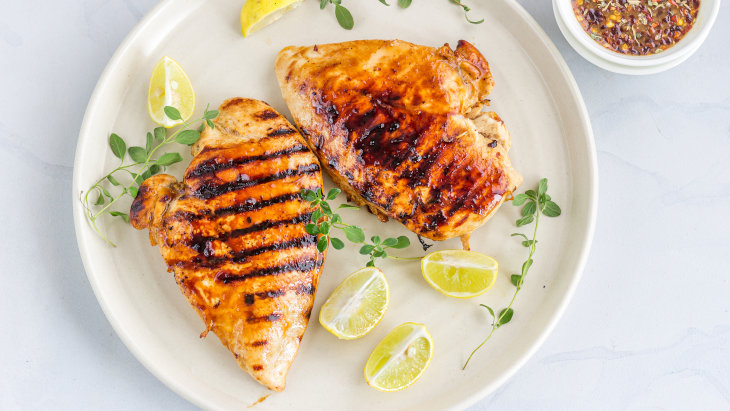
Fish Alberas for holidays. Seema
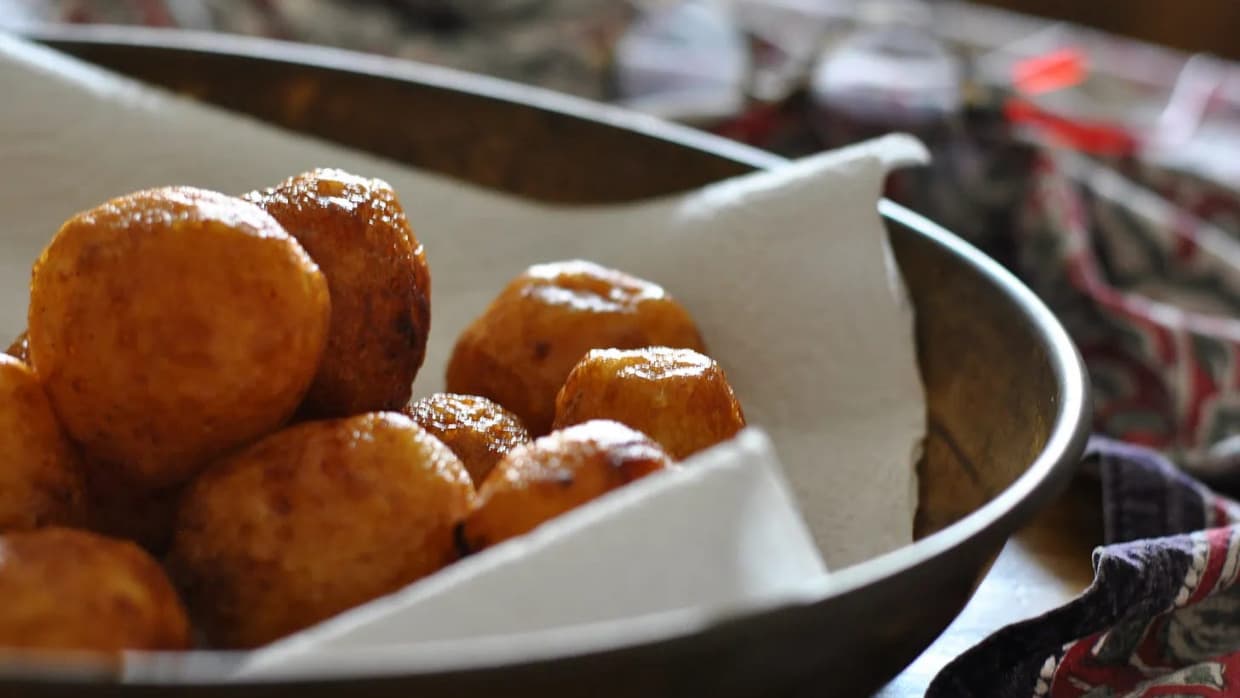
Kanavali, semolina-based sweet for Shabbat Seema
Bene Israel names are locality & occupational-based, while first names are Hebrew-based. This is no different than Jewish names such as "Sandler" & "Shraga," etc., the only difference being these names are in Hindi or Marathi. Adaraba, MOST Jewish names around the world are based on location & occupation, so, this is also not an adoption of Hindu custom. It seems the only thing Bene Israel adopted from Hindu neighbours is Marathi, with the same accent, & clothing.