





 Iran and the Freedom of Passover



7 min read


As the Jewish nation grapples with the pain of October 7th, hostages still being held in dark tunnels, and the hurt that antisemitism brings, we must find hope and healing.
The Passover Seder is the time we discover who we are and what we live for. Especially now, as the Jewish nation continues to grapple with the pain of October 7th, hostages still being held in dark tunnels, and the hurt that antisemitism brings, we must find hope and healing.
Here are four insights you can share with those at your Seder table.
One of the first actions we take at the Seder is dipping the karpas vegetable into salt water. There is deeper meaning to our actions.
How did we end up in Egypt? From whence did this exile of slavery begin?
Let us recall another moment of dipping in the Torah, a time when animosity came into the world. Joseph went out to seek his brethren. Wearing his coat of many colors gifted to him by his father as a symbol of love, the brothers were overcome with jealousy. They could not bring themselves to say hello. When there is baseless hatred between brothers, one cannot look the other in the eye, smile, or give a good word.
The brothers threw Joseph into a pit, sold him, and he ended up becoming a slave in Egypt. They took his beautiful multi-colored coat and dipped it into the blood of animals. Presenting the bloody garment to their father became their way of ridding themselves of a ‘problem called Joseph.’
But Joseph was alive in Egypt. After being thrown into prison he became second to Pharaoh. The hunger of famine brought the brothers to Egypt. Many travails later, the brothers reconciled with Joseph. Jacob came down to Egypt to reconnect with his beloved son. One family flourished to become a nation. Antisemitism took hold of the country. Our sojourn of suffering began.
Bitter exile began with the dipping of Joseph’s coat. When one brother cannot extend his hand and offer shalom to another brother, the Jewish people descend into darkness. A lack of unity destroys and devastates us.
Seder night gives us the opportunity to fix and heal this mistake. Take a moment and dip again. Dip as a family. Dip as true friends. Bring unity to your table. Take an action together and bring harmony to your table. You will help push away the darkness that we are sitting in. Each home brings another brilliant point of light into the world. Together we will dazzle the universe with our thousands and thousands points of lights. Illuminate the world with unity.
We uncover the matzah and say: “Let all who are hungry come and eat. Let all who are needy come and celebrate.”
What’s the point of inviting someone who is starving just as we are beginning our Seder? If we really want to invite others, shouldn’t we be sending out invites, and welcoming the hungry before Passover begins?
Of course, we should look for those who have no one to share Seder night with as we approach Passover.
But as we sit down and ask the hungry to come join us, we are being told to look not for those who are far from us but rather to those who are sitting across from us, at our table. See the person right in front of you. Everyone has someone at their side who is famished for love, for a good word, a deeper connection. Seder night is the evening to reach out.
Sometimes that person is our own selves. Our souls are ravenous. We are seeking depth. We want to grow more spiritual, feel more connected. The whole year we are restricted. Worry, anxiety, not believing in ourselves, and the opinions of others, brings us down. The hole within becomes insatiable.
Seder night we invite all those at our table-including ourselves, to refill our tank. Allow the stories of love and faith in the Haggadah to reignite your passion. Plug into your deep roots. You have the ability to transform a life. Perhaps it is even your own.
Before listing the four sons (the wise, the wicked, the simple, the one who does not know how to ask) we say “Baruch HaMakom – Blessed be God.” God has many names, each describing His numerous attributes. The name for God mentioned here is ‘Makom’ which literally means ‘place’ in Hebrew Why?
Another moment we evoke this particular name of God is when we pay a shiva call. As we leave we offer a prayer. “HaMakom yenachem eschem – may God, literally ‘The Place’, grant you comfort and solace.”
We use this name in a house of mourning because one sitting in grief feels all alone. Inner peace eludes them. Their sleep is restless. They wake up feeling abandoned. Did this really happen to me? they wonder.
We comfort them with the thought that God is everywhere. He is the Place of the Universe. You will find His love in the innermost cracks of your heart, in your loneliness, in your moments of despair. Do not lose hope. You have not been abandoned.
Imagining that we left Egypt, we too must feel the pain that our nation suffered. They felt as if they would never get out of the mess. They wondered how they would raise children of hope while enduring the misery of slavery. They were grief stricken. How can we offer hope for the future?
“HaMakom – God is the Place.” He has not abandoned you. He is accompanying you wherever you may go. He is in your every space. You will find Him in your tears. You will discover His presence in the chambers of your hearts. You will see His strength as you put one foot before the other and taste life once again.
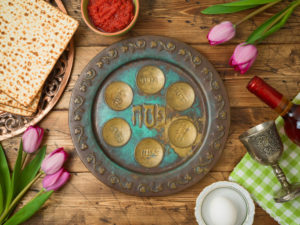
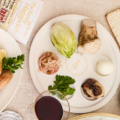
Look at the items on your Seder table. The bitter herb reflects the journey of the Jew. We stand in disbelief as thousands march across the world, defending those who brutally murdered, violated and kidnapped us. College campuses, the highest beacons of education, are filled with those who condone the murder of Jews. After thousands of years, we continue to taste the bitterness of antisemitism and vile hatred on our tongues.
The saltwater speaks of tears shed as our people were sold as slaves in Rome, expelled, murdered in pogroms and the Inquisition, burned at the stake during the Crusades, shoved into cattle cars, gassed in the Holocaust, and massacred on October 7th while the world remained deafeningly silent.
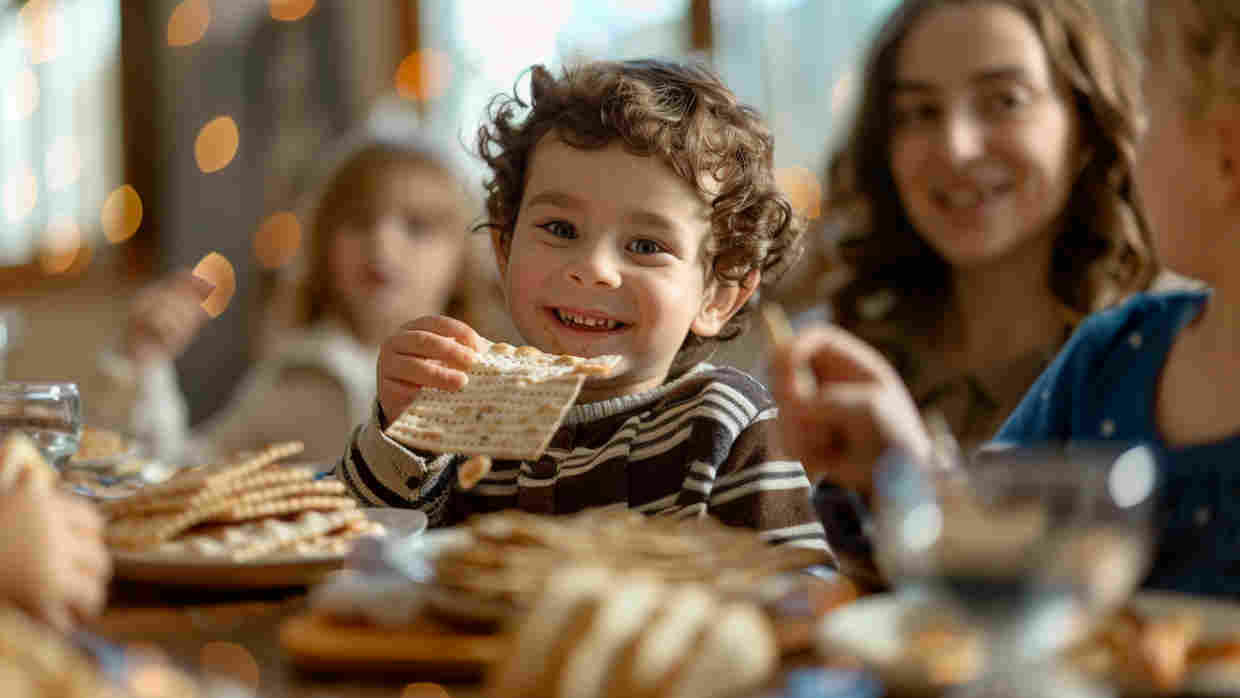
Now taste the matzah, our ‘bread of faith.’ God hurriedly took us out of our despair and bondage in Egypt. We didn’t even have time to allow the bread to rise, hence the matzah on our table.
The four cups of wine speak of the four matriarchs, Sarah, Rebecca, Rachel and Leah. Three matzahs remind us of our three forefathers, Abraham, Isaac and Jacob. They, too, suffered heartache and hostility but they never gave up in despair. Instead they created footsteps for us to follow in. Their path of resilience, fortitude and holy chutzpah sustains us till today. We have strong roots that anchor us through the storms of bitter animosity that we face.
On Passover we proudly proclaim, “In every generation they rise up to annihilate us but God saves us from their hands.” Our nation is defiant. We stubbornly refuse to die. The Jews are still here, despite it all. Am Yisrael Chai.
This Seder night create strength through unity. See those in pain who are waiting for your empathy. Discover God within the cracks of your heart. Embrace your roots as you nourish yourself and fortify others.
In just one moment our nation went from bondage to freedom. Healing comes in an instant. You must only open your heart to the story of our nation.
Now write your own story and soar.








Gorgeous as always thank you Slovie
Extremely enlightening! Will share your words here, at our seder. Kudos! Superb artlcle. 🙂
What are the three things one must say on Pesach to have fulfilled the holiday of Pesach?
Pesach - the korban; Matzah; Marror