




 What Mamdani Won't Say About His Wife's Hamas Posts




8 min read
8 min read



7 min read


In a world that admired her for strength and agility, Allison Gandlin found her greatest power in embracing her Jewish identity.
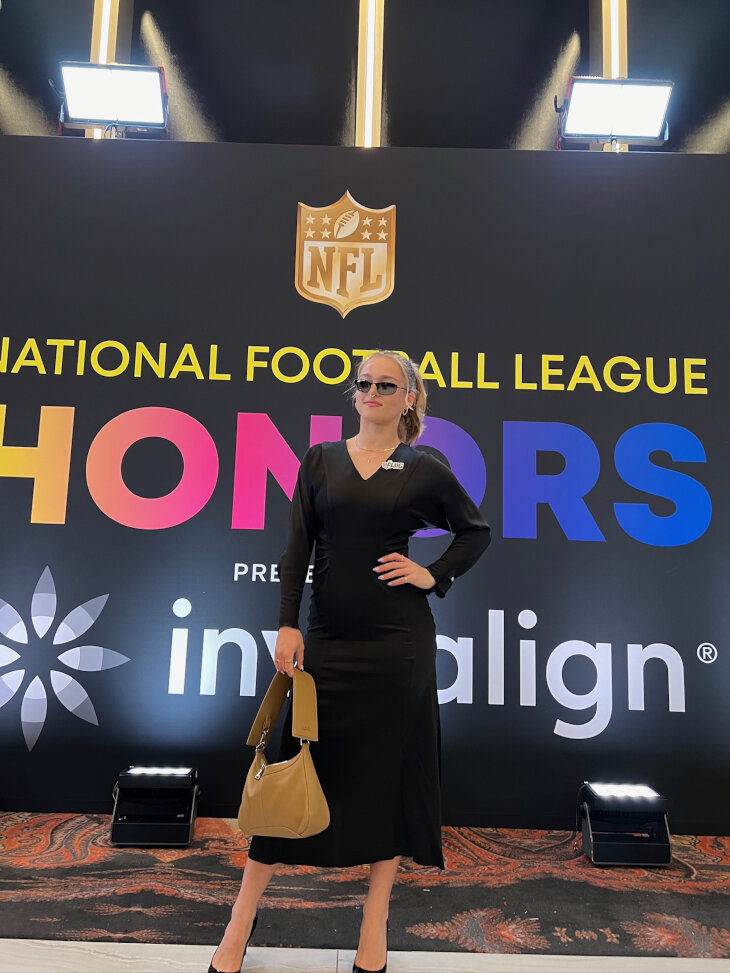
Allison Gandlin, recently named the NFL’s Flag Football Player of the Year, didn’t start her athletic journey with a football in hand. She began as a dancer.
“My mom put me in dance for years,” Allison recalls. “Dance is a different type of environment than sports. In dance, everyone is trying to be a star.”
When Allison expressed interest in football, her mother was hesitant. She had invested years into Allison’s dance training and saw promise there.
“My mom thought I could go far with dancing,” Allison explains. “At the time, flag football was just a backyard game. She didn’t see the value of the switch.”
But Allison saw something different.
“It was the first time I felt part of a team. In dance, you’re not working together. Everyone is there for themselves.”
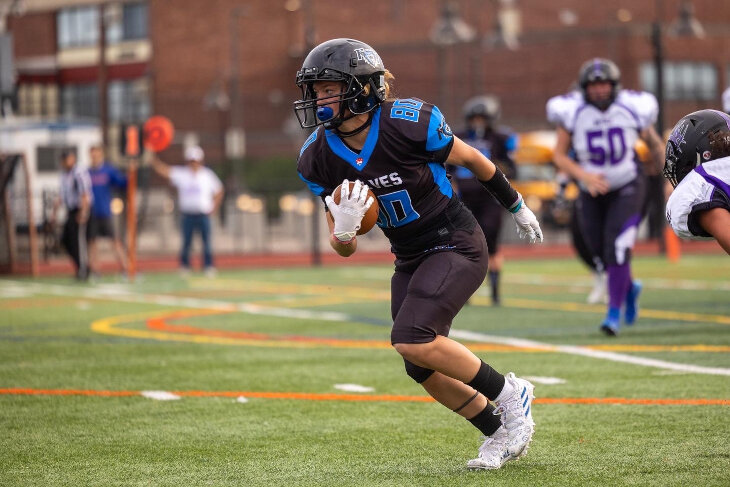
That feeling of teamwork and connection stuck with her. And interestingly, dance ended up giving her an edge on the field. In flag football, instead of tackling, players pull a flag from their opponent’s hips—a move that requires agility, quick thinking, and creative motion.
“My go-to was the spin move. I would literally twirl down the field. While defenders reached for my flag, I spun right past them.”
Her grace and agility on the field made her stand out. Flag football isn’t about brute strength—it’s about movement, instincts, and anticipation. At the time, it wasn’t even a respected sport. But that didn’t stop Allison.
“Back then, it wasn’t taken seriously. It wasn’t respected.”
But she helped change that.
“Michael Colt, my coach of five years, pulled together an all-star team from our league, and we won national titles. After that, people started paying attention. The sport grew with us.”
Their team developed new drills that eventually became standard. Allison and her teammates weren’t just playing the game—they were building it.
Flag football quickly became part of Allison’s identity. But when she looked for women in the sport to emulate, she found…no one.
“I wanted to be that woman—so other girls could say, ‘I want to move like her.’”
That desire to lead the way carried her into a semi-professional women’s tackle football league. Her rookie year, she and her team won the national championship—and she was named MVP.
“I was the youngest player ever to win MVP.”
But as she started her second season, something shifted.
Allison grew up entirely secular. “I barely even knew what Passover was,” she admits.
Her older brother began exploring Judaism after a Birthright trip and became more observant. When he got married, he and his wife would host Allison—then still in high school—for Shabbat meals.
“Spending time with them on Shabbat with their rabbi and rebbetzin changed everything.”
It wasn’t just the spiritual rhythm of Shabbat that impacted her—it was her sister-in-law’s example.
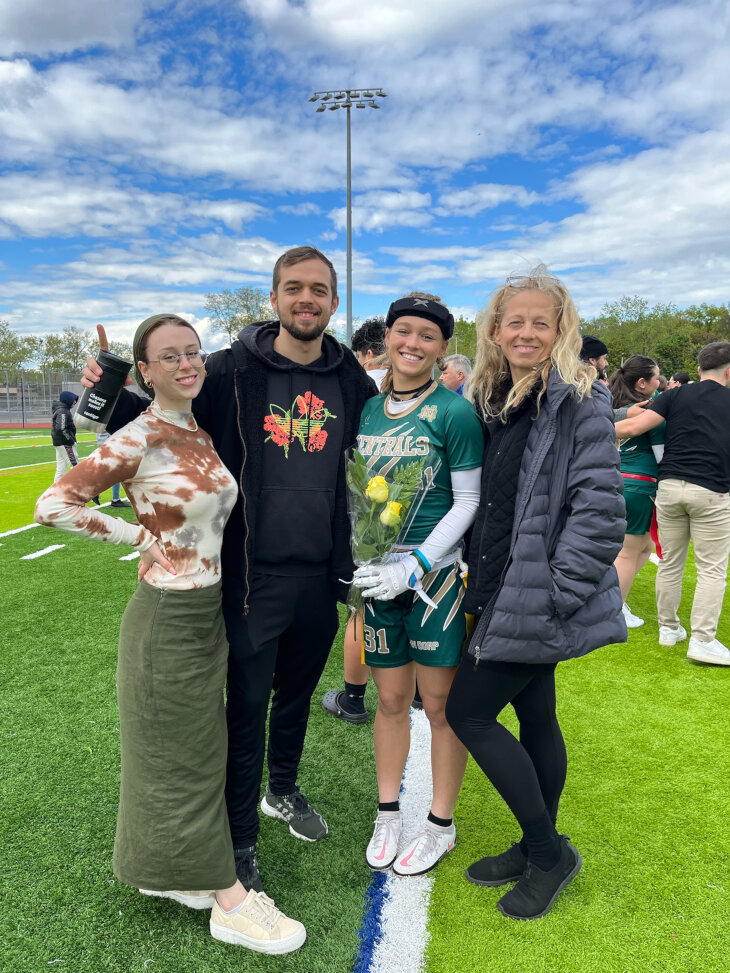 Allison with her mother, brother and sister-in-law
“She had been religious her whole life. She was bubbly, joyful, feminine—and so confident. I respected her so much. She radiated confidence not despite her femininity, but because of it.”
For Allison, who had long resisted anything “girly,” this was a revelation.
“I didn’t even own a skirt. If I did, I’d find a way to throw it out.”
She thought that to earn respect, she had to present with masculine energy—tough, strong, unshakeable. But beneath that, she says, was insecurity.
Then one day, her sister-in-law said, “What do you mean, you’re not feminine? Of course you are!”
“It stopped me in my tracks.”
For her 17th birthday, they took her to a kosher restaurant—and she wore a skirt.
“That night was a defining moment. I didn’t feel boyish or hidden—I felt beautiful.”
She realized she had spent years resisting something that lived inside her all along.
In May 2024, Allison visited Israel and decided to experiment with dressing modestly while there. On that trip, she celebrated a belated Bat Mitzvah.
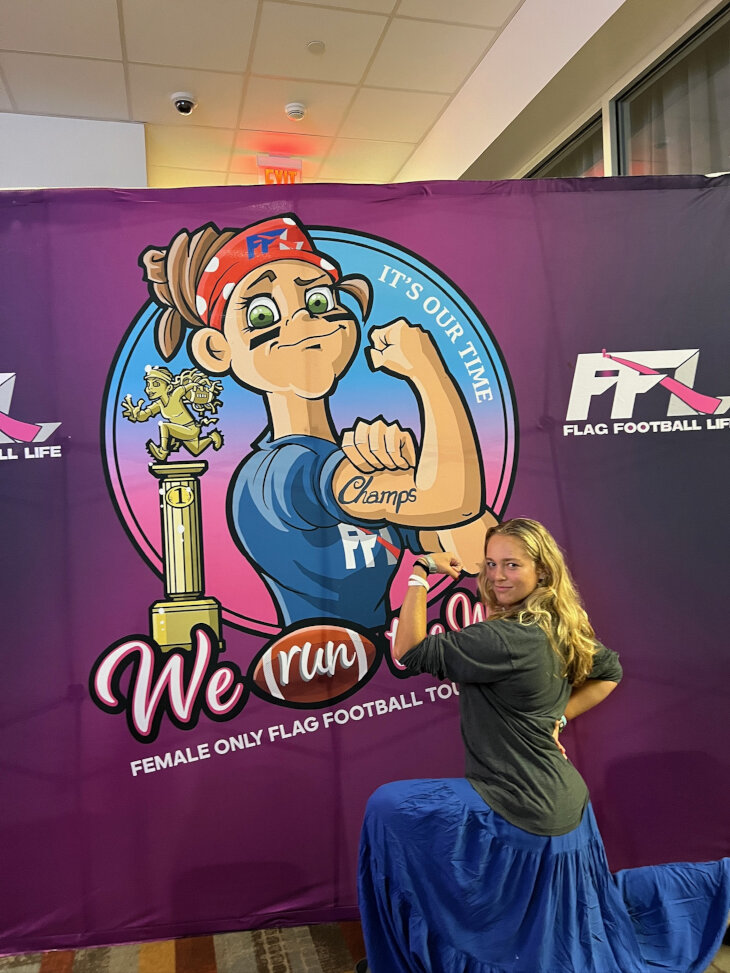
“If someone would ask me about myself, I would tell them, ‘Oh, I’m a football player. Oh, I’m an engineering student. I’m a New Yorker.’”
Her sense of worth was tied to her achievements. But in Israel, she discovered something new.
“On the trip, I didn’t tell anyone about myself. I realized that people are really special just be being, not by doing. I always defined my success by the checklist. A Jew is holy because of who they are, not what they do.”
Since then, Allison has embraced modesty more intentionally—wearing skirts regularly and avoiding shorts when playing.
“It’s a value of mine now to feel respectable in the way I dress. Looking back, I think I always felt uncomfortable—I just didn’t know how to define it.”
To her, modesty and femininity aren’t about restriction—they’re about alignment and power.
“I don’t have to push away the feminine side of myself to be powerful. Embracing it makes me feel whole. Feminine doesn’t mean fragile. Feminine can be fierce.”
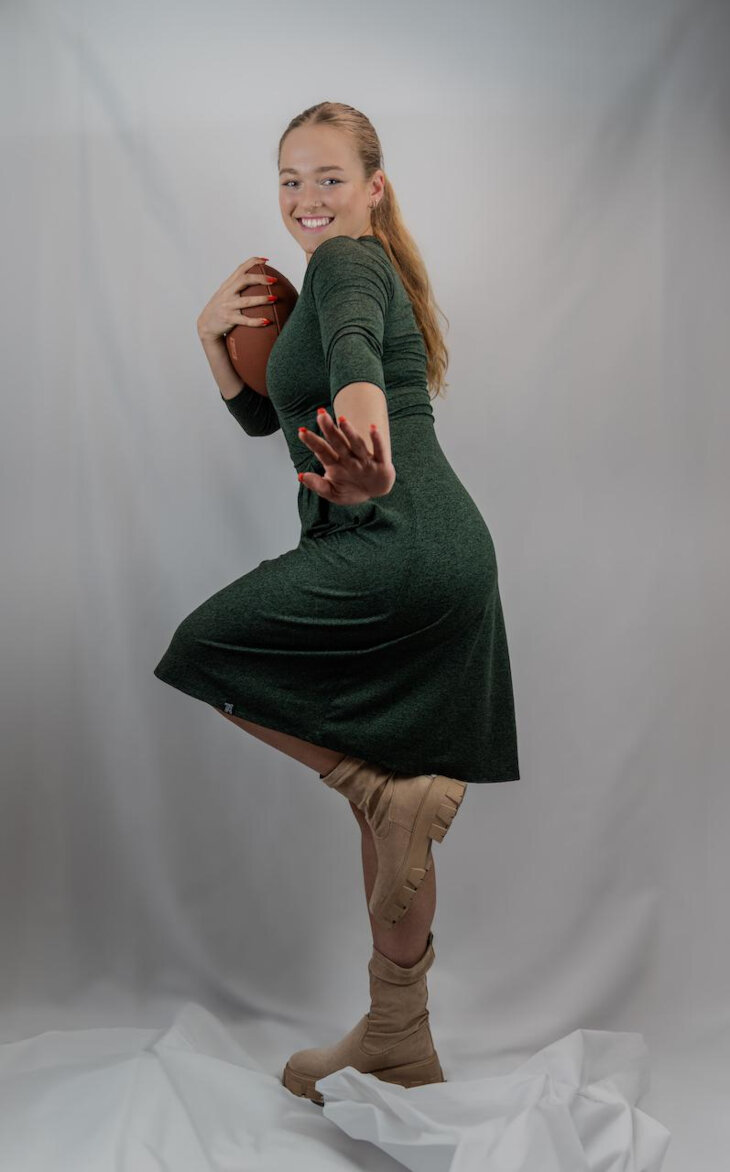
Scrolling Instagram one day, Allison came across a post by Aja Cohen, founder of Transcendent Active, a modest athleticwear brand. Aja was looking for models—and Allison jumped at the chance.

Now, they’re working together on a campaign that celebrates strength, modesty, and Jewish pride.
Allison hopes to play flag football in the 2028 Los Angeles Olympics—for Team Israel.
“Team USA wasn’t set up to accommodate Shabbat. But Team Israel? They get it.”
She’s not alone—several athletes on the team observe Shabbat, and training can be scheduled accordingly. Still, the pressure is real.
“My non-Jewish friends think I’m crazy when I pass up big opportunities for Judaism. To them, it’s just a game. Just a schedule.”
But for Allison, it’s much more.
“This isn’t just about football. It’s about who I am—as a Jew, a woman, and an athlete.”
If forced to choose between Olympic glory and keeping Shabbat, she’s still unsure. But she holds on to advice that’s helped guide her.
“Someone told me, ‘If you choose to play, even if you win gold, you’ll just be another name. But if you keep Shabbos, you might be remembered forever.’ That really stayed with me.”
As an engineering student at Rutgers University, Allison is part of a large Jewish student community. She’s also seen the rise in antisemitism firsthand: protests, encampments, tension.
But she’s seen something else, too.
“When I began embracing my religion more, people respected me more. They’d stop cursing around me—or apologize if they did.”
It wasn’t just what she said—it was how she showed up.
“Modesty wasn’t just about following Jewish law. It was about setting a boundary. Respecting myself helped others respect me, too.”
Some friends didn’t understand the changes. Some even found them off-putting. But Allison didn’t take it personally.
“Ultimately, the way people treated me changed. But I don’t see that as a bad thing.”
As both a woman and an athlete, Allison once felt like flag football itself: underappreciated, underestimated.
But now?
“Through modesty, I’ve learned to respect myself. And that changes how the world sees me, too.”
Allison continues to chart her own course—on the field and off—guided by faith, strength, and a fierce femininity all her own.
“I hope to walk both my athletic and Jewish paths with grace, dignity, and unapologetic pride.”













I grew up playing touch football in the street.. After becoming a teen, the boys didn't want to play with me anymore, and the girls just wanted to obsess about their looks. I sometimes play with kids in the neighborhood, but they quarrel a lot. When we used to play when I was little, no one quarreled. Too bad women don't love the game like I do.
Has no one told her Rav Noach's story about the bicyclist who learned at Aish while training for the Olympics? He was good enough for the US team but was put off by the antisemitism he found among many in the sport. So he moved to Israel to win a gold medal for the Jews, and some how he wound up at Aish. Long story short, the Israel Olympic Committee insisted he come for trials on Shabbos. He refused, assuming they would find a way to put him on the team. But they couldn't. So he missed the Olympics. It was 1972, and about 11 Israeli athletes were murdered by terrorists in Munich. The bicyclist had been scheduled to be roommates with one of the victims. He came to Rav Noach and said he had thought that Shabbos cost him a gold medal, but realized that Shabbos had saved his life.
I enjoyed this story. I do wonder about her characterization of dance as not being a team activity. My children have studied dance. The corps de ballet and similar dance troupes rely on excellent teamwork.
Very beautiful, moving article. Finding her inner strength was a perfect complement to her outer strength in sports. Kol ha'kavod!
Allison is such an inspiration! I am so honored to have worked with her on Transcendent Active's spring collection! She is a true testament that you can stitch to your values, but keep your personal style. Go Allison!