 The BBC Broke Her Because She’s a Jew


5 min read





I left school at fifteen with no qualifications and a string of failed jobs. Judaism showed me that every setback was preparing me for what came next.
I was 17, and it was my fifth job since leaving school at 15.
A car-parts firm in England had already taken me off deliveries after I crashed the company van, twice, in one week. (The first time I was singing Bon Jovi at full volume, which I still consider a mitigating circumstance.) So they put me on tire-stacking. All day, every day, in a warehouse with no daylight and a depot manager whose shrug said, "This is your lot now, son."
Something in me cracked. I took off my company polo shirt, laid it on a pile of retreads and walked out the back door. No plan, no next job, and no idea how I'd explain it at home where my parents were still coming to terms with the fact that their son was not going to be a doctor or a lawyer. Or, on current form, anything at all.
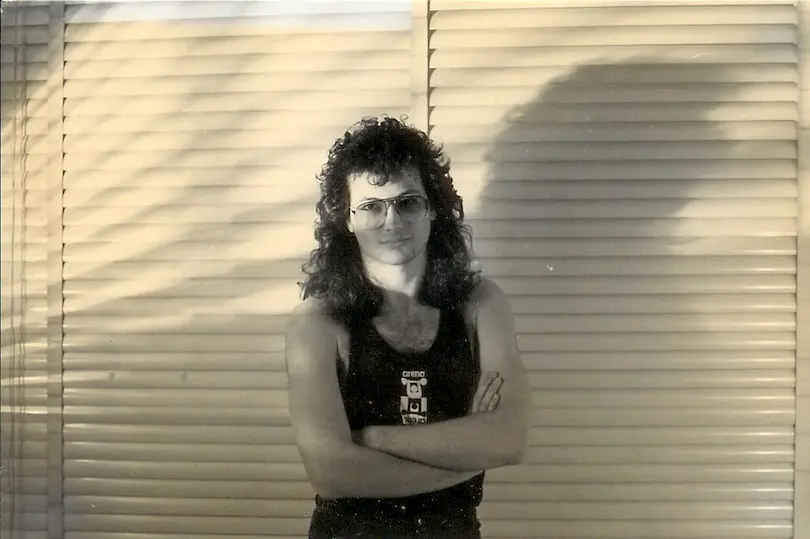 Me, at age 17, realizing that the music industry was my calling.
That same dropout went on to be employee number 12 on the original Xbox team at Microsoft, and spent 30 years in corporate marketing, rising to VP for global brands. My dad, bless him, is still not entirely convinced I have a proper job.
For most of those years, I treated my early resume like a family scandal: something to be managed, glossed over and never mentioned in front of guests. Then I looked properly at the most famous resume in the Torah.
Consider Joseph's career history. Favorite son. Thrown into a pit by his brothers. Sold to traders. Household slave in Egypt. Falsely accused. Prisoner. Forgotten by the one man he begged to remember him. Then, at 30, second only to Pharaoh.
No recruiter would have shortlisted him. Gaps everywhere, a prison record, and an unfortunate tendency to tell his brothers about his dreams.
Yet every wrong turn was training. Running Potiphar's household taught him to manage. Prison taught him to read people and gave him the one contact who would eventually mention him to Pharaoh. Years later, when his frightened brothers beg forgiveness, he doesn't pretend the past never happened. He names it: "You meant evil against me, but God meant it for good" (Genesis 50:20).
"Who is wise?" asks Ben Zoma. "One who learns from every person" (Ethics of the Fathers 4:1). Not every professor. Every person.
My teachers didn't wear gowns. They wore denim vests and duct tape. After the tire depot, I found my way into the music business as a roadie, schlepping flight cases up wet venue stairs, packing vans badly and once labelling two identical cables "thingy" and "not thingy". Glamorous, it wasn't.
But I kept turning up, and the road taught me what no classroom had. How to keep people calm when everything is falling apart. How to deliver against impossible deadlines. And trust: on tour I carried $50,000 of the night's takings strapped to my stomach under my shirt, because the band knew I'd show up, night after night.
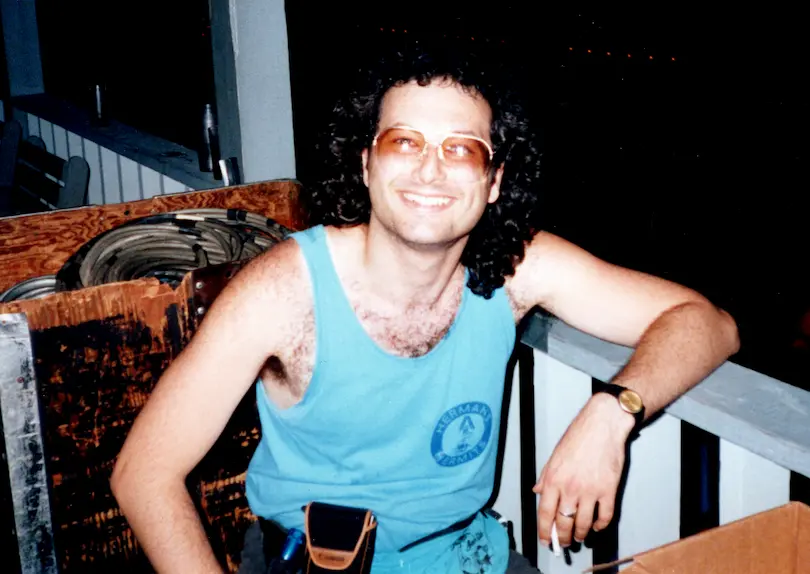 Me, age 19, wrapping cables on tour in the USA in 1988 (the smile was because I'd just finished work).
Microsoft didn't hire me for my qualifications. I didn't have any. They hired me because I knew how to make impossible things happen under pressure. The stage became the product launch. The fans became customers.
Jewish tradition has a habit of sending its leaders somewhere unglamorous first. Moses was tending his father-in-law Jethro's flock in the wilderness when God called him (Exodus 3:1). The Midrash says that when a young goat ran off, Moses followed it to a pool of water, realized it had only been thirsty, and lifted the exhausted animal onto his shoulder to carry it. God said: since you show such compassion to the flock of a mortal man, you will shepherd My flock, Israel (Shemot Rabbah 2:2). The compassion he showed in an empty field became his qualification to lead a nation.
Rabbi Akiva was a shepherd (Ketubot 62b) who, at 40, had still not learned any Torah. His turning point came at the mouth of a well, where he saw a stone worn hollow by water falling on it day after day. If soft water could carve hard stone, he reasoned, the words of Torah could surely engrave his heart (Avot de-Rabbi Natan 6). No thunderbolt. Just drops, repeated.
That’s how careers are really built. Not in one heroic leap, but in small, consistent choices: turning up early, asking the extra question, coming back the day after you got it wrong.
"The righteous one falls seven times and rises" (Proverbs 24:16). I love that the verse doesn't promise you won't fall. It assumes you will, repeatedly. I'd clocked up five falls before my 18th birthday, which by the verse's arithmetic put me ahead of schedule.
 Me today, age 58.
The rising doesn't happen despite the falling. The falling is how you learn which way is up.
If you feel stuck outside the conventional lines of success, whether you're between jobs, behind your peers or embarrassed by a path that zigzags, here is what I teach the people I coach:
When life knocks you off the path, a voice in your head insists you've wasted time. You haven't. You're not starting over; you're starting differently, carrying everything the detour taught you.
Joseph didn't choose the pit. I didn't choose to be the lad with no qualifications who couldn't hold down a job. But from the other side, I can see what I couldn't see at 17, walking out of that warehouse into the grey English afternoon.
The mess was never the obstacle. It was the education.
BIO: Harvey Lee is the author of The Anti-Resume: Turn Your Messy Past into a Future-Proof Career. It is available to pre-order now and goes on sale on November 24 at Amazon, Barnes & Noble, Walmart and all good bookstores.