 Iran and the Freedom of Passover

12 min read

5 min read


Iran is not just a military threat. It's a system of oppression holding 90 million people captive, echoing the story of Passover.
At a meeting in Washington last year marking the anniversary of D-Day, U.S. President Donald Trump remarked to German Chancellor Friedrich Merz that June 6, 1944, was “not a pleasant day” for Germany.
Merz responded simply: “True, but it was the liberation of my country from Nazi dictatorship.”
It is a striking moment. A German leader expressing gratitude for a war that devastated his country because that war made its future possible. The Allies were willing to sacrifice not only for their own survival, but to free Germany itself from a regime that had consumed it.
World War II was about dismantling a system of oppression and making possible a different future, for those who were attacked and for those trapped within that system.
At the time, World War II was understood as a fight for survival. In retrospect, its deeper meaning emerges. It was about dismantling a system of oppression and making possible a different future, for those who were attacked and for those trapped within that system as well.
As Winston Churchill put it, the goal was nothing less than ensuring that “the lights of freedom” would not be extinguished.
Today, much of the discussion around the Iran war is narrow and tactical. Will the threat be neutralized? Will the objectives be achieved? Will there be a decisive outcome? These are important questions but they do not capture the full reality of what is unfolding.
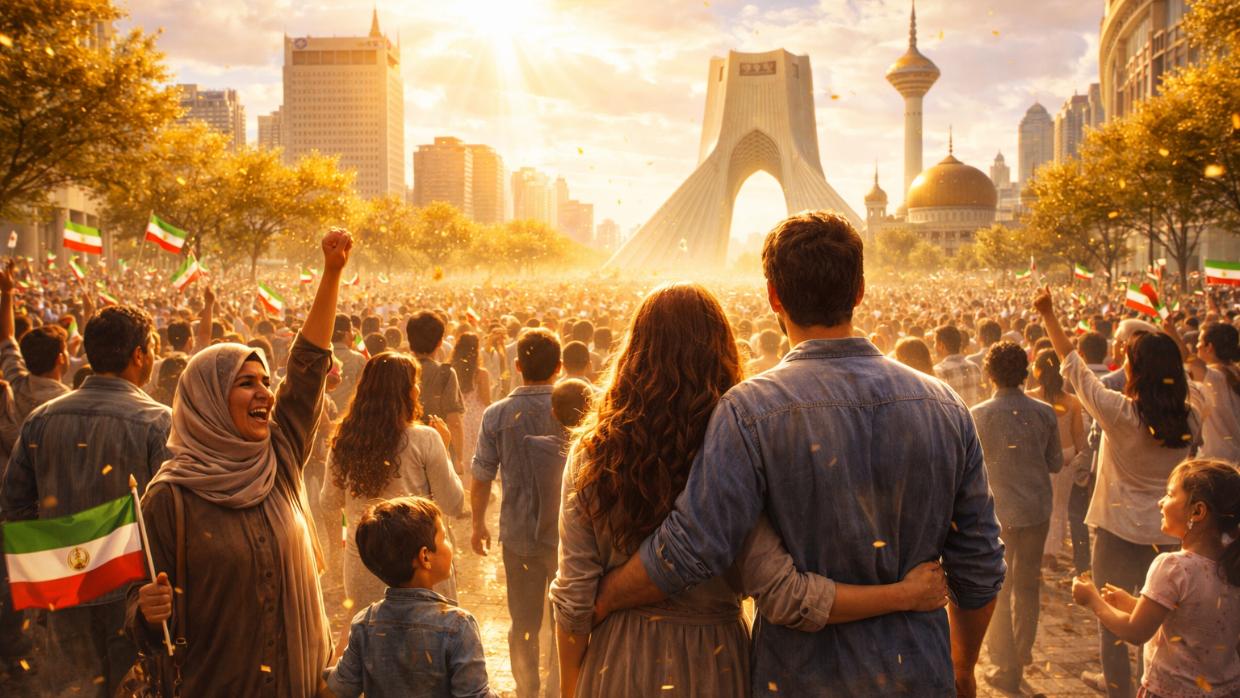
Iran is not only a serious military threat to Israel, the US and many others. There are tens of millions of people living under regimes that suppress freedom. In Iran alone, 90 million people live under a system that punishes dissent, controls thought, and exports instability far beyond its borders. That same system extends into Lebanon, Yemen, Iraq, and beyond, trapping entire societies in cycles of violence and failure.
The current war, which actually began on October 7, 2023, when an Iranian-backed proxy carried out a brutal massacre, drawing on years of Iranian funding, training, and support, is not only a confrontation with a threat. It is a confrontation with a structure of oppression that offers hope for both salvation and freedom. When such structures are weakened, even if they are not fully dismantled, something profound begins to happen. The conditions for freedom start to emerge.
The language of the Exodus became the language of freedom itself. But before it was a song, it was a confrontation.
This echoes the Passover story, the model for human hope against oppression throughout history. It is no accident that enslaved African Americans turned to this very narrative, giving voice to their struggle through the spiritual:
“Go down, Moses, way down in Egypt land,
tell old Pharaoh: let my people go.”
The language of the Exodus became the language of freedom itself.
But before it was a song, it was a confrontation.
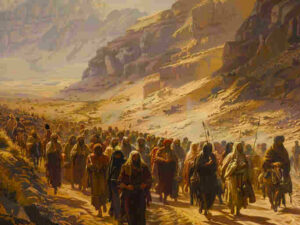
Moses stood before Pharaoh and challenged the most powerful regime of his time, and one of the most absolute systems of oppression in history: a regime that enslaved the Jewish people for generations, exercising such total control that, as the Midrash teaches, no slave ever escaped.
When Moses entered the fray, things first got worse. The suffering increased and the pressure intensified. In fact, God told Moses that this was what would happen.
An entire system had to be dismantled and delegitimized before a people could be free.
Passover is the story of how liberation becomes possible.
The Sages teach, “Open for Me an opening like the eye of a needle, and I will open for you like the opening of a great hall.” Redemption may come from above, but it begins with human initiative. Someone must take the first step before the outcome is clear.
Today we are witnessing not only a struggle for security but a confrontation with forces that shape the lives of millions beyond our immediate horizon. The outcome is uncertain and the costs are real, but the stakes extend far beyond the immediate battlefield.
The Haggadah reminds us, “In every generation, they rise against us to destroy us.” It’s a reminder that the struggle between oppression and freedom, between light and darkness, is ongoing across generations. Today it is the Islamic Republic of Iran leading the fight against God and His People.
The weakening of oppressive systems, even if incomplete, can open the door to a different future. Acts of courage, undertaken without certainty, can reshape reality in ways that only become visible later.
We need to battle oppressive forces to make freedom possible.
The outcome is not guaranteed. Moses himself was told by God that the process would involve setbacks, and that conditions would worsen before they improved.
But without that first step, nothing would have changed.
That is the enduring message of Passover. We need to battle oppressive forces to make freedom possible.
It begins with the clarity to name evil, demands the courage to confront it, and unfolds through action taken long before the outcome is certain.
When that happens, history can shift, not only for one people, but for many millions, and the entire world.
At moments like this, we give thanks to God, and to the United States and Israel for confronting forces of oppression. Such courage does not guarantee success but it will reshape history, weaken destructive regimes, and with the help of God open the path to greater freedom for generations.